

7 Books to Read During a Life Reset
There is a particular kind of quiet that settles in when life as you knew it stops making sense. Maybe a relationship ended. Maybe a career you built for years suddenly feels hollow. Maybe you just woke up one morning and realized you had been living someone else’s version of your life. Whatever brought you here, you are not alone, and you are probably not looking for someone to tell you everything happens for a reason.
What you might be looking for is a book. Not a quick fix wrapped in a glossy cover, but something honest and considered, written by someone who has actually sat with discomfort and come out the other side with something worth saying. The seven books on this list were chosen because they meet you where you are. Some are gentle. Some ask hard questions. All of them are worth your time during a season of real change.
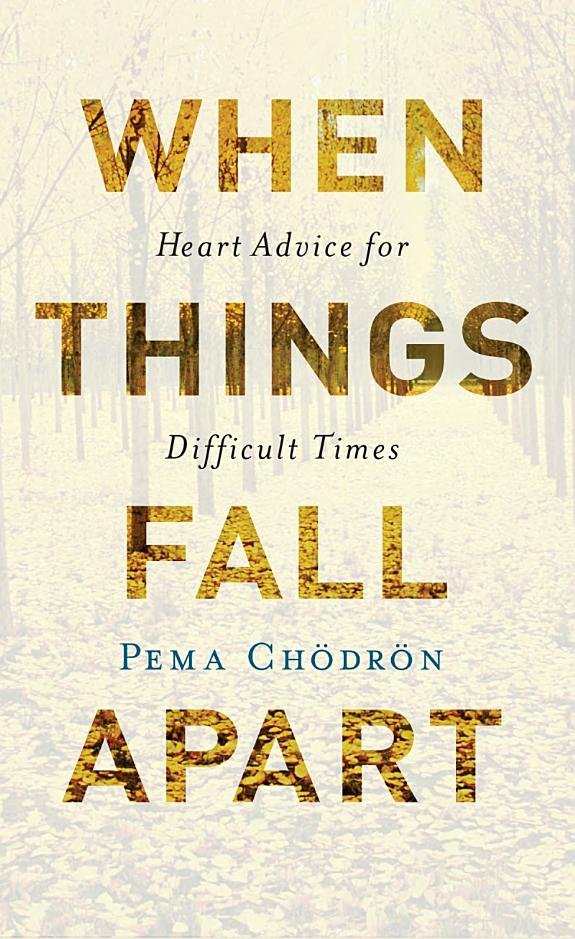
When Things Fall Apart
1. When Things Fall Apart by Pema Chödrön
Pema Chödrön writes like someone who has genuinely been through the fire and decided, rather than run from it, to sit down and take notes. This book grew out of a series of talks she gave during her own period of personal upheaval, and that origin shows. There is nothing theoretical or distant about her voice. She is warm, direct, and occasionally funny in the dry way that only someone deeply comfortable with uncertainty can be.
The central argument of the book is both simple and quietly radical: the moments when everything falls apart are not obstacles to a meaningful life. They are the actual material of one. Chödrön draws on Tibetan Buddhist teachings to explore concepts like groundlessness and the practice of leaning into fear rather than away from it. She is not asking you to enjoy suffering. She is suggesting that fighting it with everything you have is what makes it worse.
Practically speaking, the chapters are short and the language is accessible. You do not need any background in Buddhism to follow her thinking. What you do need is a willingness to sit with ideas that run counter to most of what Western culture teaches about getting back on your feet as quickly as possible. This book is not interested in speed. It is interested in honesty.
“The most difficult times for many of us are the ones we give ourselves.” Chödrön’s work is a reminder that the instinct to escape discomfort is understandable, but the willingness to stay with it is where something real begins.
This is perfect for anyone in the early, raw stages of a life reset who needs permission to stop pretending they are fine and start getting genuinely curious about what comes next.
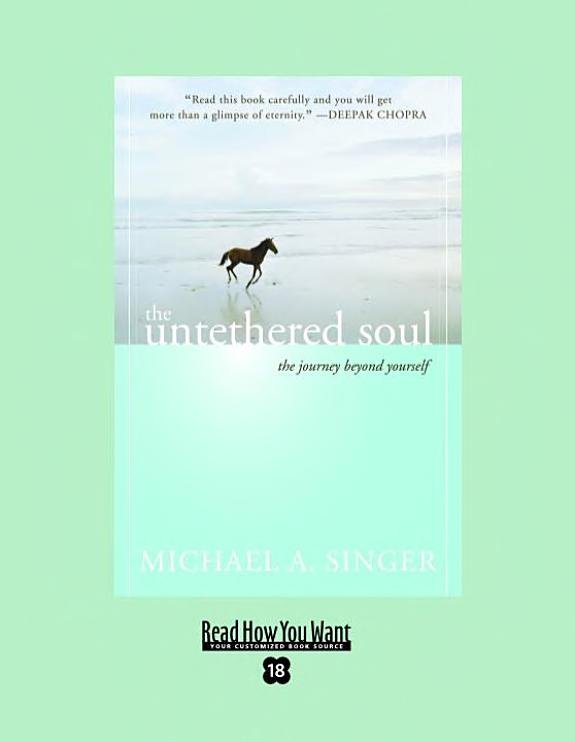
The Untethered Soul
2. The Untethered Soul by Michael A. Singer
Michael Singer has a background in economics, which makes it slightly amusing that the book he ended up writing is essentially a sustained meditation on the nature of consciousness and the voice inside your head that never stops talking. The Untethered Soul asks a deceptively simple question: who are you, exactly, if you are not your thoughts? It then spends the next two hundred or so pages unpacking that question with genuine care.
Singer’s voice is calm and methodical. He builds his ideas slowly, layering one concept on top of another in a way that feels logical rather than mystical, even when the subject matter is decidedly spiritual. The core idea is that most of us are so identified with our mental chatter that we have never actually experienced the quiet observer sitting behind all of it. That observer, he argues, is closer to who you actually are than any of the stories you tell yourself about your life.
During a life reset, this framework can be genuinely useful because it offers a way of stepping back from the noise of fear and regret without dismissing those feelings entirely. It is not a book that tells you to think positive. It is a book that tells you to notice what is happening inside you without being completely run by it. That is a meaningful distinction. If you are someone who finds purely secular self-help too shallow but organized religion too prescriptive, Singer tends to land in an interesting middle ground.
The book’s lasting contribution is its insistence that you are not your problems. You are the one who is aware of your problems. That small shift in perspective turns out to matter quite a lot.
This is perfect for readers who are intellectually curious about the inner life and want a framework for understanding their own mind that goes a little deeper than most self-help offers.
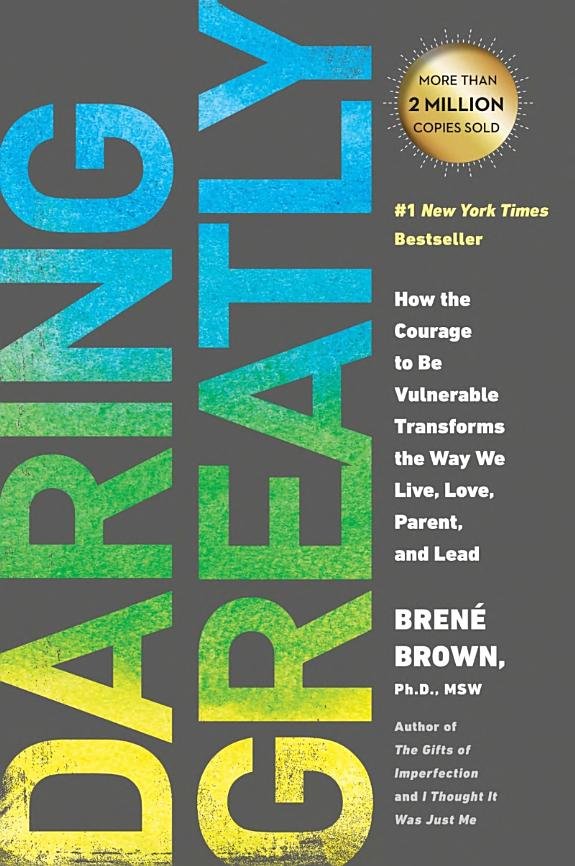
Daring Greatly
3. Daring Greatly by Brené Brown
Brené Brown spent years as a research professor studying shame and vulnerability before she became a household name, and that research background shows in the best possible way. Daring Greatly is not a collection of motivational platitudes. It is a carefully argued case for why vulnerability, the willingness to be seen even when you are uncertain of the outcome, is not a weakness but the actual prerequisite for a connected and meaningful life. She opens with a Theodore Roosevelt quote about the man in the arena, and the whole book is essentially an extended exploration of what it costs to step into that arena.
Her writing is conversational and warm, full of personal stories alongside the data. She is candid about her own resistance to vulnerability, which makes her a credible guide rather than someone preaching from a position of easy enlightenment. The sections on shame are particularly worth sitting with. Brown distinguishes carefully between shame, which says “I am bad,” and guilt, which says “I did something bad,” and argues that conflating the two is one of the more quietly destructive habits most of us have developed.
During a life reset, this book is useful because it addresses the particular kind of exposure that comes with starting over. Admitting that something did not work, asking for help, trying something new in public, all of these require a tolerance for vulnerability that many people have spent years carefully avoiding. Brown does not pretend this is easy. She just makes a compelling case that it is worth it. If you prefer books with hard data and clear frameworks over purely philosophical ones, this will suit you well.
Brown’s research suggests that people who live with the most wholehearted sense of connection are not those who avoided hard things, but those who decided their worthiness was not up for debate regardless of outcome.
This is perfect for anyone whose life reset involves recovering from a period of playing it safe, or who has built walls that once protected them but are now simply keeping good things out.
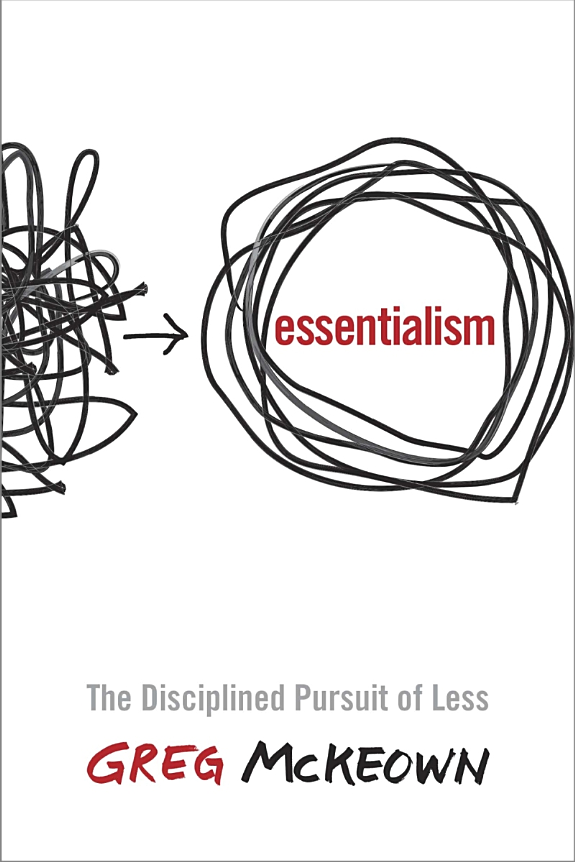
Essentialism
4. Essentialism by Greg McKeown
Greg McKeown opens Essentialism with a question that sounds almost offensively simple: what if you could do less, but better? The entire book is a defense of that idea, built out with enough practical reasoning and real-world examples that it never tips into the territory of breezy minimalism lifestyle content. McKeown is making a serious argument about how most people end up living lives shaped by other people’s priorities, not their own, and how the antidote is a kind of disciplined, almost ruthless focus on what actually matters.
His writing style is clean and efficient, which feels appropriate given the subject. He is not trying to dazzle you with prose. He is trying to get you to think clearly, and the book reflects that. The concept of the “non-essentialist” versus the “essentialist” runs throughout, and while the framing can occasionally feel a little binary, the underlying logic holds up. The chapters on the power of saying no and on protecting time for thinking are particularly useful for anyone in the middle of rebuilding a life from scratch.
A life reset is, among other things, an opportunity to stop carrying things that were never really yours to carry. This book provides a framework for making those decisions intentionally rather than just reactively. It is worth noting that Essentialism speaks most directly to people who have some degree of choice in how they structure their time and work. If you are currently in crisis mode with very little margin, some of the advice may feel frustratingly aspirational. But as a north star for where you want to get to, it is useful reading.
The book’s most honest insight is that the feeling of being overwhelmed is not a sign of hard work. It is often a sign of having said yes to the wrong things for too long.
This is perfect for someone who has emerged from the initial shock of a life reset and is now trying to figure out, with some deliberateness, what they actually want their rebuilt life to look like.
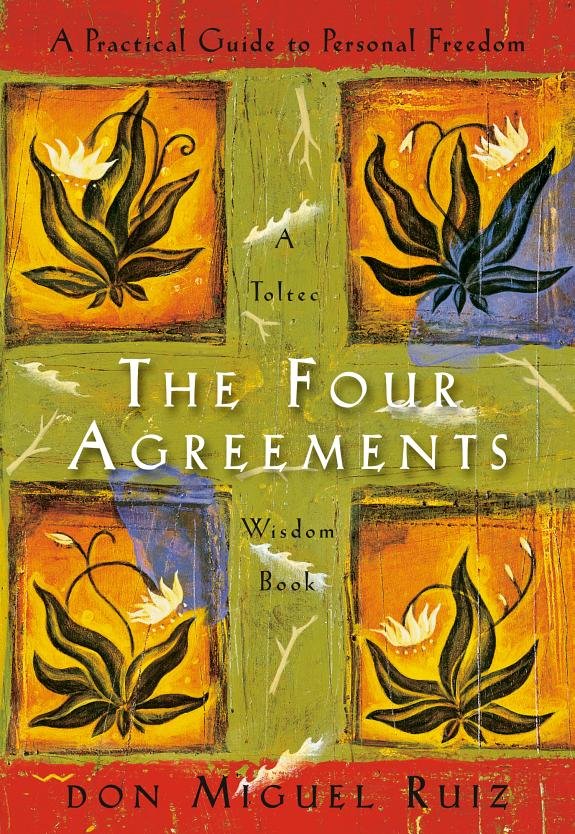
The Four Agreements
5. The Four Agreements by Don Miguel Ruiz
Don Miguel Ruiz draws on the ancient Toltec wisdom tradition of his Mexican heritage to lay out four principles for living with more freedom and less unnecessary suffering. The book is short, the language is direct, and the four agreements themselves are simple enough to write on a notecard: be impeccable with your word, do not take anything personally, do not make assumptions, and always do your best. The simplicity is deceptive. Most people who read this book recognize, with some discomfort, how consistently they violate at least three of the four on any given Tuesday.
Ruiz’s voice has a kind of elder-telling-stories quality that some readers find deeply comforting and others find slightly repetitive. He circles back to his central ideas from multiple angles, which works if you are the kind of reader who benefits from hearing something several times in slightly different words, and works less well if you prefer a more linear argument. The chapter on not taking things personally tends to hit hardest during a life reset, particularly if the reset involved a relationship ending or a professional rejection.
The philosophical underpinning of the book is the idea that most of us are living under a set of agreements, rules about ourselves and the world, that we absorbed in childhood and have never consciously examined. A life reset is precisely the kind of disruption that makes those old agreements visible. Ruiz is inviting you to look at them clearly and decide which ones you actually want to keep. That is a genuinely useful exercise, even if the book’s tone occasionally veers toward the earnestly spiritual in ways that will not land for every reader.
The most quietly useful idea in the book is that almost nothing other people do is actually about you. They are living inside their own dream, shaped by their own agreements. That realization does not fix everything, but it does free up a remarkable amount of energy.
This is perfect for readers who want a short, accessible read rooted in spiritual wisdom that offers concrete principles rather than abstract philosophy, particularly if they are working through patterns that keep repeating in their relationships or work.
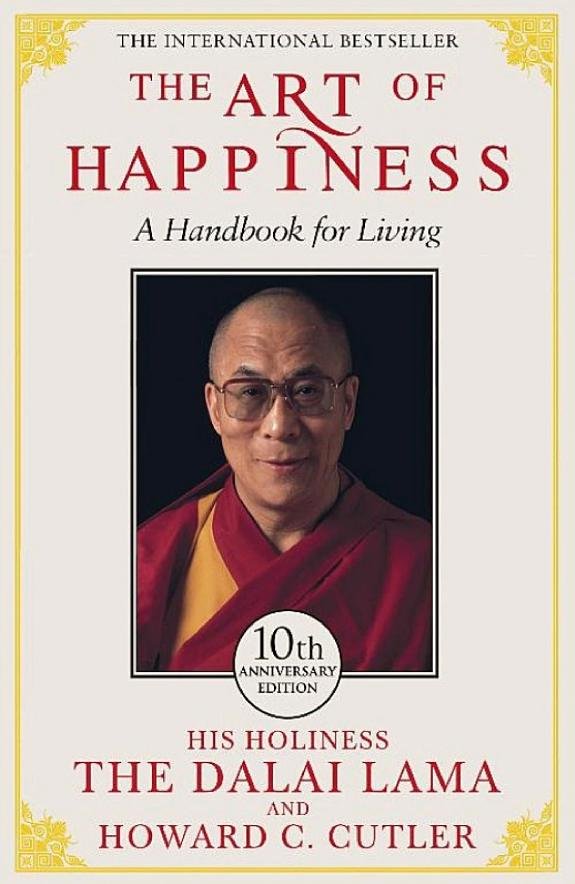
The Art of Happiness
6. The Art of Happiness by Dalai Lama XIV and Howard C. Cutler
This book came out of a series of conversations between the Dalai Lama and Howard Cutler, an American psychiatrist who was curious about how Buddhist teachings might speak to the concerns of Western psychology. The format is a little unusual: Cutler writes in the first person, describing his interviews with the Dalai Lama and then stepping back to place what he heard in conversation with Western research on well-being. The result is something that feels genuinely dialogic, two different frameworks trying to understand the same questions about what it means to live well.
The Dalai Lama’s central argument is that happiness is not something that happens to you but something you cultivate, primarily through training the mind and developing genuine compassion for others. He is not precious about this. When Cutler pushes back or describes scenarios where compassion feels impossible, the Dalai Lama engages directly and honestly rather than retreating into platitude. There is a warmth and practicality to his thinking that makes the book feel grounded rather than aspirational in an unreachable way.
For someone in the middle of a life reset, the sections on suffering and on the relationship between inner and outer happiness are worth particular attention. The book does not pretend that circumstances do not matter. It simply makes the case, with considerable patience, that the mind’s relationship to circumstances matters more. That is a position worth sitting with, especially when external circumstances feel entirely outside your control. This book will not resonate with readers who are firmly allergic to anything with a spiritual dimension, and that is fair enough.
One of the Dalai Lama’s most disarming observations is that loneliness often comes not from a lack of people around us but from a lack of genuine connection to them, and that genuine connection requires starting with an honest relationship with ourselves.
This is perfect for someone who is drawn to both Eastern philosophy and Western psychology and wants a book that takes both seriously without requiring you to abandon one for the other.
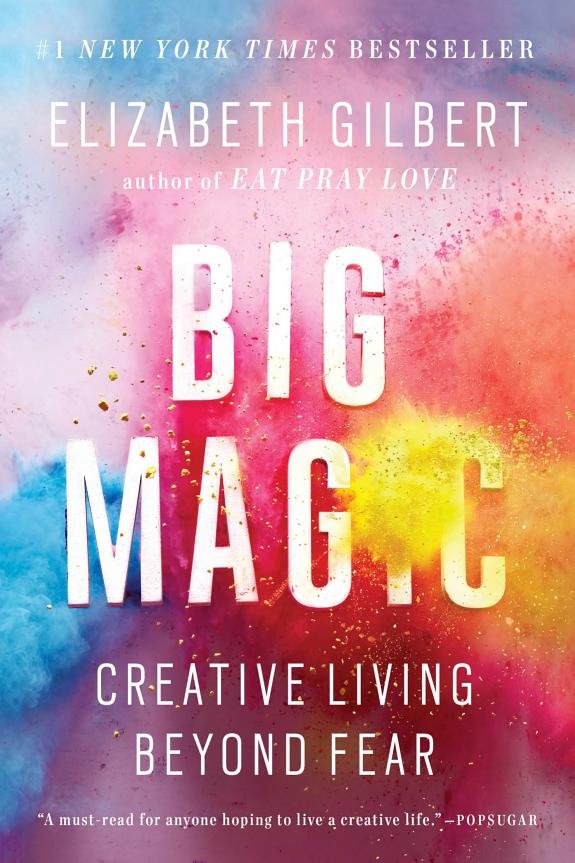
Big Magic
7. Big Magic by Elizabeth Gilbert
Elizabeth Gilbert wrote Big Magic as a love letter to the creative life, but it reads equally well as a manifesto for anyone trying to figure out who they are on the other side of something hard. Her argument is that curiosity, not passion, is the better guide for a life well lived, and that most of us are too afraid of looking foolish to follow the small, strange interests that might actually lead somewhere worth going. She is funny, self-deprecating, and genuinely enthusiastic in a way that feels earned rather than performed.
Gilbert is not interested in the romantic myth of the tortured artist. She is interested in the practical, sometimes mundane, often joyful work of making things, whether that means writing or painting or starting a business or learning to throw pottery at forty-two. She writes about fear with a kind of cheerful directness: yes, it will always be there, and no, you do not have to let it drive. The chapter where she essentially tells fear it can come along for the ride but is not allowed to touch the radio is one of the more charming pieces of writing in the whole genre.
During a life reset, Big Magic is most useful as a permission slip. It gives you license to take your own curiosity seriously, to try things without knowing if they will work out, and to stop waiting until you feel ready or qualified or certain. It is not a book about finding your one true purpose. It is a book about showing up for your own life with a little more willingness and a little less dread. Readers who prefer their advice heavily research-based may find Gilbert’s more personal, anecdotal style less satisfying, and that is a reasonable preference to have.
Gilbert’s most useful provocation is this: what would you do if you knew that no one was going to save you, but also that no one was going to stop you? That question has a way of cutting through a lot of noise.
This is perfect for anyone whose life reset has left them wanting to reconnect with a creative or curious part of themselves that got buried somewhere along the way, and who needs a warm, witty companion for that particular journey.
A life reset is not a tidy thing. It does not follow a schedule, and it does not always announce itself clearly before it arrives. But somewhere in the middle of the uncertainty, most people find themselves reaching for something to hold onto, and often that something turns out to be a book. Not because books have all the answers, but because the right book at the right moment can make you feel a little less alone in the questions.
The seven books on this list were chosen because they are honest about difficulty without being grim about it. They take the reader seriously. They do not promise quick transformations or tidy resolutions. They offer something quieter and more durable: company, perspective, and the occasional reminder that starting over, as uncomfortable as it is, is also a genuinely rare opportunity to get a few things right this time. Take what helps. Leave what does not. That is, after all, exactly what a reset is for.