5 Books to Help You Escape Survival Mode
There is a particular kind of exhaustion that does not go away after a good night’s sleep. It sits in your chest, follows you into weekends, and makes even the things you used to enjoy feel like obligations. If you have been running on fumes for so long that fumes feel normal, you are not broken. You are just stuck in survival mode, and a lot of us have been there longer than we would like to admit.
Books will not fix everything. Anyone who tells you otherwise is probably trying to sell you something. But the right book at the right moment can crack open a window when everything feels sealed shut. The five books below were chosen because they go beyond generic advice. They take seriously the question of why we get stuck and what it actually takes to get unstuck. Some are clinical and research-driven. Some are deeply personal. All of them are worth your time if you are ready to stop just getting through the day.
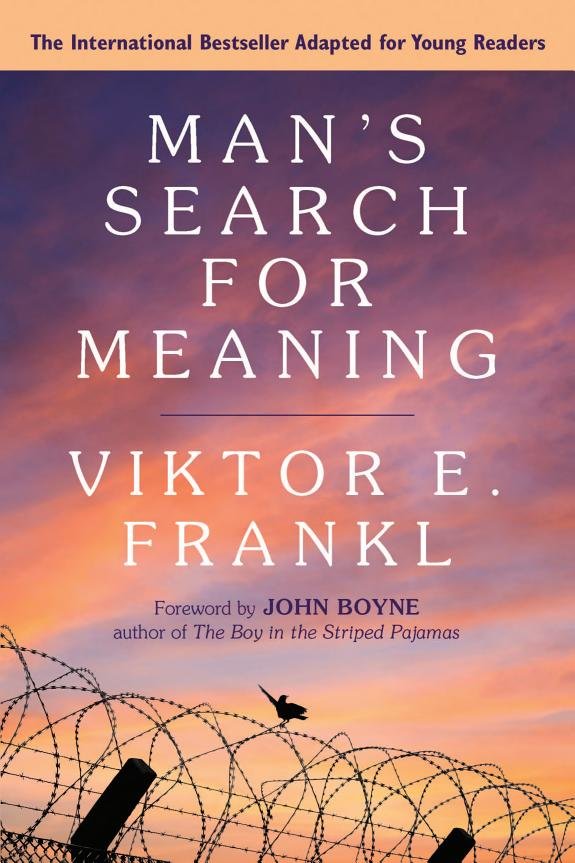
Man’s Search for Meaning
1. Man’s Search for Meaning by Viktor E. Frankl
Viktor Frankl was a psychiatrist and Holocaust survivor who wrote this book in nine days, drawing on his experiences in Nazi concentration camps including Auschwitz. That context matters enormously. This is not a self-help book in any conventional sense. It is a firsthand account of what happens to the human psyche under conditions of extreme suffering, and what Frankl observed was that the people most likely to endure were not necessarily the strongest physically. They were the ones who could hold onto a sense of meaning, however small or fragile.
The second half of the book introduces logotherapy, the school of psychology Frankl developed around the idea that the primary human drive is not pleasure or power but the search for meaning. It is a relatively short read, which is part of what makes it so quietly devastating. You expect something dense and academic, and instead you get something that feels almost conversational, written with the calm clarity of someone who has already been through the worst and come out the other side with something worth saying.
Frankl does not offer a roadmap out of survival mode so much as he reframes what survival mode is. He argues that suffering itself is not the enemy. The loss of meaning is. For readers who have been grinding through life without any sense of why, that distinction can be genuinely clarifying. It does not make the hard stuff easier, but it makes it feel less random.
“When we are no longer able to change a situation, we are challenged to change ourselves.” Frankl’s insight is that meaning is not found in circumstances but chosen within them, which is either deeply comforting or deeply inconvenient depending on where you are in your day.
This is perfect for readers who are questioning the point of it all, people who have been through something genuinely hard and want a framework that takes that seriously, and anyone who finds conventional positive thinking a little too cheerful to be useful. It is not the right fit for readers looking for practical coping strategies or step-by-step guidance.
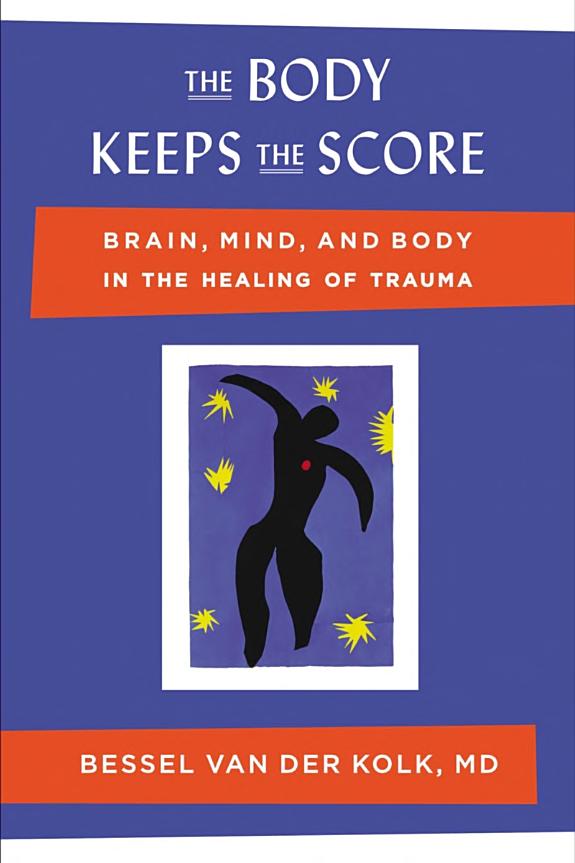
The Body Keeps the Score: Brain, Mind, and Body in the Healing of Trauma
2. The Body Keeps the Score: Brain, Mind, and Body in the Healing of Trauma by Bessel van der Kolk
Bessel van der Kolk has spent decades working with trauma survivors, and this book is his attempt to synthesize what he has learned about how trauma lives in the body long after the original event has passed. The central argument is right there in the title. The body keeps the score. Trauma is not just a memory or a set of difficult feelings. It is something that reshapes the brain and nervous system in ways that continue to affect how you move through the world, often without you realizing it.
Van der Kolk writes with the authority of a clinician and the accessibility of someone who genuinely wants to be understood. He covers neuroscience, attachment theory, and a wide range of therapeutic approaches including EMDR, yoga, theater, and neurofeedback. Some of these sections are more compelling than others, and a few chapters feel a bit like a survey course rather than a deep dive. But the overall effect is cumulative. By the time you finish, you have a much richer understanding of why certain people seem stuck in patterns they cannot explain or escape.
For anyone who has ever wondered why they react the way they do, why certain situations trigger a disproportionate response, or why they feel chronically unsafe even in objectively safe circumstances, this book provides language and context that can be genuinely orienting. It is not a light read, and it covers some difficult material including childhood abuse, war trauma, and sexual violence. Approach it accordingly.
Van der Kolk makes a compelling case that healing trauma is not about talking yourself out of it. The body needs to be involved, which means the path forward looks different for different people and often requires more than just insight.
This is perfect for people who have experienced trauma and want to understand what is happening in their own nervous system, therapists and caregivers looking for a broader framework, and curious readers who want the science without it being inaccessible. It is not ideal for someone in acute crisis or for readers who find clinical detail overwhelming rather than helpful.
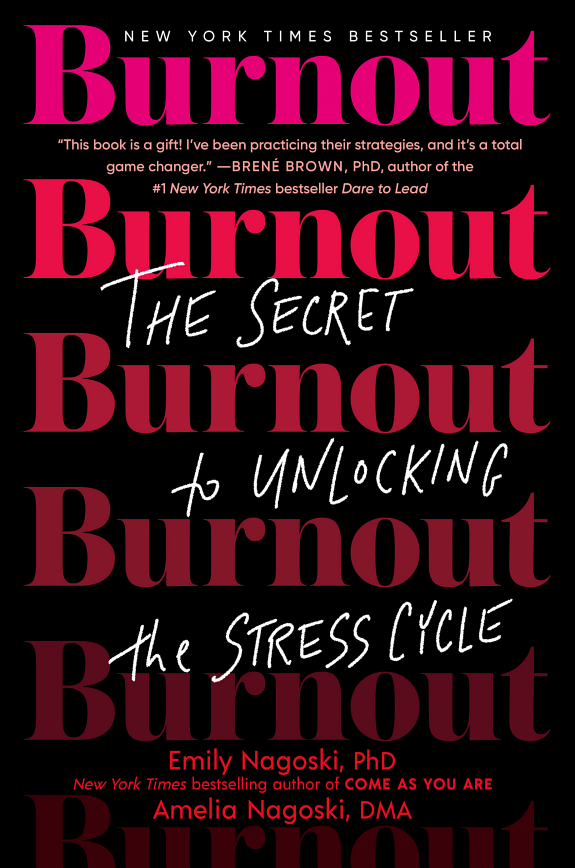
Burnout: The Secret to Unlocking the Stress Cycle
3. Burnout: The Secret to Unlocking the Stress Cycle by Emily Nagoski and Amelia Nagoski
Emily and Amelia Nagoski are sisters, one a sex educator and researcher and one a choral conductor, and together they have written one of the more genuinely useful books about burnout that exists. The key insight the book builds on is the distinction between stressors and stress. A stressor is the thing causing the problem, your job, your inbox, the difficult relationship. Stress is the physiological response your body has to that stressor. The problem, they argue, is that most of us deal with the stressor without ever completing the stress cycle, which means the stress just accumulates in the body indefinitely.
The book is written with warmth and a dry sense of humor that keeps it from feeling like a lecture. The Nagoskis are clearly not interested in telling you to just breathe more or take bubble baths. They take the structural causes of burnout seriously, particularly for women, and they are honest that individual coping strategies can only do so much when the systems around you are genuinely broken. That honesty is refreshing. It means the book does not leave you feeling like your burnout is a personal failure.
The practical sections are where the book earns its keep. The authors walk through specific ways to complete the stress cycle, physical movement, creative expression, connection, laughter, and explain the underlying physiology in terms that are easy to follow. It is not revolutionary information in isolation, but the framing around the stress cycle makes it click in a way that generic wellness advice rarely does.
The Nagoskis put it plainly: you can remove every stressor from your life and still be burned out because the stress itself was never discharged. That single idea is worth the price of the book.
This is perfect for people who are exhausted by doing everything right and still feeling terrible, readers who want practical tools backed by actual research, and anyone who has ever been told to practice self-care and felt vaguely insulted by the suggestion. It is less suited to readers looking for a deep clinical exploration of trauma or those who prefer a more academic tone.
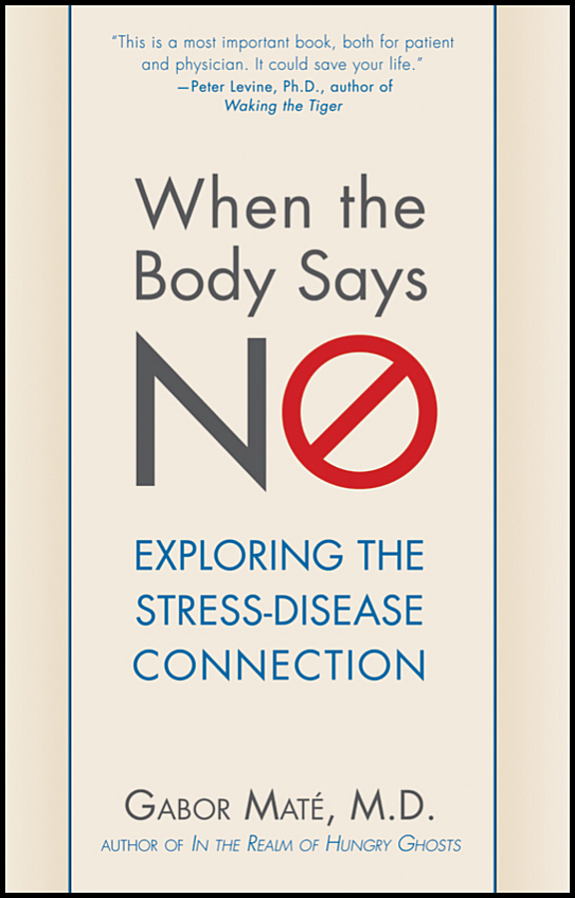
When the Body Says No: The Cost of Hidden Stress
4. When the Body Says No: The Cost of Hidden Stress by Gabor Maté
Gabor Maté is a Canadian physician who spent years working with patients facing serious illness, and this book grew out of a question he kept returning to: why do certain people get sick? Not in a blaming way, but in a genuinely curious, clinically rigorous way. What he found, across patient after patient, was a striking pattern. People who suppressed their emotions, who had difficulty saying no, who prioritized others’ needs at the cost of their own, were disproportionately represented among those with chronic and serious illness.
The book weaves together case studies, neuroscience, and developmental psychology to build an argument about the relationship between stress, the suppression of emotion, and physical disease. Maté draws on research into conditions including cancer, multiple sclerosis, rheumatoid arthritis, and ALS, and he is careful not to overclaim. He is not saying stress causes cancer in a simple cause-and-effect way. He is saying the relationship between emotional life and physical health is far more intimate than mainstream medicine has been willing to acknowledge.
Some readers find this book uncomfortable, and that is worth naming. There is a fine line between illuminating a connection and implying blame, and Maté does not always walk it perfectly. But his compassion for his patients is evident on every page, and the core message, that the body registers what the conscious mind refuses to feel, is one that many people in survival mode will recognize immediately.
Maté’s most sobering observation is that the people most at risk are often the ones everyone else describes as selfless, endlessly giving, never complaining. Being unable to say no is not a virtue. It is a stress response masquerading as one.
This is perfect for people dealing with chronic illness who want to explore the emotional dimension, readers who suspect their stress has been affecting them more than they have let themselves acknowledge, and those interested in the intersection of psychology and medicine. It is not the right book for anyone prone to health anxiety or who tends toward self-blame when things go wrong physically.
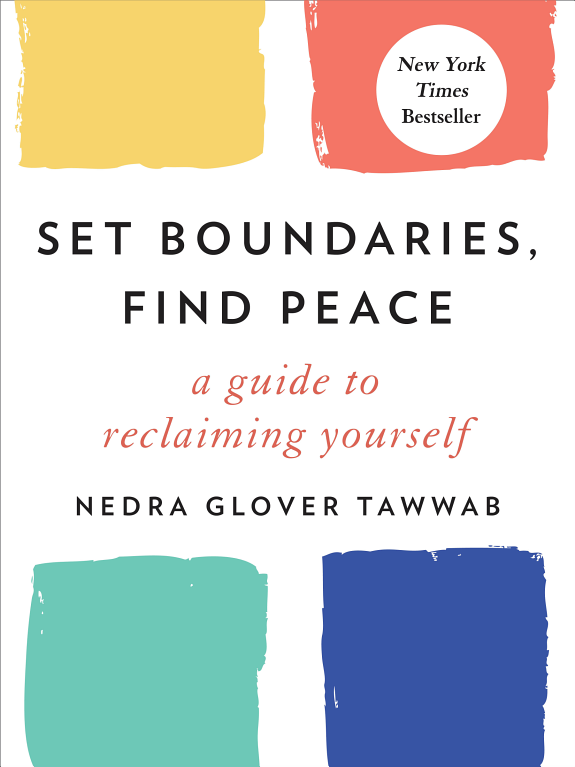
Set Boundaries, Find Peace: A Guide to Reclaiming Yourself
5. Set Boundaries, Find Peace: A Guide to Reclaiming Yourself by Nedra Glover Tawwab
Nedra Glover Tawwab is a therapist and one of the clearest writers working in the personal development space right now. This book is about boundaries, which is a word that gets thrown around so often it has almost lost its meaning. Tawwab does the work of restoring it. She defines boundaries with precision, explains why so many people struggle to set them, and walks through what it actually looks like to hold them in real relationships with real people who may not be pleased about it.
The book is organized around different areas of life, work, family, romantic relationships, friendships, and social media, which makes it easy to dip in and out of depending on where you are feeling the most stretched. Tawwab writes without judgment. She is not interested in making you feel guilty for not having figured this out sooner. She is interested in helping you understand the patterns that got you here and giving you tools to change them at whatever pace works for you.
What sets this book apart from similar titles is Tawwab’s attention to the emotional complexity of boundary-setting. She does not pretend it is easy or that the people in your life will simply applaud your newfound clarity. She addresses the guilt, the pushback, the relationships that may shift or end, with a directness that is both reassuring and realistic. If you have been living in survival mode partly because you cannot stop absorbing everyone else’s needs, this book is a practical place to start.
Tawwab makes the point that a lack of boundaries is not the same as being generous. It is often the result of anxiety, people-pleasing, or a fear of conflict that was learned long ago and never unlearned. That reframe alone can change how you approach a difficult conversation.
This is perfect for people who feel chronically overwhelmed by the demands of others, anyone who has trouble distinguishing between what they want and what they feel obligated to do, and readers who want actionable guidance rather than abstract theory. It is probably not the right starting point for someone whose survival mode stems primarily from trauma or grief rather than relational patterns.
None of these books will hand you a quick exit from survival mode. That is not how any of this works, and you probably already know that. What they can do is help you understand why you are where you are, give you language for experiences that may have felt shapeless, and point toward approaches that have actually helped real people. That is not nothing. That is, in fact, quite a lot.
Start with whichever one feels most relevant to where you are right now. You do not need to read all five in sequence or treat this like a curriculum. The goal is not to optimize your healing. It is to find a little more room to breathe, and then a little more after that. That is enough to be going on with.