8 Books Every Woman Needs During a Life Reset
There is a particular kind of restlessness that settles in when life stops fitting the way it used to. Maybe a relationship ended. Maybe a career you worked toward for years suddenly feels hollow. Maybe you just woke up one Tuesday and realized you have no idea who you actually are beneath all the roles you play. It happens to a lot of women, and it is more common than anyone talks about at dinner parties.
The good news is that books have been quietly holding space for exactly this kind of moment for a very long time. Not self-help books that hand you a five-step plan and send you on your way, but honest, messy, beautifully written books by women who went through the fire and came out the other side with something worth saying. The eight books below have each earned a place on this list because they deal with real reinvention, not the Instagram version of it.
A quick note before we dive in: not every book here will resonate with every reader, and that is fine. A life reset is a personal thing. What cracks one woman open might leave another completely cold. So read the descriptions carefully, trust your gut, and maybe start with the one that makes you slightly nervous.
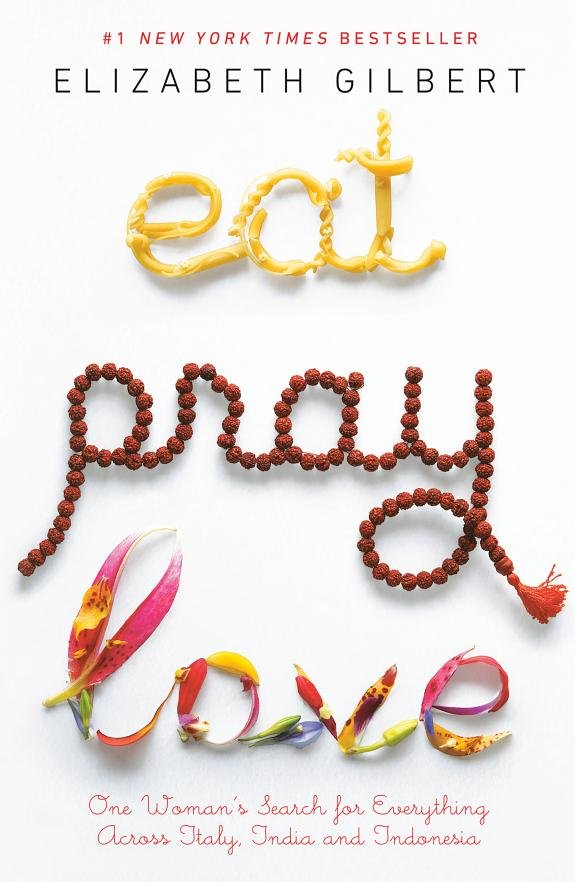
Eat, Pray, Love
1. Eat, Pray, Love by Elizabeth Gilbert
Few memoirs have caused as much conversation, devotion, and eye-rolling in equal measure as this one. Elizabeth Gilbert left a marriage that looked fine on paper, had a breakdown on her bathroom floor, and then did something most people only fantasize about: she spent a year traveling through Italy, India, and Indonesia in search of pleasure, devotion, and balance. The writing is warm, funny, and deeply self-aware, and Gilbert never pretends she is not an incredibly privileged person doing an incredibly privileged thing.
What makes this book work, even for readers who bristle at the premise, is Gilbert’s voice. She is genuinely witty and genuinely tortured, sometimes in the same sentence. The Italy section alone, which is essentially a love letter to eating pasta without guilt, has converted more than a few reluctant readers. The India section is slower and more interior, and the Bali section brings everything together with a tenderness that feels earned rather than manufactured.
The central idea is deceptively simple: you are allowed to want things for yourself. You are allowed to ask what you need, not just what everyone else needs from you. For women who have spent years being the caretaker, the responsible one, the person who holds everything together, that idea can feel genuinely radical. Gilbert does not dress it up in philosophy. She just lives it out loud and invites you to watch.
This is not the book for readers who want practical advice or a structured framework. If you need someone to tell you exactly what to do next, Gilbert will frustrate you. She is here to feel things, not to make a spreadsheet about them. But if you need permission to fall apart a little before you put yourself back together, she gives it generously.
“Eat, Pray, Love” is not really about travel. It is about the terrifying, necessary act of choosing yourself when you have spent years choosing everyone else.
This is perfect for women who are in the early, disorienting stages of a reset and need to feel less alone in the chaos before they can start making any real decisions.
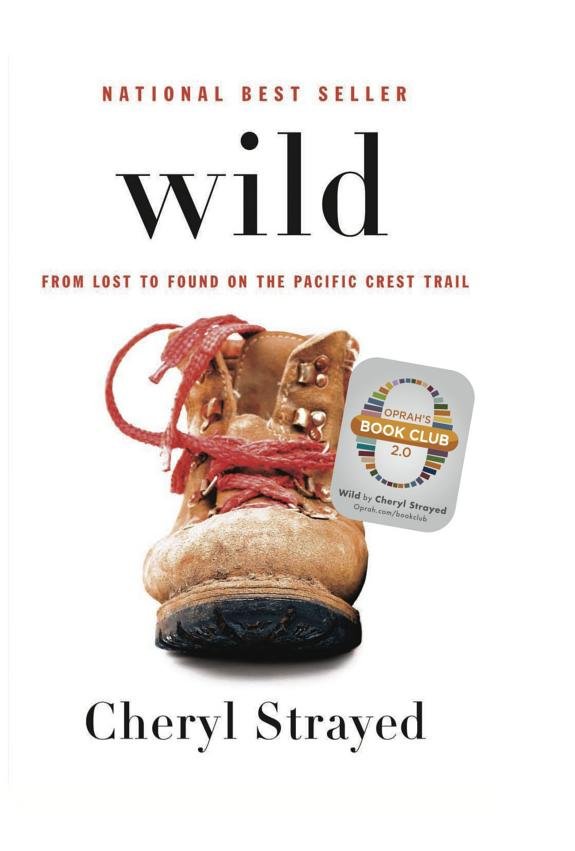
Wild
2. Wild by Cheryl Strayed
Cheryl Strayed hiked over a thousand miles of the Pacific Crest Trail alone, largely unprepared, grieving her mother, and running from a version of herself she was not proud of. She did not do it gracefully. Her boots were the wrong size. Her pack was so heavy she could barely lift it. She made mistakes, got scared, and kept going anyway. “Wild” is the book she wrote about all of it, and it is one of the most honest accounts of self-destruction and self-recovery that exists in memoir form.
Strayed’s writing has a rawness that is hard to fake. She does not soften the bad decisions she made in the years before the hike, the drug use, the infidelity, the grief she did not know how to carry. She lays it all out with a clarity that feels more like confession than performance, and that honesty is exactly what makes the book so compelling. You are not reading about a woman who had everything together and went on a hike. You are reading about a woman who was genuinely lost and used the trail as a way to find the edges of herself again.
The nature writing is gorgeous without being precious. Strayed is not trying to romanticize the wilderness so much as use it as a mirror. The physical difficulty of the hike becomes a way of measuring what she is capable of, and every small triumph on the trail carries emotional weight that sneaks up on you. By the end, you will have cried at least once, probably at something you did not expect.
This book is not for readers who want inspiration without discomfort. Strayed goes to some genuinely dark places, and if you are not in a headspace to sit with grief and regret for a while, this might not be the right moment for it. But if you are ready to look at the harder parts of a reset honestly, this is one of the best companions you will find.
“Wild” is proof that you do not have to have a plan to find your way. Sometimes you just have to keep moving until the person you want to be catches up with you.
This is perfect for women who are processing grief or regret alongside their reset and need a book that does not flinch from the difficult parts of starting over.
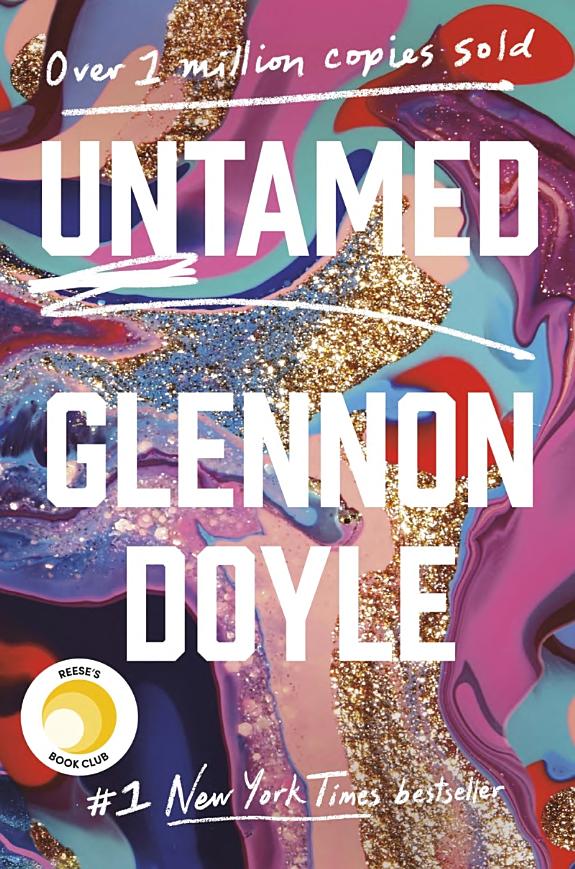
Untamed
3. Untamed by Glennon Doyle
Glennon Doyle had built what looked like a successful life: a popular blog, a nonprofit, a marriage, three kids, a book deal. Then she met soccer player Abby Wambach at a book event and realized, with startling clarity, that she had been living a life shaped almost entirely by what other people expected of her rather than what she actually wanted. “Untamed” is the story of what she did with that realization, and it is not a quiet book.
Doyle’s voice is bold, declarative, and occasionally exhausting in the best way. She writes in short, punchy sections that feel like dispatches from a woman who has just figured something out and cannot wait to tell you. Her central argument is that women are conditioned from childhood to be tame, to shrink, to perform goodness rather than live it, and that the work of a real life is to unlearn all of that. It is a big claim, and she makes it with a confidence that will either energize you or make you want to argue back. Both are valid responses.
The book is deeply personal and does not pretend to be a universal guide. Doyle’s specific experiences, her Christianity, her recovery from bulimia, her particular family dynamics, are woven through every chapter. Some readers will find that intimacy connecting. Others will feel like they are reading someone else’s therapy notes. It really depends on how much you see yourself in her story.
Where Doyle is genuinely at her best is in the sections about learning to trust your own inner voice over the noise of external expectations. That thread runs through the whole book and it is worth reading for that alone, even if some of the broader proclamations feel a little too certain for a topic as complicated as what it means to live freely.
“Untamed” asks a question that is harder than it sounds: what would you want if you stopped trying to want the right things?
This is perfect for women who suspect they have been living someone else’s version of their life and are ready to start asking uncomfortable questions about what they actually want.
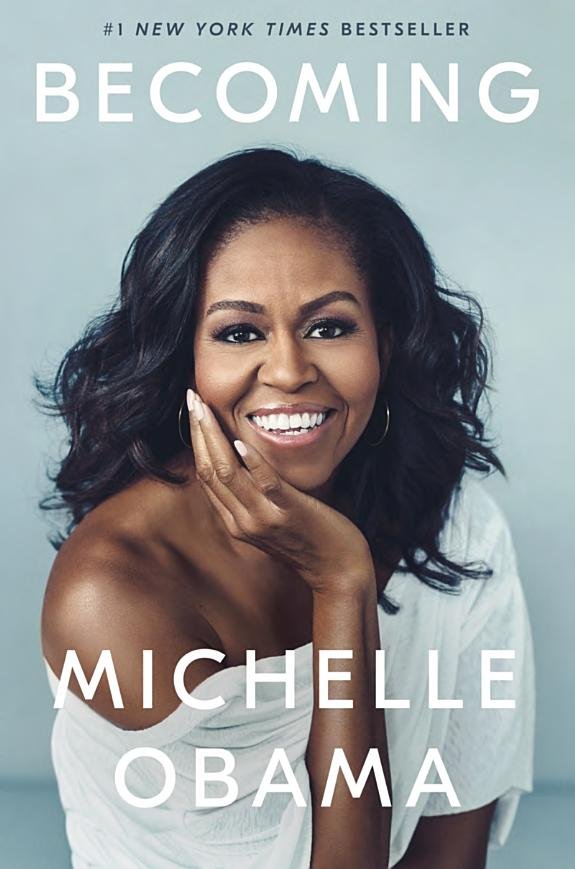
Becoming
4. Becoming by Michelle Obama
Michelle Obama’s memoir is not a book about crisis. It is something rarer: a book about the long, quiet work of figuring out who you are across decades, through institutions and expectations and a marriage to one of the most scrutinized men on earth. “Becoming” is warm and precise and written with a clarity that makes it feel like a very long, very honest conversation with someone you trust completely.
Obama writes about her childhood on the South Side of Chicago with a specificity that brings it to life without sentimentality. She writes about Princeton and Harvard Law, about the particular exhaustion of being one of very few Black women in rooms full of people who did not look like her. She writes about marriage with a candor that is rare for someone in her position, acknowledging the years when she and Barack were genuinely struggling to find each other amid the demands of his political career. None of it is melodramatic. All of it is real.
The section about her time as First Lady is fascinating for reasons that go beyond politics. Obama describes the experience of having her identity almost entirely subsumed by a role she did not choose for herself, and the work she did to carve out space for her own voice within it. For any woman who has ever felt defined by someone else’s title or someone else’s ambitions, that section will resonate in ways that have nothing to do with the White House.
This is not the book for readers looking for a dramatic turning point or a radical reinvention story. Obama’s journey is more gradual and more grounded than that. If you want someone to blow everything up and start fresh, look elsewhere on this list. But if you want a model for building a life with intention and integrity over time, this is one of the best examples available.
“Becoming” is a reminder that figuring yourself out is not a single moment. It is a practice you return to for your entire life.
This is perfect for women who want a grounded, thoughtful companion for their reset, one that values slow, deliberate growth over dramatic gestures.
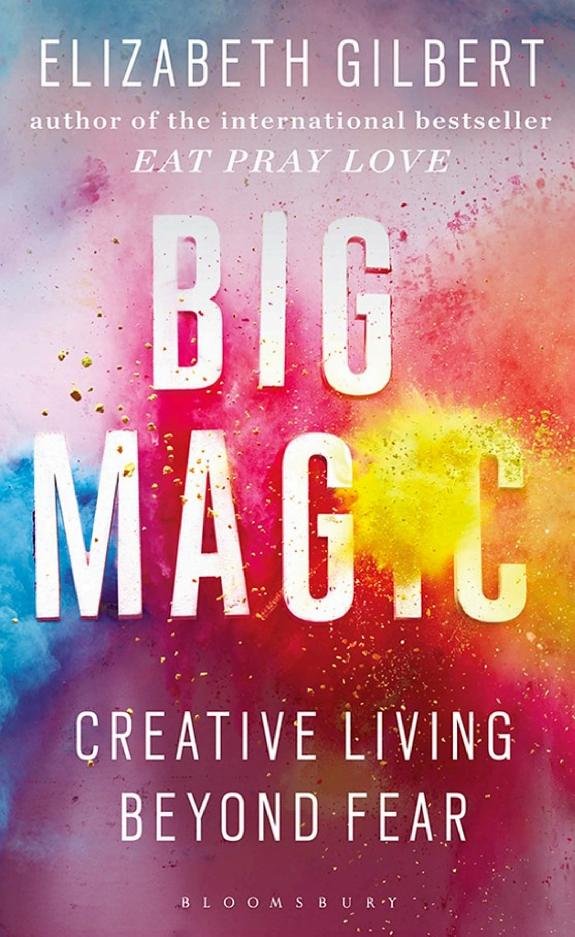
Big Magic
5. Big Magic by Elizabeth Gilbert
Elizabeth Gilbert shows up twice on this list, which is either a coincidence or a sign that she has genuinely useful things to say to women in the middle of reinventing themselves. “Big Magic” is her book about creativity, but not creativity in the narrow sense of being an artist. She is writing about the broader act of living curiously, of following ideas and interests without demanding that they justify themselves financially or practically first.
Gilbert’s argument is that creativity is not a gift reserved for special people. It is available to everyone, and the main thing standing between most people and a creative life is fear. Not a lack of talent, not a lack of time, not a lack of permission from some external authority. Just fear. She is not dismissive of that fear, but she is very clear that you do not have to eliminate it before you start. You just have to stop letting it drive.
The book is organized into sections covering inspiration, enchantment, permission, persistence, trust, and divinity, and it reads more like a collection of connected essays than a linear argument. Gilbert’s tone here is lighter and more playful than in “Eat, Pray, Love,” and she makes a deliberate case for approaching creative work with a sense of humor rather than treating it as a sacred burden. That perspective is genuinely refreshing in a genre that can get very earnest very quickly.
Where the book falls short is in its practicality. If you are looking for concrete advice about how to actually build a creative practice into a busy life, Gilbert is not your person. She deals in philosophy and encouragement, not logistics. But for the specific moment in a reset when you are trying to remember what you care about and what you used to love before life got very loud and very responsible, this book is quietly excellent.
“Big Magic” makes the case that you do not need a reason to pursue the things that interest you. Curiosity is enough. It has always been enough.
This is perfect for women who have lost touch with what they enjoy and need gentle encouragement to start exploring again without the pressure of turning it into anything productive.
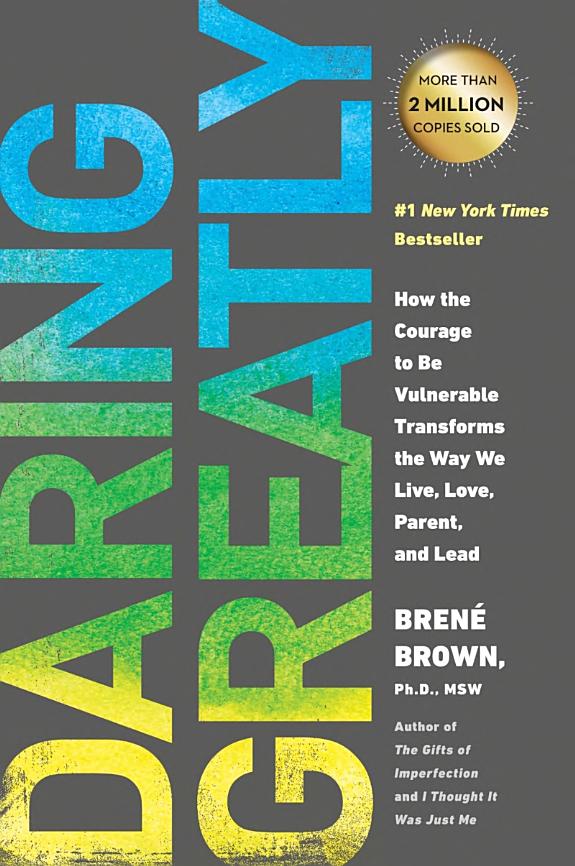
Daring Greatly
6. Daring Greatly by Brené Brown
Brené Brown is a researcher who studies shame and vulnerability, and “Daring Greatly” is her attempt to translate years of qualitative research into something readable and useful for regular people. The title comes from a Theodore Roosevelt quote about showing up in the arena, and the book’s core argument is that vulnerability, the willingness to be seen without guarantees, is not weakness. It is the foundation of every meaningful thing: connection, creativity, courage, and belonging.
Brown’s writing is accessible without being dumbed down. She moves easily between research findings and personal stories, and her own willingness to be vulnerable on the page lends the book a credibility that purely academic work would lack. She writes about the ways shame operates differently for men and women, and the sections about how women are particularly susceptible to shame around being too much or not enough are worth reading slowly and sitting with for a while.
The practical framework Brown offers around vulnerability and shame is genuinely useful during a life reset, because a reset almost always involves a period of not knowing, of being between identities, of feeling exposed before you have figured out who you are becoming. Understanding why that feels so uncomfortable, and why the instinct to armor up is so strong, can make the process a little less disorienting.
This is not a beach read. Brown is making an argument, and she builds it carefully across several chapters before the pieces really click into place. Readers who want something lighter or more narrative will find it a bit slow. But for women who like to understand the mechanics of what they are going through, this book offers some of the most useful language available for talking about the emotional terrain of reinvention.
“Daring Greatly” gives you a vocabulary for the discomfort of being in transition, and sometimes just being able to name what you are feeling is enough to make it less terrifying.
This is perfect for women who process change intellectually and want a research-backed framework for understanding why vulnerability feels so hard and why it matters so much.
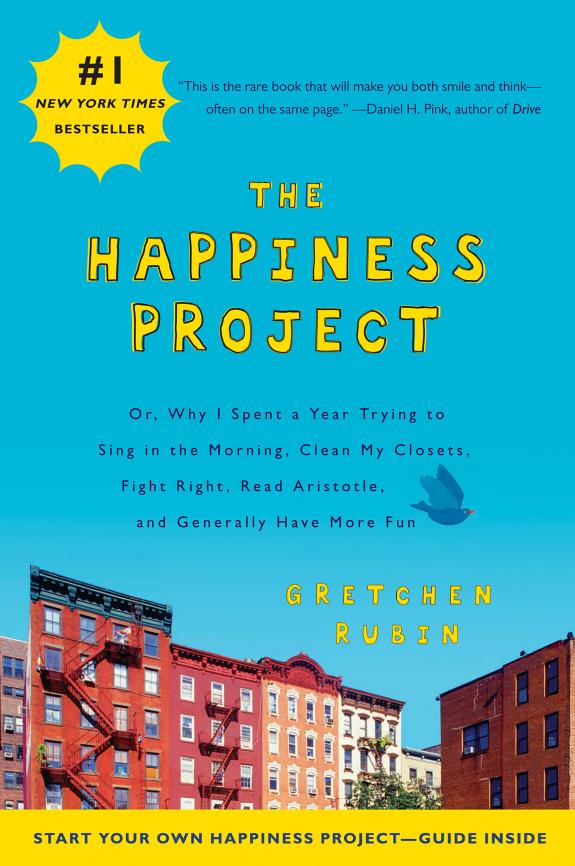
The Happiness Project
7. The Happiness Project by Gretchen Rubin
Gretchen Rubin did not have a breakdown. She did not leave a marriage or hike a thousand miles or move to Bali. She was standing on a city bus one afternoon, perfectly fine by most external measures, and realized she was not as happy as she could be and that she was not doing much about it. So she spent a year systematically testing strategies for increasing her own happiness, month by month, and wrote a book about what she found. It is, honestly, a refreshing change of pace from the more dramatic reinvention narratives.
Rubin is a researcher and writer by nature, and her approach is methodical and self-aware. She is very clear that her happiness project is specific to her life, her temperament, and her circumstances. She is not prescribing a universal program. She is sharing her own experiment and inviting readers to think about what their version might look like. That intellectual honesty keeps the book from feeling preachy, which is a real risk in this genre.
The monthly structure works well. Each chapter focuses on a different area of life, including energy, marriage, work, play, and friendship, and Rubin brings both rigor and humor to her observations. She is funny about her own contradictions and failures, which makes the book much more readable than a straightforward self-improvement manual. She also does something rare: she admits when a strategy did not work and tries to figure out why.
The book will not resonate with readers who are in acute crisis. If your life is genuinely falling apart, Rubin’s careful optimization of an already functional existence might feel tone-deaf. But for women who are in the quieter phase of a reset, the phase where the big decisions have been made and you are trying to build something better day by day, this book is a thoughtful and practical companion.
“The Happiness Project” is a reminder that you do not have to blow up your life to make it better. Sometimes small, deliberate changes compound into something that actually shifts.
This is perfect for women who are past the crisis point of their reset and are ready to start building new habits and routines with intention and a little humor.
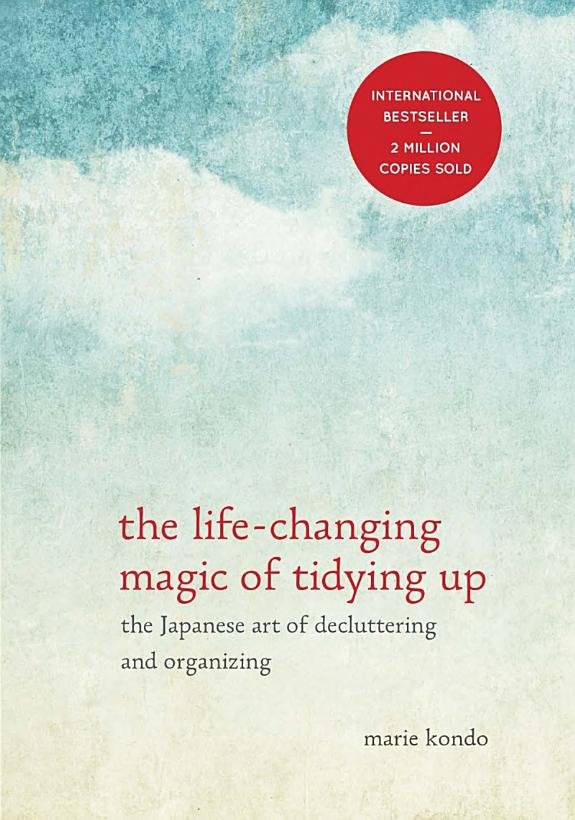
The Life-Changing Magic of Tidying Up
8. The Magic of Tidying Up by Marie Kondo
Yes, this is the book about folding your clothes. No, it is not only about folding your clothes. Marie Kondo’s slim, quietly strange guide to decluttering has sold millions of copies for a reason that goes beyond the practical advice about organizing your sock drawer. At its core, the KonMari method is a framework for asking a very simple question about everything in your life: does this bring me joy? And during a reset, that question turns out to be surprisingly useful well beyond the physical stuff.
Kondo’s voice is earnest to the point of being slightly otherworldly. She talks to her clients’ houses. She thanks objects before discarding them. She has strong opinions about the spiritual weight of clutter that some readers will find charming and others will find completely baffling. If you are a deeply pragmatic person, her animistic approach to inanimate objects might be a stumbling block. Fair enough. The method still works even if you skip the part about thanking your old sweaters.
The reason this book belongs on a list for women in the middle of a life reset is that the physical act of sorting through your belongings and deciding what stays and what goes can be a surprisingly clarifying process. When you are rebuilding your life, having a tangible, manageable task that also forces you to articulate what you value is genuinely useful. You are not just cleaning your apartment. You are practicing the skill of deciding what belongs in your life and what does not.
This is not for readers who are looking for emotional depth or narrative arc. It is a practical guide with a philosophical underpinning, and it works best if you actually do the exercises rather than just reading about them. Think of it as the most productive procrastination available during a period when bigger decisions feel too overwhelming to tackle directly.
“The Magic of Tidying Up” teaches you to make decisions about what you want to keep. That skill, it turns out, is useful for a lot more than closets.
This is perfect for women who need a concrete, physical starting point for their reset and find that clearing their external environment helps them think more clearly about everything else.
A life reset is rarely a clean, linear process. It is messy and slow and often happens in layers, with moments of clarity followed by long stretches of confusion. The books on this list will not rush you through it or promise you a tidy outcome. What they will do is keep you company, offer you language for what you are experiencing, and remind you that other women have been exactly where you are and found their way through.
You do not need to read all eight. Start with the one that feels most relevant to where you are right now, not where you want to be. The right book at the right moment can do a lot. And if one of them does not connect with you, that is fine too. Part of knowing yourself better is knowing what you need and what you do not, and that discernment is its own kind of progress.
Take your time. You are not behind.