
7 Books to Help You Handle Change Without Fear
Change has a way of showing up uninvited. A job ends, a relationship shifts, a move happens, or sometimes nothing dramatic occurs at all and you simply wake up one morning feeling like the life you built no longer fits quite right. Whatever the cause, the discomfort is real and the instinct to freeze or resist is very human.
The books on this list do not promise to make change painless. What they do offer is something more honest: different frameworks, different voices, and different ways of thinking about the uncertainty that tends to accompany any significant shift. Some are philosophical, some are practical, and at least one is a parable involving mice that has somehow sold millions of copies worldwide. There is something here for most readers, though not every book will suit every person, and we will be upfront about that as we go.
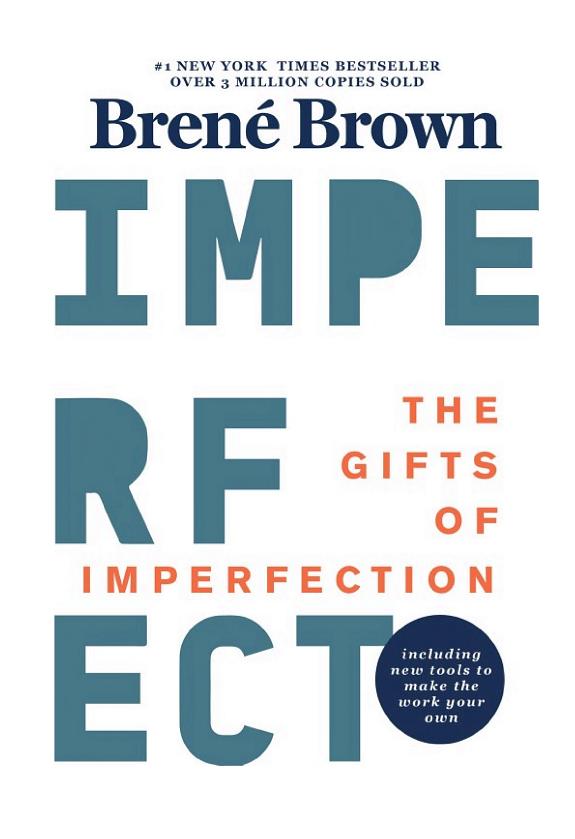
The Gifts of Imperfection
1. The Gifts of Imperfection by Brené Brown
Brené Brown is a researcher who writes like someone you would actually want to have coffee with. Her background is in social work and qualitative research, and her voice carries that combination of academic rigor and genuine warmth throughout this book. She is not here to lecture. She is here to share what she found when she started asking people about shame, worthiness, and what it means to live a wholehearted life.
The central idea is that we tend to handle change poorly when we are operating from a place of shame or scarcity, constantly measuring ourselves against some standard we never quite meet. Brown argues that letting go of perfectionism is not a defeat but a kind of freedom, and that cultivating courage, compassion, and connection allows us to move through uncertain periods with more resilience. The book is organized around ten guideposts, each addressing a specific habit or belief that holds people back.
Where this book shines is in its honesty. Brown does not pretend she has figured everything out, and her personal stories ground the research in something recognizable. That said, if you are looking for a step-by-step action plan or practical strategies for navigating a specific career transition, this book will feel a bit too inward-focused. It is more about the interior work that makes external change bearable than about the external change itself.
“Worthiness doesn’t have prerequisites” is the kind of sentence that sounds simple until you realize how many of your daily decisions are quietly built on the assumption that it does.
This is perfect for readers who suspect their fear of change is tangled up with perfectionism or self-worth, and who are open to doing some honest reflection alongside a writer who has clearly done the same.
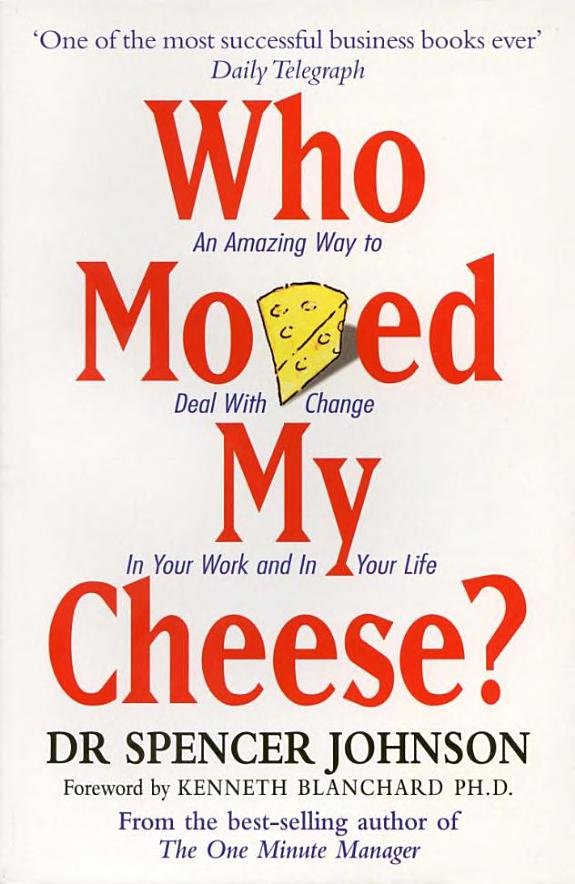
Who Moved My Cheese?
2. Who Moved My Cheese? by Spencer Johnson
Yes, it is a parable about mice and little people in a maze looking for cheese. Yes, it is very short. And yes, it has sold somewhere in the neighborhood of 30 million copies, which means Spencer Johnson was clearly doing something right. The premise is simple almost to the point of absurdity, but the message it carries has a way of sticking around longer than you might expect.
The story follows four characters, two mice named Sniff and Scurry and two small humans named Hem and Haw, as they navigate a maze and respond very differently when the cheese they have come to rely on disappears. It is an extended metaphor for how people react to change at work, in relationships, or in life generally. Some adapt quickly. Some rage against the loss. Some eventually come around. The book does not judge any of these responses harshly, but it is pretty clear about which ones lead somewhere useful.
The criticism most often leveled at this book is fair: it is simplistic, and it can feel like it is asking people to just accept difficult circumstances without questioning whether those circumstances are worth accepting. If your workplace is genuinely toxic, being told to “move with the cheese” is not particularly helpful advice. It also will not satisfy readers who want depth, nuance, or anything resembling literary ambition. But as a quick reset for someone who is stuck in resistance mode, it does the job efficiently.
The book’s real value is not in its sophistication but in its ability to make you laugh a little at your own Hem-like stubbornness, which is sometimes exactly what you need.
This is perfect for someone who needs a fast, low-stakes read to shake them out of a stuck mindset, or for a manager looking for a conversation starter with a team going through organizational change.
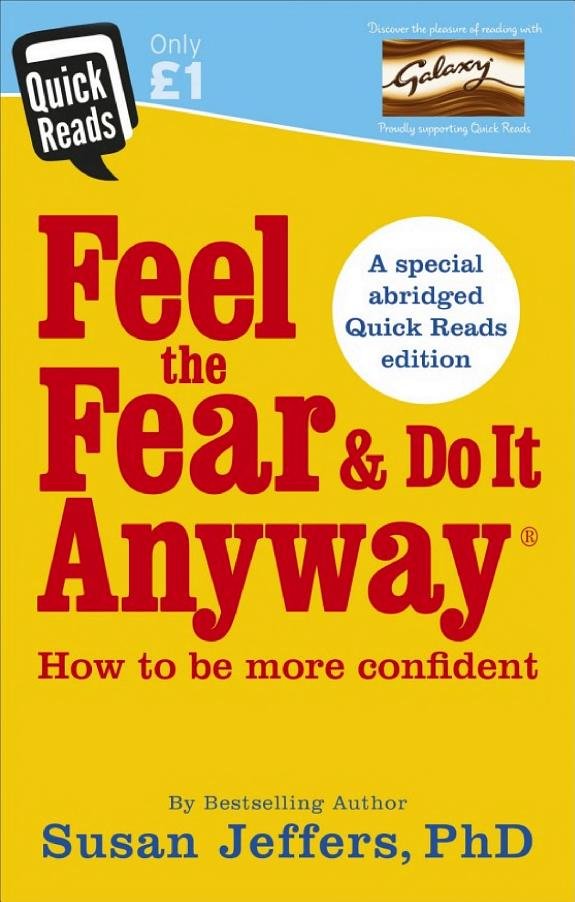
Feel the Fear and Do It Anyway
3. Feel the Fear and Do It Anyway by Susan Jeffers
Susan Jeffers was a psychologist and educator who wrote this book after working through her own significant life upheavals, including divorce and career reinvention. The title is probably the most quoted self-help phrase of the last four decades, and it captures the book’s core argument neatly: fear does not go away when you become more capable or more prepared. It simply becomes something you learn to act alongside rather than wait for permission from.
Jeffers builds her argument around the idea that fear is not a signal to stop but a signal that you are at the edge of something unfamiliar, which is exactly where growth tends to happen. She introduces a five-level model of fear that helps readers identify what is actually driving their hesitation, and she offers tools for shifting from a victim mindset to what she calls a “no-lose” perspective, where even difficult outcomes become sources of information rather than proof of failure.
The writing style is warm and encouraging, sometimes to a fault. Readers who are skeptical of affirmations or who find relentlessly positive framing grating may want to skim certain sections. The book also reflects its original 1987 publication date in places, and some of the cultural references and examples feel dated. But the central framework holds up well, and Jeffers has a genuine talent for making the reader feel accompanied rather than lectured.
The insight that fear is not the opposite of readiness but simply a companion on the way to it reframes the whole question of when you are “ready” for change.
This is perfect for someone who has been waiting to feel confident before making a change and needs a clear, compassionate argument for why that wait may never end on its own.
The Obstacle Is the Way
4. The Obstacle Is the Way by Ryan Holiday
Ryan Holiday writes about Stoic philosophy for a modern audience, and he does it without making you feel like you need a classics degree to follow along. This book draws heavily on Marcus Aurelius, Epictetus, and Seneca, but it anchors those ideas in stories from history, sports, business, and war. The result is something that reads more like a collection of case studies than a philosophy lecture, which suits the material well.
The core argument is that the thing blocking your path is not separate from your progress but is actually the path itself. Obstacles, setbacks, and unwanted changes are the material from which a good response is built. Holiday walks through three disciplines: perception, action, and will. How you see a problem shapes how you respond to it, and how you respond to it shapes who you become. It is a genuinely useful framework, and Holiday applies it with enough variety that it does not feel repetitive.
Where some readers push back is on the book’s tone, which can veer toward the relentlessly stoic in a way that underplays the emotional difficulty of real hardship. Not every obstacle is an opportunity waiting to be reframed, and the book occasionally glosses over the legitimate grief or anger that accompanies significant loss. If you are in the middle of something genuinely painful, the brisk pace and historical examples may feel a bit removed from your actual experience. That said, for readers who respond well to discipline and historical perspective, this book is a strong companion.
Holiday’s best contribution is reminding readers that the Stoics were not cold or detached people. They were people who had faced enormous difficulty and chosen to respond with deliberate intention rather than reactive panic.
This is perfect for readers who are drawn to historical examples and philosophical frameworks, and who want a book that treats them as capable of handling hard truths without much hand-holding.
The First 90 Days
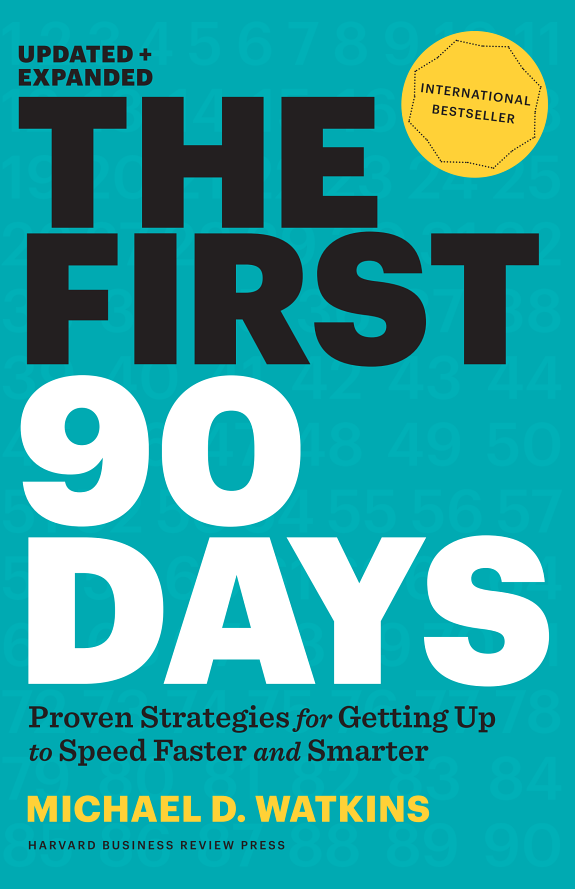
5. The First 90 Days by Michael D. Watkins
Michael Watkins is a leadership advisor and Harvard Business School professor, and this book is the most practically focused entry on this list by a significant margin. Where the other books tend to address change in broad, personal terms, Watkins zeroes in on a specific and very common form of change: starting a new role. Whether you are stepping into a new job, a promotion, or a leadership position in a different organization, the first ninety days tend to set the tone for everything that follows.
The book is structured around a series of strategies for accelerating your transition into a new environment. Watkins covers how to diagnose the situation you are entering, how to build relationships with the right people early, how to identify quick wins without overreaching, and how to manage your own expectations during a period when you are genuinely not yet effective. The writing is clear and direct, and the frameworks are specific enough to be actionable without being so rigid that they fail to apply across different industries or contexts.
This is not a book about the emotional experience of change, and it does not pretend to be. If you are looking for help processing the anxiety or grief that can accompany a major life transition, this book will feel too transactional. It is also primarily aimed at people in organizational settings, so readers navigating personal transitions, caregiving changes, or creative reinventions may find it less relevant. But for anyone stepping into a new professional role and wanting to hit the ground with some strategic clarity, it is genuinely useful.
The premise that your success in a new role is largely determined before you even arrive, by how well you prepare and how quickly you learn, is a quietly sobering idea that most people underestimate.
This is perfect for professionals taking on a new job, a promotion, or a leadership role who want a structured, practical guide to making the transition as effectively as possible.
Mindset: The New Psychology of Success
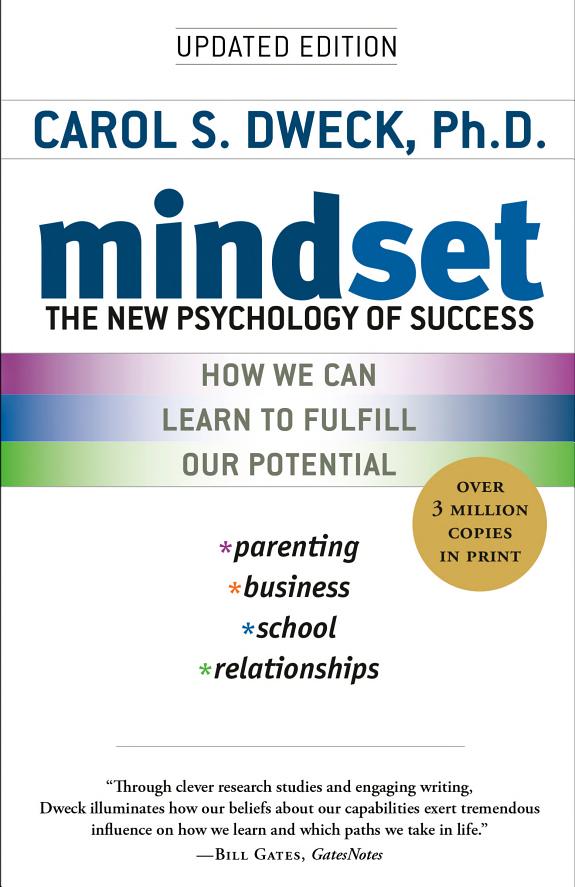
6. Mindset: The New Psychology of Success by Carol S. Dweck
Carol Dweck is a Stanford psychologist whose research on motivation and achievement has influenced education, sports coaching, and organizational development in ways that are hard to overstate. The central concept, the distinction between a fixed mindset and a growth mindset, has become so widely referenced that it is easy to forget how carefully Dweck built the research behind it. The book is worth reading in full rather than just absorbing the summary, because the nuance matters.
A fixed mindset is the belief that your abilities, intelligence, and character are essentially set. A growth mindset is the belief that they can be developed through effort, strategy, and input from others. Dweck shows, through decades of research and dozens of examples, how these two orientations shape responses to challenge, failure, criticism, and change. People with a fixed mindset tend to avoid challenges that might reveal their limitations. People with a growth mindset tend to see those same challenges as useful information. The implications for how we handle change are significant and direct.
The book does occasionally feel repetitive, particularly in the middle sections where Dweck applies the framework to sports, business, and relationships in succession. Some readers also note that the concept has been oversimplified in popular culture to the point where it becomes a kind of toxic positivity, as if simply believing you can grow is enough to make it happen. Dweck addresses this in later editions, but it is worth keeping in mind as you read. The research is solid. The application requires more care than the summary version suggests.
Dweck’s most useful observation may be that mindset is not a fixed trait either. The growth mindset can itself be cultivated, which is a pleasingly recursive idea.
This is perfect for readers who notice they tend to avoid challenges or take feedback personally, and who want to understand the psychology behind that pattern well enough to actually change it.
Transitions: Making Sense of Life’s Changes
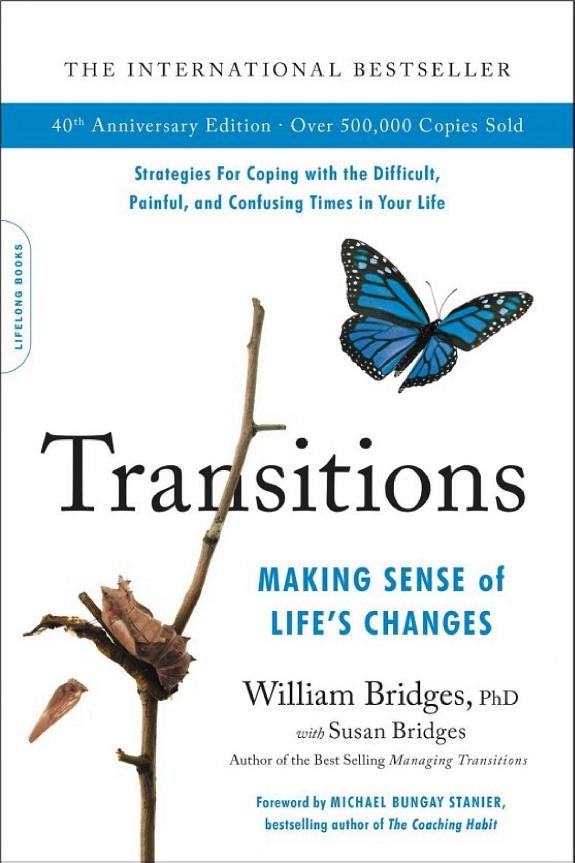
7. Transitions: Making Sense of Life’s Changes by William Bridges
William Bridges was an organizational consultant and author who spent much of his career helping individuals and companies understand why change is so difficult even when it is wanted. This book, first published in 1980 and updated several times since, makes a distinction that sounds simple but reorients the whole conversation: change is situational and external, while transition is the internal psychological process of adapting to that change. Most of us focus entirely on the external event and wonder why we still feel disoriented long after the situation has technically resolved.
Bridges describes transition as a three-phase process. It begins not with a new beginning but with an ending, the letting go of whatever the old situation provided in terms of identity, routine, or security. It then moves through what he calls the neutral zone, a liminal period of confusion and uncertainty that most people try to rush through or escape. Only after that comes the new beginning, which arrives on its own schedule rather than the one you would prefer. This framework is deceptively useful. It explains why people who have made objectively good changes, a better job, a healthier relationship, a long-wanted move, can still feel lost for months afterward.
The writing is thoughtful and measured, drawing on mythology, psychology, and personal narrative in a way that feels genuinely integrated rather than assembled. The book is not a quick read, and it does not offer a checklist or a productivity system. Readers who want concrete action steps will find it frustrating. But for someone who is in the middle of a transition and cannot quite name what they are feeling or why it is taking so long, this book has the rare quality of making you feel understood by a writer who has clearly thought about this more carefully than most.
The idea that every transition begins with an ending reframes the neutral zone from a problem to be solved into a necessary passage, which is not always comforting but is almost always accurate.
This is perfect for anyone in the middle of a major life change who feels more disoriented than the circumstances seem to warrant, and who wants a thoughtful framework for understanding why the internal process of change takes so much longer than the external one.
None of these books will make change feel easy, and any book that claims otherwise is probably not being straight with you. What they can do is shift the way you relate to uncertainty, give you language for what you are experiencing, and remind you that the disorientation of transition is not a sign that something has gone wrong. It is often a sign that something real is happening.
Different books on this list will suit different people and different moments. The Bridges book might be exactly right for someone in the middle of a long, murky transition. The Watkins book might be what someone needs on their first week in a new role. Dweck might click for a reader who has been quietly avoiding challenges for years without quite understanding why. The best approach is to pick the one that feels most relevant to where you actually are right now, rather than collecting all seven and hoping the stack does the work for you. One good book, read at the right moment, tends to be worth more than seven books left on a shelf.