

6 Books to Help You Handle Criticism Gracefully
Nobody likes being criticized. Even people who say they welcome feedback tend to go home and replay the conversation seventeen times while staring at the ceiling. That is just being human. The sting of someone pointing out your flaws, your blind spots, or your mistakes does not go away simply because you know intellectually that feedback is useful.
But here is the thing: how you receive criticism shapes almost everything, from your relationships to your career to the quiet story you tell yourself about who you are. The good news is that this is a skill, not a personality trait you are either born with or without. The books below approach that skill from different angles, some practical and workplace-focused, others philosophical and inward-looking. Together they form a pretty solid toolkit for anyone who wants to stop falling apart every time someone says “I have some notes.”
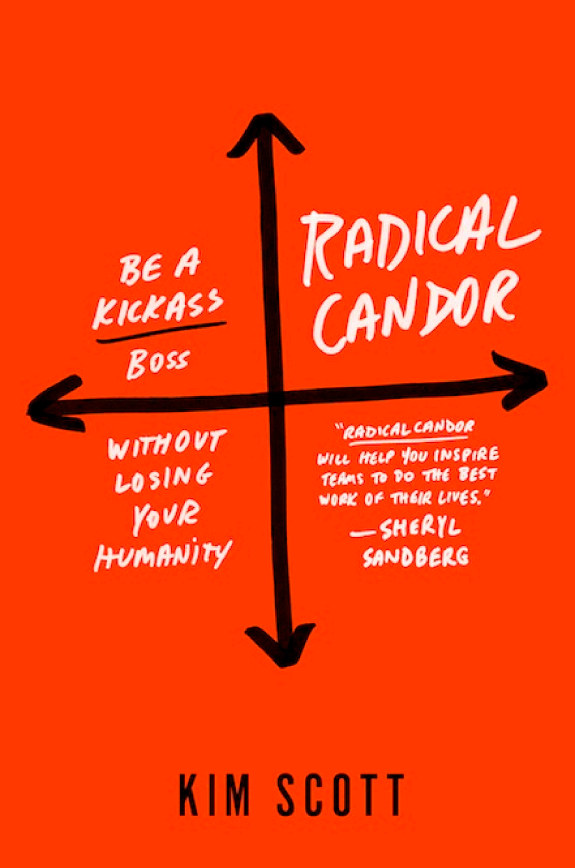
Radical Candor
1. Radical Candor by Kim Scott
Kim Scott spent years managing teams at Google and Apple, and what she noticed was a consistent failure on both sides of the feedback equation. Managers either sugarcoated everything into meaninglessness or delivered criticism so bluntly it felt like an attack. Her response to this was a framework she calls Radical Candor, which asks you to care personally about someone while also challenging them directly. It sounds simple. It is surprisingly hard to practice.
What makes this book worth reading is that Scott does not just tell you how to give feedback, she also reframes what it means to receive it. When you understand the mechanics of why people soften criticism or avoid it altogether, you start to hear what people are actually trying to say beneath the polite hedging. That shift in perspective alone is worth the read. Scott writes with warmth and a dry sense of humor, and she is honest about the times she got it wrong herself.
The book is rooted in professional settings, so if you are looking for help with personal relationships or a purely internal emotional reckoning, this one will feel a little narrow. It is best suited for people who work in teams, manage others, or are navigating feedback cultures at work. The frameworks are concrete and immediately applicable, which is either a selling point or a limitation depending on what you are after.
“Failing to give honest feedback is not kindness. It is a quiet form of neglect dressed up as politeness.”
This is perfect for managers, team leads, and professionals who want to build a healthier relationship with workplace feedback, both giving it and receiving it without taking it personally.
Thanks for the Feedback
2. Thanks for the Feedback by Douglas Stone and Sheila Heen
If there is one book on this list that treats the receiver of feedback as the main character, it is this one. Stone and Heen, who also co-wrote Difficult Conversations, argue that most of the writing about feedback focuses on how to deliver it better, and that this misses half the picture entirely. Their focus here is on you, the person sitting across from someone who is telling you something you may not want to hear.
The central insight is that feedback triggers three distinct types of reactions: truth triggers, relationship triggers, and identity triggers. A truth trigger fires when the feedback feels factually wrong. A relationship trigger fires when you care more about who is saying it than what they are saying. An identity trigger fires when the feedback threatens your sense of who you are. Naming these categories does not make them disappear, but it gives you a moment of pause between the comment and your reaction, and that pause is where growth actually happens.
The writing is clear and grounded in research without being academic. Stone and Heen use real-world examples that feel recognizable rather than constructed. The book is thorough, occasionally to a fault, and some readers may find the middle sections a little repetitive. But if you are someone who tends to either dismiss feedback defensively or absorb it so completely it ruins your week, this book has something specific to offer you.
“The problem with feedback is rarely the feedback itself. It is the tangle of emotions, history, and identity wrapped around it.”
This is perfect for anyone who finds themselves either brushing off criticism too quickly or lying awake replaying it, and who wants a structured way to actually process what they are hearing.
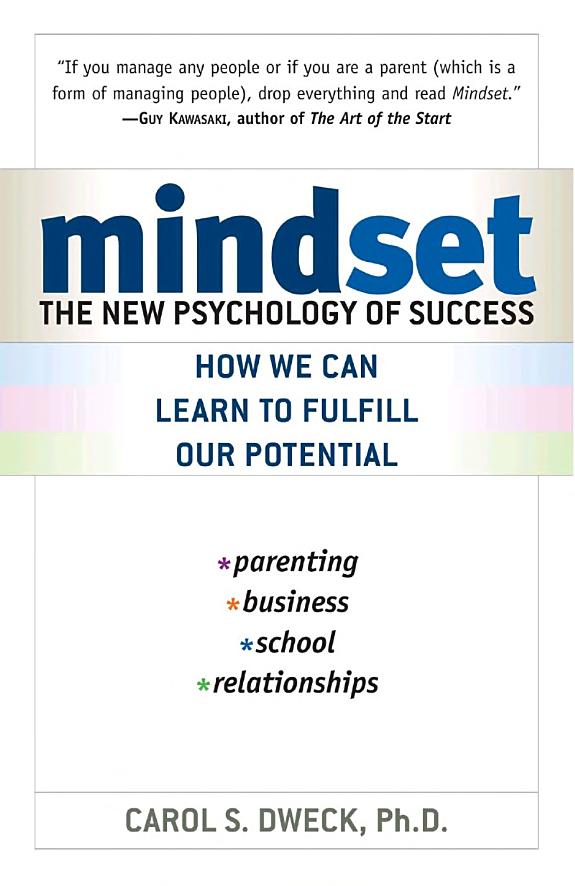
Mindset
3. Mindset by Carol S. Dweck
Carol Dweck is a Stanford psychologist who spent decades studying why some people crumble under failure and criticism while others seem to use it as fuel. Her answer, developed through rigorous research, is the concept of fixed versus growth mindsets. People with a fixed mindset believe their abilities are essentially set in stone, so criticism feels like a verdict. People with a growth mindset believe abilities can be developed, so criticism becomes information.
What is useful here is not just the framework itself but the way Dweck traces how these mindsets show up across every area of life, in schools, relationships, sports, and workplaces. The book is full of examples, some from research, some from well-known figures, and they help make an abstract psychological concept feel very concrete and recognizable. You will almost certainly see yourself in the fixed mindset examples more often than you expect, which is both uncomfortable and clarifying.
The book does lean heavily on the same core idea across many chapters, and readers who grasp the concept early may feel the later sections are covering familiar ground. It is also worth noting that subsequent research has complicated some of Dweck’s original claims about how easily mindsets can be shifted. That does not invalidate the central insight, but it is worth approaching the book as a lens rather than a prescription. If you are not interested in psychology or research-based frameworks, this one might feel slow.
“Criticism lands differently when you believe it is telling you something about your potential rather than your fixed worth.”
This is perfect for people who notice they shut down or feel personally attacked when receiving feedback, and who want to understand the deeper belief system driving that reaction.
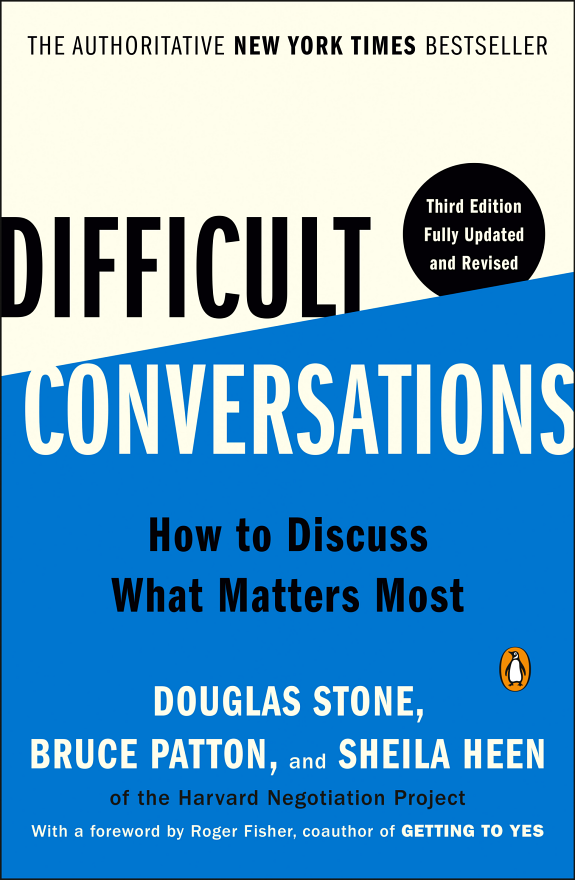
Difficult Conversations
4. Difficult Conversations by Douglas Stone, Bruce Patton, and Sheila Heen
Before Stone and Heen wrote Thanks for the Feedback, they were part of the team that produced this book, which came out of the Harvard Negotiation Project and has been quietly essential for decades. Difficult Conversations examines what actually happens when people try to talk about things that matter, and why those conversations so often go sideways. Criticism, it turns out, is almost always a difficult conversation in disguise.
The book breaks every hard conversation into three simultaneous conversations happening at once: the “what happened” conversation, the feelings conversation, and the identity conversation. Most people focus entirely on the facts and ignore the other two, which is why they keep talking past each other. Once you see this structure, you cannot unsee it, and it changes both how you deliver hard truths and how you receive them. There is something almost relieving about understanding that the reason a conversation felt impossible was not because you are bad at communication, but because you were only engaging with one third of it.
The prose is clear and the examples are detailed without being dry. Some sections feel a little clinical, and readers looking for emotional warmth or personal narrative may find the tone a bit distant. It is also more focused on navigating conversations than on the internal work of processing criticism after the fact. But as a companion to the other books on this list, it fills a gap that none of the others quite cover.
“Every difficult conversation carries a hidden conversation about identity, and that is usually the one doing the most damage.”
This is perfect for people who dread confrontation, tend to avoid hard conversations entirely, or find themselves stuck in circular arguments where nobody feels heard.
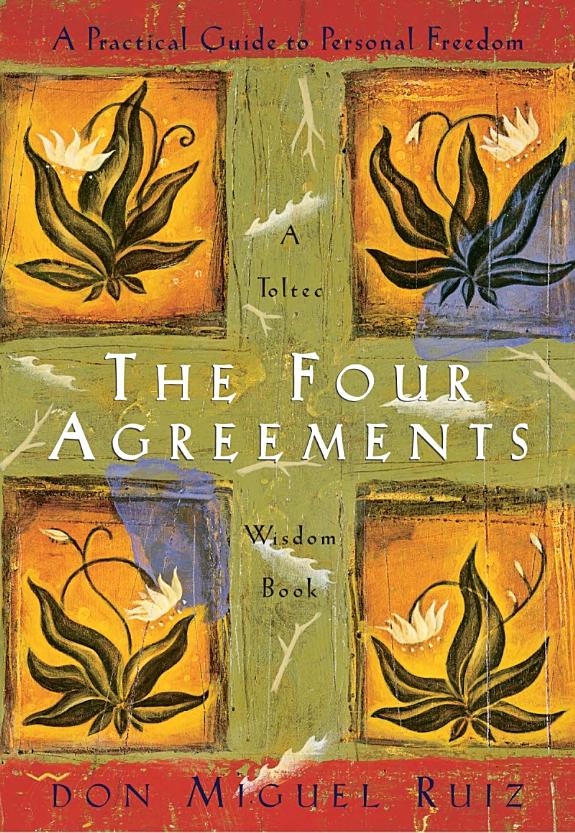
The Four Agreements
5. The Four Agreements by Don Miguel Ruiz
This one is a little different from the others on the list. Don Miguel Ruiz draws on Toltec wisdom to offer four principles for living, and one of them, “don’t take anything personally,” speaks directly to the experience of receiving criticism. The idea is that what other people say and do is a projection of their own reality, their own fears, their own story. When someone criticizes you, they are revealing something about themselves as much as they are saying anything about you.
That concept sounds deceptively simple, but Ruiz unpacks it in a way that genuinely shifts something. He is not telling you to become indifferent or to stop caring about feedback entirely. He is pointing at the way we absorb other people’s opinions as if they are objective truths about our worth, when in fact they are filtered through that person’s entire history, mood, and worldview. Holding that awareness while someone is critiquing your work is genuinely useful, and it is the kind of thing that takes practice rather than a single reading.
The book is short and written in a warm, almost parable-like style, which some readers find accessible and others find a little thin. It is not a research-backed framework, and readers who need evidence-based approaches may find it too vague. It also covers three other agreements beyond the one most relevant here, and the book as a whole is more of a philosophy for living than a targeted guide to handling criticism. Think of it as a different kind of tool, not a hammer but a compass.
“Taking things personally is the maximum expression of selfishness, because we assume everything is about us.”
This is perfect for readers who are drawn to philosophical or spiritual frameworks, and who want a short, reflective read that reframes criticism as something that says less about you than you think.
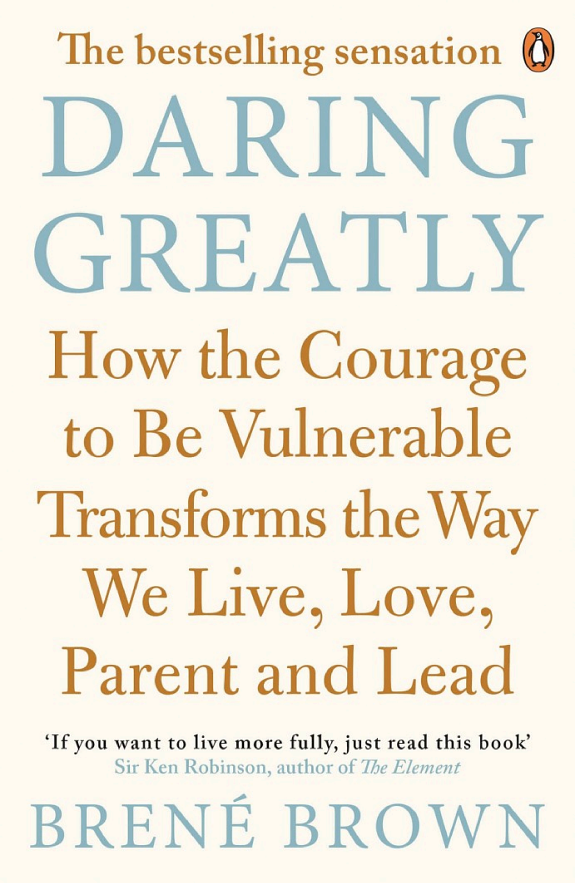
Daring Greatly
6. Daring Greatly by Brené Brown
Brené Brown has built a career studying vulnerability and shame, and Daring Greatly is where she makes her most complete case for why being open to criticism, truly open, requires a kind of courage most of us have been trained to avoid. The title comes from a Theodore Roosevelt quote about the person in the arena, and that image runs through the whole book: the idea that anyone who puts their work or themselves out into the world is going to get criticized, and that the only way to avoid it is to never show up at all.
What Brown does well is connect the experience of receiving criticism to deeper questions about shame and worthiness. When criticism lands like a catastrophe, it is often because somewhere underneath, you are afraid it confirms something you already secretly believe about yourself. Brown’s research, drawn from thousands of interviews, gives weight to what might otherwise feel like self-help generalities. She is a good writer, funny in a low-key way, and honest about her own struggles with the ideas she is presenting.
The book is broader than just handling criticism, and some chapters venture into parenting, leadership, and culture in ways that may feel tangential depending on what you came for. Readers who are skeptical of vulnerability as a concept, or who find emotional frameworks less useful than practical ones, may find the tone a bit much. But for anyone who has ever held back from sharing their work, their ideas, or themselves because they were afraid of what people might say, this book meets you exactly where you are.
“If you are not in the arena also getting your ass kicked, I am not interested in your feedback.”
This is perfect for creative people, leaders, and anyone who struggles with the fear of judgment, especially those who want to understand the emotional roots of why criticism feels so threatening in the first place.
None of these books will make criticism stop hurting. That is not really the goal. The goal is to shrink the gap between hearing something hard and being able to think clearly about it, to get a little less defensive, a little more curious, and a little more able to separate useful feedback from noise. That is slow work, and it is ongoing.
Different books here will resonate depending on where you are starting from. If the workplace is your main arena, begin with Radical Candor or Thanks for the Feedback. If the issue feels more internal, more about identity and shame, Daring Greatly or Mindset might be the better entry point. And if you just want something short and philosophical to shift your perspective on a Sunday afternoon, The Four Agreements is about as low-commitment as it gets.
The fact that you are looking for these books at all suggests you are already doing the harder thing, which is being willing to examine how you respond rather than just blaming the people doing the criticizing. That counts for something.