

7 Books That Build Real Mental Strength
There is a particular kind of tired that has nothing to do with sleep. It is the tired that comes from carrying too much for too long, from hitting a wall you did not see coming, from wondering whether you have what it takes to keep going. Most of us have been there. And most of us, at some point, have reached for a book hoping to find something useful inside.
The books on this list were chosen because they actually deliver. Not in a “post it on your vision board” kind of way, but in a slow, quiet, roll-up-your-sleeves kind of way. Some are rooted in psychology. Some come from lived experience that is almost hard to believe. A couple will challenge assumptions you did not even know you were holding. Together, they form a solid foundation for anyone who wants to think more clearly, endure more gracefully, and respond to difficulty with something other than panic or despair.
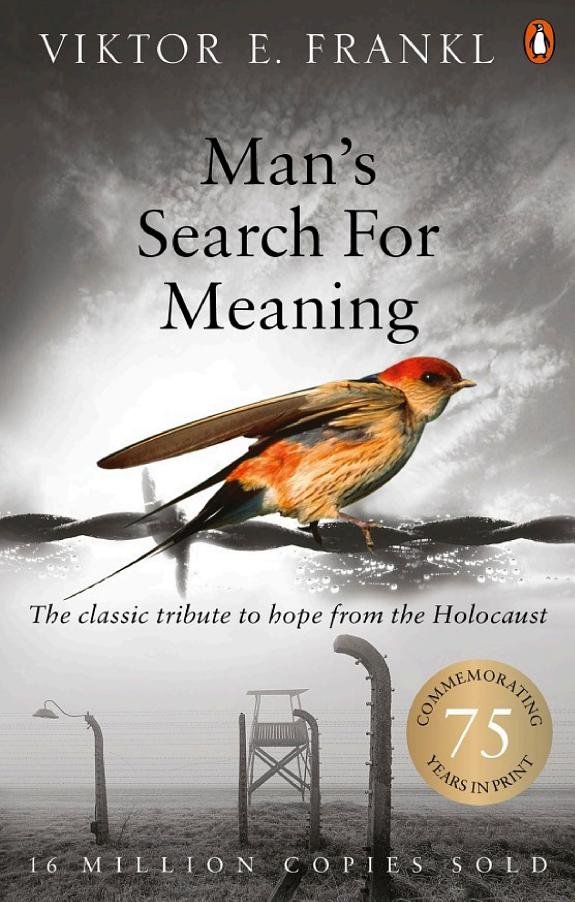
Man’s Search for Meaning
1. Man’s Search for Meaning by Viktor E. Frankl
Viktor Frankl was a psychiatrist and Holocaust survivor who spent years in Nazi concentration camps, including Auschwitz. That sentence alone tells you this is not a light read. What he wrote afterward, based on those experiences and his own therapeutic framework called logotherapy, is one of the most quietly devastating and quietly hopeful books ever published. He observed, with clinical precision, that the prisoners who found a reason to survive were more likely to do so. Not always. But often enough that it mattered.
The central idea is both simple and difficult: we cannot always choose our circumstances, but we can choose our response to them. Frankl is not cheerful about this. He is not selling optimism. He is describing something harder and more durable than optimism, which is meaning. The ability to find purpose in suffering, or at least to decide what that suffering will mean, is presented here as the last human freedom that no one can take from you.
The writing is spare and direct. Frankl does not dramatize his own story more than necessary, which somehow makes it hit harder. The second half of the book shifts into a more clinical explanation of logotherapy, and some readers find that transition jarring. If you are not interested in the theoretical framework, the first half alone is worth the price of admission.
“When we are no longer able to change a situation, we are challenged to change ourselves.” Frankl wrote this not as a motivational slogan but as a survival observation. There is a meaningful difference.
This is perfect for anyone going through a period of genuine difficulty, readers drawn to philosophy and psychology in equal measure, and those who want their thinking about suffering and purpose challenged at a foundational level. It is not for readers looking for quick tips or structured exercises.
The Obstacle Is the Way
2. The Obstacle Is the Way by Ryan Holiday
Ryan Holiday has made a career of translating ancient Stoic philosophy into language that modern readers can actually use, and this is probably his best effort at that project. The title comes from a line attributed to Marcus Aurelius, and the book builds outward from that single idea: the thing blocking your path is not separate from your path. It is your path. The obstacle, approached correctly, becomes the way forward.
Holiday structures the book around three disciplines drawn from Stoicism: perception, action, and will. He illustrates each with historical examples, from Amelia Earhart to Ulysses S. Grant to Theodore Roosevelt. Some of these stories are genuinely gripping. Others feel a bit like they were chosen to fit the argument rather than to illuminate it, and if you are a history reader you may occasionally raise an eyebrow at the framing. Still, the overall effect is persuasive.
The prose is punchy and fast. Chapters are short. Holiday writes with a confidence that borders on bluntness, which works well here because the philosophy itself is blunt. Stoicism does not coddle you, and neither does this book. You will not find a lot of “be gentle with yourself” energy in these pages, which is either refreshing or off-putting depending on what you came looking for.
The book’s core argument is that adversity is not something to be managed or survived. It is raw material. What you build from it is up to you.
This is perfect for readers who want a practical, no-nonsense introduction to Stoic ideas, people facing a specific setback or challenge, and anyone who responds well to historical examples and short punchy chapters. It is not for readers who want deep philosophical nuance or who find Holiday’s confident tone grating.
13 Things Mentally Strong People Don’t Do
3. 13 Things Mentally Strong People Don’t Do by Amy Morin
Amy Morin is a licensed clinical social worker and psychotherapist, and this book grew out of a personal essay she wrote during one of the hardest stretches of her life. She had lost her mother, then her young husband, then her father-in-law in quick succession. The essay, which listed behaviors she was trying to avoid in her own grief, went quietly viral. The book expands on those ideas with clinical depth and personal honesty.
The framing is deliberately negative, and that is actually one of its strengths. Rather than telling you what mentally strong people do, Morin focuses on what they stop doing: feeling sorry for themselves, giving away their power, resenting other people’s success, fearing alone time, expecting immediate results. Each chapter is structured consistently, moving from the behavior itself to the research behind it to practical strategies for changing it. It is organized in a way that makes it easy to dip in and out of.
Some readers will find the structure a little formulaic after a while, and a few of the thirteen behaviors overlap enough that you wonder if the number was chosen for its roundness. That said, the writing is warm and grounded, and Morin earns trust by being honest about her own struggles rather than presenting herself as someone who has everything figured out. The clinical backing also gives the book more weight than the average self-help title.
Mental strength, Morin argues, is not about feeling tough. It is about managing your thoughts, emotions, and behaviors even when none of them are cooperating with you.
This is perfect for readers who prefer a structured, chapter-by-chapter approach, those dealing with grief or significant life change, and anyone who finds traditional self-help too vague to be useful. It is not for readers who want philosophical depth or who dislike the self-help genre’s conventions.
Grit
4. Grit by Angela Duckworth
Angela Duckworth is a psychologist at the University of Pennsylvania who spent years studying why some people succeed and others do not, particularly in high-demand environments like West Point and the National Spelling Bee. Her conclusion, backed by substantial research, is that talent matters less than most people assume, and that a combination of passion and perseverance, which she calls grit, is a far better predictor of long-term achievement. This probably sounds familiar by now because her TED Talk made it famous. The book goes considerably further.
What Duckworth adds beyond the talk is texture and nuance. She explores how grit develops, what role parenting and culture play, and whether it can be deliberately cultivated. She is also honest about the limits of her own research, which is rarer in popular science books than it should be. The sections on deliberate practice are particularly useful, drawing on Anders Ericsson’s work to explain not just that effort matters but what kind of effort actually moves the needle.
The book is not without its critics. Some researchers have questioned the predictive validity of grit as a construct, and Duckworth acknowledges this more in later editions than she did initially. There is also a risk that some readers will take the message as “just work harder,” which flattens a more complicated argument. The book is at its best when it is examining the internal architecture of sustained effort rather than simply celebrating it.
Duckworth’s most useful insight may be that passion, in the context of grit, does not mean excitement. It means consistency of interest over time. That is a much harder thing to maintain, and a much more honest definition.
This is perfect for readers interested in psychology and human performance, parents thinking about how to raise resilient children, and anyone who has wondered why effort alone does not always seem to be enough. It is not for readers who are skeptical of popular psychology or who want actionable frameworks rather than research-based narrative.
Mindset
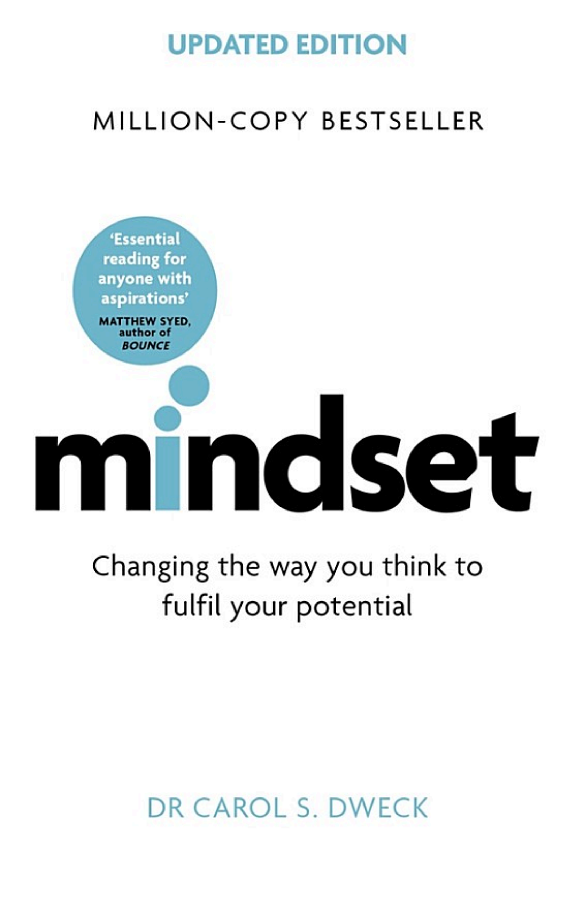
5. Mindset by Carol S. Dweck
Carol Dweck is a Stanford psychologist whose decades of research on motivation and achievement led her to one of the most widely cited ideas in modern education and psychology: the distinction between a fixed mindset and a growth mindset. In brief, people with a fixed mindset believe their abilities are static, so they avoid challenges that might expose their limits. People with a growth mindset believe abilities can be developed, so they treat failure as information rather than verdict. Simple enough on paper. Genuinely difficult in practice.
What makes this book worth reading rather than just reading a summary of the concept is the range of domains Dweck applies it to. She moves through sports, business, relationships, and parenting, showing how the same underlying belief about the nature of ability shapes behavior in each context. The parenting and education chapters are particularly strong. Her research on how praise is delivered, specifically that praising effort rather than intelligence produces more resilient learners, is the kind of finding that changes how you talk to children.
The book is written for a general audience and occasionally feels like it is repeating itself to make sure the point lands. If you are already convinced by the central idea, some chapters may feel slow. There is also a version of the growth mindset that has been commercialized into a kind of toxic positivity, where any failure is rebranded as a “learning opportunity” in a way that dismisses genuine hardship. Dweck herself has pushed back on these misreadings, and the book itself is more careful than its popularization suggests.
The fixed mindset is not laziness. It is a form of self-protection. Dweck’s research shows that when people believe their worth is tied to their performance, they stop taking the risks that would actually help them grow.
This is perfect for educators, parents, coaches, and managers, as well as anyone who has noticed a pattern of avoiding challenges and wants to understand why. It is not for readers who want cutting-edge research, since the core ideas have been widely discussed for years, or for those who find repetitive structuring in popular psychology books frustrating.
Can’t Hurt Me
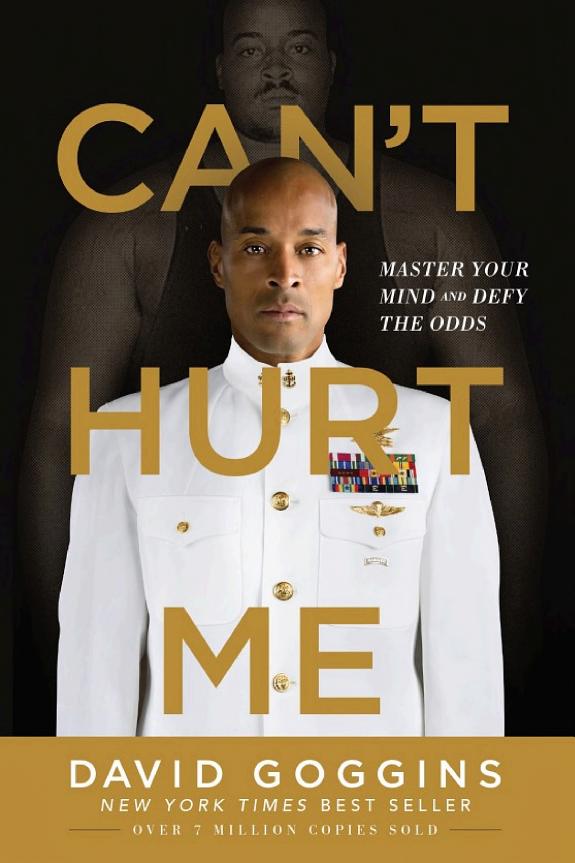
6. Can’t Hurt Me by David Goggins
David Goggins had a childhood that most people would not survive psychologically intact. Poverty, violence, racism, and abuse. He was overweight, directionless, and working as a pest control exterminator when he decided, at age twenty-four, to become a Navy SEAL. He went on to complete SEAL training three times, become an Army Ranger, set a world record for pull-ups, and run ultramarathons on broken legs. He is not a subtle person, and this is not a subtle book. Fair warning.
The writing is raw and often profane, which will immediately tell you whether this book is for you. Goggins co-wrote it with Adam Skolnick, and the format alternates between memoir chapters and a series of “challenges” that ask the reader to apply the principles being described. The central argument is that most people are operating at a fraction of their actual capacity, held back by comfort-seeking and self-deception, and that the path to mental toughness runs directly through the things you least want to do. He calls this “callusing the mind.”
This book will not appeal to everyone, and it should not. Goggins’s approach to suffering is essentially to seek it out, which is not a universal prescription. For some people, particularly those recovering from burnout or trauma, the message that you simply need to push harder could do real harm. The book also has a tendency to conflate physical extremity with psychological strength in a way that does not always hold up. That said, for readers who respond to intensity and want to be genuinely challenged rather than reassured, there is almost nothing else like it.
Goggins’s most honest moment may be his concept of the “accountability mirror,” which involves telling yourself the uncomfortable truth about your own excuses before you ask anything else of the world around you.
This is perfect for readers who want to be pushed hard and are not easily offended, athletes or people drawn to physical challenge, and anyone who suspects they have been letting themselves off the hook. It is emphatically not for readers who are in a fragile mental state, those recovering from burnout, or anyone who prefers their self-improvement measured and calm.
Emotional Intelligence
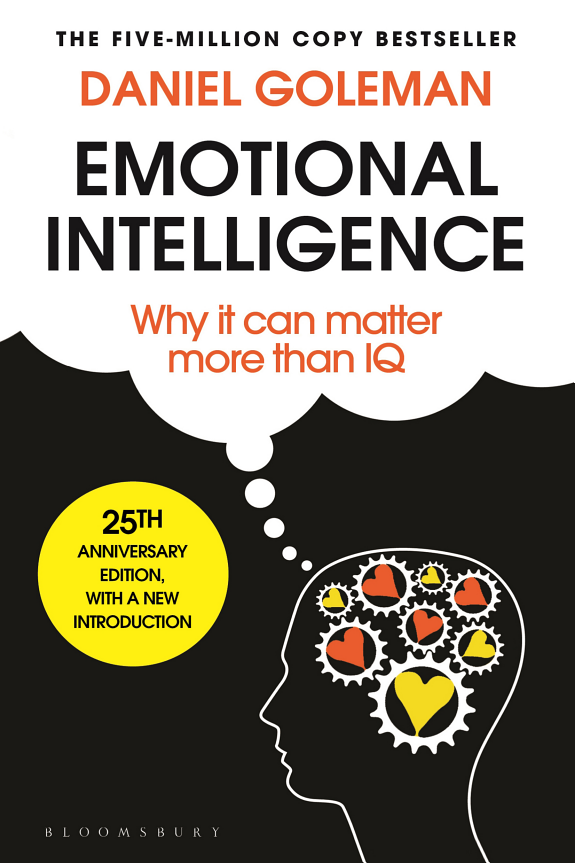
7. Emotional Intelligence by Daniel Goleman
Daniel Goleman’s 1995 book arrived at a moment when IQ was still widely treated as the gold standard of human capability, and it made a case that has only grown more persuasive over time: that our ability to understand and manage emotions, both our own and other people’s, matters at least as much as raw cognitive ability in determining how well we navigate life. The book draws on neuroscience, psychology, and a wide range of real-world examples, and it holds up better than most popular science books from that era.
Goleman organizes emotional intelligence around five domains: self-awareness, self-regulation, motivation, empathy, and social skills. He is careful to ground each of these in research rather than just assertion, and the neurological sections, explaining how the brain processes emotional and rational information and why they sometimes conflict, are genuinely illuminating. The chapters on how emotional intelligence affects health, relationships, and workplace performance are the most practically useful.
It is worth noting that Goleman’s popularization of the concept has been criticized by some researchers for overstating the predictive power of emotional intelligence relative to IQ, and for defining the construct broadly enough that it starts to resemble general personality. These are legitimate critiques. The book is also quite long and covers a lot of ground, which means some sections feel more essential than others. Still, as an introduction to a set of ideas that genuinely matter for how we relate to ourselves and each other, it remains one of the most thorough and readable options available.
The book’s most enduring contribution may be the simple insistence that how we handle our inner life is not a soft skill. It is a skill that shapes nearly every outcome that matters to us.
This is perfect for readers interested in the intersection of neuroscience and human behavior, those who want to understand their emotional patterns more clearly, and anyone working in environments where relationships and communication are central. It is not for readers who want a quick overview, those looking for a workbook-style approach, or anyone put off by a book that takes its time building an argument.
These seven books do not agree with each other on everything, which is part of what makes them worth reading together. Frankl and Goggins approach suffering from nearly opposite directions. Dweck and Duckworth overlap in interesting ways but emphasize different things. Goleman and Morin both deal with emotional regulation but from very different angles. That friction is useful. Mental strength is not a single thing, and no single book is going to hand it to you.
What these books share is a refusal to be dishonest about difficulty. None of them promise that thinking the right thoughts will make hard things easy. They promise something more modest and more true: that how you respond to hard things can change, and that changing it takes real work. If you find one book on this list that shifts something for you, even slightly, that is enough to start with. The rest will wait.