

6 Books to Stop Living for Other People’s Approval
There is a particular kind of exhaustion that comes from spending your days trying to be whoever the room needs you to be. You agree to things you resent. You shrink yourself in conversations. You lie awake replaying something you said three weeks ago, wondering what so-and-so thought of it. It is tiring in a way that sleep does not fix.
The books on this list do not promise a quick fix, because honestly, there is no such thing. What they do offer is a genuine reckoning with why we hand so much power to other people’s opinions, and what it actually looks like to take it back. Some of these writers are philosophers at heart, some are therapists, and at least one is just a very funny woman who decided she had better things to worry about. Together they cover a lot of ground, and there is something here for almost anyone who has ever twisted themselves into a pretzel trying to earn approval they were never going to feel satisfied by anyway.
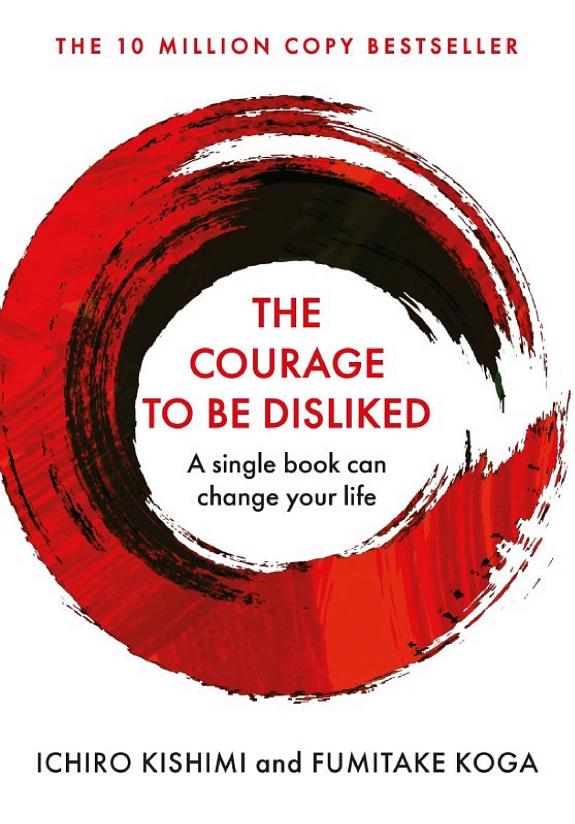
The Courage to Be Disliked
1. The Courage to Be Disliked by Ichiro Kishimi and Fumitake Koga
Written as a Socratic dialogue between a young man and a philosopher, this book introduces Western readers to the ideas of Alfred Adler, a psychologist who has long been overshadowed by Freud and Jung but whose thinking feels startlingly relevant right now. The young man arrives frustrated and argumentative, convinced that his unhappy situation is the product of his past and his circumstances. The philosopher gently, persistently dismantles that belief over the course of five long conversations.
The central argument is both simple and genuinely unsettling: we do not suffer because of what happened to us, but because of the goals our suffering serves. Seeking approval, the book argues, is a way of avoiding the discomfort of actually choosing your own path. The concept of “separation of tasks” is particularly useful here. Kishimi and Koga suggest that what other people think of you is, quite literally, not your business. Your job is to act according to your own values. Their reaction belongs entirely to them.
The dialogue format makes this feel more like eavesdropping on a real argument than reading a self-help book, which is either refreshing or slightly frustrating depending on your patience for Socratic back-and-forth. The young man asks all the objections you are already forming, which helps. The philosophy is dense in places, but never cold. There is genuine warmth underneath the rigor.
“The courage to be disliked” is not about becoming reckless or unkind. It is about accepting that you cannot control whether people approve of you, and that chasing that approval is costing you your actual path forward.
This is perfect for readers who enjoy philosophical depth, who feel trapped by the need to please everyone around them, and who want a framework rather than just encouragement. It is not the right fit for anyone who finds dialogue-style writing slow or who wants practical exercises over ideas.
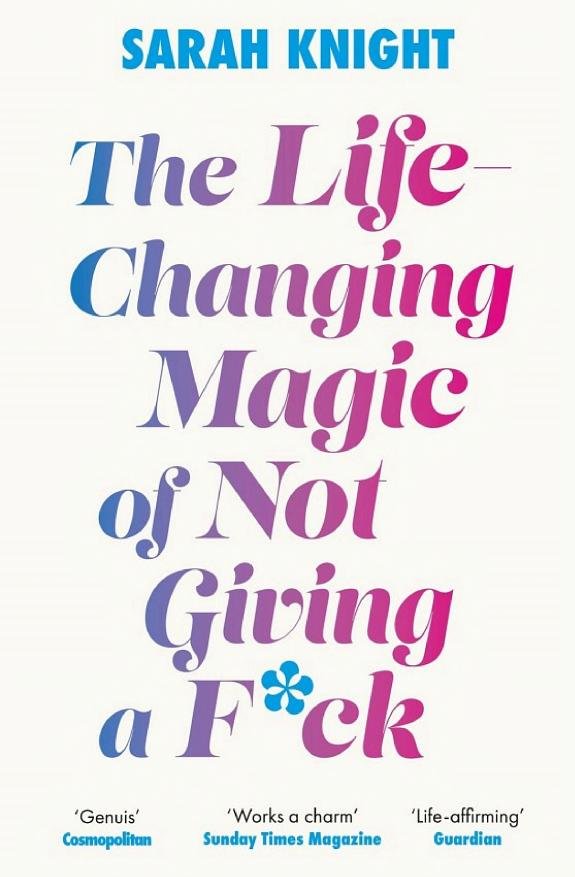
The Life-Changing Magic of Not Giving a F*ck
2. The Magic of Not Giving a F*ck by Sarah Knight
Sarah Knight wrote this book after reading Marie Kondo’s famous tidying guide and thinking, essentially, that the same principle should apply to obligations, social events, and other people’s opinions. The result is one of the funniest books on this list, and also one of the most practically useful. Knight is not interested in your childhood wounds or your attachment style. She wants to help you figure out what you actually care about and stop pretending to care about everything else.
The book introduces what Knight calls the “NotSorry Method,” which involves two steps: deciding what you do not give a f*ck about, and then not giving a f*ck about it without being a jerk. That second part matters more than it sounds. Knight is very clear that opting out of things that drain you is not the same as being cruel or dismissive to the people around you. There is a whole section on how to decline things politely, which is more useful than it has any right to be.
The humor carries the book a long way. Knight writes with a dry, self-deprecating wit that makes the whole project feel less like a lecture and more like a conversation with a very decisive friend. She is also honest about the fact that she is not some enlightened guru. She figured this out because she was miserable, and she is sharing the map she drew on the way out.
Knight’s key insight is that you have a finite number of f*cks to give, and every one you spend on something you resent is one you cannot spend on something you love. The math is simple. The practice takes work.
This is perfect for people who are over-committed, chronically people-pleasing, and in need of a laugh while they figure out how to say no. It is not ideal for readers who want psychological depth or who are put off by profanity.
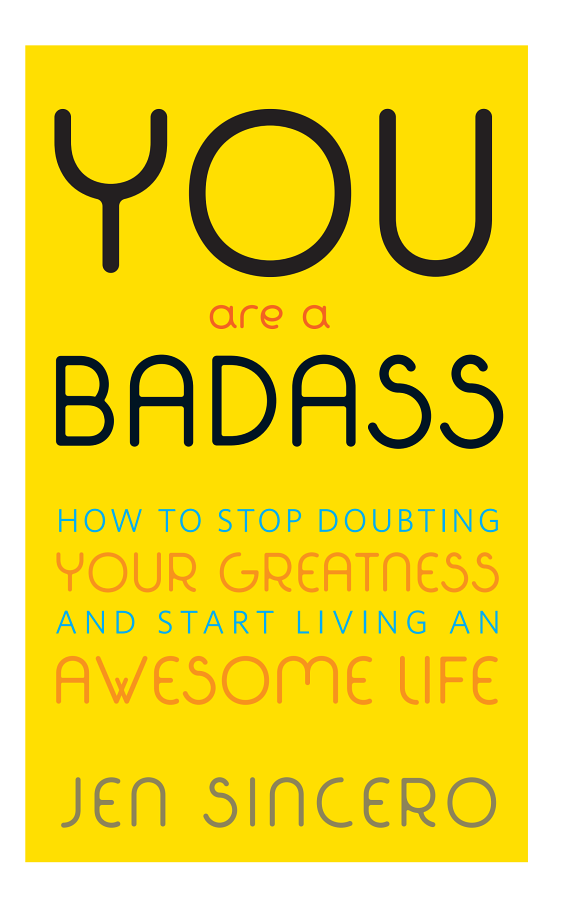
You Are a Badass
3. You Are a Badass by Jen Sincero
Jen Sincero wrote this book in her forties, after spending a long time being broke, directionless, and thoroughly convinced that other people had access to some secret she had missed. Her voice is loud, enthusiastic, and very American in its optimism, which will either energize you or make you want to lie down quietly. She is not trying to be subtle. She wants you to stop apologizing for existing and start actually building the future you want.
The book covers a lot of territory, from subconscious beliefs to the law of attraction to practical goal-setting, and it does not always go deep on any one of them. What it does well is create a sense of momentum. Sincero is genuinely funny, and she writes about her own failures and embarrassments with enough honesty that the cheerleading never feels entirely hollow. The chapter on how we inherit other people’s limitations and then mistake them for our own is particularly worth reading.
Where the book connects to the theme of approval-seeking is in its insistence that most of us have built an identity around what we were told we were allowed to want. We have internalized the judgments of parents, teachers, and peers so thoroughly that we no longer recognize them as external. Sincero pushes back against that with considerable force, and sometimes considerable repetition.
The central provocation of the book is worth sitting with: most of the limitations you believe are real are actually just opinions you absorbed from other people and forgot to question.
This is perfect for readers who respond well to high-energy encouragement, who are stuck in patterns of self-doubt, and who want a breezy, entertaining read. It is not the right fit for skeptics of positive thinking, readers who want rigorous research, or anyone who finds relentless enthusiasm grating.
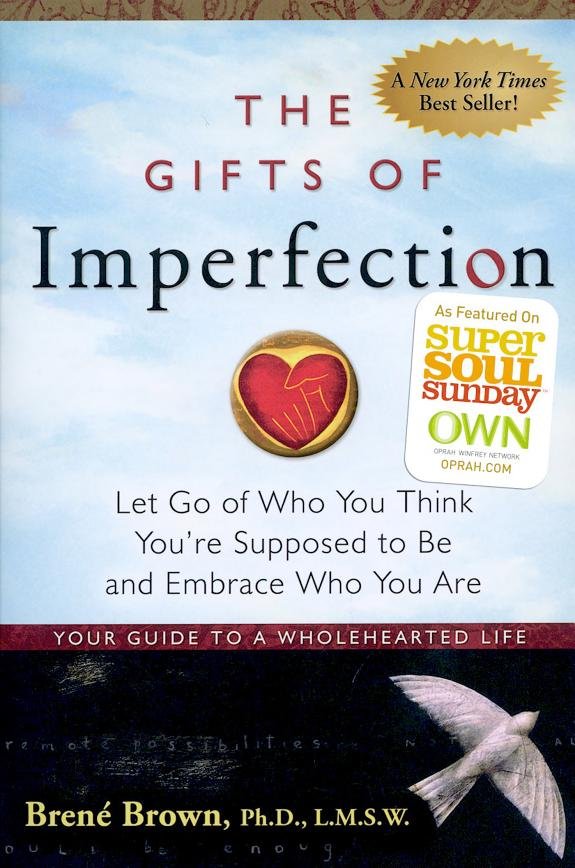
The Gifts of Imperfection
4. The Gifts of Imperfection by Brené Brown
Brené Brown spent years as a shame researcher before she became a household name, and that background shows in everything she writes. This book, which she describes as a guide to Wholehearted living, is built on a deceptively simple premise: that worthiness is not something you earn through achievement or approval, but something you have to decide you already possess. That decision is harder than it sounds, and Brown does not pretend otherwise.
The book is organized around ten guideposts, each one a practice Brown identified in the people she studied who seemed to live with genuine self-acceptance. These include things like cultivating self-compassion, letting go of what other people think, and practicing gratitude. None of them are revolutionary on paper. What Brown does well is show the specific ways we undermine each of these things, often without realizing it. The section on perfectionism is particularly honest. Brown argues that perfectionism is not about high standards. It is about avoiding judgment, and it almost always backfires.
Her writing is warm and personal. She draws heavily on her own struggles, including her resistance to vulnerability and her complicated relationship with control. This makes the book feel like a genuine conversation rather than a lecture from someone who has it all figured out. Brown absolutely does not present herself as having it all figured out, which is part of why people trust her.
Brown’s distinction between perfectionism and healthy striving is one of the most clarifying things in the book: perfectionism is about what other people will think, while healthy striving is about what you actually want to achieve.
This is perfect for readers who struggle with perfectionism and shame, who appreciate research-backed ideas delivered with personal warmth, and who are ready to examine why they tie their worth to other people’s opinions. It is less suited to readers who prefer purely practical frameworks or who find vulnerability-focused writing uncomfortable.
The Four Agreements
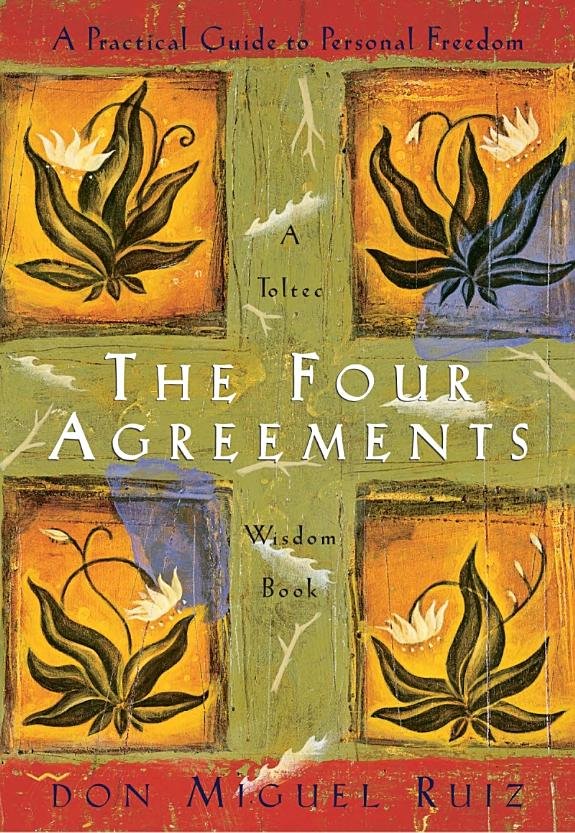
5. The Four Agreements by Don Miguel Ruiz
Don Miguel Ruiz draws on Toltec wisdom to lay out four principles that, if genuinely practiced, would dissolve most of the approval-seeking anxiety people carry around. The book is short. It is also one of those books that sounds simple until you sit with it and realize how much of your daily behavior it is quietly indicting. The four agreements are: be impeccable with your word, do not take anything personally, do not make assumptions, and always do your best. The second one is where most readers stop and stare at the ceiling for a while.
“Nothing other people do is because of you” is the core of that second agreement, and Ruiz develops it with a clarity that is almost uncomfortable. When someone criticizes you, ignores you, or disapproves of you, they are operating from their own beliefs, their own wounds, their own internal world. Taking it personally, Ruiz argues, is a kind of arrogance, a belief that their actions are actually about you. Releasing that belief does not happen overnight, but the framework gives you something to return to when you catch yourself spiraling over someone’s offhand comment.
The writing has a spiritual quality that some readers find grounding and others find vague. Ruiz is not offering a research-backed psychological model. He is offering a philosophy rooted in ancient tradition, and it asks for a certain openness to that kind of language. Readers who bring that openness tend to find the book quietly revelatory. Readers who do not may find it frustratingly abstract.
The most liberating idea in the book is also the most counterintuitive: that other people’s opinions of you are entirely about them, and treating them as verdicts on your worth is a choice you are making, not a fact you are receiving.
This is perfect for readers open to spiritual frameworks, who want a short and concentrated read, and who are specifically struggling with taking criticism or rejection personally. It is not the right fit for readers who need empirical grounding or who find spiritual language alienating.
Radical Acceptance
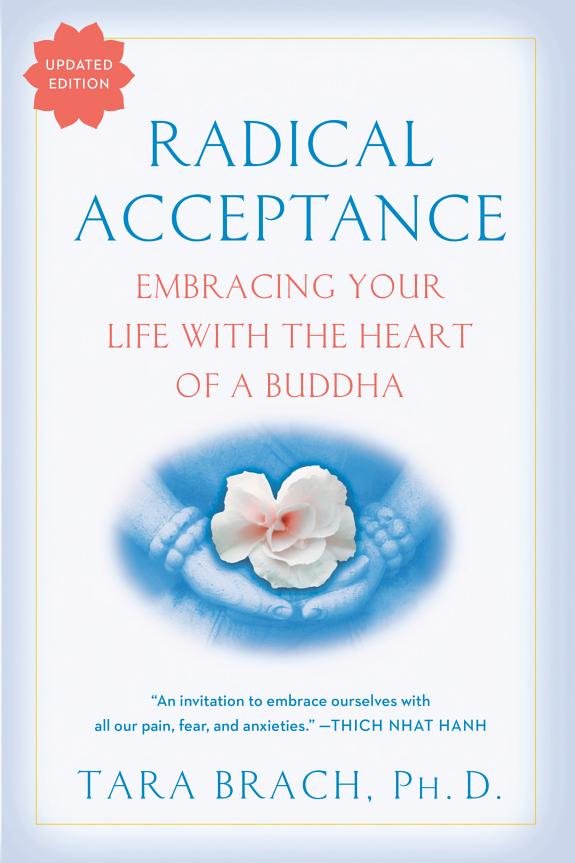
6. Radical Acceptance by Tara Brach
Tara Brach is a psychologist and Buddhist meditation teacher, and this book sits at the intersection of those two things in a way that is unusually thoughtful. The central concept she introduces is what she calls the “trance of unworthiness,” a deep, often unconscious belief that we are fundamentally flawed and that we need to earn our place in the world through performance, achievement, or constant approval from others. Most of us, she argues, live inside this trance without knowing it.
Radical acceptance, in Brach’s framing, is not passivity or resignation. It is the practice of meeting your experience, including your fear, your shame, and your longing for approval, with honesty and compassion rather than judgment. She draws on mindfulness meditation as the primary tool for this, and the book includes guided practices alongside the narrative chapters. The stories she tells, drawn from her own work and from years of working with students and therapy clients, are often quietly devastating and just as often quietly beautiful.
This is the most emotionally deep book on this list. It does not offer quick reframes or productivity-style frameworks. It asks you to slow down and look honestly at the pain underneath the approval-seeking, the fear that if people saw you clearly, they would leave. That is not comfortable reading. But for the right reader at the right moment, it is exactly what is needed.
Brach’s core argument is that the relentless pursuit of approval is really a search for safety, and that the only place that safety can actually be found is in learning to accept yourself with the same compassion you would offer someone you love.
This is perfect for readers who are drawn to mindfulness and contemplative practices, who sense that their approval-seeking runs deeper than habit and into something more like shame, and who are willing to sit with difficult emotions rather than reframe their way past them. It is not the right fit for readers looking for something upbeat, fast-paced, or secular in tone.
What these six books share, underneath their very different tones and approaches, is a refusal to pretend that living for other people’s approval is a sustainable way to be. Some of them will make you laugh. Some will make you uncomfortable. At least one might make you cry, and that is probably the one doing the most work.
You do not have to read all six. Start with the one that sounds most like the conversation you need right now. The philosopher’s dialogue if you want your assumptions challenged. The funny woman with the profanity if you need permission to stop saying yes to everything. The meditation teacher if you suspect the issue goes deeper than habits and into something you have been carrying for a long time. Any of them is a decent place to begin.
The goal, as best as any of these writers can articulate it, is not to stop caring about people or to become indifferent to the world. It is to stop outsourcing your sense of worth to a vote you never actually get to see counted. That is a quieter, steadier way to be, and it turns out there are quite a few good books to help you get there.