

7 Books for Becoming More Independent
There is a particular kind of exhaustion that comes from living a life shaped entirely by other people’s expectations. You say yes when you mean no. You spend money to impress people you don’t even like. You make decisions based on what seems reasonable to everyone else, and somewhere along the way you lose track of what you actually want. If any of that sounds familiar, you are not alone, and you are not broken.
Independence is not about moving to a cabin in the woods or cutting off everyone you know. It is about learning to think clearly, set honest limits, and take responsibility for your own direction. The seven books below approach that idea from different angles, covering money, psychology, philosophy, and the quiet courage it takes to stop outsourcing your choices. Some are gentle. Some are demanding. All of them are worth your time.
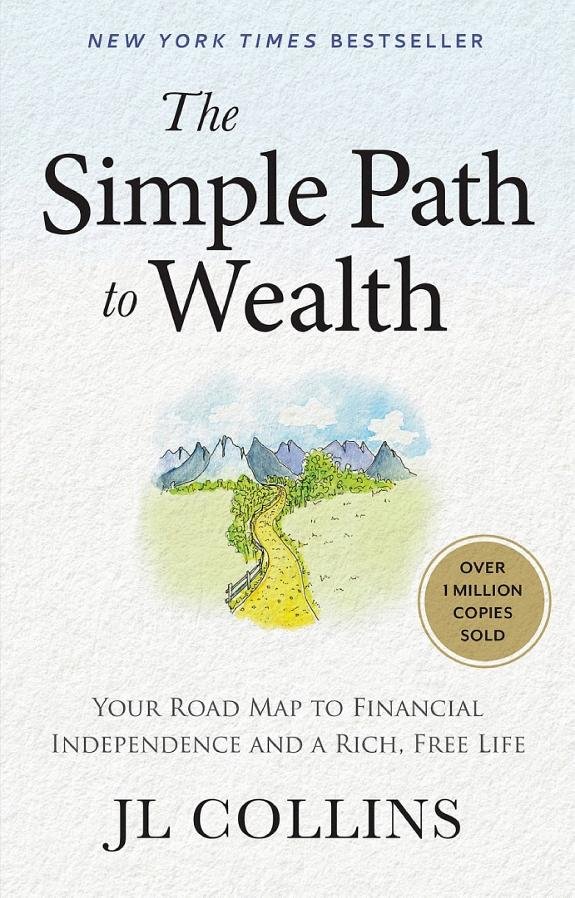
The Simple Path to Wealth
1. The Simple Path to Wealth by JL Collins
Financial independence is one of the most concrete forms of independence there is, and JL Collins writes about it with the kind of plain, unhurried clarity you wish your parents had used when explaining money. The book grew out of a series of letters Collins wrote to his daughter, which gives it a warmth that most personal finance books completely lack. He is not trying to impress you with complexity. He is trying to make sure you actually understand what he is saying.
The central argument is simple: avoid debt, invest consistently in low-cost index funds, and give the market time to do its work. Collins is a devoted follower of the Vanguard philosophy, and he spends a good portion of the book explaining why stock picking and active fund management are, statistically speaking, a losing game for most people. He is not shy about his opinions, and that confidence makes the book easy to follow even if you have never opened a brokerage account in your life.
What separates this from other finance books is the underlying message that money is a tool for freedom, not a scoreboard. Collins wants you to reach a point where work becomes optional, not because you are lazy, but because you have built enough of a foundation to make real choices. That framing changes how you think about spending, saving, and what you actually need.
This book is not for you if you want sophisticated tax strategies, real estate investing advice, or anything resembling a get-rich-quick approach. Collins keeps his lane narrow on purpose. But within that lane, he is one of the clearest voices around.
“Financial independence is not about being rich. It is about having enough so that your time belongs to you.”
This is perfect for anyone who feels confused or anxious about money and wants a straightforward, no-nonsense starting point for building real financial freedom.
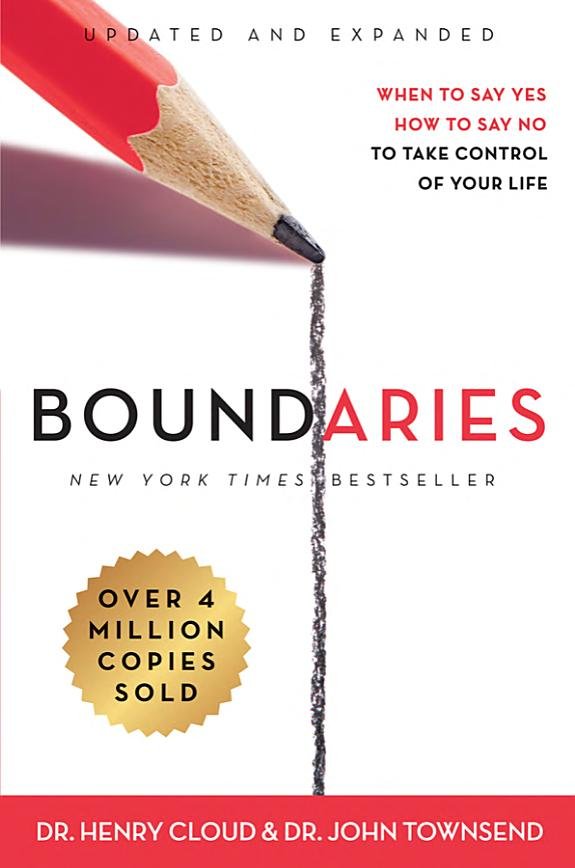
Boundaries
2. Boundaries by Henry Cloud and John Townsend
Few books have been recommended more enthusiastically in therapy offices than this one, and for good reason. Henry Cloud and John Townsend, both psychologists writing from a Christian perspective, make a compelling case that knowing where you end and another person begins is not selfish. It is, in fact, the foundation of healthy relationships. The title sounds simple. The implications are not.
The authors spend a lot of time on the emotional cost of having no limits, which includes chronic resentment, exhaustion, and the slow erosion of your own identity. They look at how people-pleasing develops, often in childhood, and why saying no feels so threatening even when it is clearly the right thing to do. The book covers relationships with parents, spouses, children, friends, and coworkers, which makes it unusually thorough.
One thing worth knowing upfront: the book is explicitly rooted in Christian theology. The authors frame limits as something God both models and endorses, and they return to that framework throughout. If that resonates with you, the book will feel deeply grounding. If it does not, you may find yourself doing a lot of mental translation to extract the practical advice from the spiritual scaffolding around it.
The writing is accessible rather than academic, and the case studies feel real rather than constructed. Even if you only take away one or two ideas about communicating your needs more honestly, this book will have done its job.
“You are responsible to others, not for others. That single distinction changes everything about how you show up in relationships.”
This is perfect for people who struggle to say no, feel responsible for everyone else’s emotions, or are trying to understand why certain relationships leave them feeling drained and invisible.
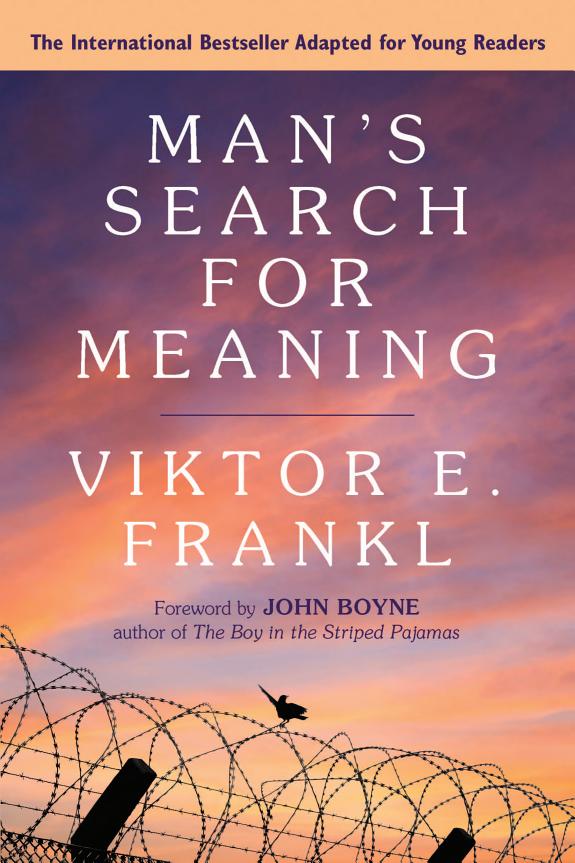
Man’s Search for Meaning
3. Man’s Search for Meaning by Viktor E. Frankl
Viktor Frankl was a psychiatrist and Holocaust survivor who spent years in Nazi concentration camps, including Auschwitz. That context matters enormously, because this is not a book written from comfort. It is a book written by someone who watched people face the absolute worst conditions imaginable and still found ways to hold onto their humanity. Frankl’s core observation, that meaning can be found even in suffering, is not a platitude. It is a conclusion drawn from evidence most of us will never have to face.
The first half of the book is a memoir of his time in the camps, written with restraint and precision. Frankl does not sensationalize. He observes. He notices which prisoners seemed to maintain their inner freedom and which did not, and he begins to form a theory about what makes the difference. The second half introduces logotherapy, the therapeutic approach he developed, which holds that the primary human drive is not pleasure or power but the search for meaning.
What this has to do with independence is worth spelling out. Frankl argues that while you cannot always control your circumstances, you can always choose your response to them. That gap between stimulus and response is where human freedom lives. It is a small space, sometimes, but it is yours. No one can take it from you without your cooperation.
This is a short book, just over a hundred pages in most editions, but it is not a quick read in any meaningful sense. It asks a lot of you. Readers who prefer practical, step-by-step guidance may find it frustrating. But for those willing to sit with difficult questions about purpose and suffering, it is one of the most honest books ever written.
“Everything can be taken from a man but one thing: the last of the human freedoms, to choose one’s attitude in any given set of circumstances.”
This is perfect for anyone going through a difficult period who wants a genuine philosophical anchor, or for readers drawn to questions about meaning, purpose, and what it actually means to live on your own terms.
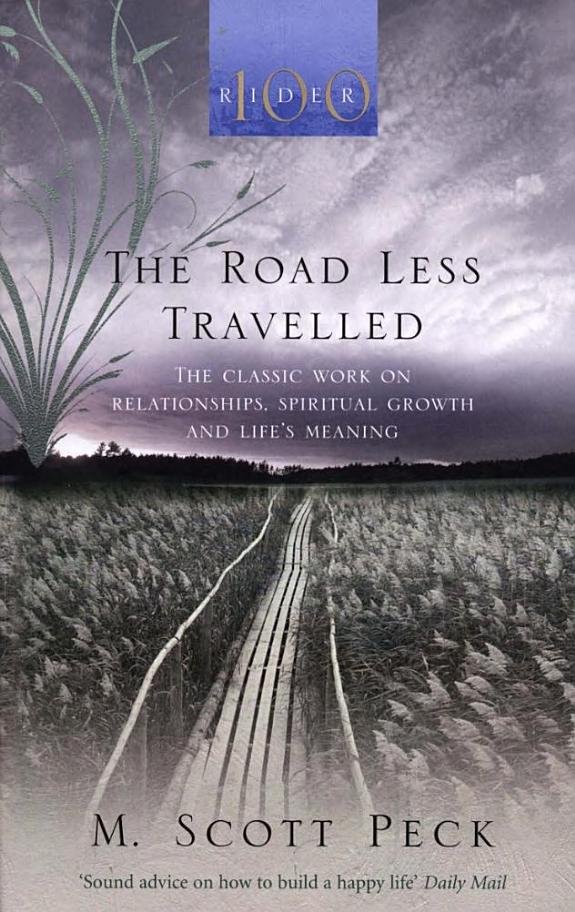
The Road Less Traveled
4. The Road Less Traveled by M. Scott Peck
M. Scott Peck opens this book with three words: “Life is difficult.” Then he spends the next three hundred pages explaining why accepting that fact, rather than fighting it, is the beginning of genuine maturity. Published in 1978 and still in print, The Road Less Traveled is one of those books that has aged better than most of its contemporaries because it never chased trends. Peck was a psychiatrist who drew on his clinical work, and the book reads like a long, thoughtful conversation with someone who has seen a great deal of human suffering and thought carefully about what it means.
The book is organized around four themes: discipline, love, growth, and grace. Peck’s treatment of discipline is especially useful for anyone thinking about independence, because he frames it not as punishment but as the set of tools we use to deal with the pain of being alive. Delaying gratification, accepting responsibility, and being honest with yourself are not cheerful topics, but Peck handles them without being preachy. Mostly.
It is worth noting that the book’s later sections move into spiritual territory, and Peck’s framework is broadly Christian, though not dogmatically so. Some readers find this deepens the book considerably. Others find it a distraction. You will know which camp you fall into fairly quickly once you hit part three.
The writing occasionally feels dated, and a few of the case studies reflect attitudes about gender and sexuality that have not aged well. But the core ideas about personal responsibility and the choice to grow remain as honest and demanding as they ever were. This is not a comfortable book. It is not supposed to be.
“Until you accept that life is difficult, and stop expecting it to be otherwise, you will spend most of your energy resisting reality rather than engaging with it.”
This is perfect for readers who are ready to take a hard, honest look at their own patterns and are willing to sit with uncomfortable ideas about responsibility, love, and what growing up actually requires.
The Gifts of Imperfection
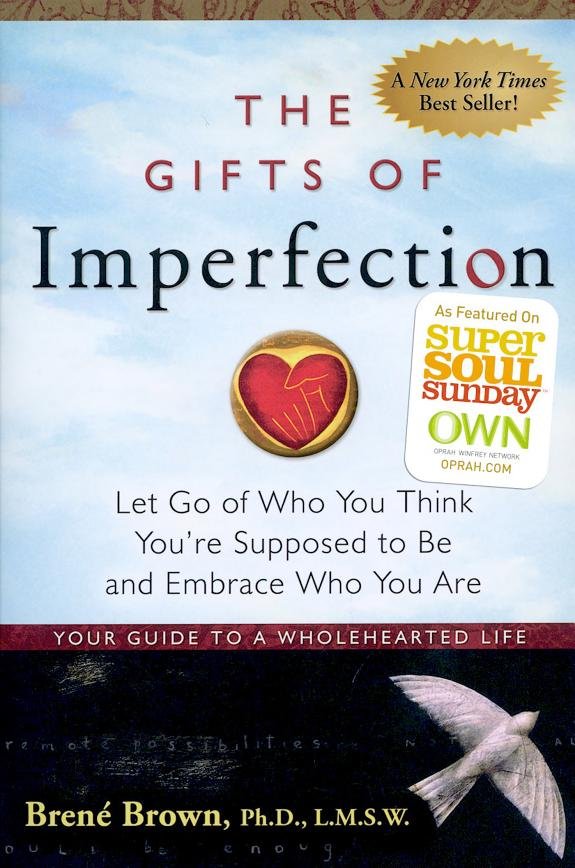
5. The Gifts of Imperfection by Brené Brown
Brené Brown spent years as a shame researcher before she became a household name, and that background gives this book a credibility that a lot of self-help titles lack. The Gifts of Imperfection is not about lowering your standards or giving yourself a pass on everything. It is about the specific kind of exhaustion that comes from trying to earn your worth through achievement, appearance, and approval. Brown calls this “hustling for worthiness,” and once you hear that phrase, you will start seeing it everywhere.
The book is built around ten guideposts, which Brown describes as practices for what she calls wholehearted living. These include things like cultivating self-compassion, letting go of the need for certainty, and making space for play and rest without feeling guilty about it. Each one is grounded in her research, which involved thousands of interviews with people who seemed to live with a genuine sense of belonging and those who did not.
Where this connects to independence is in Brown’s argument that you cannot truly show up as yourself while you are constantly performing for other people’s approval. The need for external validation is, in a quiet way, one of the most limiting forces in most people’s lives. Brown is not telling you to stop caring what anyone thinks. She is asking you to notice when that caring has become the engine driving your decisions.
The tone is warm and conversational, and Brown is honest about her own struggles, which keeps the book from feeling like a lecture. Readers who prefer dense theoretical frameworks may find it a bit light. And if you have read her other books, some of the ideas will feel familiar. But as an entry point into thinking about authenticity and self-worth, it is genuinely useful.
“Fitting in is about assessing a situation and becoming who you need to be to be accepted. Belonging, on the other hand, doesn’t require you to change who you are.”
This is perfect for people who are tired of performing their lives for an invisible audience and want a research-backed, honest look at what it means to live with more authenticity and less shame.
Essentialism
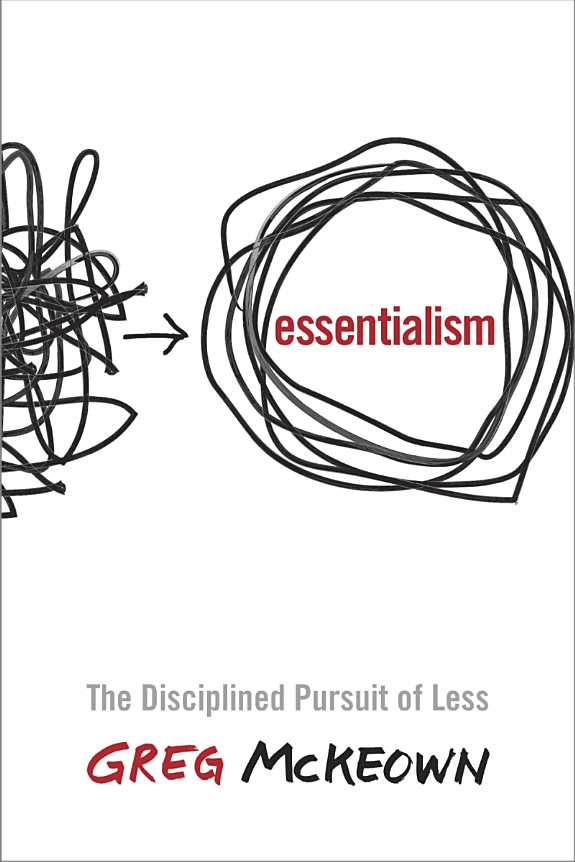
6. Essentialism by Greg McKeown
Greg McKeown’s central argument is one that sounds obvious until you try to actually live it: you cannot do everything, and attempting to do so guarantees that you will do nothing particularly well. Essentialism is a book about the disciplined pursuit of less, which is a harder sell than it sounds in a culture that treats busyness as a virtue and overcommitment as a badge of honor. McKeown is not advocating laziness. He is advocating ruthless clarity about what actually matters.
The book is organized around a simple framework: explore your options carefully, eliminate what is not essential, and then execute on what remains without distraction. Each section is practical and well-illustrated with examples from business and personal life. McKeown writes clearly and without unnecessary padding, which feels appropriate given the subject matter. A book about doing less that overstays its welcome would be a little embarrassing.
What makes this relevant to independence is the idea that every yes is a no to something else, and most people have never stopped to decide consciously which things deserve their yes. When you let other people’s priorities fill your schedule by default, you are not living your own life. You are living a collection of other people’s agendas, which is comfortable in the short term and quietly suffocating over time.
The book is strongest in its early sections and occasionally repeats itself in the back half. Some readers also find McKeown’s examples skew heavily toward high-achieving professionals, which can make the advice feel less applicable if your life looks different. But the core idea is worth returning to regularly, almost like a compass check.
“If you don’t prioritize your life, someone else will.”
This is perfect for people who feel chronically overextended, struggle to say no, or have a nagging sense that they are busy but not actually moving toward anything that matters to them.
Walden
7. Walden by Henry David Thoreau
Henry David Thoreau spent two years, two months, and two days living in a small cabin he built himself on the shore of Walden Pond in Massachusetts. He was not, despite popular mythology, completely isolated. He walked into town regularly, had dinner with friends, and his mother did his laundry (a detail his critics have never quite let go). But the experiment was genuine, and the book he wrote about it remains one of the most searching examinations of what a self-directed life might actually look like.
Published in 1854, Walden is part memoir, part philosophy, part extended argument with a society Thoreau found noisy, materialistic, and spiritually hollow. He wanted to see whether a person could strip away the unnecessary and find something more essential underneath. The answer, as he tells it, is yes, though the stripping away turns out to be harder than it sounds and more interesting than it looks from the outside.
The writing is dense and occasionally maddening. Thoreau is not trying to be accessible. He is trying to be precise, and he expects you to keep up. There are passages of extraordinary beauty and passages that feel like being lectured by someone who is extremely pleased with himself. Both things are true, and somehow the book works anyway. It has been irritating and inspiring readers in equal measure for over a hundred and fifty years, which is its own kind of achievement.
This is emphatically not the book for you if you want practical steps or actionable takeaways. Thoreau would find that framing depressing. But if you want a book that asks the oldest questions about freedom, simplicity, and what you are actually doing with the one life you have, there are few better places to start.
“I went to the woods because I wished to live deliberately, to front only the essential facts of life, and see if I could not learn what it had to teach.”
This is perfect for readers who love classic literature, enjoy philosophical provocation, and are willing to wrestle with a demanding text in exchange for ideas that have a way of staying with you for years.
None of these books will hand you independence. That is not how it works, and any book that claims otherwise is selling something. What these seven can do is give you better questions, clearer frameworks, and the occasional uncomfortable mirror. Some will resonate immediately. Others might take a second read, or a few years of life experience, before they fully land.
The common thread running through all of them is the idea that living on your own terms requires knowing what your terms actually are. That is harder than it sounds. It involves saying no to things that feel safe, letting go of approval you have been chasing for years, and making peace with the fact that a simpler, more intentional life sometimes looks strange to people around you. Thoreau knew that. So did Frankl. So, in their different ways, did all the authors on this list.
Start with whichever one speaks to where you are right now. There is no wrong entry point. The goal is just to start thinking more carefully about your own life, and these books are good company for that work.