

6 Books for Healing From Rejection
Rejection has a particular cruelty to it. Whether it came from a job application, a relationship, a manuscript, or something as small as an unanswered text, the feeling tends to land in the same sore spot. It tells you something unflattering about yourself, and it waits there, quietly, until you do something about it.
The books on this list are not here to convince you that rejection was secretly a blessing in disguise. Some of them might get there eventually, but they earn it first by taking the pain seriously. These are books written by people who have genuinely sat with difficulty, studied it, or lived through it. They approach the subject from different angles, including behavioral experiments, psychological research, Buddhist philosophy, and raw personal memoir, so there is likely something here for wherever you happen to be in the process right now.
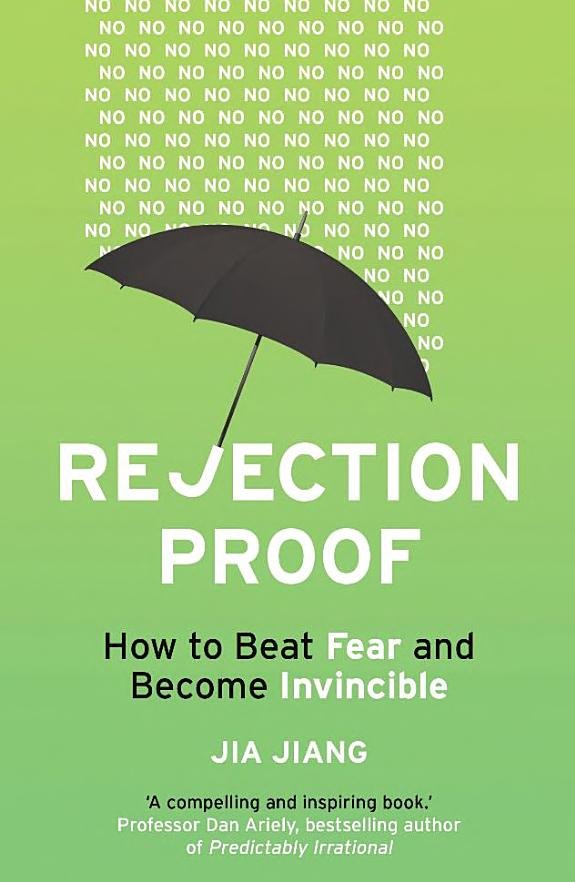
Rejection Proof
1. Rejection Proof by Jia Jiang
Jia Jiang was so terrified of rejection that when a startup investor passed on his business idea, he spiraled into a kind of paralysis. His response was, to put it charitably, unconventional. He decided to seek out rejection every single day for 100 days, asking strangers for absurd favors, requesting things he fully expected to be denied, and filming the whole experiment. What happened surprised him considerably, and it will probably surprise you too.
The writing here is breezy and conversational, almost like reading someone’s personal blog at its best. Jiang is not a philosopher or a therapist. He is a guy who was scared, made a plan, and stuck to it. That grounded, practical quality is exactly what makes the book work. He documents how often people actually say yes when you ask for something outrageous, and what that reveals about the stories we tell ourselves before we even try.
The central insight is that rejection is far less personal and far less final than our brains insist it is. Jiang backs this up not with theory but with dozens of small, sometimes hilarious stories. He asks a police officer if he can drive his patrol car. He requests a burger refill at a fast food restaurant. He asks to play soccer in a stranger’s backyard. The cumulative effect is oddly freeing to read.
“Most rejection is not a verdict. It is simply one person’s answer on one particular day. The story we build around it is usually larger than the rejection itself.”
This is perfect for readers who want a light, action-oriented approach to rejection, especially those dealing with career setbacks, creative refusals, or social anxiety around putting themselves out there. It is not the right fit for someone processing deep emotional loss or grief, as the tone stays fairly upbeat and practical throughout.
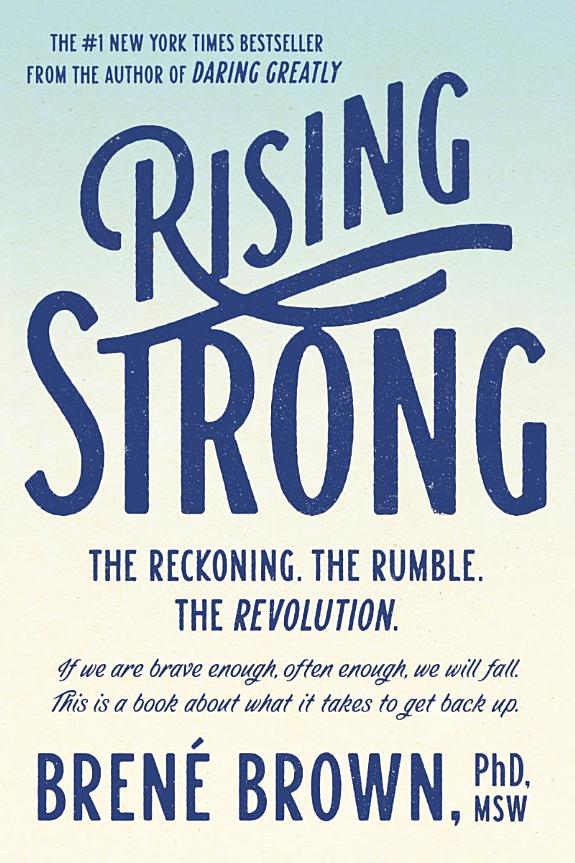
Rising Strong
2. Rising Strong by Brené Brown
Brené Brown has built a career on researching vulnerability, and Rising Strong is where she turns her attention specifically to what happens after you fall. Not the falling itself, not the triumphant getting-back-up, but the messy, uncomfortable middle where most people actually live for a while. She calls it “the reckoning, the rumble, and the revolution,” which sounds a bit like a wrestling pay-per-view but turns out to be a genuinely useful framework.
Brown writes with warmth and a willingness to use her own life as material. She shares stories of her own failures and the moments where she caught herself writing what she calls “the shitty first draft” of a story, meaning the narrative we construct in our heads immediately after something goes wrong, which is almost always catastrophic and rarely accurate. Learning to recognize that draft, and then revise it, is the core skill the book tries to teach.
Her research background gives the book credibility without making it dry. She is drawing on years of interviews and data, but she presents it in a way that feels like a conversation rather than a lecture. The chapters on emotion and on how people tend to armor up after rejection are particularly worth reading slowly. Some readers find her style a little repetitive, and if you have already read Daring Greatly, you will notice some overlapping ideas. But Rising Strong earns its own place because it focuses specifically on recovery rather than on the act of showing up in the first place.
“The process of rising strong is not about pretending the fall did not hurt. It is about getting honest with yourself about what the fall actually meant, and then deciding who you want to be on the other side of it.”
This is perfect for people who tend to shut down emotionally after rejection and want a research-grounded, story-rich guide to processing what happened and moving forward with more self-awareness. It may feel redundant if you have read several of Brown’s other books already.
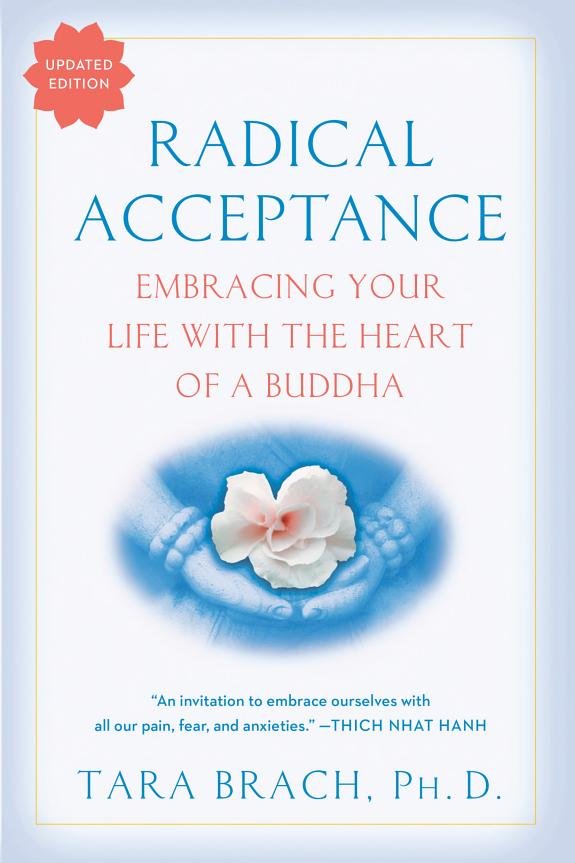
Radical Acceptance
3. Radical Acceptance by Tara Brach
Tara Brach opens this book with a concept she calls the trance of unworthiness, the background hum of feeling that you are somehow not enough, that you have failed some standard you cannot quite name. If rejection has a way of turning up the volume on that feeling for you, this is the book that addresses it most directly. Brach is a psychologist and Buddhist meditation teacher, and she draws on both traditions throughout, weaving clinical insight together with contemplative practice in a way that rarely feels forced.
The prose is gentle without being vague. Brach has a gift for naming things that feel difficult to articulate, and she does it without the clinical coldness you might expect from someone with her credentials. The book is built around the practice of radical acceptance, which she defines not as resignation or approval of painful circumstances, but as a clear-eyed willingness to meet your experience exactly as it is, without adding layers of self-judgment on top of it. For anyone who has responded to rejection by turning it into evidence of their own fundamental inadequacy, this distinction matters enormously.
The meditation practices woven through the chapters are optional but genuinely useful. Even if you have no interest in sitting quietly with your eyes closed, the conceptual framework Brach offers is worth the read on its own. She is particularly good on the way we use busyness and self-criticism as a way of avoiding the rawness of difficult feelings, which is a pattern many people will recognize in themselves without much prompting.
“Radical acceptance is not about deciding that what hurt you was fine. It is about refusing to add suffering on top of suffering by rejecting the reality of what you feel.”
This is perfect for readers who carry a persistent sense of not being good enough, particularly those open to mindfulness or meditation as a tool. It is probably not the right starting point for someone who finds spiritual or Buddhist framing off-putting, or who is looking for something more action-oriented.
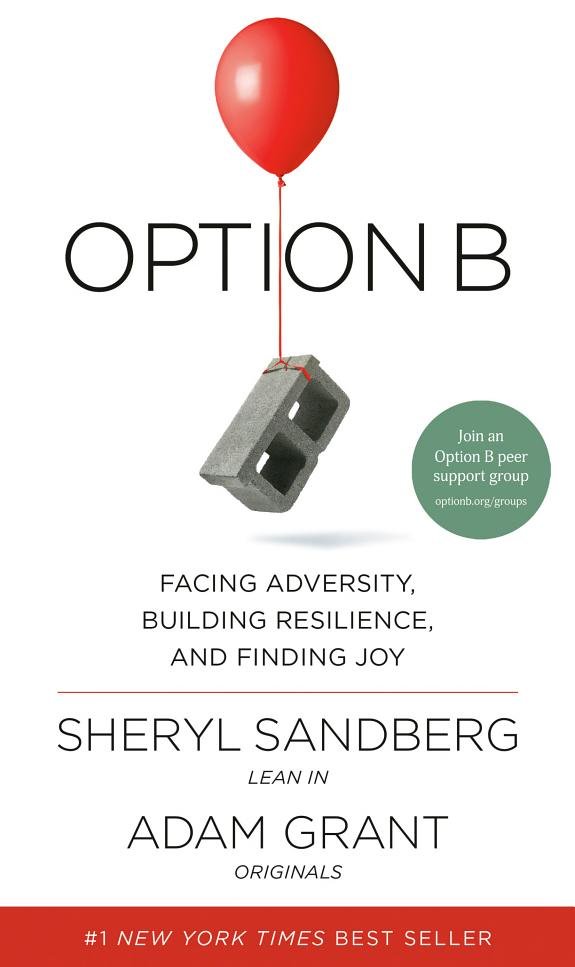
Option B
4. Option B by Sheryl Sandberg and Adam Grant
Option B began as something far more personal than a book. Sheryl Sandberg’s husband Dave Goldberg died suddenly in 2015, and this is, in part, her account of what came after. It is also a collaboration with organizational psychologist Adam Grant, who brings research on resilience and post-traumatic growth into conversation with Sandberg’s raw, honest memoir sections. The combination works better than you might expect, though it does take some getting used to.
The title comes from a moment when Sandberg wanted to ask Dave to speak at a parent event at her children’s school, then remembered he was gone. A friend reminded her that option A was no longer available, so they would have to “kick the hell out of option B.” That spirit, the refusal to pretend the loss is not real while also refusing to stop building a life, runs through every chapter. The book addresses grief and loss more directly than it addresses rejection in the narrow sense, but anyone who has experienced a significant door closing will find something here that resonates.
Grant’s contributions bring in concepts like the three P’s identified by psychologist Martin Seligman: personalization, pervasiveness, and permanence, the tendencies to blame yourself entirely, to let one painful thing color everything, and to believe it will last forever. These are exactly the cognitive patterns that make rejection so corrosive, and naming them clearly is genuinely helpful. Sandberg’s voice is sometimes more polished than raw, which is a small criticism in a book that is otherwise admirably honest about how hard the process actually is.
“Resilience is not a fixed trait you either have or you do not. It is built in the specific, ordinary moments when you choose to keep going even when you have every reason not to.”
This is perfect for anyone navigating significant loss or a major life disruption, including job loss, relationship endings, or grief, who wants both emotional companionship and a research-backed framework for recovery. Readers looking for a lighter, more practical read may find the emotional weight here more than they were expecting.
The Gifts of Imperfection
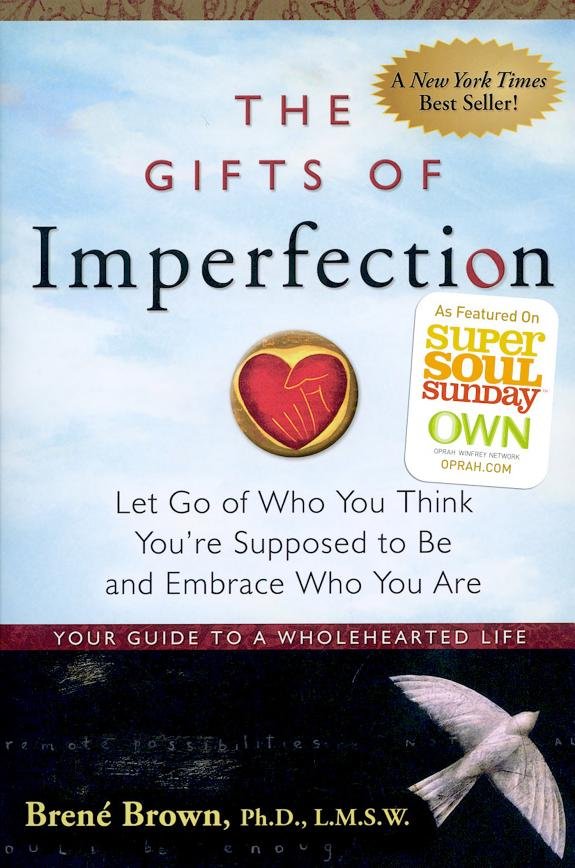
5. The Gifts of Imperfection by Brené Brown
Yes, this is the second Brené Brown book on the list. The two cover different enough ground that both earned their place. Where Rising Strong focuses on recovering from specific falls, The Gifts of Imperfection is concerned with the broader project of building a life that does not require external approval to feel worthwhile. That is a relevant project for anyone who has internalized rejection as a referendum on their value as a person, which is most of us, if we are honest.
The book is structured around ten guideposts, practices Brown identifies as central to what she calls wholehearted living. These include cultivating self-compassion, letting go of perfectionism, and embracing the kind of vulnerability that comes with genuinely caring about things. The tone is warmer and slightly less academic than some of her other work. It reads quickly, sometimes almost too quickly, and a few of the chapters feel like they could have been expanded. But the core ideas are solid and the writing is accessible without being shallow.
What Brown does well here is make the case that perfectionism is not the same as striving for excellence. It is, she argues, fundamentally about fear, specifically the fear of being judged and found wanting. Rejection tends to activate that fear loudly, and this book offers a way of relating to that fear that does not involve either ignoring it or being ruled by it. It is not a heavy read, which is sometimes exactly what you need.
“Perfectionism is not about healthy achievement or growth. It is a twenty-ton shield we carry around hoping it will keep us from being hurt, while it actually keeps us from being seen.”
This is perfect for readers who tie their self-worth closely to achievement or others’ opinions, and who want a readable, warmhearted book about building inner resilience. It is not the right choice for readers who find self-help framing grating, or who are looking for something with more narrative depth.
The Untethered Soul
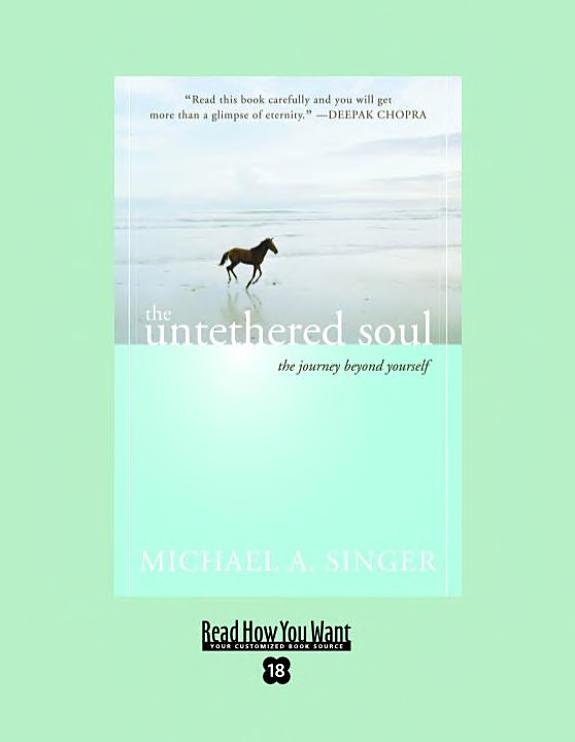
6. The Untethered Soul by Michael A. Singer
Michael Singer opens this book with a question that is either immediately compelling or mildly annoying depending on your temperament: who is the voice inside your head, and are you actually that voice, or are you the one listening to it? If you are willing to sit with that question for a few hundred pages, The Untethered Soul will take you somewhere genuinely interesting. If the question makes you want to close the book immediately, that is useful information too.
Singer’s central argument is that most of our suffering, including the suffering that comes from rejection, is caused not by events themselves but by our habit of clenching around painful experiences rather than letting them move through us. He uses the image of a thorn in your arm: you can build your entire life around protecting that thorn from being touched, or you can remove it. The thorn, in his framework, is the unresolved emotional pain we carry, and rejection has a way of pressing directly on it.
The book draws on both Eastern philosophy and Western psychology without being heavy-handed about either. Singer writes clearly and without unnecessary jargon, which is rarer in this genre than it should be. Some chapters have a slightly repetitive quality, circling back to the same ideas from slightly different angles, but for many readers that repetition is actually helpful. These are not ideas that land fully on the first pass. The sections on releasing stored energy and on the relationship between the heart and fear are worth reading more than once.
“You are not the pain that rejection stirs up. You are the awareness that notices it. That distinction, small as it sounds, changes everything about how you relate to what you feel.”
This is perfect for readers drawn to contemplative or spiritual approaches to emotional healing, particularly those who feel stuck in repetitive patterns of thought and reaction after painful experiences. It is not the right fit for readers who want practical, step-by-step strategies, or who are firmly skeptical of anything approaching spiritual language.
Rejection does not have a single cure, and none of these books will pretend otherwise. What they offer instead is something more durable: different ways of understanding what rejection actually is, different tools for sitting with the discomfort it creates, and different perspectives on who you are in relation to it. Some of these books will speak to you immediately. Others might need to wait until you are in a different place.
If you are not sure where to start, Jia Jiang is the most immediately readable and the least emotionally demanding. Tara Brach and Michael Singer are worth reaching for when you want to go deeper. Brené Brown belongs on the shelf regardless of where you are in the process. The point is not to read all six at once, but to know they are there, and to trust that the right one will find you when you need it.