

6 Books for Understanding Human Behavior
People are strange. We make decisions we regret, fall for the same tricks repeatedly, and convince ourselves we are being perfectly rational while doing something completely absurd. If you have ever watched someone, or yourself, do something baffling and thought “why would anyone do that,” then you already have the itch that these books are designed to scratch.
The six books below approach human behavior from different angles. Some come from psychology, some from neuroscience, some from behavioral economics. A few are dense and academic in spirit, even if they wear a popular nonfiction costume. Others are breezy and anecdote-driven. None of them will turn you into a mind-reader, but all of them will leave you looking at the people around you, and the person in the mirror, a little differently.
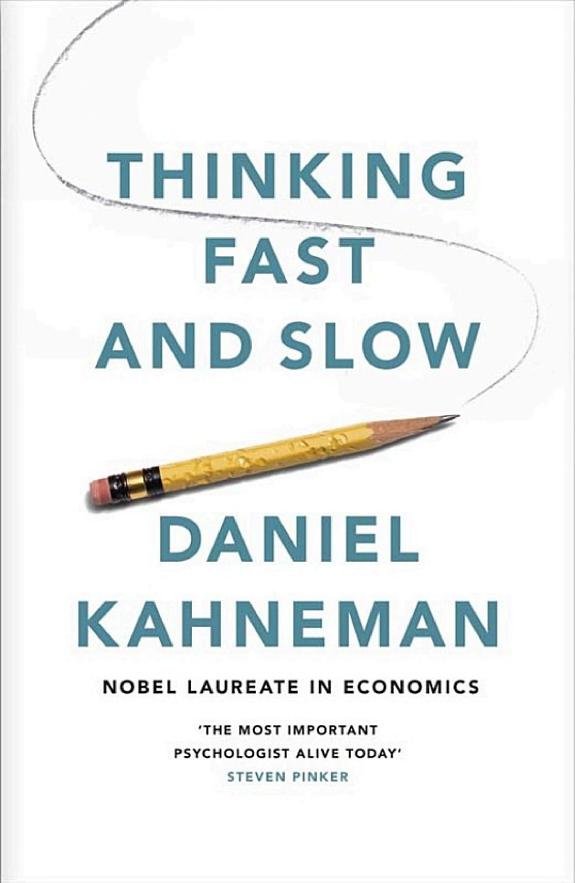
Thinking, Fast and Slow
1. Thinking, Fast and Slow by Daniel Kahneman
Daniel Kahneman spent decades as a research psychologist before winning the Nobel Prize in Economics, which should tell you something about how far-reaching his ideas turned out to be. This book is the distillation of a career’s worth of work, most of it done alongside his late collaborator Amos Tversky. The central argument is deceptively simple: we have two modes of thinking. System 1 is fast, automatic, and emotional. System 2 is slow, deliberate, and effortful. The trouble is that System 1 is running the show far more often than we like to admit.
Kahneman walks through a long catalog of cognitive biases, from anchoring to the planning fallacy to what he calls “what you see is all there is.” Each one is illustrated with studies, experiments, and the occasional wry observation. The writing is clear but never dumbed down. Kahneman seems genuinely interested in the reader understanding the material, not just feeling impressed by it. That is rarer than it should be in popular science writing.
The book is long, and there is no getting around that. Some sections, particularly the later chapters on prospect theory and economics, require real concentration. If you pick this up expecting a quick tour of quirky human quirks, you may find yourself stalling around page 200. But if you push through, the payoff is a genuinely coherent framework for understanding why smart people make bad decisions, repeatedly, under conditions they should recognize.
“Nothing in life is as important as you think it is, while you are thinking about it.” Kahneman calls this the focusing illusion, and once you see it, you cannot unsee it in your own daily reasoning.
This is perfect for readers who enjoy rigorous ideas and do not mind slowing down to absorb them, especially those with an interest in psychology, economics, or their own decision-making patterns.
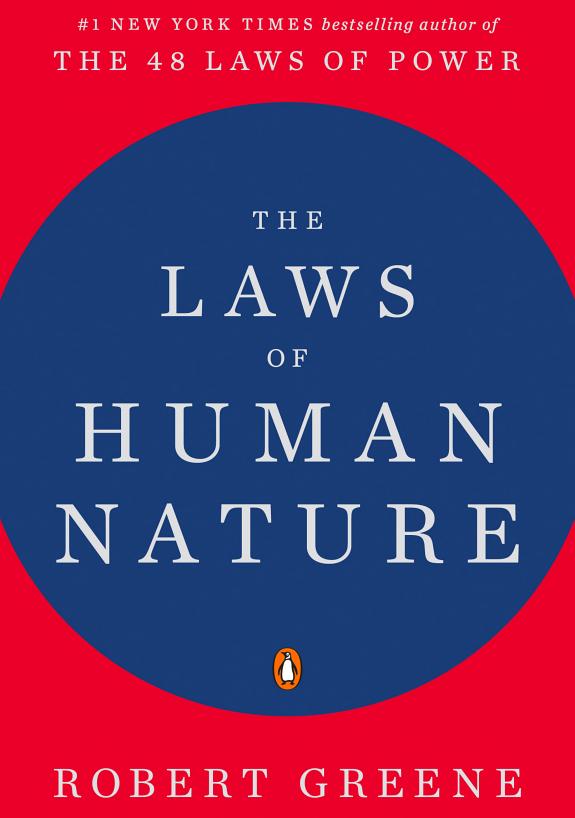
The Laws of Human Nature
2. The Laws of Human Nature by Robert Greene
Robert Greene has built a career out of writing very long books about power, strategy, and the darker corners of human motivation. This one, at nearly 600 pages, might be his most ambitious. He draws on history, biography, psychology, and philosophy to lay out what he sees as the fundamental drives behind human behavior: the need for status, the pull of envy, the way narcissism quietly distorts our perception, the tribal instincts that never quite left us even after we built cities and invented polite conversation.
Greene’s voice is distinctive and a little theatrical. He loves a dramatic historical anecdote, and he tends to present his ideas with the confidence of someone who has figured something out that most people are too polite to say. That can be genuinely refreshing. It can also tip into a kind of cynicism that not every reader will enjoy. He assumes, as a baseline, that people are mostly self-interested and that understanding this is a survival skill. Whether you find that bracing or depressing probably depends on the week you are having.
The book is organized around eighteen “laws,” each illustrated with a historical figure whose life demonstrates the principle in action. The structure makes it easy to dip in and out, though reading it straight through gives you a better sense of how the ideas connect. Greene is not an academic, and some critics have pointed out that he plays fast and loose with sources. That is worth knowing going in. This is a book of ideas and provocations, not a peer-reviewed study.
Greene’s most useful contribution is his insistence that understanding your own irrationality is not a one-time revelation but an ongoing, uncomfortable practice. He is not offering comfort. He is offering a mirror.
This is perfect for readers interested in the social and strategic dimensions of human nature, particularly those drawn to history, biography, and the less flattering truths about why people do what they do.
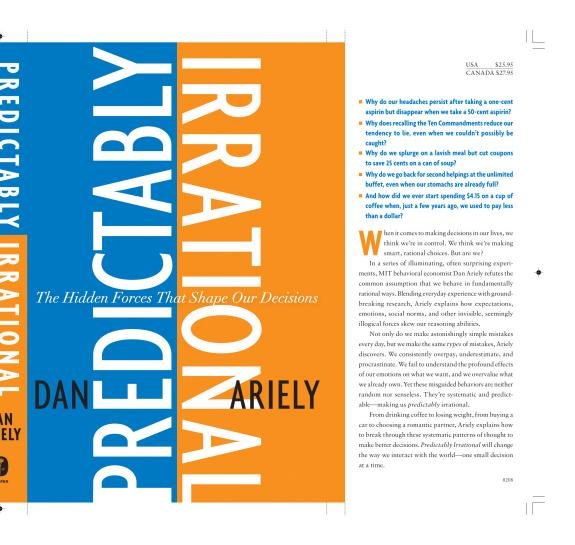
Predictably Irrational
3. Predictably Irrational by Dan Ariely
Dan Ariely is a behavioral economist at Duke, and he writes with the enthusiasm of someone who genuinely cannot believe how weird people are. The premise of this book is right there in the title: our irrational behavior is not random. It follows patterns. It is predictable. And once you understand those patterns, you start noticing them everywhere, in the prices on a restaurant menu, in the way a free offer makes you act against your own interests, in the reason you keep the gym membership you never use.
Ariely structures the book around a series of experiments, many of which he designed himself. He writes about them in the first person, with a storytelling instinct that keeps things moving even when the underlying ideas are fairly technical. He covers topics like the power of “free,” the way expectations shape experience, the surprising gap between what we say we value and what we actually choose, and the strange ways that social norms and market norms collide. The chapter on how arousal affects decision-making is both genuinely illuminating and, frankly, a little funny.
Where the book is weakest is in its prescriptive sections. Ariely occasionally pivots to “here is what we should do about this,” and those passages feel thinner than the descriptive ones. The research is also now old enough that some findings have faced replication challenges, a caveat worth keeping in mind for any behavioral economics book published in the mid-2000s. Still, the core observations hold up, and the writing is consistently engaging. This is not a book that will bore you.
The insight that “free” is not just a price but a psychological trigger that overrides rational calculation is one of those ideas that permanently changes how you read a promotional offer.
This is perfect for readers who want an accessible, entertaining entry point into behavioral economics and do not mind that some of the research is a bit dated by now.
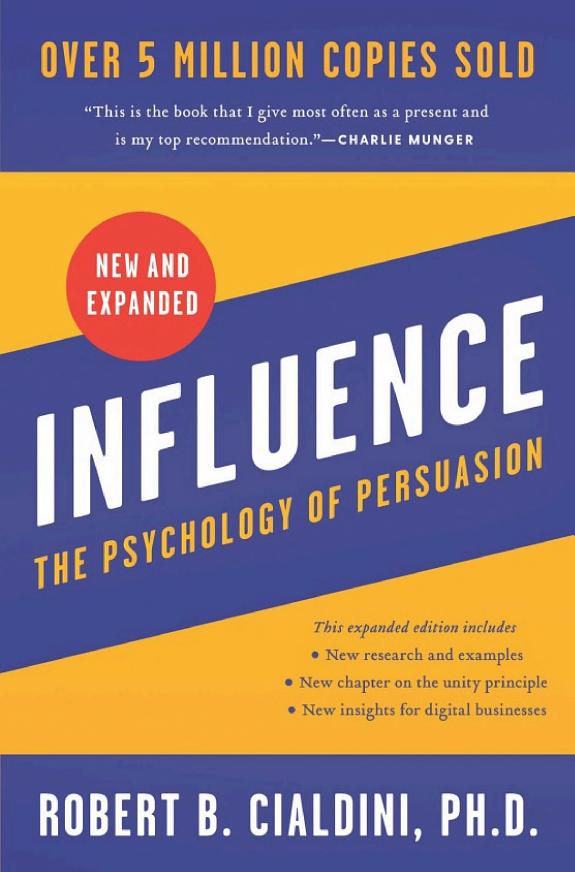
Influence: The Psychology of Persuasion
4. Influence: The Psychology of Persuasion by Robert B. Cialdini
Robert Cialdini spent years going undercover, so to speak, training with car salespeople, fundraisers, and advertisers to understand how persuasion actually works in the wild. The result is a book that has been in print for decades and shows no signs of becoming irrelevant. Cialdini identifies six principles of influence: reciprocity, commitment and consistency, social proof, authority, liking, and scarcity. Each one is rooted in a genuine psychological tendency, and each one is exploited, constantly and deliberately, by people who want something from you.
The writing is clean and example-heavy. Cialdini is a social psychologist by training, but he writes for a general audience without condescending to one. The book has an unusual dual purpose: it explains how influence works so that you can both use it and recognize when it is being used on you. That dual framing gives it a slightly different energy from a pure self-help book. It is less “here is how to get what you want” and more “here is how the machinery of social influence operates.”
If you are looking for nuanced moral philosophy about when persuasion becomes manipulation, this is not quite that book. Cialdini acknowledges the ethical dimensions but does not dwell on them. Some readers also find the examples repetitive after a while, since each chapter essentially follows the same pattern: here is the principle, here are three examples, here is how to defend yourself against it. That structure is useful for retention but can feel a little formulaic by the end.
The chapter on social proof alone is worth the price of the book. Understanding why we look to others to determine correct behavior explains everything from laugh tracks to five-star reviews to the way a crowd forms around nothing at all.
This is perfect for anyone who wants to understand the mechanics of persuasion, whether for professional reasons, personal defense, or simple curiosity about why we are so susceptible to certain kinds of pressure.
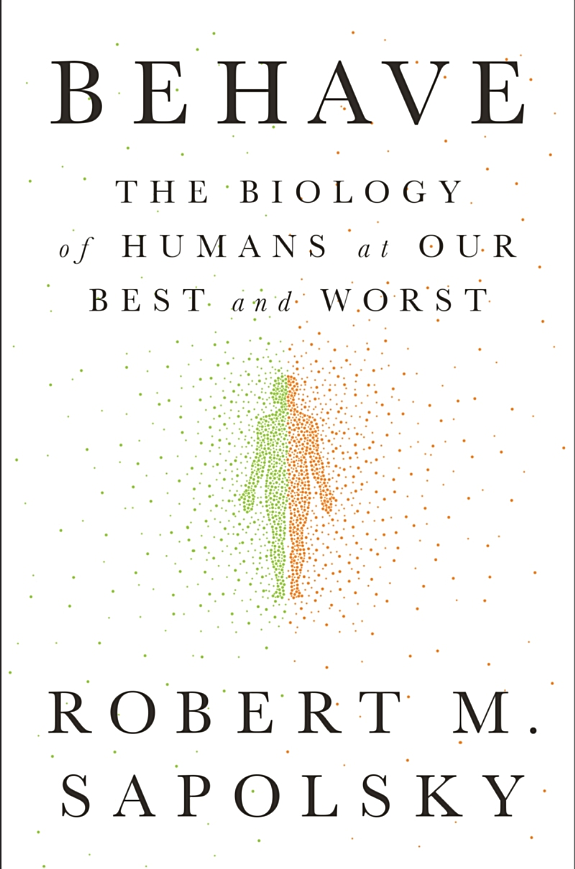
Behave: The Biology of Humans at Our Best and Worst
5. Behave: The Biology of Humans at Our Best and Worst by Robert M. Sapolsky
Robert Sapolsky is a Stanford neuroscientist and primatologist who writes with a rare combination of deep expertise and genuine wit. Behave is his attempt to answer a deceptively difficult question: when a human being does something, whether an act of violence or an act of extraordinary kindness, what caused it? He starts with the neurobiology of a single moment, then works backward through seconds, minutes, hours, days, years, decades, and finally evolutionary time. The result is the most genuinely comprehensive account of human behavior in this entire list.
This is not a light read. Sapolsky assumes you can handle a fair amount of biological and neurological detail, and he is right to. The chapters on hormones, the amygdala, the prefrontal cortex, and the ways that stress shapes behavior are dense but rewarding. He is also consistently funny in a way that feels earned rather than performed. There is a running irreverence toward tidy explanations that makes the complexity feel like honesty rather than showing off.
The book is long and occasionally exhausting, and readers who are not at least somewhat comfortable with science writing may struggle. Sapolsky is also not afraid to wade into politically charged territory, discussing race, tribalism, free will, and punishment in ways that some readers will find bracing and others will find uncomfortable. He does not tidy up the conclusions. If you want a book that leaves you with clean takeaways, this is not it. If you want a book that leaves you genuinely smarter about what it means to be a human animal, it is hard to do better.
Sapolsky’s central argument, that almost every behavior we judge as purely moral or immoral is also a biological event shaped by factors outside our control, does not let anyone off the hook so much as it complicates every hook we have.
This is perfect for readers with patience for scientific detail and a genuine desire to understand human behavior at its most fundamental level, particularly those interested in neuroscience, evolution, or the biology of morality.
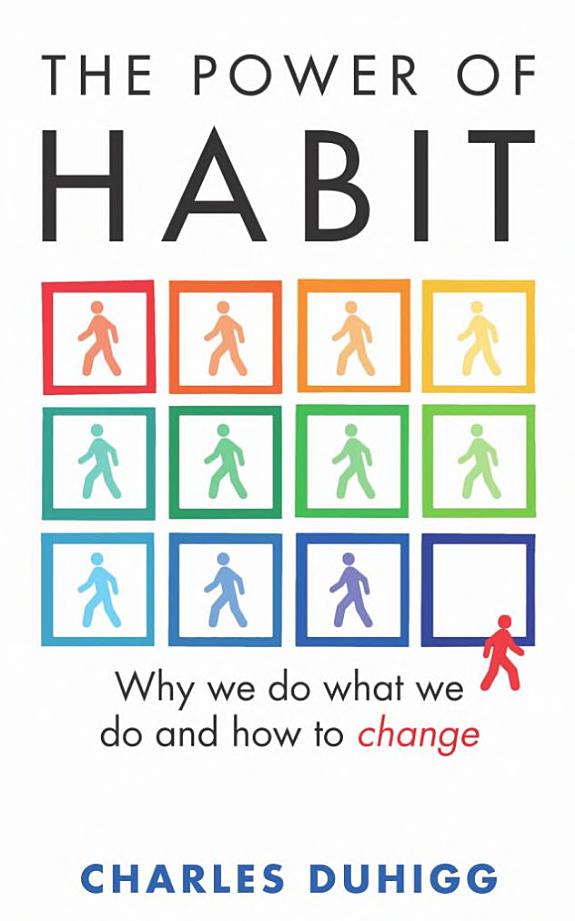
The Power of Habit: Why We Do What We Do in Life and Business
6. The Power of Habit by Charles Duhigg
Charles Duhigg is a journalist, and it shows in the best possible way. This book is built around stories: a woman who transformed her life by changing one habit, the way Target figured out a customer was pregnant before she told her own family, how Alcoa became one of the most profitable companies in America after a new CEO made worker safety his singular obsession. Duhigg uses these narratives to illustrate a simple but genuinely useful framework: the habit loop, which consists of a cue, a routine, and a reward.
The science here is solid, drawn from neuroscience research on the basal ganglia and the way repeated behaviors become automatic. Duhigg explains it accessibly without oversimplifying it. The book also goes beyond individual habits to look at organizational and social habits, which broadens its scope considerably and keeps it from feeling like a narrow self-help manual. The chapters on how the civil rights movement used social habits to sustain itself are particularly interesting and not what you would expect from a book that starts with someone trying to stop biting her nails.
The book is not without weaknesses. The final section, which tries to give the reader a practical guide to changing their own habits, is thinner than the rest of the book and occasionally tips into the kind of optimistic vagueness that pops up in popular psychology. Some critics have also noted that Duhigg stretches the habit framework to cover situations where it fits awkwardly. Still, as an introduction to why we behave automatically in so many areas of our lives, and what it might take to change that, this book is clear, readable, and genuinely useful.
The idea of the “keystone habit,” a single habit whose change creates a cascade of other changes, is one of the more practically interesting concepts in this genre and one that Duhigg supports with compelling evidence.
This is perfect for readers who want to understand the mechanics of habit formation and are drawn to narrative nonfiction that blends research with well-told stories, though it may feel too light for readers who prefer academic depth.
These six books do not agree on everything. Kahneman and Ariely come at irrationality from slightly different angles. Sapolsky would probably want to add a chapter of biological context to everything Greene writes. Cialdini and Duhigg are both interested in behavior change but approach it from opposite ends of the telescope. That disagreement is part of what makes reading across this field worthwhile. Human behavior is genuinely complicated, and any single book that claims to have it fully figured out is probably overselling itself.
What these books share is a willingness to take human behavior seriously as a subject of inquiry rather than something we can explain away with common sense or good intentions. Reading even two or three of them in close succession tends to produce a particular kind of humility, the kind where you catch yourself mid-decision and think, wait, which system is running this? That is not a bad thing to carry around with you.
Start with whichever premise interests you most, whether that is the neuroscience, the economics, the social dynamics, or simply the stories. There is no wrong door into this particular room.