
6 Books for Managing Stress and Anxiety
Stress has a funny way of convincing you that reading a book about stress is the last thing you have time for. And yet here you are, which probably means things have gotten uncomfortable enough that you are ready to actually do something about it. That is a good sign, not a bad one.
The books on this list come from therapists, researchers, and clinicians who have spent careers studying why our nervous systems go haywire and what we can actually do about it. Some are workbooks with exercises you can use today. Others are more narrative, helping you understand the deeper mechanics of anxiety before offering a way through. None of them promise a quick fix, because anxiety does not work that way, and any book that tells you otherwise is selling something. What these books do offer is genuine, well-researched guidance that has helped a lot of people feel considerably more like themselves again.
Burnout
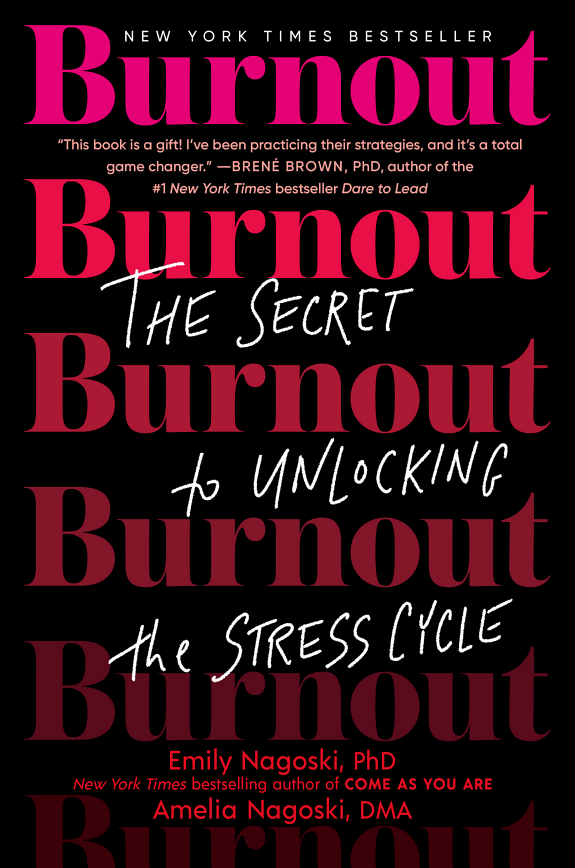
1. Burnout by Emily Nagoski and Amelia Nagoski
Emily Nagoski is a health educator and the author of the widely read “Come As You Are,” and here she teams up with her twin sister Amelia, a conductor and performer who has navigated her own battles with burnout. The collaboration gives the book an unusual dual perspective, blending rigorous science with very personal storytelling. Their writing is warm and funny in places, which helps considerably when the subject matter is the particular exhaustion that comes from running on empty for too long.
The central argument of the book is that stress is not just a feeling but a biological cycle, and the problem is that most of us never actually complete that cycle. We deal with the stressor, whether it is a difficult boss, a financial crisis, or a family conflict, but we never give our bodies the signal that the threat has passed. The Nagoskis explain what actually closes the stress response loop, things like physical movement, creative expression, and genuine human connection, and why skipping those steps keeps us stuck in a state of chronic activation that eventually burns us out entirely.
The book is specifically written with women in mind, addressing how societal expectations around caregiving and emotional labor contribute to burnout in ways that are rarely acknowledged. That focus is one of its greatest strengths, but it is also worth naming, because readers who do not identify with those particular pressures may find some sections less directly applicable to their lives. The science, however, is universal, and the core framework applies broadly.
“Burnout” does something quietly radical: it separates the stressor from the stress itself, and in doing so, gives you a place to start that does not require fixing the world first.
This is perfect for anyone who has handled every obligation on their list and still feels completely depleted, especially those who suspect the problem runs deeper than a better to-do list.
The Mindful Way Through Anxiety
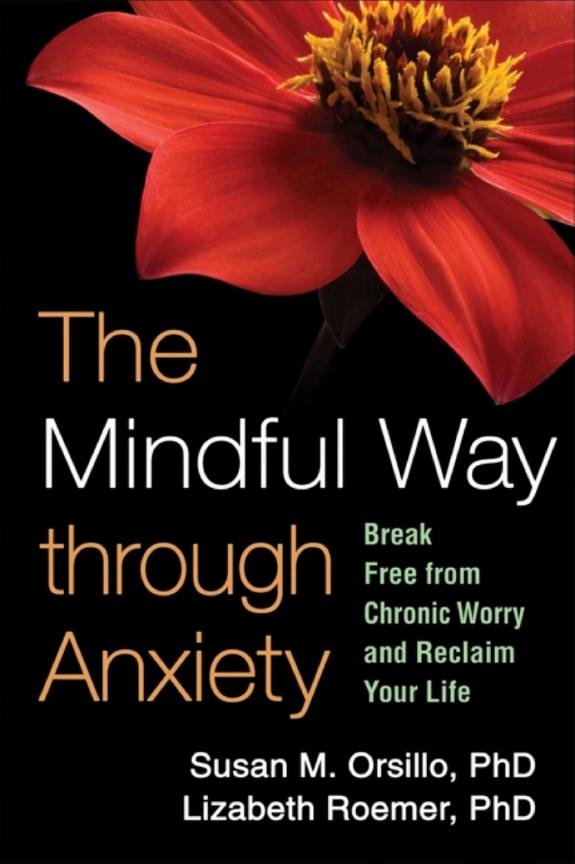
2. The Mindful Way Through Anxiety by Susan M. Orsillo and Lizabeth Roemer
Susan Orsillo and Lizabeth Roemer are both clinical psychologists and researchers who helped develop Acceptance-Based Behavior Therapy, and this book is essentially the accessible, reader-friendly version of that clinical work. Their writing is careful and clear without being cold. You get the sense throughout that they have sat across from a lot of anxious people and understand, with real compassion, how exhausting it is to be at war with your own mind.
The book draws on mindfulness and acceptance principles rather than the more traditional cognitive approach of challenging or disputing anxious thoughts. The distinction matters. Instead of asking you to argue with your anxiety, Orsillo and Roemer invite you to observe it, make room for it, and learn to act according to your values even when fear is present. For people who have tried to think their way out of anxiety and found that the thinking only made things louder, this reorientation can feel like a genuine shift.
There are guided exercises throughout, and the book includes downloadable audio for the meditation practices, which makes it more usable than a purely theoretical read. It does ask something of you, though. The approach requires patience and a willingness to sit with discomfort rather than escape it, which is not everyone’s preferred method, particularly when anxiety is at its most acute. If you are in crisis or looking for rapid symptom relief, this is not the right starting point.
The book’s quiet insistence that you do not need to eliminate anxiety before living fully is, for many readers, the most useful thing they have encountered in a long time.
This is perfect for people who have tried to reason their way out of anxiety without success and are open to a gentler, more acceptance-based approach to finding their footing.
When Panic Attacks
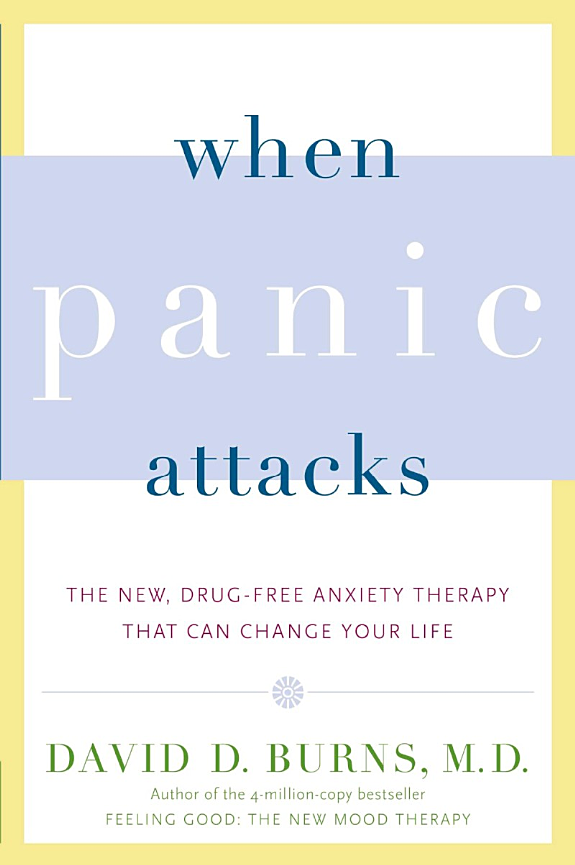
3. When Panic Attacks by David D. Burns
David Burns is a psychiatrist and the author of “Feeling Good,” one of the most widely read books on cognitive behavioral therapy ever written. “When Panic Attacks” applies that same CBT framework specifically to anxiety, panic, and phobias, and it carries all the hallmarks of Burns’s style: direct, occasionally irreverent, and packed with techniques you can use without a therapist in the room. He has a gift for making clinical concepts feel approachable rather than intimidating.
The book is structured around a large toolkit of techniques, far more than most comparable titles offer, and Burns encourages readers to experiment and find what actually works for them rather than committing to a single method. Some of the approaches are cognitive, targeting the distorted thinking patterns that fuel anxiety. Others are behavioral, involving gradual exposure or role-playing. There is also material on interpersonal causes of anxiety, which is a dimension many books in this space overlook entirely.
Burns is confident to the point of occasionally overselling his results, and some readers find his style a little breezy given how serious and debilitating anxiety can be. The claim that the techniques work quickly is not always borne out in practice, and people with severe or long-standing anxiety disorders may need professional support alongside the book rather than instead of it. Still, as a self-help resource grounded in solid clinical research, it covers more ground than almost anything else in the category.
Burns treats you as someone capable of understanding your own mind and doing something about it, which is either exactly what you need to hear or mildly annoying depending on your current state.
This is perfect for readers who want a wide-ranging, technique-heavy resource they can work through independently, particularly those who have found CBT useful in the past.
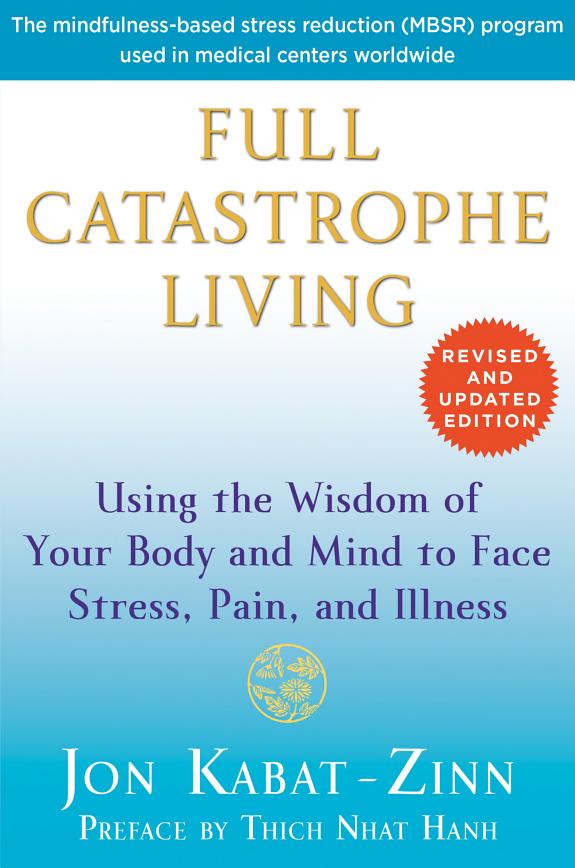
Full Catastrophe Living
4. Full Catastrophe Living by Jon Kabat-Zinn
Jon Kabat-Zinn founded the Mindfulness-Based Stress Reduction program at the University of Massachusetts Medical School in 1979, and this book is the comprehensive companion to that program. It is a substantial read, not a quick guide, and Kabat-Zinn writes with the depth and seriousness the subject deserves. The title comes from a line in “Zorba the Greek,” where the full catastrophe refers not to disaster but to the whole messy, beautiful, painful experience of being alive. That framing tells you something about what the book asks of you.
The core of the MBSR program is learning to relate differently to your thoughts, feelings, and bodily sensations through sustained mindfulness practice. Kabat-Zinn is meticulous about the science, citing research throughout without letting the book become a dry academic text. He covers the physiology of stress, the clinical evidence for mindfulness, and the practical mechanics of building a meditation practice, including body scan, sitting meditation, and mindful movement. The material on pain is particularly interesting, given that the program was originally developed for chronic pain patients.
This is a long book and it asks for a genuine commitment to practice, not just reading. People who are looking for something lighter or faster will probably find it overwhelming. And readers who have a strong resistance to anything that feels adjacent to meditation may find the whole enterprise a bit much, even though Kabat-Zinn is careful to present mindfulness in entirely secular, clinical terms.
“Full Catastrophe Living” does not promise to remove the hard parts of life. It offers something more durable: a different relationship with them.
This is perfect for readers who are ready to commit to a sustained mindfulness practice and want the full clinical and philosophical context behind why it works.
The Anxiety and Phobia Workbook
5. The Anxiety and Phobia Workbook by Edmund J. Bourne
Edmund Bourne spent years working as a psychologist specializing in anxiety disorders, and this workbook has been updated through multiple editions since it first appeared in the early 1990s, which is about as good an endorsement as a self-help book can have. It is comprehensive to a degree that can feel almost encyclopedic at first glance. Generalized anxiety, panic disorder, social anxiety, specific phobias, OCD, PTSD, and more are all addressed, with dedicated chapters offering background, assessment tools, and practical exercises for each.
The workbook format is genuinely useful here. Rather than reading passively, you are filling out questionnaires, tracking patterns, and working through structured exercises that build on each other over time. Bourne draws on multiple therapeutic traditions, including CBT, relaxation techniques, nutrition, exercise, and even some discussion of the role of spirituality in recovery, which gives the book a broader scope than many competitors. Whether you find that breadth reassuring or slightly overwhelming will depend on your personality.
Because the book covers so much ground, it can feel a little clinical in places, more like a reference manual than a conversation. Readers who need warmth and narrative to stay engaged may find themselves drifting. It is also worth noting that a workbook only works if you actually do the work, which sounds obvious but is genuinely harder than it looks when anxiety is making everything feel effortful. Having a therapist to work alongside is still the ideal scenario.
As a structured, standalone resource for understanding and addressing anxiety in its many forms, very few books are this thorough or this practical at the same time.
This is perfect for people who want a comprehensive, structured program they can work through at their own pace, especially those dealing with a specific anxiety disorder who want detailed, targeted guidance.
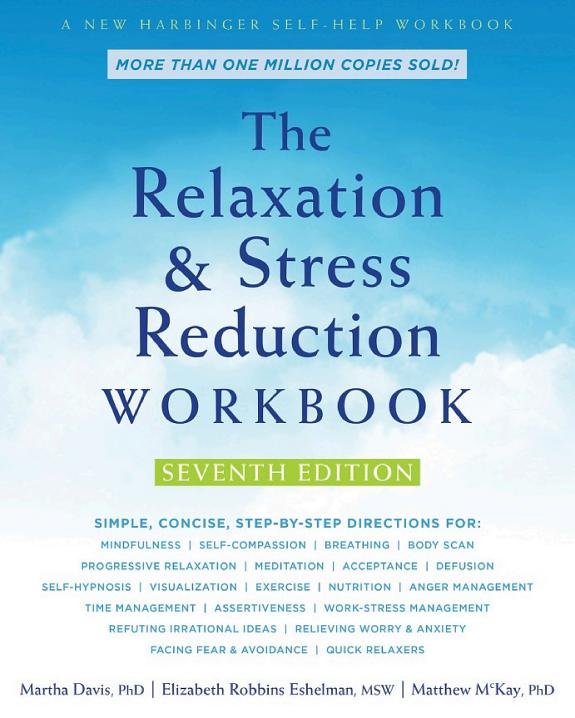
The Relaxation and Stress Reduction Workbook
6. The Relaxation and Stress Reduction Workbook by Martha Davis, Elizabeth Robbins Eshelman, and Matthew McKay
This workbook has been in print since 1980 and has gone through multiple updated editions, which puts it in rare company. Martha Davis, Elizabeth Robbins Eshelman, and Matthew McKay are all clinicians, and the book reflects that professional grounding throughout. It is not a pop-psychology title dressed up in clinical language. It is a genuine, well-organized compendium of stress reduction techniques drawn from decades of research and practice.
The range of techniques covered is impressive: progressive muscle relaxation, autogenics, breathing exercises, mindfulness meditation, visualization, cognitive restructuring, assertiveness training, time management, and more. Each chapter explains the technique, provides the research backing it, and then walks you through how to actually do it, with worksheets and practice logs included. The tone is measured and instructional rather than inspirational, which some readers will find refreshing and others will find a little dry.
Because it covers so many methods, the book works best as a resource you return to over time rather than something you read cover to cover in a week. It is not particularly warm or narrative-driven, and it does not tell much of a story. If you are looking for personal essays or memoir-adjacent writing alongside the practical content, you will not find it here. What you will find is one of the most reliable, well-tested collections of stress reduction tools available in a single volume.
There is something quietly reassuring about a book that has been helping people manage stress for over four decades. It did not stick around by accident.
This is perfect for readers who want a practical, no-frills reference they can use to build a personalized stress reduction toolkit, particularly those who appreciate variety and want to experiment with multiple approaches.
Anxiety and stress are not problems you solve once and move past. They tend to be ongoing conversations with your own nervous system, and finding the right tools for that conversation takes time and some honest self-knowledge. The books on this list represent genuinely different approaches, from the biological and systemic framing of the Nagoskis to the structured clinical workbooks of Bourne and Davis, and there is no single right answer about which one belongs in your hands first.
If you are not sure where to start, think about what you actually need right now. Do you want to understand what is happening in your body and why? Do you need practical exercises you can use today? Are you more drawn to reading and reflection, or to structured practice? Any of those instincts will point you toward at least one of these books. Trust that instinct. The best book for managing stress is the one you will actually open.