
5 Books for Quiet Women Who Want More Confidence
There is a particular kind of exhaustion that comes from being a quiet person in a loud world. You leave conversations replaying everything you did not say. You agree to things you did not want to do. You watch someone else get credit for an idea you mentioned softly ten minutes earlier. It is not weakness. It is a pattern, and patterns can be changed.
The books on this list are not about turning you into someone you are not. Nobody here is asking you to become a bold, brash extrovert who high-fives strangers. These are books that meet you where you are, take your quietness seriously, and offer something genuinely useful: a clearer understanding of yourself, and some practical footing for the moments that matter most.
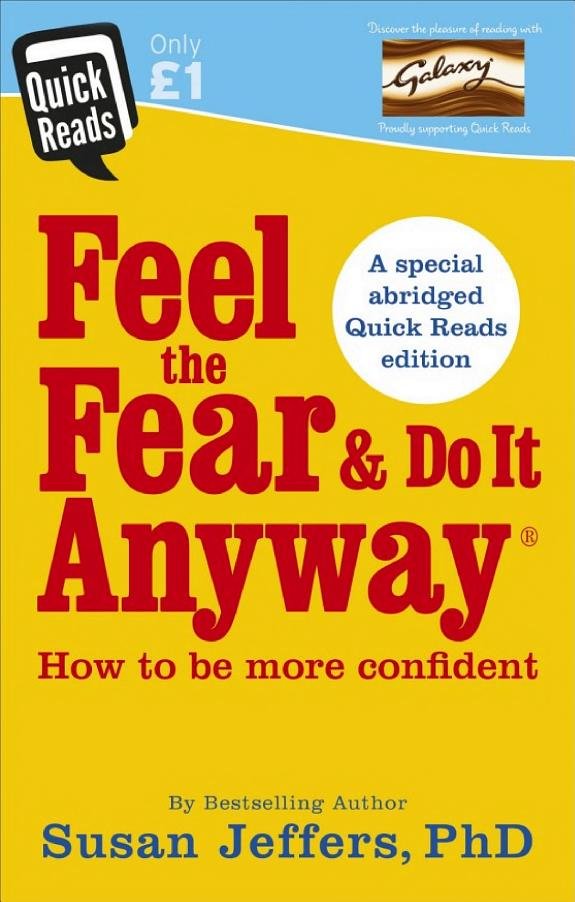
Feel the Fear and Do It Anyway
1. Feel the Fear and Do It Anyway by Susan Jeffers
Susan Jeffers wrote this book in the 1980s and it has never really gone out of print, which tells you something. The central idea is deceptively simple: fear does not go away when you become more capable or more confident. It goes away when you stop waiting for it to go away and act regardless. Jeffers argues that the real problem is not the fear itself but the belief that you cannot handle whatever is on the other side of it.
Her writing is warm and direct without being preachy. She draws on her own experience of feeling paralyzed, and that honesty keeps the book from feeling like a lecture. The exercises she offers are practical rather than abstract, things you can actually try rather than concepts to simply nod along to. There is a reason therapists have been recommending this one for decades.
That said, if you are someone who prefers a heavy research foundation and peer-reviewed citations, this book may feel a little light. Jeffers writes from personal experience and observation more than from clinical data. It is motivational in tone, which works beautifully for some readers and feels thin to others.
The fear of doing something new will always be there. Jeffers makes a convincing case that waiting for it to vanish is the only strategy guaranteed to fail.
This is perfect for women who know intellectually that they are capable but still find themselves frozen at the moment of action, and who want a readable, encouraging push rather than a dense psychological framework.
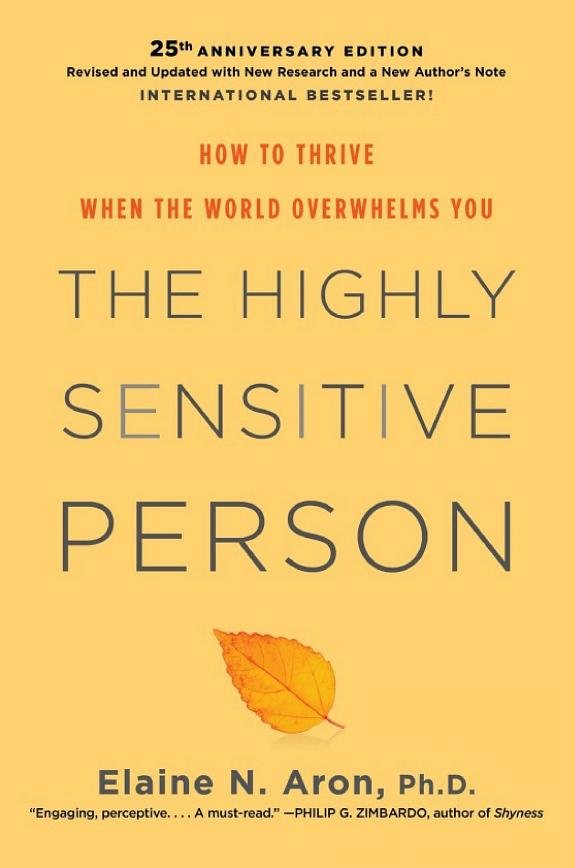
The Highly Sensitive Person: How to Thrive When the World Overwhelms You
2. The Highly Sensitive Person: How to Thrive When the World Overwhelms You by Elaine N. Aron
Elaine Aron is a research psychologist who identified the trait of high sensitivity in the early 1990s, and this book remains the foundational text on the subject. If you have spent your life being told you are too sensitive, too easily overwhelmed, too affected by things that do not seem to bother anyone else, this book has a good chance of making you feel significantly less broken. Aron explains that roughly fifteen to twenty percent of people are born with a nervous system that processes information more deeply than average. That is not a flaw. It is a trait with real advantages, and real costs.
The book is part science, part self-help, and part gentle reframe. Aron covers everything from relationships and work to childhood experiences and how sensitivity intersects with introversion (though she is careful to note they are not the same thing). Her tone is compassionate without being saccharine, and she does not pretend the trait is always easy to live with. That honesty is part of what makes the book feel trustworthy.
Readers who are not highly sensitive themselves may find this one less relevant, and that is perfectly fair. It is also worth noting that the book can veer into self-assessment territory that feels repetitive in places. But for the right reader, it is one of those rare books that rearranges something fundamental in how you see yourself.
Understanding why you respond to the world the way you do is not the same as excusing yourself from it. Aron makes the case that self-knowledge is the starting point for actually thriving, not just coping.
This is perfect for women who have long suspected that their sensitivity is a defining feature of who they are, and who want both a scientific explanation and a compassionate roadmap for working with that trait rather than against it.
The Assertiveness Guide for Women: How to Communicate Your Needs, Set Healthy Boundaries, and Transform Your Relationships
3. The Assertiveness Guide for Women: How to Communicate Your Needs, Set Healthy Boundaries, and Transform Your Relationships by Julie de Azevedo Hanks
Julie de Azevedo Hanks is a licensed therapist, and it shows in the best way. This book approaches assertiveness not as a personality trait you either have or do not have, but as a skill rooted in emotional awareness and attachment patterns. Hanks connects the difficulty many women have with speaking up directly to early experiences and relational history, which makes the book feel more substantial than a typical communication guide.
The structure is genuinely helpful. Hanks moves through different attachment styles and explains how each one tends to show up in communication, then offers concrete tools for shifting those patterns. There are reflection questions and exercises throughout, which makes this a book you work through rather than just read. If you have ever wondered why you apologize constantly, or why asking for something simple feels so fraught, Hanks gives you a framework that actually explains it.
This book is probably not for someone looking for a quick read or a simple list of scripts to memorize. It asks for real engagement and some willingness to look at your own history. Readers who prefer a lighter, more anecdotal approach may find the therapeutic structure a bit clinical. But for women who want to understand the roots of their communication habits, not just patch over them, this is one of the more thoughtful books available.
Assertiveness, Hanks argues, is not about being louder or more aggressive. It is about knowing what you feel, believing it is worth expressing, and having the tools to do so with honesty and care.
This is perfect for women who have tried to be more assertive and found it did not stick, and who suspect the issue runs deeper than simply not knowing the right words to say.
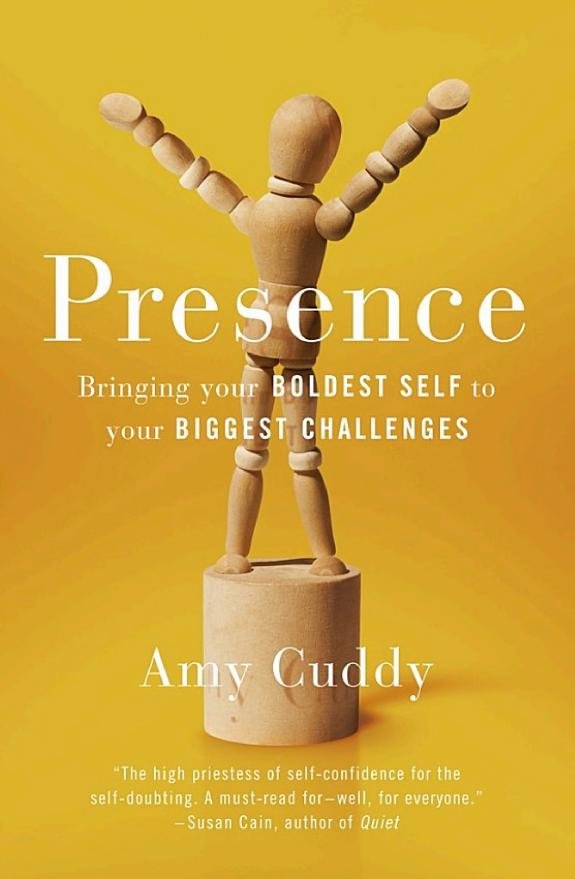
Presence: Bringing Your Boldest Self to Your Biggest Challenges
4. Presence: Bringing Your Boldest Self to Your Biggest Challenges by Amy Cuddy
Amy Cuddy became famous for a TED Talk about power poses, and if that is all you know about this book, it is worth knowing that the book is considerably more nuanced than the two-minute summary version. Yes, she discusses body language and how physical posture affects psychological state. But the larger argument of the book is about something she calls presence, which she defines as the state of being fully connected to your own values, feelings, and capabilities in a high-stakes moment rather than being hijacked by anxiety about how you are being perceived.
Cuddy writes with genuine warmth and includes a great deal of her own story, including a serious brain injury she sustained as a young woman that made her path through academia far harder than it might otherwise have been. That personal thread gives the book an emotional weight that keeps it from feeling like a pure self-improvement manual. She is clearly writing from experience, not just from research findings.
It is worth mentioning that some of the underlying research on power poses has faced scrutiny since the original TED Talk, and Cuddy addresses this in the book with more care than critics sometimes acknowledge. Readers who are highly skeptical of pop psychology may want to approach with that context in mind. And if you are looking for something that speaks specifically to introversion or sensitivity, this book is broader in its focus than some others on this list.
Presence is not about performing confidence you do not feel. Cuddy makes a compelling case that it is about getting out of your own way long enough to let what is actually true about you come through.
This is perfect for women who have a specific high-stakes situation on the horizon, a job interview, a difficult conversation, a presentation, and who want both the science and the practical grounding to show up as themselves rather than a nervous version of themselves.
Quiet: The Power of Introverts in a World That Can’t Stop Talking
5. Quiet: The Power of Introverts in a World That Can’t Stop Talking by Susan Cain
Susan Cain spent years as a lawyer and negotiator before writing this book, which is part of why it feels so grounded. She is not theorizing about introversion from a distance. She is writing from inside it. Quiet is a cultural history, a psychological study, and a personal reckoning all at once, and the combination is what makes it so readable. Cain traces how Western culture came to prize extroversion above almost everything else, and what has been lost in that shift.
The research Cain draws on is extensive and well-integrated. She covers neuroscience, personality psychology, education, and business, and she does it without ever making the book feel like a textbook. The chapter on how introverts can stretch beyond their comfort zones without betraying themselves is particularly useful, as is her treatment of the relationship between introversion and sensitivity. She is careful throughout to distinguish between shyness, introversion, and anxiety, which matters more than it might initially seem.
If you are an extrovert reading this list out of curiosity, Quiet is still worth your time, but it is not really written for you. The book is most useful to people who already have a felt sense that the world is calibrated for someone slightly different from them. It will not necessarily give you a five-step plan for becoming more confident, which is also why it belongs on this list. Sometimes understanding yourself is the confidence-building work.
Cain is not arguing that introverts are better than extroverts, or that the quiet life is the superior one. She is arguing that the quiet life deserves to be taken seriously on its own terms, which turns out to be a more radical claim than it sounds.
This is perfect for introverted women who have spent years wondering if something is wrong with them, and who are ready to stop apologizing for how they are wired and start understanding it as a genuine source of strength.
None of these books will hand you confidence in a neat package. That is not how it works, and any book that promises otherwise is probably not worth your time. What these five books offer is something more durable: a clearer sense of who you are, why you respond to the world the way you do, and what it might look like to take up a little more space without pretending to be someone else entirely.
Start with whichever title feels most urgent to you right now. Maybe that is the one that addresses a specific challenge, or maybe it is the one that made you think, finally, someone is describing me. Either way, the fact that you are here looking for these books suggests you already know that something needs to shift. That awareness is not nothing. It is actually a pretty good place to start.