

6 Books About Boundaries Without Guilt
Somewhere along the way, a lot of us learned that saying no was the same as being unkind. We said yes to things we resented, smiled through situations that exhausted us, and then lay awake at 2 a.m. wondering why we felt so depleted. If that sounds familiar, you are not alone, and you are also not broken.
Books about boundaries have a reputation for being preachy or oversimplified, full of worksheets and affirmations that feel fine in theory but dissolve the moment your mother calls. The books on this list are different. They are grounded in psychology, written by people who have actually studied this stuff, and honest about how hard it is to change patterns that have been years in the making. Some are warm and gentle. Some are a little blunt. All of them take the subject seriously.
Whether you are just starting to notice that you give more than you receive, or you have been in therapy for years and want something to read between sessions, there is something here for you. Pick the one that sounds most like where you are right now.
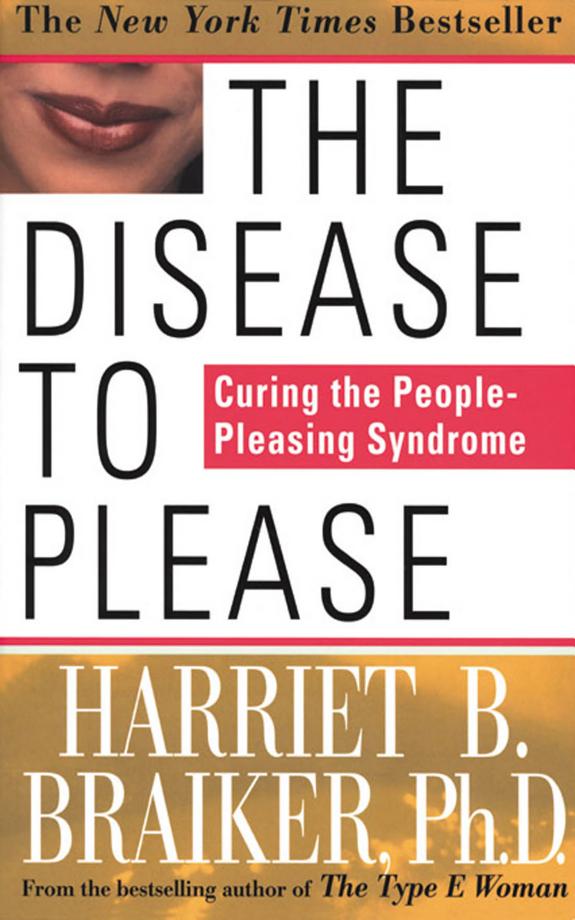
The Disease to Please: Curing the People-Pleasing Syndrome
1. The Disease to Please: Curing the People-Pleasing Syndrome by Harriet B. Braiker
Harriet B. Braiker was a clinical psychologist, and it shows. This book does not mess around with surface-level advice. It goes straight for the root of people-pleasing behavior, treating it not as a personality quirk but as a genuine psychological pattern with real consequences for your mental and physical health. Braiker coined the phrase “disease to please” to describe the compulsive need to make others happy at the expense of yourself, and she spends the book unpacking exactly how that pattern forms and why it is so hard to shake.
The voice here is clinical but readable. Braiker is not warm and fuzzy, and she is not trying to be. She is more interested in helping you understand the mechanics of your behavior than in making you feel cozy about it. There is a lot of self-assessment built into the book, which some readers will find useful and others will find a bit much. If you like structure and want to actually diagnose what is driving your people-pleasing, this is the kind of book that rewards careful reading.
One of the book’s strongest qualities is its refusal to let people-pleasers off the hook by framing everything as victimhood. Braiker acknowledges that the need to please others often comes with its own kind of control, and that is a more nuanced take than you get in a lot of self-help books. It is not a comfortable read, but it is an honest one.
“People-pleasing is not about being nice. It is about needing approval so badly that you will sacrifice your own needs to get it.”
This is perfect for readers who want a psychologically rigorous explanation of why they cannot stop saying yes, and who are ready to be a little uncomfortable in the process. It is not the right fit for someone looking for a warm, narrative-driven read or quick practical scripts.
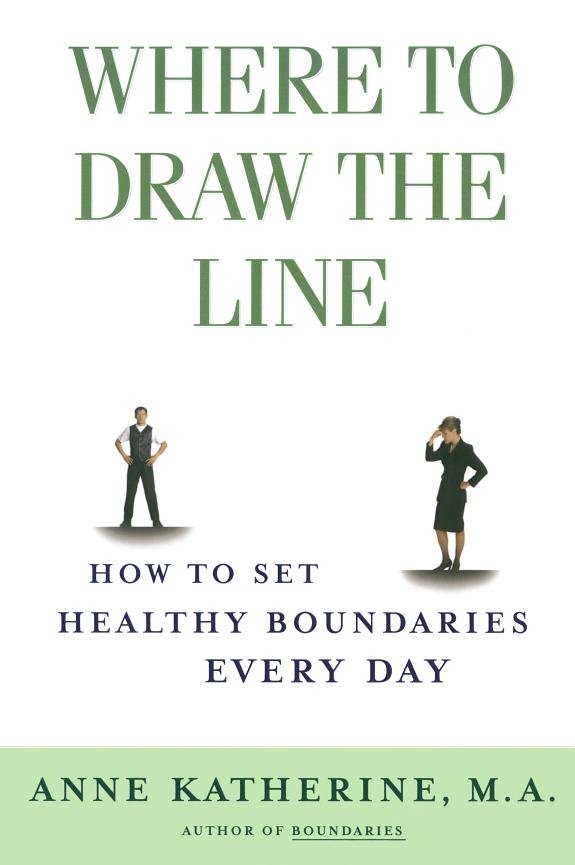
Where to Draw the Line: How to Set Healthy Boundaries Every Day
2. Where to Draw the Line: How to Set Healthy Boundaries Every Day by Anne Katherine
Anne Katherine takes a different approach than most books in this space. Rather than focusing on one big idea and building an entire framework around it, she works through specific areas of life where boundaries tend to break down: time, money, friendships, family, the body, sexuality, and more. It is almost encyclopedic in its scope, which makes it an unusual kind of reference book as much as a straight read-through.
Katherine’s writing is clear and grounded, informed by her background as a therapist. She is good at describing the subtle ways boundaries get violated, the ones that do not look like violations at all until you step back and notice how drained you feel. She also spends real time on what healthy boundaries actually look like in practice, not just how to say no, but how to recognize when your own limits are being crossed before you reach the point of resentment.
The book is not particularly funny or stylish. It reads like it was written by someone who genuinely cares about helping people rather than someone trying to build a brand, which is refreshing. Some chapters will feel more relevant to your life than others, and that is fine. You do not have to read it cover to cover to get something meaningful out of it.
“Knowing where you end and another person begins is not selfishness. It is the foundation of every relationship that actually works.”
This is perfect for readers who want a practical, area-by-area guide to boundaries rather than a single overarching theory. It is less suited to someone looking for an engaging narrative or a book they can race through in one sitting.
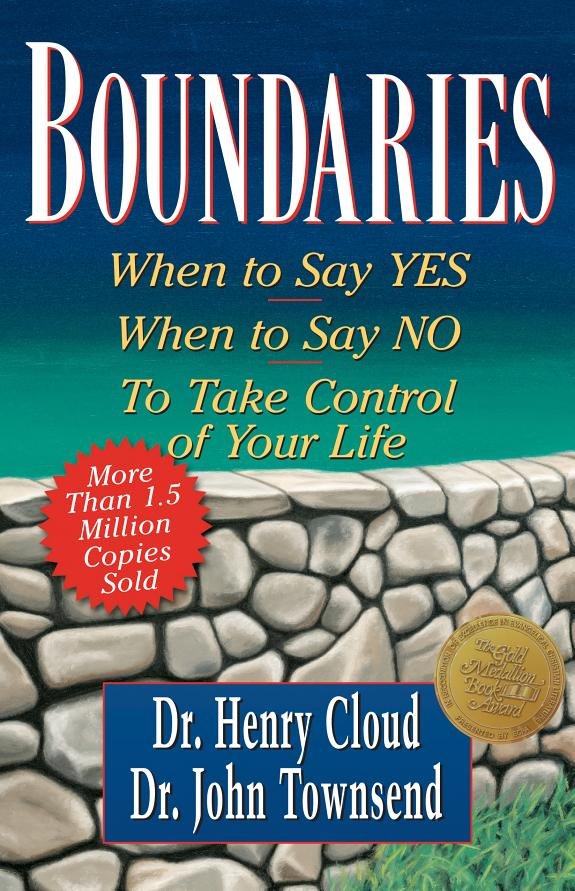
Boundaries: When to Say Yes, How to Say No to Take Control of Your Life
3. Boundaries: When to Say Yes, How to Say No to Take Control of Your Life by Henry Cloud and John Townsend
This is one of the most widely read books on boundaries ever published, and it has been in print for decades for a reason. Henry Cloud and John Townsend are both psychologists who write from a Christian perspective, which is worth knowing upfront. The book is explicitly grounded in biblical principles, and that framing is woven throughout rather than confined to a chapter or two. For readers who share that worldview, it adds depth. For readers who do not, it may require some translation.
What makes this book worth reading regardless of your spiritual background is the clarity of its central argument: that saying yes to everything is not generosity, it is a failure to take responsibility for your own life. Cloud and Townsend are particularly good at naming the guilt that comes with setting limits, and at explaining why that guilt is not a signal that you have done something wrong. They use a lot of case studies, which helps the concepts feel grounded rather than abstract.
The book is thorough to the point of being long. Some sections cover the same ground more than once, and a few of the examples feel dated. But the core ideas hold up, and the authors are genuinely compassionate toward people who have spent years giving more than they had. There is no smugness here, just a patient argument for why you are allowed to have limits.
“We are responsible to others and for ourselves. Knowing the difference changes everything.”
This is perfect for readers who are open to faith-based framing and want a thorough, well-developed exploration of why boundaries matter and how to build them. It is not the right fit for readers who prefer secular psychology or want something concise.
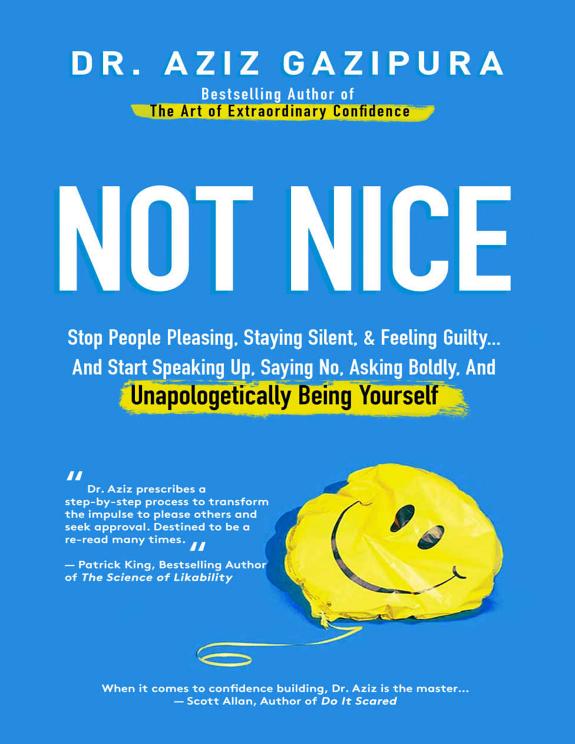
Not Nice: Stop People Pleasing, Staying Silent, & Feeling Guilty… And Start Speaking Up, Saying No, Asking Boldly, And Unapologetically Being Yourself
4. Not Nice: Stop People Pleasing, Staying Silent, and Feeling Guilty… And Start Speaking Up, Saying No, Asking Boldly, And Unapologetically Being Yourself by Aziz Gazipura
Aziz Gazipura is a clinical psychologist who also writes like a person, which is rarer than it should be. Not Nice is direct, a little confrontational, and occasionally funny in the way that a good friend who tells you the truth is funny. The central premise is that most of what we call “being nice” is actually fear in disguise, and that genuine kindness looks very different from the compulsive approval-seeking a lot of us have mistaken for a personality trait.
Gazipura draws on his own experience with social anxiety and people-pleasing, which gives the book a personal quality that purely clinical texts often lack. He is not writing from a distant, authoritative position. He is writing as someone who has been in the same trap and found his way out. That comes through in the tone, which is encouraging without being saccharine. He takes you seriously enough to push back on your excuses, which is exactly what this kind of book needs to do.
The book is long and covers a lot of ground, including romantic relationships, friendships, work dynamics, and the internal voice that tells you to shrink. Some readers will find the length a little much. Others will appreciate the thoroughness. Either way, the chapters on guilt are among the best writing on the subject you will find in this genre. Gazipura is particularly sharp on the difference between guilt that signals a genuine moral failure and guilt that is simply the discomfort of changing old patterns.
“The guilt you feel when you say no is not evidence that you did something wrong. It is evidence that you are changing.”
This is perfect for readers who want a blend of psychological insight and personal narrative, and who respond well to a direct, no-excuses tone. It is not ideal for readers who prefer short books or who find blunt writing off-putting.
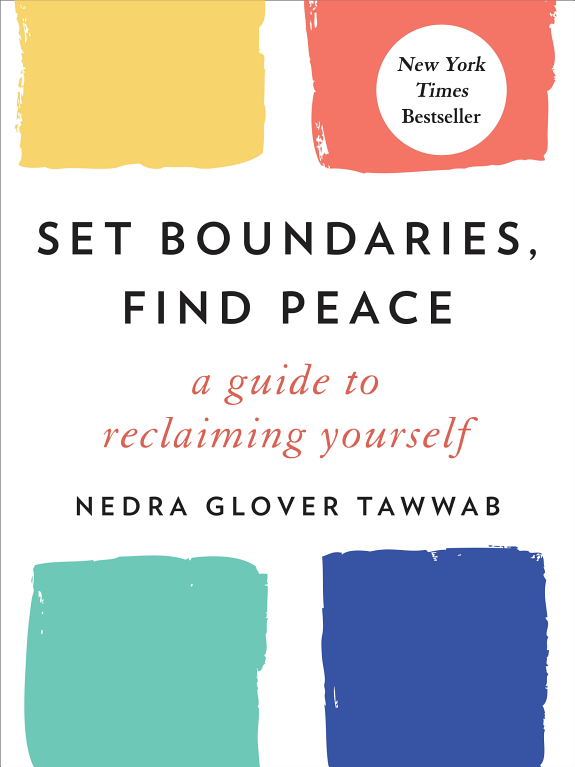
Set Boundaries, Find Peace: A Guide to Reclaiming Yourself
5. Set Boundaries, Find Peace: A Guide to Reclaiming Yourself by Nedra Glover Tawwab
Nedra Glover Tawwab is a therapist who built a large following on social media by talking about boundaries in plain, accessible language, and this book is the extended version of that work. It is warm, readable, and structured in a way that makes it easy to pick up and put down without losing the thread. Tawwab is not trying to overwhelm you. She is trying to meet you where you are, and that intention comes through on every page.
What sets this book apart from others in the genre is its attention to the specific ways that boundaries show up differently depending on your relationships and your background. Tawwab writes about family dynamics, workplace boundaries, digital boundaries, and the particular challenges that come with setting limits in communities where self-sacrifice is treated as a virtue. She does not pretend that saying no is easy or that the people in your life will always respond well. She is honest about the friction that comes with change, which makes her encouragement feel earned rather than hollow.
The book is not dense or academic. If you are looking for deep psychological theory, you will probably want to pair this with something else on this list. But if you want something that feels like a conversation with a thoughtful, knowledgeable friend, this is exactly that. Tawwab has a gift for making complex emotional territory feel navigable without making it feel simple.
“Boundaries are not walls. They are the terms under which you are willing to be in a relationship with someone.”
This is perfect for readers who want an accessible, compassionate introduction to boundaries that covers a wide range of relationships and situations. It is less suited to readers looking for a research-heavy or highly structured approach.
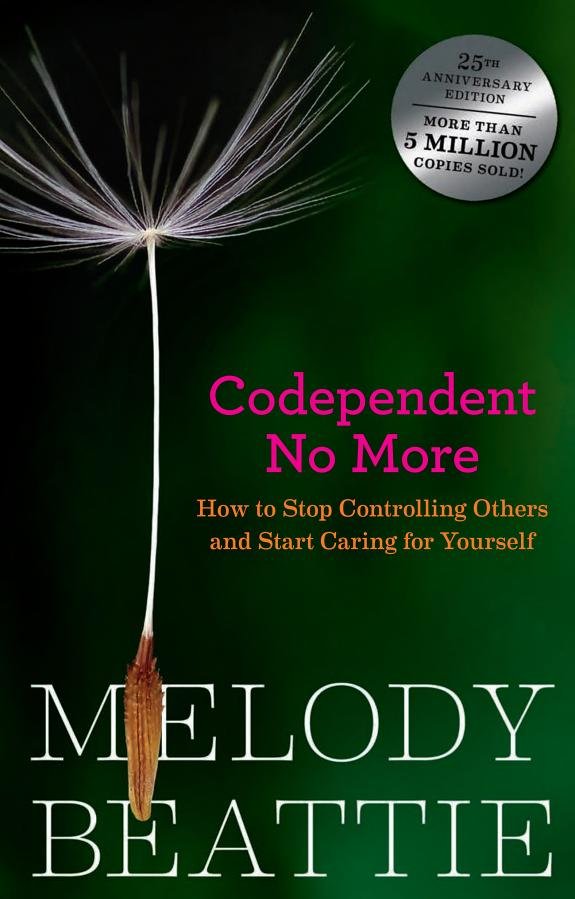
Codependent No More: How to Stop Controlling Others and Start Caring for Yourself
6. Codependent No More: How to Stop Controlling Others and Start Caring for Yourself by Melody Beattie
Melody Beattie wrote this book in 1986, and it is still in print, still being pressed into people’s hands by therapists, and still finding new readers who recognize themselves in its pages. That kind of longevity means something. Codependent No More is the book that essentially put the concept of codependency into mainstream conversation, and Beattie wrote it from personal experience as much as from research. It reads like it was written by someone who needed this book and could not find it.
The subject is codependency, which is the pattern of organizing your life around managing other people’s emotions, problems, and choices at the expense of your own. Beattie is compassionate toward people caught in this pattern, but she is also clear that compassion for others cannot come at the cost of abandoning yourself. The book draws on twelve-step philosophy, which is part of its DNA. If that framework does not resonate with you, some sections may feel less useful. But the core observations about how codependency works are sharp and hold up across contexts.
The writing is honest in a way that can feel a little raw. Beattie does not dress things up. She describes the exhaustion of trying to control outcomes you cannot control, the loneliness of relationships built around caretaking rather than genuine connection, and the strange grief that comes with starting to let go. It is not a comfortable book. It is, however, a genuinely useful one, and for a certain kind of reader it will feel like being finally, accurately seen.
“Caring for yourself is not a reward you earn after you have taken care of everyone else. It is the starting point.”
This is perfect for readers who recognize codependent patterns in their relationships, particularly those involving addiction, chronic illness, or emotionally unavailable partners. It is less suited to readers who prefer a secular, clinical approach or who have no connection to twelve-step culture.
Every book on this list approaches boundaries from a slightly different angle, which is part of why they work well together. Some go deep into the psychology. Some focus on practical application. Some are warm and gentle, and some are more willing to tell you things you might not want to hear. None of them promise that setting limits will be easy or that the people around you will applaud you for it. They are honest about the difficulty, and that honesty is part of what makes them worth reading.
The thread running through all six is the same basic idea: that you are a person with finite time, energy, and emotional capacity, and that protecting those things is not selfishness. It is just reality. Saying no to something you cannot give is not a failure of generosity. It is an act of honesty, toward yourself and toward the other person.
Start with whichever book on this list sounds most like where you are right now. You do not have to read all six to get something meaningful out of this. You just have to start somewhere, and the fact that you are here suggests you already have.