

8 Books to Stop Chasing Validation for Good
There is a particular exhaustion that comes from needing other people to tell you that you are okay. It creeps into small decisions and enormous ones. You rewrite the text message four times. You replay the conversation at 2 a.m. You shrink yourself in rooms where you used to feel comfortable. And the frustrating part is that the approval, when it finally comes, never quite fills the thing you were hoping it would fill.
The books on this list are not about becoming indifferent to other people or turning yourself into some lone-wolf stoic who needs nothing from anyone. That is not freedom, that is just a different kind of performance. These books are about something quieter and more durable: learning to trust your own judgment, sit with your own discomfort, and stop outsourcing your sense of worth to whoever happens to be watching. Some of these reads are gentle. Some are blunt. All of them are worth your time if you are tired of living in reaction to other people’s opinions.
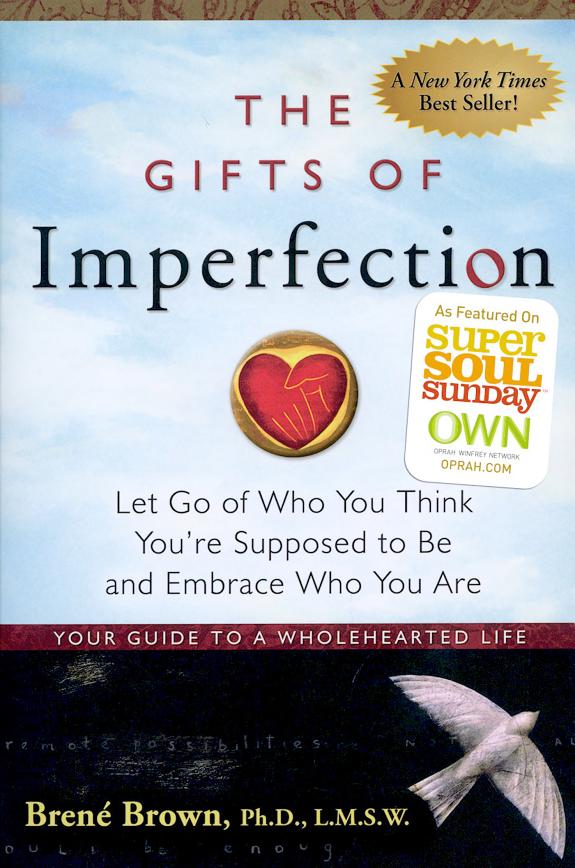
The Gifts of Imperfection
1. The Gifts of Imperfection by Brené Brown
Brené Brown spent years as a shame researcher before she became a household name, and that background gives this book a texture that a lot of self-help titles lack. She is not just offering cheerful advice. She is working through something herself, and you feel that on every page. The central argument is that wholehearted living, the kind where you actually feel like you belong to your own life, requires letting go of who you think you should be and making peace with who you actually are.
The book is organized around what Brown calls guideposts, practices like cultivating gratitude, rest, and creativity, while letting go of perfectionism, scarcity, and the need for certainty. It sounds tidy in summary, but Brown’s writing has a warmth and honesty that keeps it from feeling like a checklist. She shares her own stumbles, her resistance to the very ideas she is researching, and that self-awareness makes the whole thing feel earned rather than preached.
Where this book shines is in its treatment of worthiness. Brown makes a careful distinction between fitting in and belonging, and that distinction alone is worth the price of admission. Fitting in requires you to change yourself to be accepted. Belonging requires you to show up as yourself and trust that there is a place for that. Most people chasing validation are actually chasing the former while hungering for the latter.
“Worthiness doesn’t have prerequisites. The hustle for approval is exhausting precisely because it can never be finished.”
This is perfect for readers who sense that their perfectionism and approval-seeking are connected but haven’t quite found the language for it yet, though if you prefer a more clinical or data-heavy approach, you might find Brown’s storytelling style a little too warm and personal for your taste.
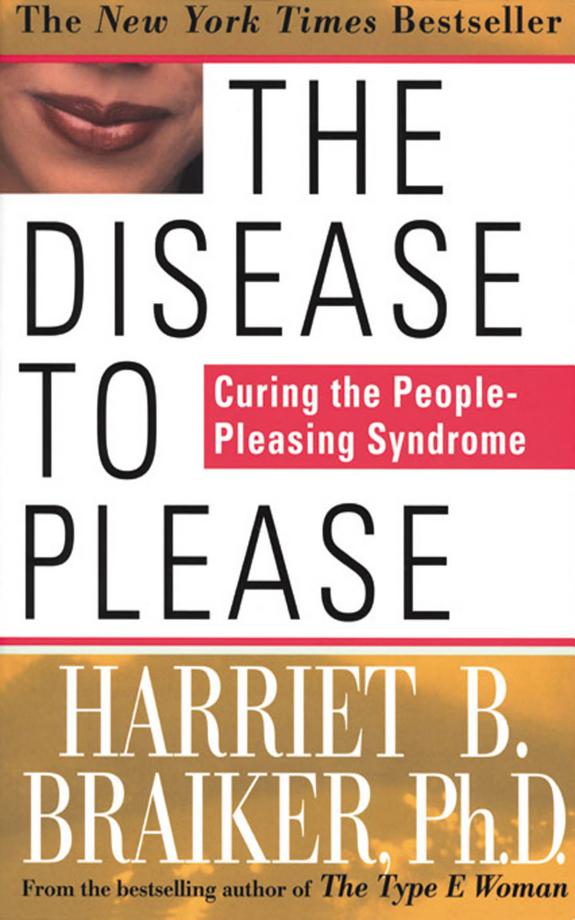
The Disease to Please
2. The Disease to Please by Harriet B. Braiker
Harriet Braiker is a psychologist, and this book reads like one. That is not a criticism. Where some books on people-pleasing stay in the realm of inspiration, Braiker goes clinical in the best sense, treating the compulsive need for approval as a genuine behavioral pattern with identifiable causes and specific strategies for change. If you have ever thought “I know I shouldn’t care this much what people think” and then immediately cared enormously what people think, this book speaks directly to that gap between knowing and doing.
Braiker identifies three components of the people-pleasing syndrome: thoughts, behaviors, and feelings, and she works through each with exercises designed to interrupt the patterns. The book includes self-assessments and cognitive restructuring techniques borrowed from cognitive behavioral therapy, which gives it a practical edge that more narrative-driven books sometimes lack. You are not just reading about the problem, you are being handed tools to actually work on it.
The author is direct about the costs of chronic people-pleasing, including resentment, burnout, anxiety, and a gradual erosion of your own identity. She does not romanticize kindness or generosity, but she draws a clear line between those things and the compulsive appeasement that comes from fear. That distinction is one of the more useful things this book offers.
“People-pleasing isn’t really about being nice. It’s about managing your own anxiety by controlling how others see you.”
This is perfect for readers who want a structured, psychology-based approach to breaking approval-seeking habits, though if you dislike workbook-style exercises or prefer narrative nonfiction over clinical frameworks, you may find the format a bit dry.
No More Mr. Nice Guy
3. No More Mr. Nice Guy by Robert A. Glover
The title sounds like it is encouraging you to become difficult, but that is not what this book is about at all. Robert Glover’s argument is that the “Nice Guy” he describes is not actually nice. He is a person who hides his real needs, suppresses his real opinions, and performs helpfulness in exchange for approval, love, and the avoidance of conflict. The performance is exhausting for everyone involved, and it tends to breed exactly the resentment and disconnection it was designed to prevent.
Glover draws on his own experience and his work as a therapist to describe a pattern he sees repeatedly in men who grew up learning that their needs were burdens and that being agreeable was the safest way to move through the world. The book is written primarily for men, and that focus is worth noting. The dynamics Glover describes are real and recognizable, but the framing is specifically masculine, which means some readers will need to do a bit of translation to apply it to their own situation.
What makes this book useful in the context of validation-seeking is its unflinching look at covert contracts, the unspoken deals we make with other people where we give endlessly and then feel betrayed when we don’t receive what we silently expected in return. Identifying those contracts in yourself is uncomfortable. It is also genuinely clarifying.
“The Nice Guy isn’t giving freely. He’s giving strategically, and the strategy almost never works the way he hopes.”
This is perfect for men who recognize themselves in patterns of over-accommodation and hidden resentment, though readers who are not men may find the gendered framing limiting, and those who dislike blunt, somewhat confrontational writing may find Glover’s tone a little much.
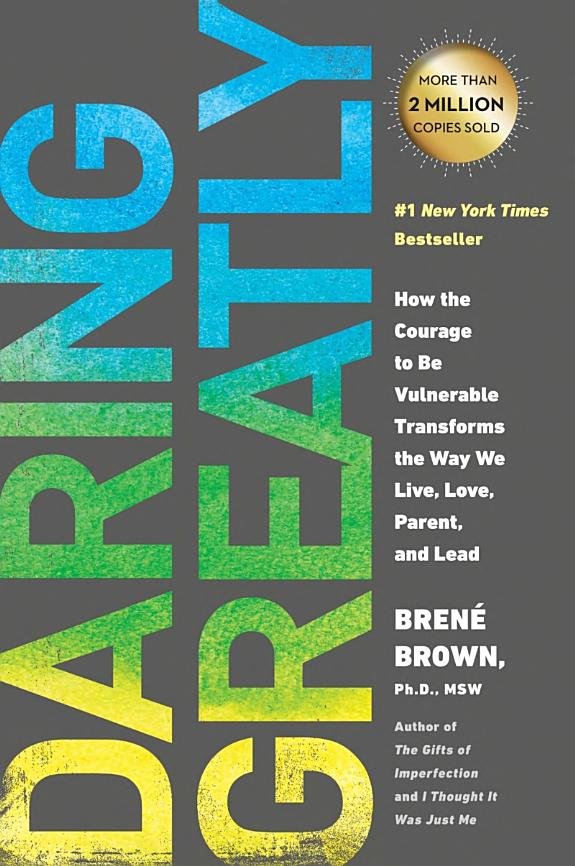
Daring Greatly
4. Daring Greatly by Brené Brown
Yes, Brené Brown appears twice on this list. She earned it. While “The Gifts of Imperfection” is more personal and practice-oriented, “Daring Greatly” goes deeper into the research and broader into the culture. The title comes from a Theodore Roosevelt speech about the man in the arena, the one whose face is marred by dust and sweat and blood, as opposed to the critics who never try anything. Brown uses that image to argue that vulnerability is not weakness. It is the only path to genuine connection, creativity, and belonging.
The book is largely about shame, which is the engine behind most validation-seeking behavior. Brown distinguishes between shame and guilt in a way that is genuinely useful: guilt says “I did something bad,” shame says “I am bad.” When shame is driving the bus, you become endlessly dependent on external reassurance because no amount of approval can actually fix the belief that you are fundamentally not enough. That is the trap, and Brown maps it carefully.
Brown also applies her ideas to institutions, parenting, and workplaces, which gives the book a scope that feels larger than a typical self-help read. Whether you find that scope satisfying or scattered probably depends on what you came for. If you want personal transformation tools, “The Gifts of Imperfection” is more focused. If you want to understand the cultural conditions that make vulnerability so terrifying, this is the book.
“Vulnerability is not about winning or losing. It’s about showing up when you can’t control the outcome, and that takes more courage than most people realize.”
This is perfect for readers who want to understand the deeper relationship between shame, vulnerability, and the need for external approval, though if you have already read Brown’s other work you may find some of the core ideas familiar, and skeptics of qualitative research may wish for harder data.
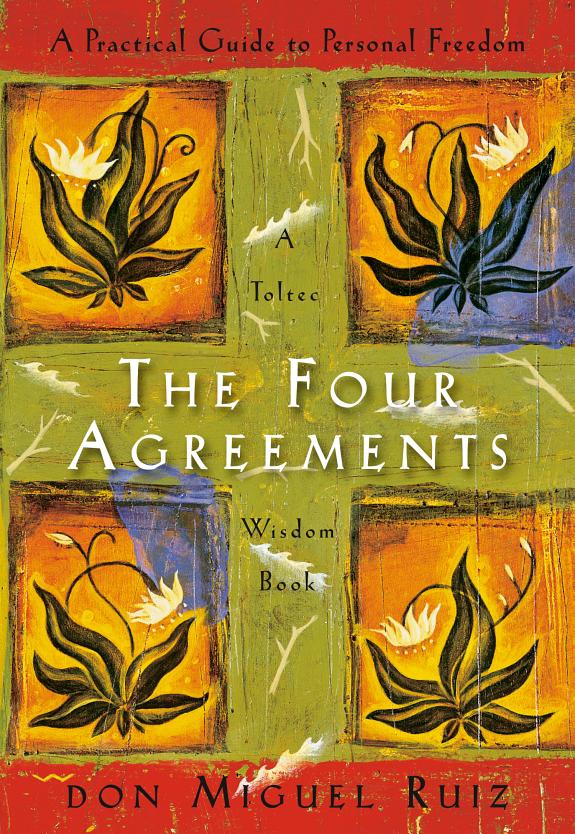
The Four Agreements
5. The Four Agreements by Don Miguel Ruiz
Don Miguel Ruiz draws on Toltec wisdom to offer four deceptively simple principles for living: be impeccable with your word, don’t take anything personally, don’t make assumptions, and always do your best. The second agreement is the one most relevant to validation-seeking, and Ruiz’s treatment of it is worth the whole book. He argues that nothing other people do is actually about you. Their opinions, their judgments, their praise and their criticism all emerge from their own internal world, their own fears and conditioning and needs, and treating those things as reliable measures of your worth is a fundamental misunderstanding of how human beings work.
The writing is simple, almost spare, which some readers find refreshing and others find frustrating. Ruiz is not interested in nuance or lengthy qualification. He states his ideas plainly and repeats them, which gives the book a quality somewhere between a philosophical text and a meditation guide. It is short. You could read it in an afternoon. The ideas, though, have a way of staying with you and surfacing at inconvenient moments when you catch yourself catastrophizing about what someone thinks of you.
The spiritual framework is present throughout, and if you have no patience for anything that touches on metaphysics or ancient wisdom traditions, you might find the packaging off-putting. But the core psychological insight, that you are not responsible for other people’s perceptions and cannot control them anyway, is sound regardless of the tradition it comes from.
“What others say and do is a projection of their own reality. Your freedom begins when you stop taking their opinions as evidence about your worth.”
This is perfect for readers who appreciate concise, principle-based books with a spiritual dimension, though if you prefer evidence-based psychology or find ancient wisdom frameworks a bit too abstract, this one may not land the way you hope.
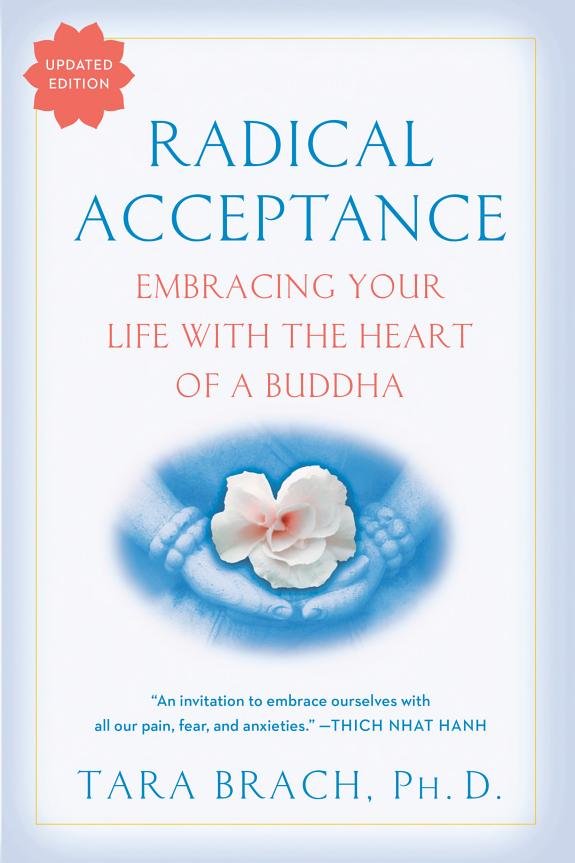
Radical Acceptance
6. Radical Acceptance by Tara Brach
Tara Brach is a psychologist and a Buddhist meditation teacher, and this book lives comfortably in both worlds. The central idea is what she calls the trance of unworthiness, the deep background hum of “something is wrong with me” that drives so much of our grasping, performing, and seeking of external reassurance. Brach argues that the antidote is not positive thinking or better self-esteem strategies but something more radical: the willingness to turn toward your own experience with honesty and compassion, without immediately trying to fix or escape it.
The book is full of stories from Brach’s clients and from her own practice, and she writes about pain, fear, and shame with a gentleness that never tips into sentimentality. The meditation practices she offers are woven into the text rather than appended as an afterthought, and even readers who have never meditated before will find them accessible. The RAIN practice she describes, Recognize, Allow, Investigate, Nurture, has become genuinely well-known in mindfulness circles, and reading it in its original context gives it more depth than the abbreviated versions you find elsewhere.
If you are someone who has read all the right books about self-worth and still cannot shake the feeling that you are somehow not quite enough, this is the book that might actually move the needle. It is not asking you to think differently. It is asking you to feel differently, which is harder and more lasting.
“The trance of unworthiness keeps us striving for a self that is finally acceptable. Radical acceptance means recognizing that the self we already are is not in need of fixing.”
This is perfect for readers who want a meditation-informed, compassion-based approach to releasing self-judgment and the need for approval, though if you are actively resistant to Buddhist concepts or mindfulness practices, the framework may feel like an obstacle rather than a door.
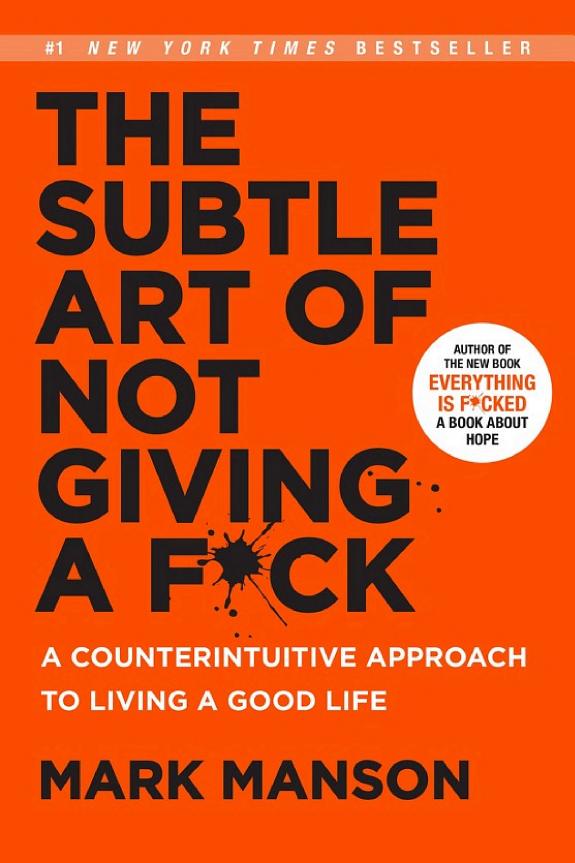
The Subtle Art of Not Giving a F*ck
7. The Subtle Art of Not Giving a F*ck by Mark Manson
Mark Manson’s book has a provocative title and a surprisingly thoughtful argument underneath it. He is not actually telling you to stop caring about everything. He is telling you that you have a limited number of things you can genuinely care about, and that most people waste that capacity on things that do not matter, including the opinions of people they barely know. The book is essentially about choosing your values deliberately rather than absorbing them from whatever the culture happens to be applauding this week.
Manson writes with a casual, conversational bluntness that is either refreshing or grating depending on your tolerance for profanity and a certain swagger. He is not trying to be your therapist. He is more like the friend who skips the comforting platitudes and says the thing you have been avoiding. Some of his arguments are more developed than others, and the book is not a systematic framework so much as a collection of connected essays, but the through-line is consistent: stop measuring your worth by metrics you did not choose and cannot control.
The chapter on failure is particularly good, as is his treatment of the “feedback loop from hell,” the way anxiety about anxiety makes everything worse. He is skeptical of the relentless positivity industry in a way that feels earned rather than cynical, and that skepticism gives the book a grounding that a lot of self-help titles lack. He is not selling you a better version of the same hustle. He is questioning whether the hustle was the point.
“The desire for more positive experience is itself a negative experience. The acceptance of negative experience is itself a positive one.”
This is perfect for readers who are tired of cheerful self-improvement rhetoric and want a more irreverent, no-nonsense take on choosing what actually matters, though if you are sensitive to profanity or prefer a gentler, more structured approach, you will likely find the tone more exhausting than energizing.
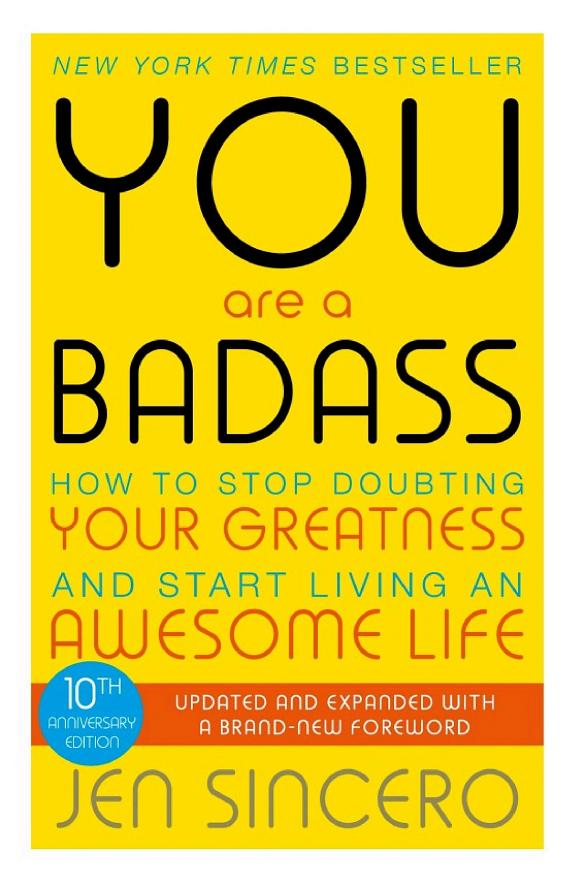
You Are a Badass
8. You Are a Badass by Jen Sincero
Jen Sincero writes like she is talking to you over coffee, and that quality is either the best or worst thing about this book depending on what you are looking for. It is energetic, funny in places, and relentlessly encouraging in a way that some readers find genuinely motivating and others find a bit much. Sincero spent years broke and directionless before turning things around, and she writes from that experience with a self-deprecating humor that keeps the book from feeling preachy. She is not talking down to you. She has been where you are.
The core argument is that most people are living smaller than they need to because they have internalized other people’s beliefs about what they are capable of and what they deserve. The book is partly about identifying those beliefs, understanding where they came from, and choosing to operate from different ones. That is not a new idea, but Sincero’s delivery has a momentum to it that makes the familiar feel fresh. She is also honest that this is ongoing work, not a one-time revelation.
The book does lean into the law of attraction and some spiritual concepts that not everyone will find compelling. If that framework bothers you, you can mentally translate it into more secular terms and lose very little. The practical exercises are solid, and the underlying message, that you are allowed to want what you want without apologizing for it or waiting for someone to grant you permission, is one worth hearing regardless of the packaging.
“The only thing standing between you and the life you want is the story you keep telling yourself about why you can’t have it.”
This is perfect for readers who want an upbeat, accessible entry point into questioning self-limiting beliefs and reclaiming their own sense of worth, though if you are skeptical of spiritual frameworks or prefer a more research-grounded approach, you may find the tone more cheerleader than coach.
None of these books will hand you a permanent cure for caring what people think. That is not really how it works, and any book that promises otherwise is selling something. What they can do is give you a clearer picture of why the validation-seeking started, what it is costing you, and what a different way of moving through the world might actually feel like. That is not nothing. That is, in fact, quite a lot.
The books on this list come from different traditions and use different voices. Some are warm and clinical. Some are blunt and funny. Some are quiet and meditative. That variety is intentional. There is no single path out of the approval trap, and different readers will need different doors. The important thing is to pick one and walk through it. The version of you that exists on the other side of this work is not louder or harder or more indifferent. It is just more yours.