

6 Books to Help You Overcome Fear of Failure
Fear of failure is one of those things that sounds manageable in theory and feels completely paralyzing in practice. You know the feeling. You have an idea, a goal, a dream sitting right there, and instead of moving toward it, you freeze. You rewrite the email seventeen times. You decide you are not quite ready yet. You wait for a better moment that somehow never arrives.
The books on this list were chosen because they actually grapple with that paralysis honestly. None of them promise a quick fix or pretend that courage is simply a matter of deciding to be brave. What they offer instead is something more useful: perspective, research, personal honesty, and the kind of writing that makes you feel a little less alone in your own head. Whether you are dealing with a specific setback or a longer pattern of playing it safe, there is something here worth reading.
Feel the Fear and Do It Anyway
1. Feel the Fear and Do It Anyway by Susan Jeffers
Susan Jeffers published this book in 1987, and it has stayed in print ever since, which tells you something. The central argument is disarmingly simple: the fear does not go away when you become more capable or more confident. It just stops being the deciding factor. Jeffers writes with a warmth and directness that feels more like a conversation than a lecture, and she backs her ideas with practical exercises rather than vague encouragement.
The book’s most quoted insight, that at the bottom of every fear is essentially the worry that you cannot handle what happens next, is the kind of thing that sounds obvious until you really sit with it. Jeffers argues that building trust in your own ability to cope is the actual work, not eliminating fear before you act. It reframes the whole project in a way that feels genuinely achievable rather than aspirational and distant.
Her writing style is accessible and occasionally a little breezy, which works well for readers who want something they can actually finish and apply. The self-help genre can sometimes feel like it is written for people who already have their lives together, but Jeffers is not doing that here. She writes for people in the middle of it.
“The fear will always be there when you try something new. The question Jeffers keeps asking is whether you are going to let it have the last word.”
This is perfect for readers who are newer to self-help and want an approachable, encouraging entry point into understanding fear, though those looking for dense psychological research may find it a bit light.
The Gifts of Imperfection
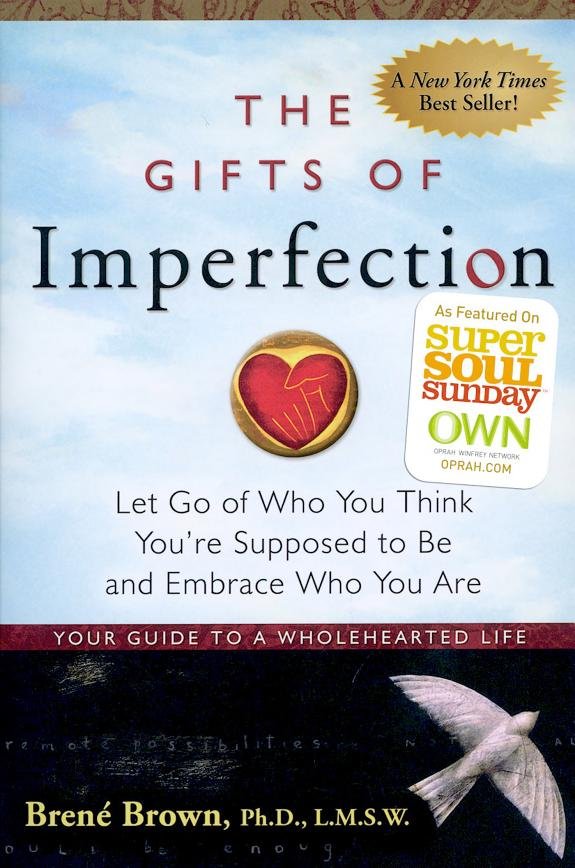
2. The Gifts of Imperfection by Brené Brown
Brené Brown spent years as a researcher studying shame, vulnerability, and worthiness before she became a household name, and that background shows in everything she writes. The Gifts of Imperfection is built around the idea of “Wholehearted living,” which Brown defines as engaging with your life from a place of worthiness rather than from a constant effort to earn it. Fear of failure is, at its core, often a fear of being found lacking, and Brown goes straight at that.
What makes this book stand out is that Brown does not romanticize struggle. She talks about her own anxiety and perfectionism with a candor that keeps the book grounded. There are ten guideposts throughout the book, each addressing something we tend to numb or avoid, including things like cultivating creativity, gratitude, and the willingness to let go of what other people think. It sounds like a lot, but Brown has a gift for making complex emotional territory feel navigable.
The writing is warm and conversational, occasionally funny, and never preachy. Brown earns her conclusions rather than just asserting them. If you have ever caught yourself thinking that you will feel worthy once you achieve a certain thing, this book will gently and persistently argue that you have the sequence backwards.
“Brown’s research keeps returning to the same uncomfortable finding: perfectionism is not about high standards. It is about fear, dressed up as ambition.”
This is perfect for readers who suspect their fear of failure is tied to deeper feelings of shame or not-enoughness, though those who prefer purely data-driven books may find the personal storytelling style not quite their thing.
Daring Greatly
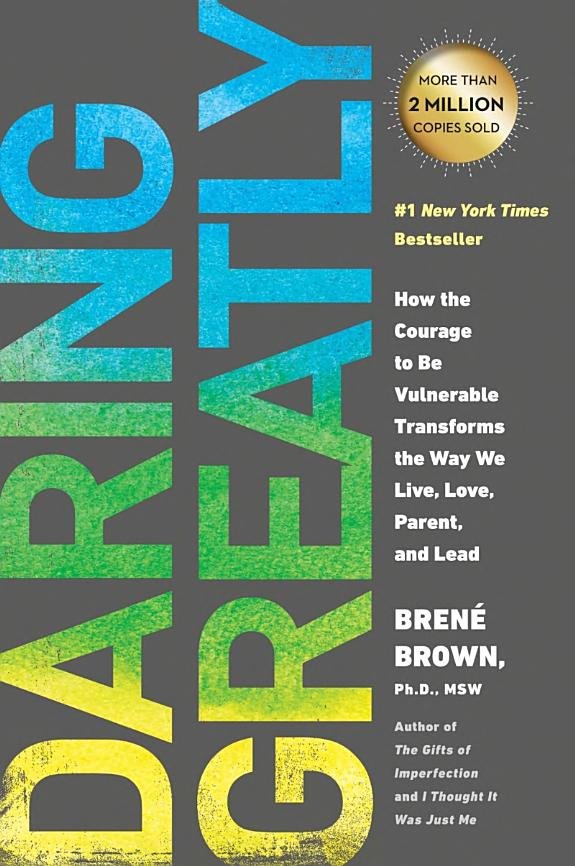
3. Daring Greatly by Brené Brown
Yes, there are two Brené Brown books on this list. No apologies. Daring Greatly covers different ground than The Gifts of Imperfection, and it earns its place separately. Where Gifts focuses on personal wholehearted living, Daring Greatly zooms out to look at vulnerability as a cultural and relational force. The title comes from a Theodore Roosevelt speech, the one about the man in the arena, and Brown uses it to make a case that vulnerability is not weakness but rather the starting point for courage.
The fear of failure is intimately connected to the fear of being seen failing, and Brown spends considerable time on that distinction. She looks at how shame operates differently across genders, how it shows up in workplaces and schools, and what it actually costs us to keep our armor on all the time. The research is woven through the narrative in a way that feels illuminating rather than academic.
Brown is a good writer, and she is particularly good at naming things that most of us feel but have never quite had language for. If The Gifts of Imperfection is about your interior life, Daring Greatly is about how you show up in the world and what gets in the way. Reading them together is worthwhile, but this one also stands firmly on its own.
“The armor we build to protect ourselves from failure and judgment is often the very thing that keeps us from doing anything worth doing.”
This is perfect for readers who want to understand how vulnerability and fear of failure show up in relationships and professional life, though if you have already read extensively in this space, some ideas may feel familiar.
Mindset: The New Psychology of Success
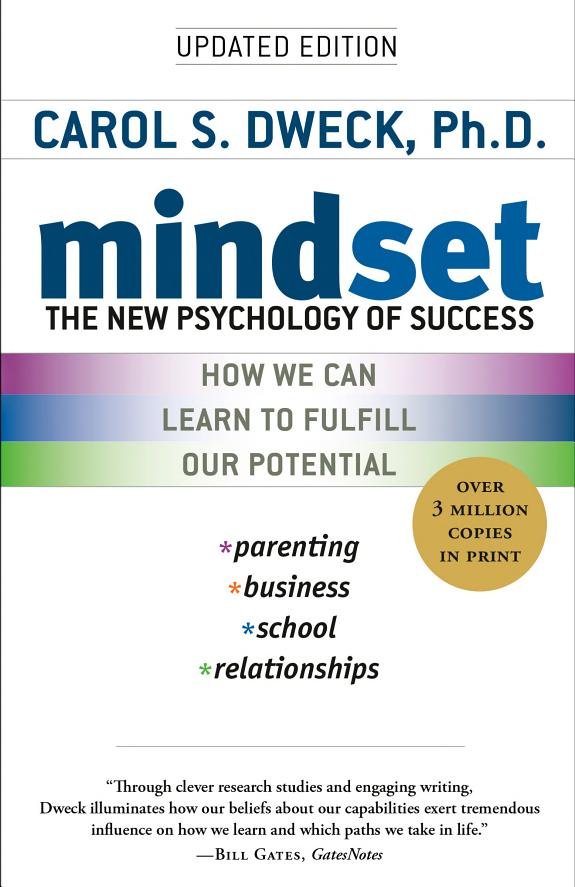
4. Mindset: The New Psychology of Success by Carol S. Dweck
Carol Dweck is a Stanford psychologist, and Mindset is the book that introduced the now widely used concept of fixed versus growth mindsets. The fixed mindset treats your abilities as static, which means failure becomes a verdict on who you are. The growth mindset treats abilities as developable, which means failure becomes information. It sounds like a simple reframe, but Dweck’s decades of research make a compelling case that this distinction shapes nearly everything about how people approach challenges, setbacks, and learning.
The book is grounded in real studies and real examples, covering athletes, students, business leaders, and relationships. Dweck is not a flashy writer, but she is a clear one, and the clarity serves the material well. She is also honest about the fact that most people operate with a mixture of both mindsets depending on the domain, which makes the book feel realistic rather than prescriptive.
For anyone whose fear of failure is rooted in the belief that trying and not succeeding reveals something permanent and damning about their intelligence or talent, this book is a direct challenge to that belief. It does not dismiss the difficulty of failure. It recontextualizes what failure is actually measuring, and that shift has real consequences for how willing you are to try things that matter to you.
“The fixed mindset turns every challenge into a referendum on your worth. The growth mindset turns it into a question about your process.”
This is perfect for readers who want research-backed ideas about how beliefs shape behavior, though those already familiar with growth mindset concepts from popular culture may find the book covers ground they have heard summarized before.
The Confidence Code: The Science and Art of Self-Assurance—What Women Should Know
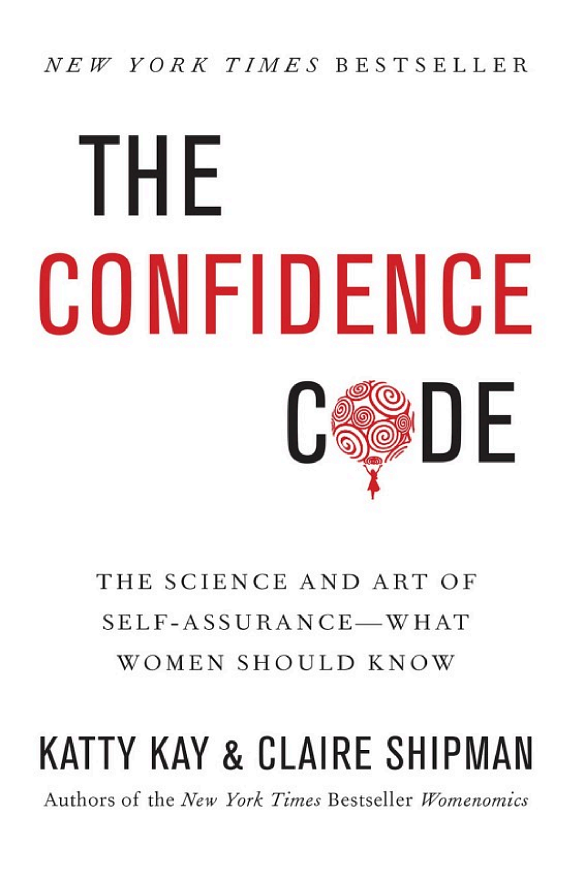
5. The Confidence Code by Katty Kay and Claire Shipman
Katty Kay and Claire Shipman are both accomplished journalists, and they brought that instinct for investigation to a question that had been nagging at them professionally: why do so many capable, qualified women hold back? The Confidence Code explores the science and social conditioning behind confidence, drawing on interviews with neuroscientists, psychologists, and a wide range of women in public life. It is reported rather than purely personal, which gives it a texture that sets it apart from a lot of books in this space.
The fear of failure for women is often compounded by particular social pressures, the expectation of perfection, the tendency to over-prepare and under-claim, the way mistakes tend to be weighted differently. Kay and Shipman address these dynamics without veering into victimhood or oversimplification. They are interested in what actually builds confidence, and their answer involves action more than mindset shifts, which is a useful corrective to books that stay purely in the realm of internal work.
The book has its limitations. It is written specifically for women, which is stated plainly in the subtitle, and some of the science it cites has been part of broader conversations about replication in psychology research. Still, the reporting is sharp, the interviews are genuinely interesting, and the core argument that confidence is built through doing rather than waiting to feel ready is one that holds up well regardless of the reader’s gender.
“Waiting until you feel confident enough to act is, Kay and Shipman argue, exactly backwards. The action has to come first.”
This is perfect for women who want to understand the specific social and psychological roots of their self-doubt, though readers looking for a book that speaks to all genders equally will want to pair it with something from this list with broader scope.
Option B: Facing Adversity, Building Resilience, and Finding Joy
6. Option B by Sheryl Sandberg and Adam Grant
Option B occupies a slightly different space than the other books here. Sheryl Sandberg wrote it after the sudden death of her husband, and it is at its core a book about grief, resilience, and how to keep living when the thing you feared most has already happened. Adam Grant, a psychologist at Wharton, collaborated on the research woven throughout. The combination of raw personal narrative and rigorous science makes for an unusual and genuinely moving reading experience.
The reason it belongs on a list about fear of failure is this: so much of what keeps us from trying is the fear of loss, of losing face, losing ground, losing something we cannot get back. Option B is about what actually happens after loss. And what Sandberg and Grant find, consistently, is that people are more resilient than they expect to be, that post-traumatic growth is real, and that the story we tell ourselves about whether we can handle what comes next matters enormously. It is, in its own way, a thorough answer to the fear Susan Jeffers identifies at the beginning of this list.
The book is not without its complications. Sandberg’s particular kind of loss and her particular resources are not universally relatable, and some readers have noted that the book occasionally underestimates structural barriers to resilience. But the emotional honesty here is genuine, and Grant’s research sections are some of the most useful writing on resilience you are likely to find in a book this readable.
“The question Option B keeps returning to is not whether hard things will happen, but whether you believe you are capable of surviving them. That belief turns out to matter more than most of us think.”
This is perfect for readers who have experienced a significant setback or loss and want both emotional companionship and practical, research-based frameworks for rebuilding, though those looking for a lighter read on confidence and fear may find this one more emotionally demanding than they expected.
Fear of failure is not something you read your way out of entirely. Anyone who tells you otherwise is selling something. But books can change the questions you are asking, and sometimes that is enough to get you unstuck. The six books here approach the problem from different angles, personal narrative, psychological research, journalism, philosophy, and between them they cover a lot of the territory that fear tends to occupy.
Start with whichever one speaks most directly to where you are right now. There is no wrong entry point. The only real mistake, as several of these authors would be quick to point out, is deciding you are not ready to begin.