

6 Books for Increasing Motivation That Actually Work
Motivation is a strange thing. Some mornings you wake up ready to conquer everything on your list, and other mornings the idea of answering a single email feels like climbing a mountain in flip-flops. Most of us have been there more times than we care to admit. The good news is that motivation is not some fixed personality trait you either have or you don’t. It can be understood, cultivated, and yes, occasionally tricked into showing up.
The books on this list take very different approaches to the subject. Some are rooted in behavioral science, some in raw personal experience, and some in the kind of practical psychology that makes you think, “Oh, that’s actually why I keep procrastinating.” None of them promise overnight miracles, and that’s exactly why they’re worth your time. Whether you’re trying to restart a stalled project, build better daily habits, or simply figure out why you care about what you care about, there’s something here for you.
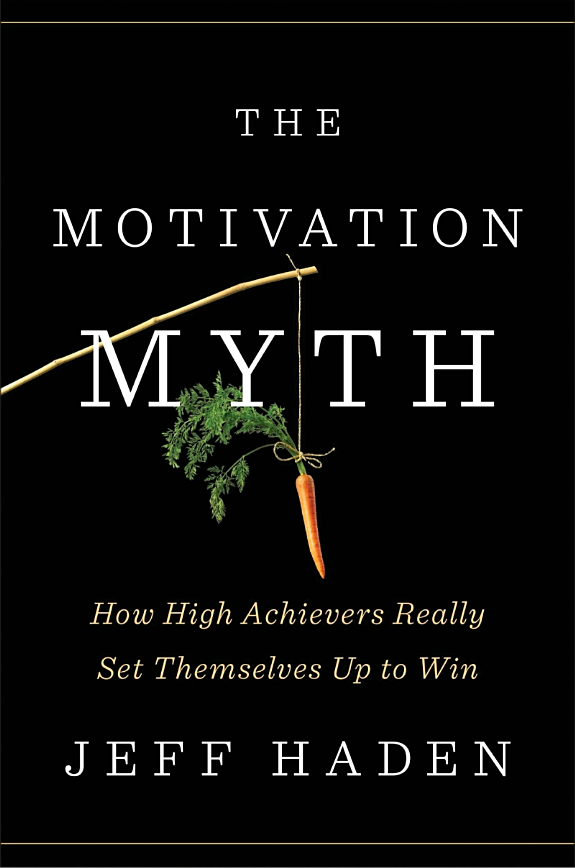
The Motivation Myth: How High Achievers Really Set Themselves Up to Win
1. The Motivation Myth: How High Achievers Really Set Themselves Up to Win by Jeff Haden
Jeff Haden opens this book with a claim that might feel a little deflating at first: motivation is not something that arrives before you start working. It arrives because you start working. That’s the myth he’s dismantling, and he does it with a refreshing lack of fluff. Haden is a contributing editor at Inc. Magazine, and his writing has the crisp, no-nonsense quality of someone who has spent years translating research and real-world experience into practical advice.
The central idea here is that success creates motivation, not the other way around. Small wins compound. The feeling of progress is what keeps you going, and if you wait to feel motivated before you begin, you’ll be waiting for a very long time. Haden builds his argument around the habits and processes of genuinely high-performing people, and he’s careful to distinguish between what those people say they do and what they actually do.
What makes this book stand out is its honesty about the role of process over passion. Haden is skeptical of the “follow your passion” advice that fills so many motivational books, and he makes a convincing case that passion usually follows mastery rather than preceding it. It’s a grounding read, especially if you’ve grown tired of inspiration that evaporates by Tuesday afternoon.
“Motivation isn’t something you find. It’s something you build, one small result at a time.”
This is perfect for people who are tired of waiting to feel inspired and want a realistic, process-driven framework for building momentum in their work and personal goals.
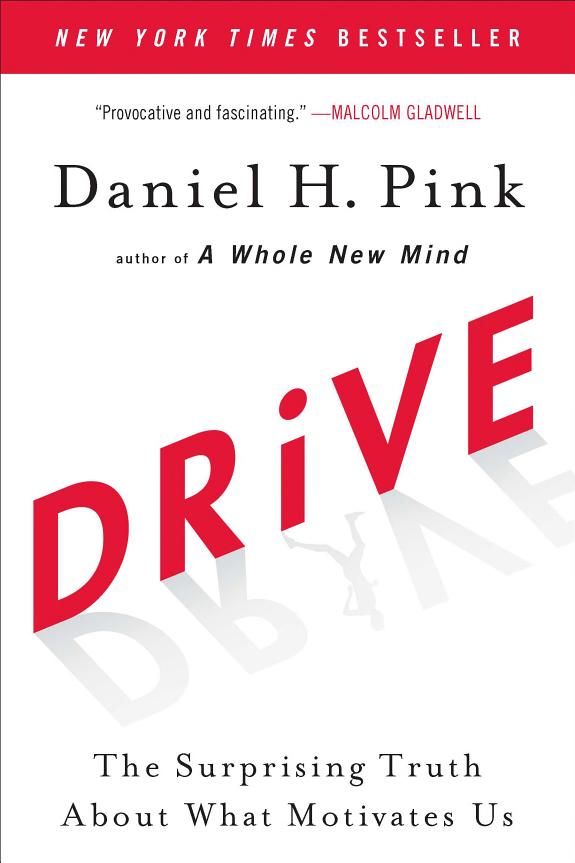
Drive: The Surprising Truth About What Motivates Us
2. Drive: The Surprising Truth About What Motivates Us by Daniel H. Pink
Daniel Pink has a gift for taking behavioral science and making it feel genuinely readable. Drive is probably his most well-known work, and for good reason. He argues that the traditional carrot-and-stick model of motivation, the one built on rewards and punishments, is badly outdated for the kind of complex, creative work most of us do today. The research he draws on, much of it from psychologists Edward Deci and Richard Ryan, is compelling and surprisingly fun to read about.
Pink’s framework centers on three elements he believes drive intrinsic motivation: autonomy, mastery, and purpose. Autonomy is the desire to direct your own life. Mastery is the urge to get better at something that matters. Purpose is the need to do what you do in service of something larger than yourself. Together, these three form a model that feels both intellectually rigorous and immediately applicable to everyday decisions.
The book does lean heavily on the professional and organizational side of things, which means some sections feel more relevant to managers and business owners than to individuals trying to motivate themselves in their personal lives. That’s a fair caveat. But the core ideas translate well regardless of your context. Pink writes with clarity and a dry wit that keeps things moving, and the final section of the book, which is essentially a toolkit, is genuinely useful.
“The secret to high performance isn’t rewards and punishments, but that unseen intrinsic drive, the drive to do things for their own inherent interest and satisfaction.”
This is perfect for professionals, managers, and curious readers who want to understand the psychology of motivation at a deeper level and apply it to how they work and lead.
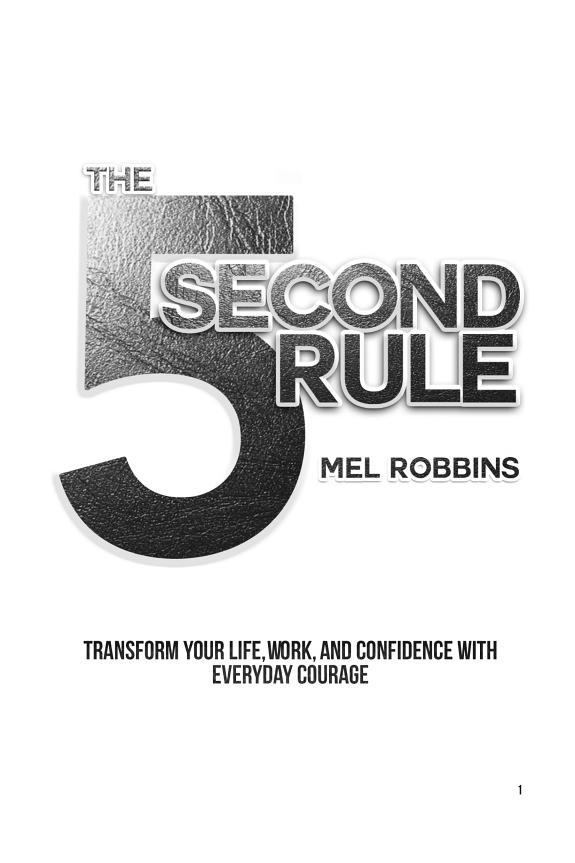
The 5 Second Rule: Transform your Life, Work, and Confidence with Everyday Courage
3. The 5 Second Rule: Transform your Life, Work, and Confidence with Everyday Courage by Mel Robbins
Mel Robbins stumbled onto her central idea while lying in bed, unable to get up, during one of the lowest periods of her life. She counted backward from five and launched herself out of bed like a rocket. That’s the origin story of the 5 Second Rule, and while it sounds almost embarrassingly simple, Robbins backs it up with neuroscience and a whole lot of personal candor. The rule is this: the moment you have an instinct to act on a goal, count 5-4-3-2-1 and move. Before your brain talks you out of it.
What Robbins is really addressing is the gap between intention and action, that infuriating space where good ideas go to die. She argues that hesitation is the enemy, and that the brain’s default mode is to protect you from discomfort, which means it will always generate reasons not to do the scary or difficult thing. The countdown interrupts that pattern. It sounds like a trick because it is a trick, and she’s entirely upfront about that.
This book is not for readers who want dense research or subtle nuance. Robbins writes with the energy of someone who has given a lot of motivational talks, which is both a strength and a weakness depending on your tolerance for enthusiasm. The stories can pile up, and the book is longer than it needs to be. But the core insight is genuinely useful, and for people who struggle with chronic hesitation or anxiety-driven procrastination, it can be a real circuit-breaker.
“You are never going to feel like it. Motivation is garbage. You only feel motivated to do the things you already want to do.”
This is perfect for people who know what they want to do but consistently struggle to start, particularly those dealing with anxiety, self-doubt, or the paralysis of overthinking.

Can’t Hurt Me: Master Your Mind and Defy the Odds
4. Can’t Hurt Me: Master Your Mind and Defy the Odds by David Goggins
David Goggins is not for everyone, and he would probably take that as a compliment. A former Navy SEAL, ultramarathon runner, and someone who has completed some of the most brutal endurance challenges on the planet, Goggins writes about mental toughness with the authority of a person who has genuinely been tested to his absolute limit. His story, which involves a deeply difficult childhood, severe obesity, and a series of physical ordeals that would make most people weep just reading about them, is told with raw honesty and zero self-pity.
The book is structured as a memoir with embedded challenges, which Goggins calls “accountability mirrors” and mental exercises designed to help you confront your own excuses. His philosophy centers on the idea that most people operate at a fraction of their true capacity, and that the only way to expand that capacity is to voluntarily seek discomfort. He calls the untapped potential in all of us the “40% rule,” the idea that when your mind says you’re done, you’re actually only about 40 percent of the way there.
The writing is blunt, sometimes crude, and relentlessly intense. If you’re looking for a gentle, nuanced exploration of motivation, this is the wrong book. Goggins has no interest in meeting you where you are if where you are is comfortable. But if you need something that will genuinely shake you out of complacency, this has that quality in abundance. It’s the literary equivalent of a cold shower at 4 in the morning.
“You are in danger of living a life so comfortable and soft that you will die without ever realizing your true potential.”
This is perfect for readers who respond to intense, unfiltered personal narratives and want to be challenged rather than comforted, especially those feeling stuck in a pattern of giving up too easily.
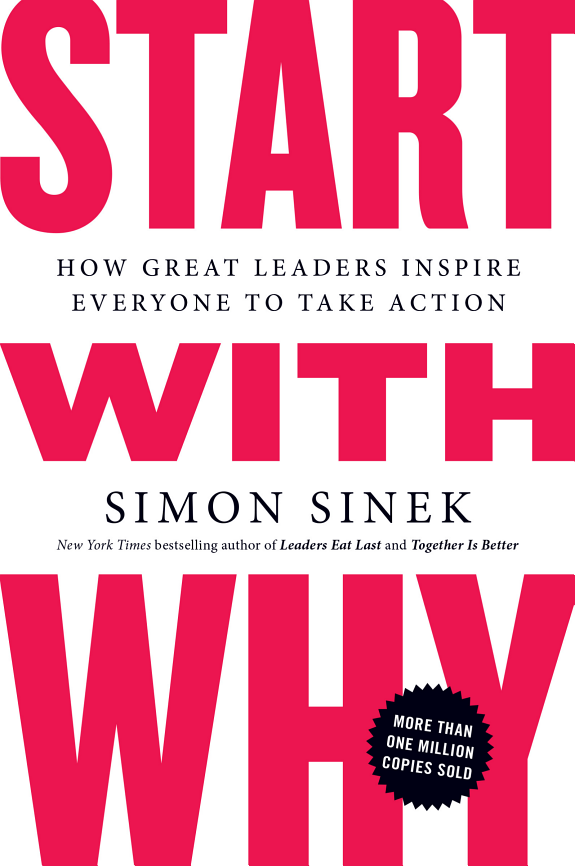
Start with Why: How Great Leaders Inspire Everyone to Take Action
5. Start with Why: How Great Leaders Inspire Everyone to Take Action by Simon Sinek
Simon Sinek’s core argument is deceptively simple: people don’t buy what you do, they buy why you do it. He illustrates this through what he calls the Golden Circle, three concentric rings representing Why, How, and What. Most people and organizations, he argues, communicate from the outside in. They lead with what they do, then explain how they do it, and rarely articulate why. Truly inspiring leaders and companies do the opposite. They start with why.
The book draws heavily on examples from Apple, Martin Luther King Jr., and the Wright Brothers, which by now have become almost obligatory citations in this genre. Sinek uses them well, though, and his analysis of what made those figures and organizations compelling goes deeper than surface-level cheerleading. The biological explanation he offers, rooted in how the limbic brain processes decisions versus the neocortex, is simplified but genuinely illuminating.
Where this book is most useful for motivation is in its argument that clarity of purpose is what sustains effort over time. When you know why you’re doing something, the how and the what become much easier to navigate. That’s a meaningful insight for anyone who finds themselves grinding away at goals that feel hollow. It’s worth noting that Start with Why is primarily aimed at leaders and organizations, so individual readers may need to do a bit of translation to apply the ideas to their personal lives.
“Working hard for something we don’t care about is called stress. Working hard for something we love is called passion.”
This is perfect for entrepreneurs, leaders, and anyone feeling disconnected from their work who wants to reconnect with the deeper purpose behind what they do each day.
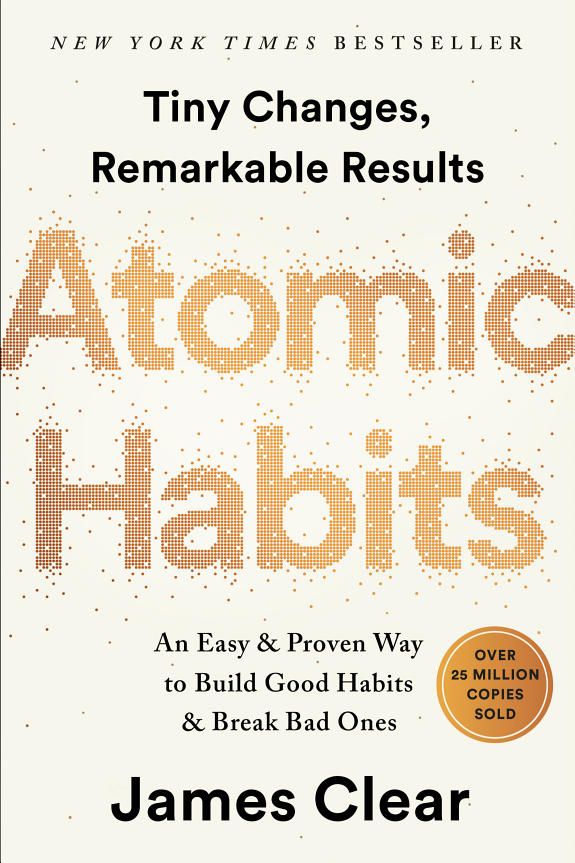
Atomic Habits: An Easy & Proven Way to Build Good Habits & Break Bad Ones
6. Atomic Habits: An Easy and Proven Way to Build Good Habits and Break Bad Ones by James Clear
James Clear spent years researching and writing about habits before distilling everything into Atomic Habits, and the care he put into it shows. The book is meticulously organized, clearly written, and grounded in behavioral science without ever becoming a dry academic exercise. His central claim is that tiny changes, what he calls atomic habits, compound over time into remarkable results. A one percent improvement each day adds up to being 37 times better over the course of a year. That’s not a motivational slogan. That’s math.
Clear builds his framework around what he calls the Four Laws of Behavior Change: make it obvious, make it attractive, make it easy, and make it satisfying. Each law comes with practical techniques, from habit stacking and environment design to the two-minute rule and immediate rewards. The book reads almost like a field guide, and many readers find themselves dog-earing pages and coming back to specific chapters repeatedly. Clear also introduces the concept of identity-based habits, the idea that lasting change comes from deciding who you want to be rather than what you want to achieve.
This is one of those books that works best when you actually do the things it suggests rather than just reading it and nodding along. And yes, most people read it and nod along without doing the things. (Guilty.) If you’re willing to treat it as a workbook rather than a passive read, the return is genuinely high. It’s not the most thrilling narrative, and readers who prefer personal stories over frameworks may find it a little dry in places, but the practical value is hard to argue with.
“Every action you take is a vote for the type of person you wish to become.”
This is perfect for detail-oriented readers who want a systematic, science-backed approach to building better habits and are ready to make small, consistent changes rather than dramatic overhauls.
What strikes me about this collection is how differently each author approaches the same fundamental problem. Goggins wants you to embrace suffering. Clear wants you to make good behavior frictionless. Pink wants you to understand what you actually value. Robbins wants you to stop waiting and just count to five. None of them are wrong, and the fact that such different approaches all point toward increased motivation says something interesting about how personal and contextual this stuff really is.
The best thing you can do is pick the book that speaks to where you are right now, not the one that sounds most impressive or the one everyone is talking about. If you’re feeling paralyzed, start with Robbins. If you feel disconnected from your work, start with Sinek. If you want to build something sustainable, start with Clear. Motivation isn’t one-size-fits-all, and the right book at the right moment can genuinely shift something. Happy reading.