

6 Books for Becoming More Authentic
At some point, most of us realize we have been playing a character. Not in a dramatic, soap-opera kind of way, just in the quiet, daily way of saying “I’m fine” when we’re not, agreeing with things we don’t believe, and shrinking ourselves to fit into rooms that were never built for us. Authenticity sounds simple until you try to actually practice it.
The books on this list approach that challenge from different angles. Some are rooted in psychology, some in spirituality, some in memoir. What they share is an honest reckoning with the gap between who we present to the world and who we actually are. If you’ve been meaning to close that gap, these six are a genuinely good place to start.
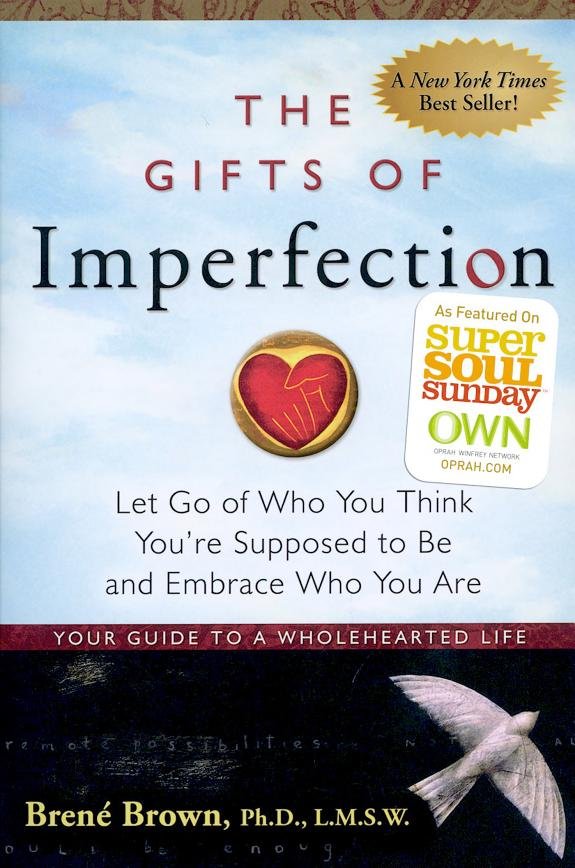
The Gifts of Imperfection
1. The Gifts of Imperfection by Brené Brown
Brené Brown spent years as a shame researcher before she became a household name, and that academic background gives her work a grounding that a lot of self-help books lack. “The Gifts of Imperfection” is not her longest or most detailed book, but it might be her most personal. She writes about wholehearted living, which she defines as engaging with life from a place of worthiness rather than from a constant need to earn approval. It is a distinction that sounds obvious until you sit with it for a moment and realize how rarely most of us actually operate that way.
The book is organized around ten guideposts, things like cultivating self-compassion, letting go of perfectionism, and embracing the ordinary. Brown’s voice is warm and direct. She does not talk down to readers, and she is not shy about sharing her own stumbles. There is something genuinely refreshing about a researcher who uses herself as a case study without making it feel like a therapy session you accidentally wandered into.
If you are someone who ties your worth to productivity, achievement, or other people’s opinions of you, this book will name that pattern with unusual clarity. It will not fix it overnight, but naming things is often the first real step. The writing is accessible without being shallow, which is harder to pull off than it sounds.
“Authenticity is a collection of choices that we have to make every day. It’s about the choice to show up and be real.” Brown’s point is not that this is easy. It’s that it’s worth it.
This is perfect for readers who suspect perfectionism is costing them more than it’s giving them, and who want a research-backed but readable guide to letting some of that go. It is not the right fit for people who prefer purely philosophical frameworks or find personal anecdotes distracting in nonfiction.
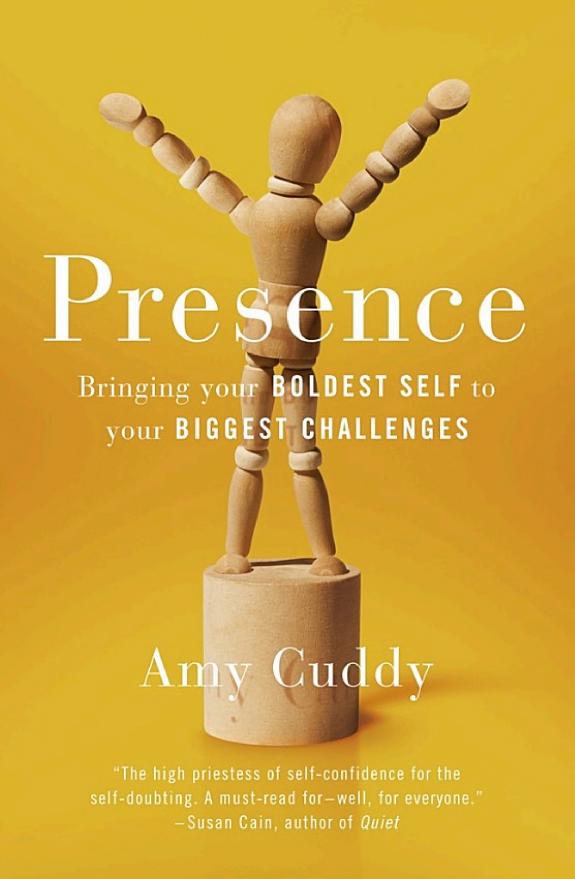
Presence
2. Presence by Amy Cuddy
Amy Cuddy is probably best known for her TED Talk about power poses, which became one of the most-watched talks in TED history and also one of the most debated. “Presence” is the book that grew out of that research, and it is considerably more nuanced than the talk. The central argument is not really about body language as a performance trick. It is about the relationship between how we carry ourselves and whether we feel connected to our own values and abilities in high-stakes moments.
Cuddy’s definition of presence is specific: it is the state of being attuned to your own feelings, values, and capabilities, and being able to express them even when you are nervous or under pressure. She draws on psychology, neuroscience, and a good deal of her own story, including a serious brain injury she suffered in her early twenties that forced her to rebuild her sense of self from the ground up. That personal thread gives the book an emotional weight that pure research writing rarely achieves.
Where the book is strongest is in its treatment of impostorism, the feeling that you do not belong in a room and that someone is about to figure that out. Cuddy argues that the antidote is not confidence in the conventional sense but rather a kind of self-trust that comes from staying connected to who you actually are rather than performing a version of who you think you should be. It is a subtle but important distinction.
The goal, Cuddy argues, is not to fake it till you make it. It is to fake it till you become it, which is really just another way of saying: practice being yourself until it stops feeling like practice.
This is perfect for people who freeze up in high-pressure situations, feel like impostors in professional or social settings, or want a science-grounded look at how self-expression and self-perception are connected. It may not resonate with readers who are already comfortable in their own skin and are looking for deeper philosophical exploration.
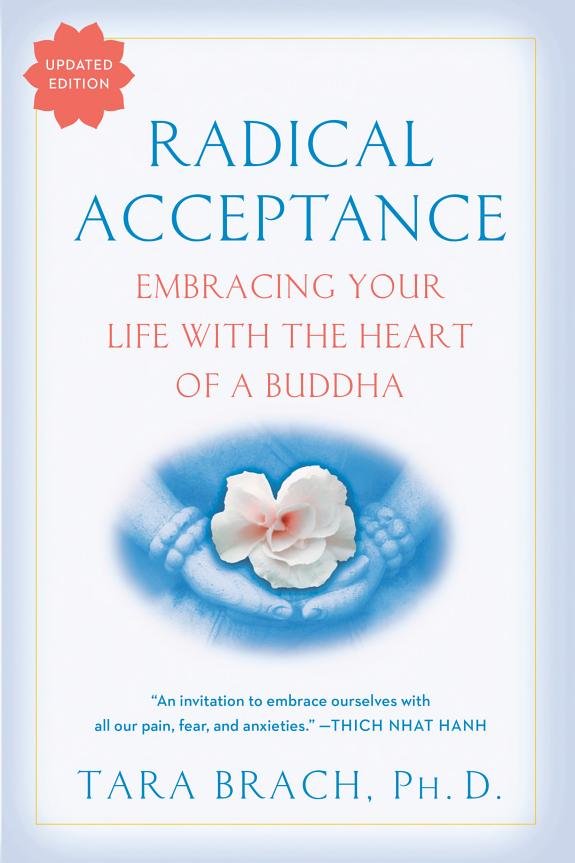
Radical Acceptance
3. Radical Acceptance by Tara Brach
Tara Brach is a Buddhist teacher and psychologist, and “Radical Acceptance” draws on both traditions with unusual grace. The book begins with a concept she calls the trance of unworthiness, the persistent background hum of feeling like something is fundamentally wrong with you. If that phrase lands with any recognition, this book was probably written for you. Brach argues that most of our striving, our self-improvement projects, our relentless busyness, is really an attempt to outrun that feeling rather than face it.
The practice she proposes is, in some ways, counterintuitive. Instead of trying to fix or improve yourself into acceptability, you practice meeting yourself exactly as you are, moment by moment. This is not passivity or resignation. It is actually quite rigorous. Brach weaves in meditation practices, clinical case studies from her therapy work, and stories from Buddhist teaching, and somehow it all holds together without feeling like a jumbled mix of traditions.
The writing is gentle but not soft. Brach does not flinch from the harder material, grief, shame, fear, the ways we abandon ourselves long before anyone else gets the chance. Some chapters are genuinely moving in a quiet, unhurried way. This is not a book you race through. It is one you read slowly, maybe with a cup of tea, and return to when you need it.
“The boundary to what we can accept is the boundary to our freedom,” Brach writes. It is the kind of sentence that seems simple until you realize it contains almost everything.
This is perfect for readers drawn to mindfulness or Buddhist thought, those working through deep-seated self-criticism, or anyone who has tried every self-improvement strategy and still feels like something is missing. It is probably not the right starting point for readers who are skeptical of meditation practices or prefer secular, data-driven approaches.
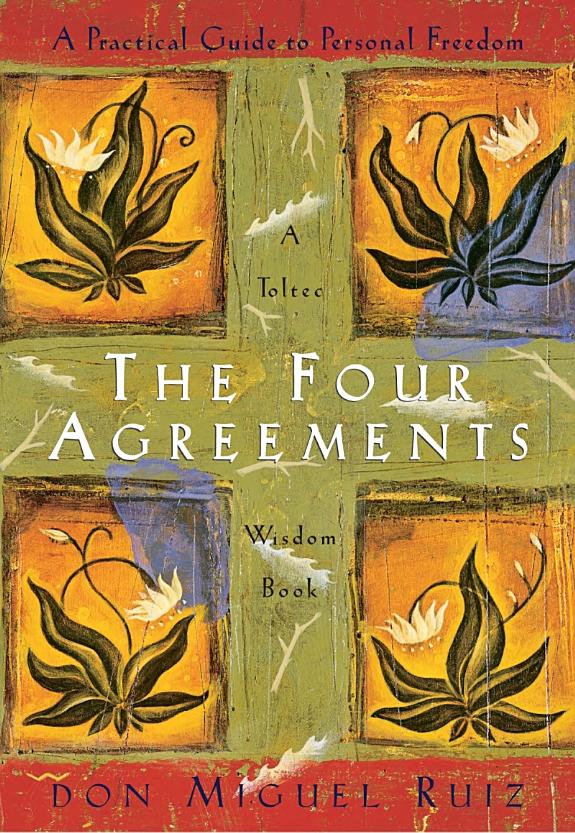
The Four Agreements
4. The Four Agreements by Don Miguel Ruiz
Don Miguel Ruiz draws on ancient Toltec wisdom to build a framework that is, on the surface, almost disarmingly simple. Four agreements: be impeccable with your word, don’t take anything personally, don’t make assumptions, and always do your best. You can read those and think, sure, that sounds reasonable, and then spend the next six months realizing how rarely you actually practice any of them. That gap between understanding something intellectually and living it is exactly what this book is about.
The prose is plain and direct, almost parable-like in its rhythm. Ruiz writes about “domestication,” the process by which we are taught, from childhood, to seek approval and avoid punishment, and how that process shapes the agreements we unconsciously make with ourselves and the world. Most of us, he argues, are living by a set of rules we never consciously chose. The work of authenticity is recognizing those rules and deciding which ones are actually yours.
Some readers find the style too simple or too spiritual for their tastes, and that is a fair response. This is not a book that will satisfy anyone looking for empirical research or complex argument. What it offers instead is clarity. The ideas are not new, but Ruiz has a way of presenting them that makes them feel freshly relevant, like something you knew but had forgotten to act on.
“You don’t need to justify your love, you don’t need to explain your peace, you don’t need to prove your joy to anyone.” Ruiz is reminding you that your inner life is yours. That sounds obvious. It rarely is.
This is perfect for readers who appreciate wisdom-tradition frameworks, those who want a short, concentrated read they can revisit regularly, and anyone feeling trapped by the need for external validation. It is not a good fit for readers who prefer heavily researched nonfiction or find spiritual language off-putting.
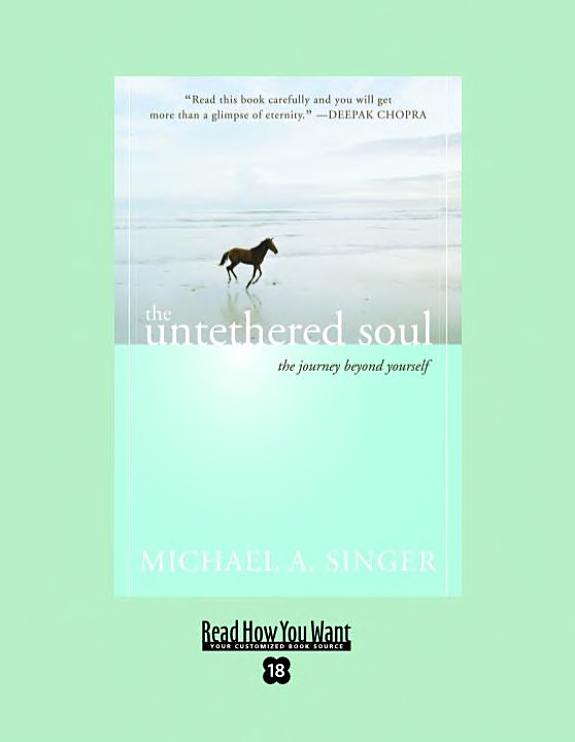
The Untethered Soul
5. The Untethered Soul by Michael A. Singer
Michael A. Singer opens “The Untethered Soul” with a question that sounds almost absurd until you sit with it: who are you? Not your name, your job, your relationships, or your opinions. Who is the one noticing all of those things? That question is the engine of the entire book, and Singer pursues it with a kind of calm persistence that is either deeply settling or slightly unsettling, depending on where you are in life. Possibly both at the same time.
The book is rooted in yogic and contemplative philosophy, but Singer translates these ideas into plain, contemporary language without flattening them. He writes about the inner voice, the narrator that runs commentary on everything you experience, and argues that most people are so identified with that voice that they mistake it for themselves. Authenticity, in his framework, means learning to observe that voice without being controlled by it. It means becoming, as the title suggests, untethered from the mental and emotional patterns that keep you stuck.
Singer is particularly good on the subject of emotional energy, how we block it, store it, and let old pain run our present decisions without realizing it. There is a chapter on “closing your heart” that has stayed with a lot of readers for years after they first encountered it. The book does not ask you to become a different person. It asks you to stop hiding from the person you already are, which turns out to be a considerably larger project.
“There is nothing more important to true growth than realizing that you are not the voice of the mind. You are the one who hears it.” Singer says this early and spends the rest of the book showing you what it means to actually live that way.
This is perfect for readers open to contemplative and spiritual perspectives, those who feel like their own thoughts and emotions are running the show, and anyone who has sensed there is a quieter, steadier self underneath all the noise. It is not for readers who find spiritual or non-dualist frameworks frustrating, or who are looking for practical, step-by-step behavioral strategies.
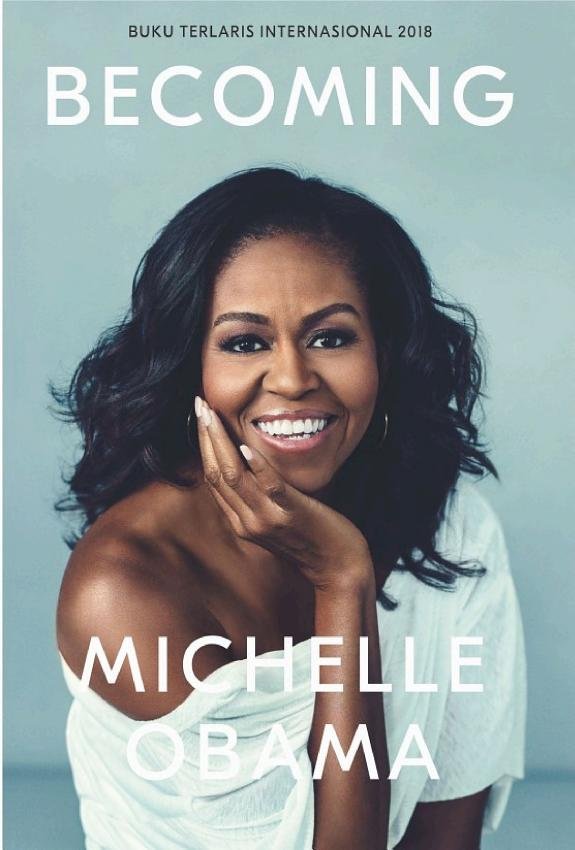
Becoming
6. Becoming by Michelle Obama
“Becoming” is a memoir, not a self-help book, and that distinction matters. Michelle Obama is not telling you how to live. She is showing you how she lived, which is a different and often more useful thing. The book covers her childhood on Chicago’s South Side, her education at Princeton and Harvard Law, her marriage to Barack Obama, and the years in the White House that were, by any measure, among the most scrutinized years any American family has endured in recent history. What holds all of it together is her ongoing negotiation with the question of who she is allowed to be.
Obama writes about being told, at various points, that she was “too much,” too ambitious, too direct, too focused on her own career once her husband’s political life took over. She writes about the pressure to fit into roles she did not choose and the internal cost of doing so. She is honest about the strains in her marriage, about anger she felt and had to sit with, about the loneliness of a life lived under constant public scrutiny. It is more candid than you might expect from someone who spent eight years being diplomatically careful about everything she said in public.
The prose is clear and confident, with a warmth that feels earned rather than performed. Obama is a good storyteller. She knows how to build a scene and when to step back and reflect. The memoir format means the insights arrive through experience rather than instruction, which makes them land differently. You are not being told what authenticity looks like. You are watching someone fight for it across decades.
“Becoming requires equal parts patience and rigor. Becoming is never giving up on the idea that there’s more growing to be done.” Obama frames authenticity not as a destination but as an ongoing practice, which is probably the most honest thing anyone in this list says.
This is perfect for readers who connect with memoir as a form, those who want to see the themes of authenticity and self-definition explored through a real, specific, richly detailed life, and anyone who has felt pressure to minimize themselves to make others more comfortable. It is not the right choice for readers who want structured frameworks or are looking for something primarily instructional.
None of these books will hand you a finished, authentic self in a neat package. That is not how any of this works, and any book that promises otherwise deserves your skepticism. What these six can do is offer language for things you may have been feeling without quite being able to name, and a few different maps for the same general territory: the long, sometimes uncomfortable work of becoming more honest with yourself.
Some of them will resonate immediately. Others might need to wait until you are in the right place to receive them. That is fine. Good books have a way of arriving at the right time if you let them. Pick the one that sounds most like the conversation you need to have right now, and start there.