

6 Books That Improve Emotional Intelligence
Somewhere between the third time you said something you regretted in a meeting and the fifth time you replayed an awkward conversation at 2 a.m., you probably wondered if there was a better way to handle your emotions. Not suppress them. Not perform wellness. Actually understand them. That is what emotional intelligence is really about, and it turns out there are some genuinely useful books on the subject.
The field has attracted its share of oversimplification over the years. Pop psychology loves to slap a number on your EQ and call it a day. But the best books in this space go much deeper than that. They look at how emotions function in relationships, in workplaces, in parenting, and inside your own head when things get difficult. The six books below represent a range of approaches, from research-heavy frameworks to practical self-assessment tools, and they are worth your time for different reasons depending on where you are starting from.
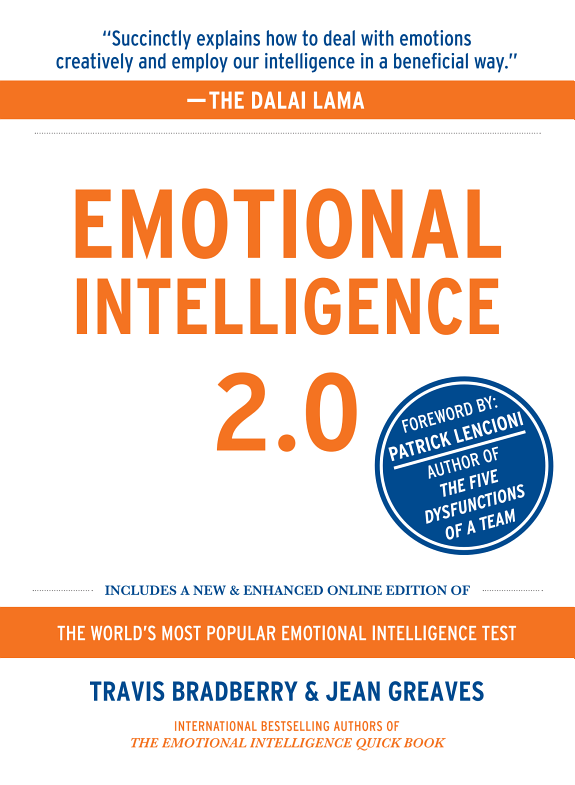
Emotional Intelligence 2.0
1. Emotional Intelligence 2.0 by Travis Bradberry and Jean Greaves
This is probably the most widely read entry point into emotional intelligence, and for good reason. Bradberry and Greaves take a concept that can feel abstract and turn it into something you can actually measure and work on. The book is built around four core skills: self-awareness, self-management, social awareness, and relationship management. Each section comes with concrete strategies, and the book includes an access code for an online EQ assessment that gives you a baseline score to work from.
The writing is clear and direct without being condescending. Bradberry and Greaves are not trying to write literature here. They are trying to get you to change specific behaviors, and the book is structured accordingly. Some readers find the strategy lists a little formulaic, and if you are already well-read in psychology or organizational behavior, parts of this will feel familiar. But as a starting point, it does the job honestly and without a lot of fuss.
One thing worth knowing is that the online assessment is the real centerpiece of the experience. The book without it is still useful, but the combination of reading the framework and then seeing your own scores laid out in front of you is where the self-reflection tends to kick in. It is a bit like getting your blood work done. You thought you were fine until the numbers said otherwise.
This book works best when you treat the assessment as a conversation starter with yourself rather than a verdict. The score is a snapshot, not a sentence.
This is perfect for someone new to the concept of emotional intelligence who wants a structured, practical introduction with a built-in self-assessment. It is not the right fit for readers looking for deep psychological theory or narrative storytelling.
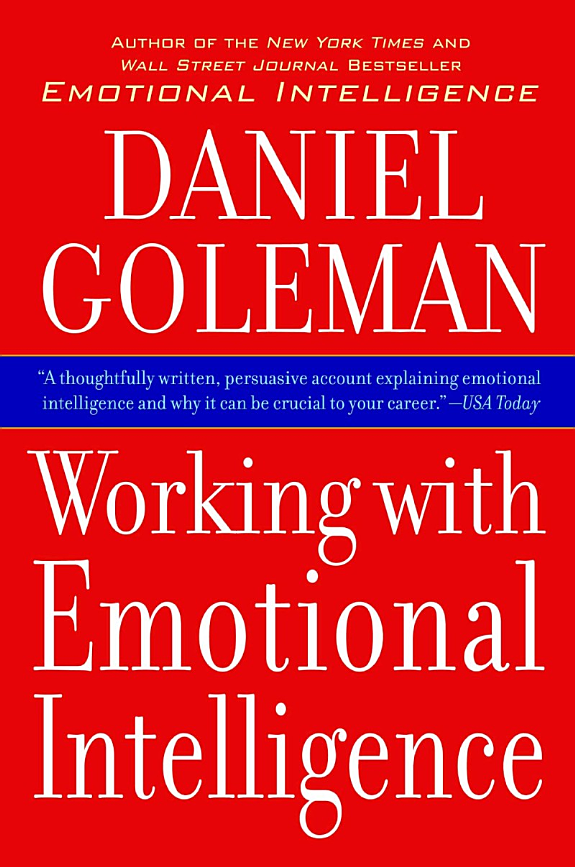
Working with Emotional Intelligence
2. Working with Emotional Intelligence by Daniel Goleman
Daniel Goleman essentially put emotional intelligence on the map with his 1995 book, but this follow-up is where he gets specific about the workplace. Drawing on research from hundreds of companies and interviews with executives, managers, and HR professionals, Goleman builds a case that emotional competencies matter more than technical skills when it comes to professional success. He is not being anti-intellect about it. He is just pointing out that a high IQ gets you in the room, and emotional intelligence determines what happens once you are there.
The book is dense in the best possible way. Goleman covers everything from self-confidence and initiative to empathy, conflict management, and the ability to build bonds across an organization. Each competency is explored with research, real-world examples, and a clear explanation of why it matters at work specifically. This is not generic self-help. It is applied, contextual, and grounded in data that was gathered with professional environments in mind.
Where some readers lose patience is in the sheer volume of material. Goleman covers a lot of ground, and the book can feel encyclopedic at times. If you are looking for a quick read with a tidy takeaway, this is not it. But if you want to understand the full landscape of emotional competencies in professional life, this is one of the most thorough treatments available.
Goleman makes a compelling argument that the skills most organizations undervalue are precisely the ones that determine whether a talented person becomes a good leader or just a frustrated one.
This is perfect for managers, team leads, and professionals who want a research-backed look at how emotional intelligence plays out specifically in workplace dynamics. Readers who prefer light, narrative-driven books may find the depth here a bit much.
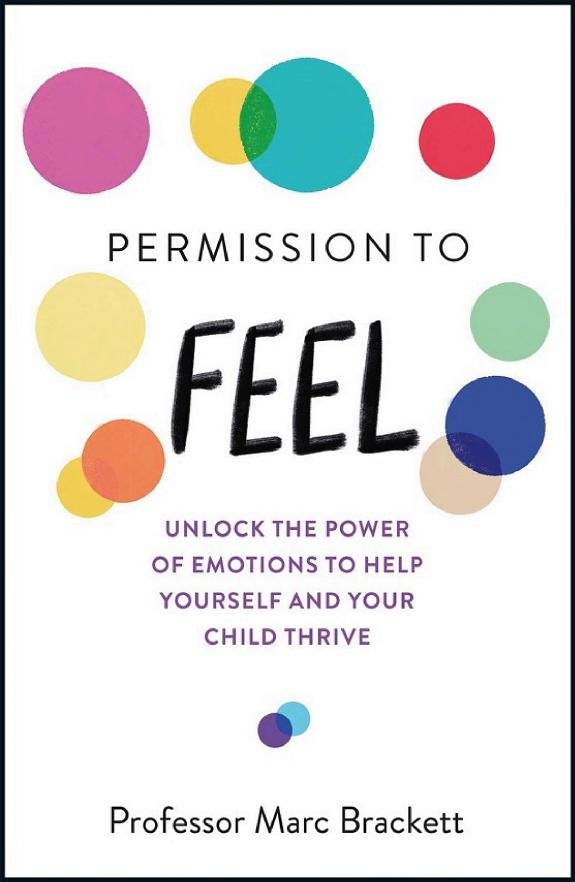
Permission to Feel: Unlocking the Power of Emotions to Help Our Kids, Ourselves, and Our Society Thrive
3. Permission to Feel by Marc Brackett
Marc Brackett is the founding director of the Yale Center for Emotional Intelligence, and this book is part research summary, part memoir, and part call to action. The memoir element is what sets it apart. Brackett opens with his own childhood experience of being dismissed and misunderstood emotionally, and that personal thread runs through the entire book, giving the science a human warmth that purely academic texts often lack. He is not just explaining emotions. He is clearly someone who has thought about them his whole life.
The central tool Brackett introduces is the RULER framework, which stands for Recognizing, Understanding, Labeling, Expressing, and Regulating emotions. It sounds simple enough, but the depth he brings to each component is considerable. The chapter on labeling emotions is particularly striking. Brackett argues that most people have a startlingly small emotional vocabulary, and that this limitation directly affects how well we can process and communicate what we are feeling. Calling something anger when it is actually disappointment or embarrassment leads to very different, often worse, responses.
The book also takes seriously the social dimension of emotional intelligence, looking at how schools, families, and workplaces either support or suppress emotional awareness. This makes it broader in scope than most books in the genre. It is not just asking you to work on yourself. It is asking you to think about the environments you are part of and what they do to people’s emotional lives. That is a bigger ask, and it lands.
Brackett’s point about emotional vocabulary is one of the most practically useful ideas in any book on this subject. You cannot regulate what you cannot name.
This is perfect for parents, educators, and anyone who grew up in an environment where emotions were minimized or ignored. It is less suited to readers who want a strictly professional or organizational focus.
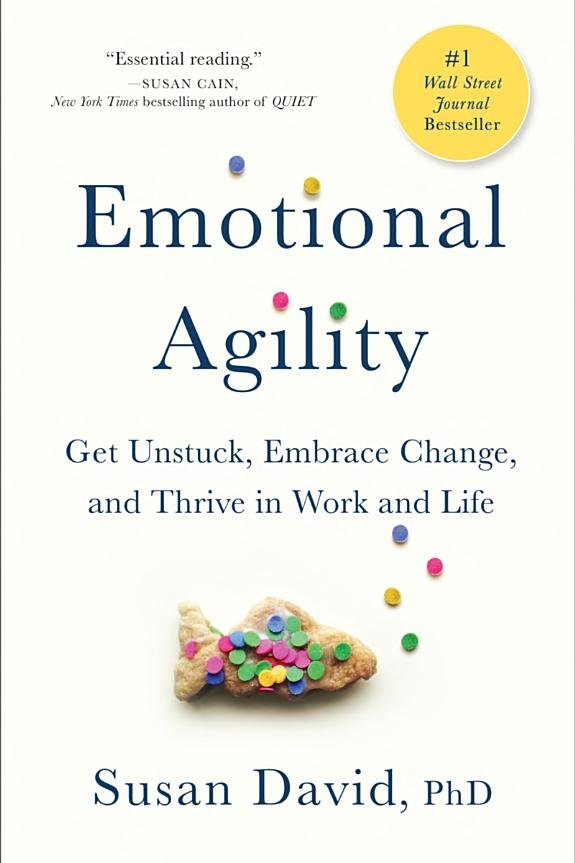
Emotional Agility: Get Unstuck, Embrace Change, and Thrive in Work and Life
4. Emotional Agility by Susan David
Susan David is a psychologist at Harvard Medical School, and this book grew out of research she has been doing for years on how people relate to their inner emotional lives. The core idea is that most of us are either hooked by our emotions, letting them run the show, or we bottle them up and pretend they are not there. Emotional agility is the alternative: a way of holding your thoughts and feelings with curiosity and compassion rather than getting tangled up in them or pushing them away.
What David does particularly well is challenge the relentless positivity culture that has taken hold in wellness and self-help circles. She argues, with solid research behind her, that forcing yourself to think positive thoughts or suppressing negative ones actually backfires. The emotions do not disappear. They just come out sideways. Her approach is more honest and, frankly, more respectful of how complicated human beings actually are. She is not asking you to feel good all the time. She is asking you to feel accurately.
The book is well-written and moves at a good pace. David uses a mix of case studies, personal anecdotes, and research to illustrate her points, and the balance works. There are practical exercises woven throughout, but they never feel like homework. They feel like genuine invitations to reflect. The section on values, and how they can serve as a compass when emotions are noisy, is especially worth sitting with.
David’s argument that emotional rigidity, not negative emotion itself, is the real problem is a reframe that quietly reshapes how you think about your own inner life.
This is perfect for people who feel stuck in patterns of overthinking, self-criticism, or emotional suppression, and who want a compassionate, research-informed way forward. It is not the right pick for readers who want a strictly skills-based or workplace-focused approach.
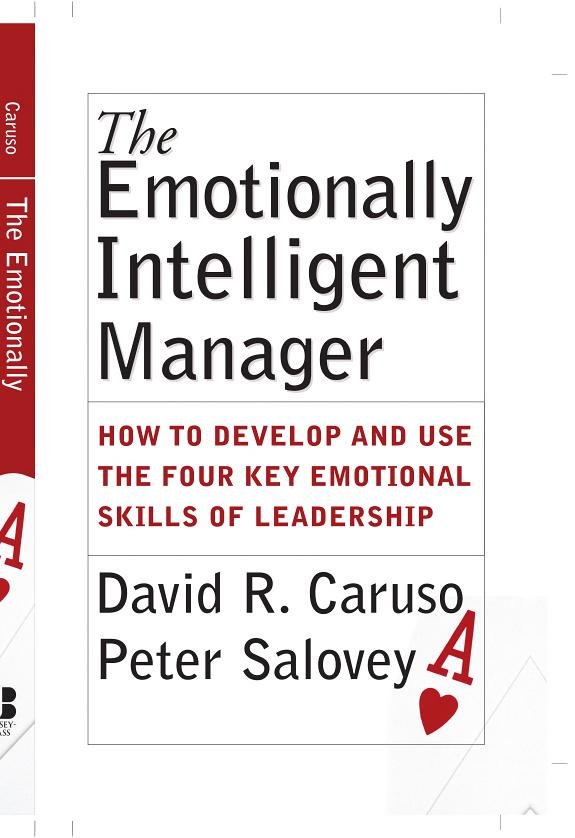
The Emotionally Intelligent Manager: How to Develop and Use the Four Key Emotional Skills of Leadership
5. The Emotionally Intelligent Manager by David R. Caruso and Peter Salovey
Peter Salovey is one of the psychologists who originally coined the term emotional intelligence, so there is a certain authority to this book that is hard to dismiss. Written with David Caruso, a researcher and consultant, this is one of the more technically rigorous books on the subject while still being readable by a general audience. The framework they use divides emotional intelligence into four distinct abilities: reading emotions, using emotions to facilitate thought, understanding emotions, and managing emotions. It is a cleaner and more precise model than some of the broader competency lists found elsewhere in the genre.
The leadership focus is genuine and specific. Caruso and Salovey are not just applying generic emotional intelligence advice to a management context. They are thinking carefully about what it actually means to lead people, make decisions under pressure, give feedback, and navigate organizational politics with emotional awareness. Each chapter addresses a real managerial challenge and works through it using the four-ability framework, which gives the book a practical coherence that holds up well.
This is not a casual read. The writing is clear but the ideas are layered, and the book rewards careful attention rather than a quick skim. Readers who find management books too anecdotal will appreciate the research foundation here. Those who find research-heavy books dry might want to start elsewhere and come back to this one when they are ready for more depth.
The distinction Caruso and Salovey draw between using emotions as data versus being controlled by them is one of the most clarifying ideas in the entire emotional intelligence literature.
This is perfect for managers and organizational leaders who want a rigorous, research-grounded framework for applying emotional intelligence to real leadership situations. It is not the right starting point for readers new to the subject or those looking for a lighter, more personal read.
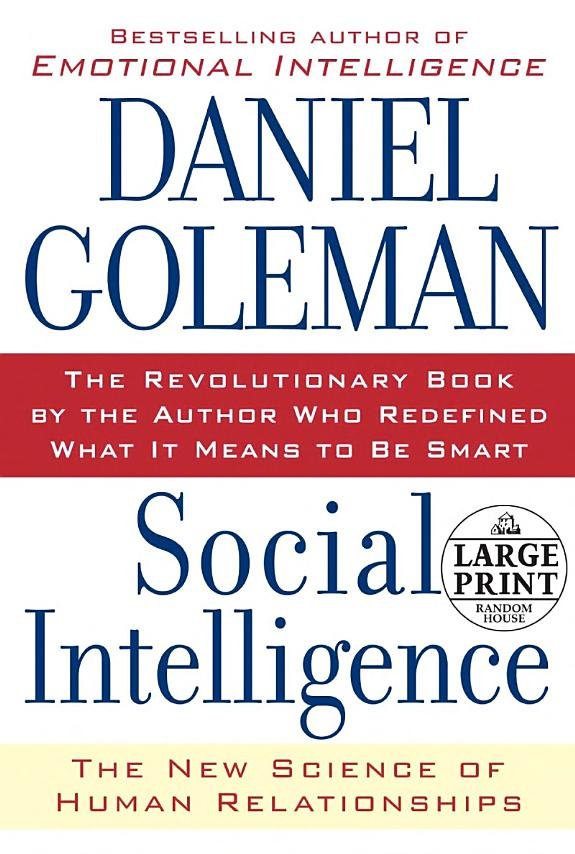
Social Intelligence: The New Science of Human Relationships
6. Social Intelligence by Daniel Goleman
Goleman returns here with a book that zooms out from the individual and looks at how human beings connect with each other at a neurological and social level. Drawing on advances in neuroscience, particularly research on mirror neurons and the social brain, Goleman makes the case that we are wired for connection in ways that go far deeper than most of us realize. Our nervous systems are literally shaped by our relationships, for better or worse, and that insight sits at the heart of everything this book explores.
The science here is genuinely interesting and Goleman presents it accessibly without dumbing it down. He covers topics like empathic accuracy, how well we actually read other people’s emotional states, social cognition, toxic relationships and their measurable effects on health, and what it looks like to be truly present with another person rather than just physically nearby. The chapter on the neuroscience of connection is one of the more fascinating sections of any book in this space, and it does not require a background in biology to follow.
Where the book occasionally loses momentum is in its breadth. Goleman covers a lot of territory, and some sections feel more developed than others. A few of the later chapters on social intelligence in schools and society read more like policy advocacy than science writing, which is not a flaw exactly, just a shift in register that some readers notice. That said, the core material on how relationships shape us and how we can become more attuned to others is genuinely worthwhile.
The idea that our relationships are not just emotionally significant but biologically consequential, that other people’s moods and behaviors literally alter our physiology, is one of those facts that changes how you think about who you spend time with.
This is perfect for readers curious about the neuroscience behind human connection and social behavior, and for anyone who wants to understand empathy and relationships at a deeper level. It is less suited to readers who want a purely practical, skills-based guide.
These six books do not all say the same thing, which is part of what makes them worth reading together. Some focus on the individual, some on the workplace, some on relationships, and some on the biology underneath all of it. Emotional intelligence is not a single skill you acquire and then have forever. It is more like a practice, something you keep returning to as your circumstances change and as you learn more about yourself and the people around you.
If you are not sure where to start, let your situation guide you. New to the whole concept? Begin with Bradberry and Greaves. Struggling with your own emotional patterns? Susan David is the one to reach for. Leading a team and feeling out of your depth? Goleman’s workplace book or the Caruso and Salovey title will serve you well. There is no wrong entry point, only the one that fits where you are right now.
Reading about emotional intelligence is not a substitute for actually practicing it, of course. But it is a reasonable place to begin. And sometimes understanding why you feel what you feel is the first step toward doing something useful with it.