

7 Books That Help With Social Anxiety
Social anxiety is one of those things that is very easy to misunderstand, even by the people who have it. It is not just shyness. It is not simply being introverted. It is the particular dread of being watched, judged, or embarrassed that can make something as ordinary as ordering coffee feel like a rehearsed performance with very high stakes. If you have ever replayed a conversation for three days afterward, picking apart everything you said, you probably know exactly what I mean.
Books will not fix social anxiety on their own. That is worth saying upfront, because no honest reading list should promise miracles. What they can do is help you understand what is happening in your brain, give you concrete tools to practice, and remind you that you are far from alone in this. The seven books below range from structured workbooks to more narrative, conversational reads. Some lean on cognitive behavioral therapy, others on mindfulness and acceptance. Together, they cover a lot of ground, and at least one of them is likely to feel like it was written specifically for you.
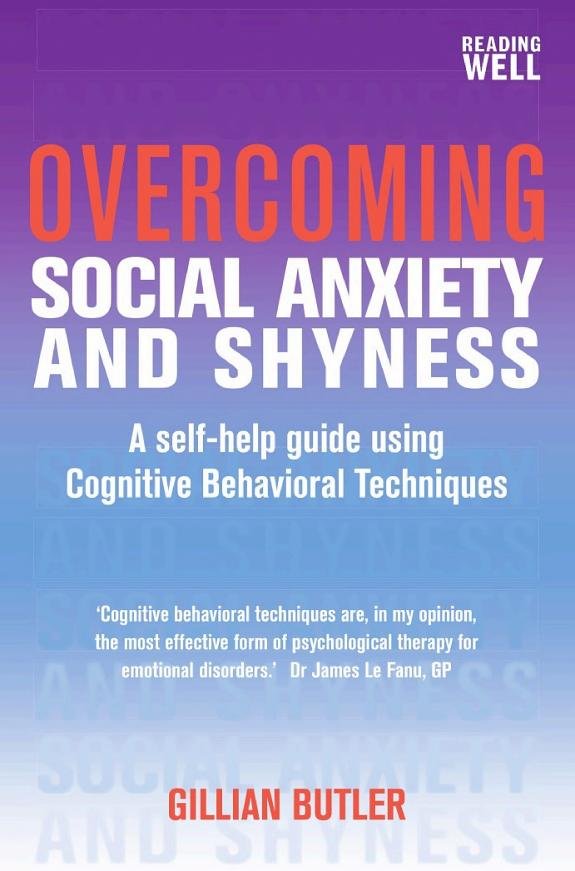
Overcoming Social Anxiety and Shyness, 2nd Edition
1. Overcoming Social Anxiety and Shyness, 2nd Edition by Gillian Butler
Gillian Butler is a clinical psychologist who helped develop cognitive behavioral therapy in the UK, and that background shows throughout this book. It is thorough without being clinical, and reassuring without being patronizing. The second edition updates the original with newer research while keeping the accessible, grounded tone that made the first version so widely recommended by therapists.
The book works through the mechanics of social anxiety in a way that genuinely makes sense. Butler explains how anxious thinking patterns develop, why avoidance feels helpful in the short term but makes things worse over time, and how to start shifting both thoughts and behaviors in a more useful direction. She uses clear examples and practical exercises, but the book reads more like a conversation than a workbook. You are not filling in blanks so much as being walked through ideas at a comfortable pace.
The tone is notably kind. Butler does not make you feel broken for struggling with something that, as she points out, affects an enormous number of people. She also does not oversell the process. Change takes time and effort, and she is honest about that. This is not a book that promises you will be chatting effortlessly at parties by chapter five.
Butler’s real strength is explaining not just what to do, but why the anxious brain does what it does, which makes the strategies feel logical rather than arbitrary.
This is perfect for someone who wants a solid, research-backed introduction to CBT for social anxiety without the intimidating structure of a formal workbook. It suits people who prefer reading to filling in exercises, and who want to understand the theory behind the techniques.
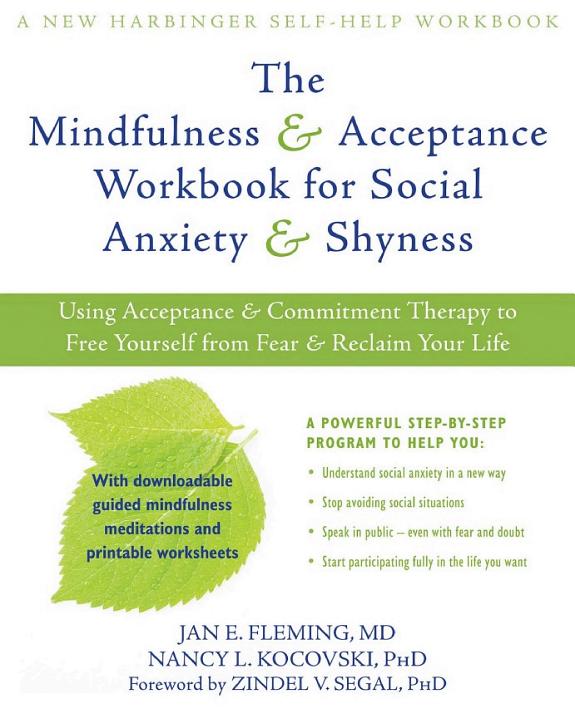
The Mindfulness and Acceptance Workbook for Social Anxiety and Shyness
2. The Mindfulness and Acceptance Workbook for Social Anxiety and Shyness by Jan E. Fleming and Nancy L. Kocovski
Fleming and Kocovski take a different approach from the standard CBT model. Their workbook is grounded in Acceptance and Commitment Therapy, which means the goal is not to eliminate anxious thoughts but to change your relationship with them. If you have tried thought-challenging techniques before and found them frustrating or exhausting, this book might be a genuinely refreshing change of direction.
The core idea is that fighting your anxiety often makes it louder, while learning to observe it without judgment, and still moving toward the life you want, tends to work better in the long run. The authors walk you through mindfulness practices, values clarification, and defusion techniques, which is the ACT term for learning to see your thoughts as just thoughts rather than facts. The workbook format means there are exercises throughout, and they are well-designed and clearly explained.
The writing is warm and collaborative. Fleming and Kocovski write as though they are working alongside you rather than lecturing at you. That said, the ACT framework requires some patience to get into. If you are brand new to mindfulness or find the idea of sitting with discomfort counterintuitive, the early chapters might take a bit of effort to absorb before the approach clicks.
The shift this book asks you to make is subtle but significant: stop treating anxiety as the enemy to be defeated, and start treating it as something you can carry while still moving forward.
This is perfect for people who have found traditional CBT approaches frustrating, or who are already curious about mindfulness and want to apply it specifically to social anxiety. It works well alongside therapy or as a standalone resource for someone willing to do the exercises seriously.
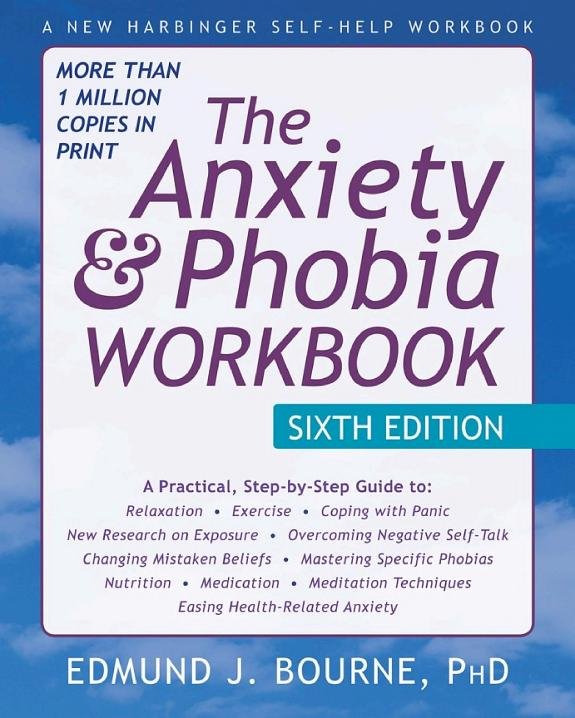
The Anxiety and Phobia Workbook
3. The Anxiety and Phobia Workbook by Edmund J. Bourne
Edmund Bourne’s workbook has been around since 1990 and has gone through multiple editions, which tells you something about its staying power. It is comprehensive in a way that few anxiety books manage to be, covering not just social anxiety but the full landscape of anxiety disorders, including phobias, panic, generalized anxiety, and obsessive thinking. For someone whose social anxiety shows up alongside other anxious tendencies, this breadth is genuinely useful.
The book covers an enormous range of techniques, from relaxation training and breathing exercises to cognitive restructuring, assertiveness skills, nutrition, exercise, and even the role of spirituality in managing anxiety. Bourne is not dogmatic about any single approach. He presents multiple tools and trusts the reader to find what works for them. This makes the book feel generous rather than prescriptive, though it does mean you are getting a wide survey rather than a deep dive into any one method.
The workbook format is active and engaging, with exercises woven throughout. Some readers find the sheer scope of the book slightly overwhelming at first, and it is not specifically focused on social anxiety the way some other books on this list are. But as a comprehensive reference that you can return to again and again, it is hard to beat. Think of it less as a book to read cover to cover and more as a resource to dip into based on what you need.
Bourne’s workbook functions almost like a personal handbook for anxiety, broad enough to address whatever form your anxiety takes on any given day.
This is perfect for people who experience anxiety in multiple forms, not just socially, and who want one thorough resource to consult across different situations. It is also well-suited to people who appreciate having a wide variety of techniques to choose from rather than following a single prescribed approach.
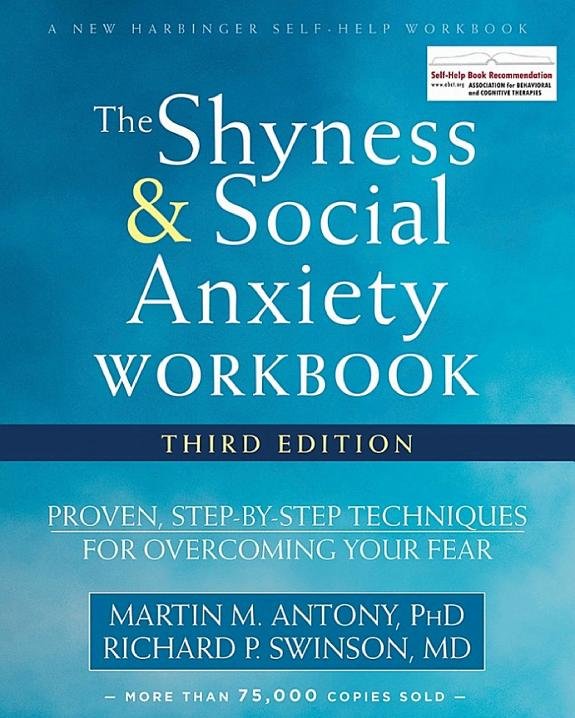
The Shyness and Social Anxiety Workbook
4. The Shyness and Social Anxiety Workbook by Martin M. Antony and Richard P. Swinson
Martin Antony and Richard P. Swinson are both respected researchers in the anxiety field, and this workbook reflects that expertise without feeling like a dry academic text. It is one of the most practically structured books on this list, walking you step by step through a CBT-based program that includes assessment, cognitive restructuring, and graduated exposure. The exposure component, which involves gradually facing feared situations in a planned and manageable way, is presented particularly well here.
What sets this workbook apart is how carefully it helps you individualize the program. Rather than giving you a generic list of feared situations, the authors guide you through building your own hierarchy based on what actually triggers your anxiety. This makes the exposure work feel relevant and achievable rather than like a one-size-fits-all checklist. The cognitive sections are similarly grounded, helping you identify the specific thought patterns that fuel your particular brand of social anxiety.
The writing is clear and direct, without a lot of warmth or humor, which suits some readers perfectly and might feel a little dry to others. This is a workbook that rewards commitment. If you sit down and actually do the exercises, you are likely to get a lot out of it. If you read it passively without engaging with the activities, you will probably find it less useful. That is not a criticism so much as a note about how to approach it.
The exposure hierarchy in this workbook is one of the most well-explained versions of the technique available in self-help format, which is saying something given how often that explanation goes wrong.
This is perfect for people who want a structured, evidence-based program they can work through systematically. It suits readers who are comfortable with a more clinical tone and who are genuinely ready to do the practical work of exposure rather than just reading about anxiety.
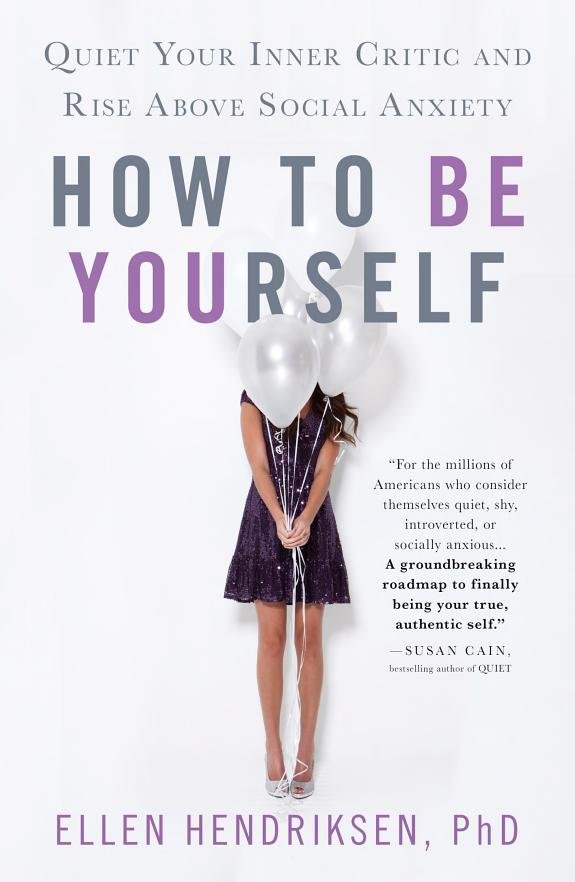
How to Be Yourself: Quiet Your Inner Critic and Rise Above Social Anxiety
5. How to Be Yourself: Quiet Your Inner Critic and Rise Above Social Anxiety by Ellen Hendriksen
Ellen Hendriksen is a clinical psychologist who also has personal experience with anxiety, and that combination gives this book a warmth and credibility that is hard to fake. The central argument is both simple and quietly radical: people with social anxiety are not missing some social skill or confidence gene. They are held back by a specific fear of being found lacking, and the solution is not to become a different person but to stop hiding the person you already are.
The writing is genuinely enjoyable. Hendriksen has a light, conversational style with occasional flashes of humor that make the book feel less like a self-help manual and more like a smart friend talking you through something difficult. She explains the science clearly without being condescending, and the practical suggestions are woven naturally into the narrative rather than dropped in as an afterthought. The book covers cognitive techniques, behavioral approaches, and the particular cruelty of the inner critic that narrates social situations with such relentless negativity.
This is one of the more readable books on this list, which is a real advantage if you have struggled to get through denser workbooks in the past. It is not the most structured program, and if you want a step-by-step protocol with worksheets, you might want to pair it with one of the workbooks listed elsewhere here. But as a book that helps you understand social anxiety and genuinely shifts how you think about yourself, it is excellent.
Hendriksen’s insight that social anxiety is not about lacking confidence but about hiding your real self reframes the whole problem in a way that actually feels hopeful.
This is perfect for people who want to understand social anxiety through engaging, readable prose rather than structured exercises. It suits readers who have tried workbooks and found them hard to stick with, or who want a book that addresses the self-concept and identity aspects of social anxiety alongside the practical techniques.
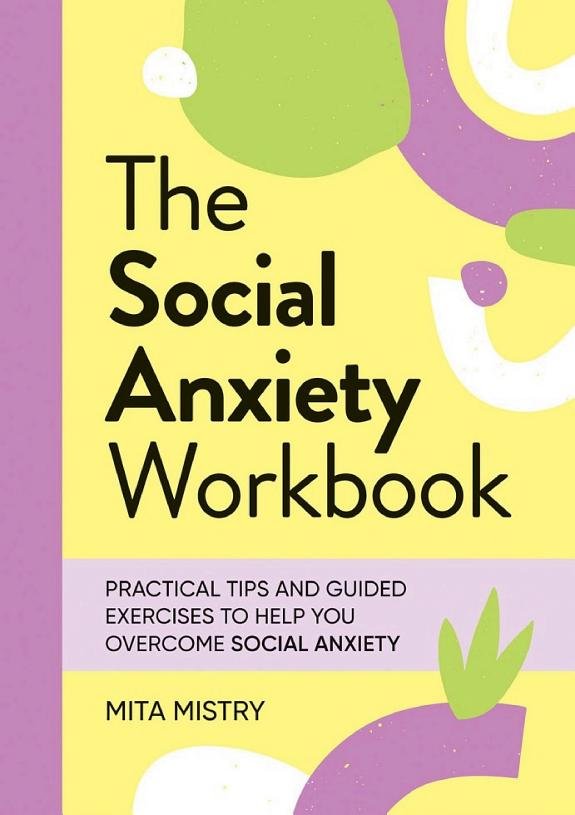
The Social Anxiety Workbook: Practical Tips and Guided Exercises to Overcome Social Anxiety
6. The Social Anxiety Workbook: Practical Tips and Guided Exercises to Overcome Social Anxiety by Mita Mistry
Mita Mistry is a cognitive behavioral therapist, and this workbook has the feel of a thoughtful therapist sitting across from you and walking you through the process in a calm, organized way. The book is relatively compact compared to some of the other titles on this list, which is actually one of its strengths. It does not try to cover every possible aspect of anxiety. Instead, it focuses specifically on social anxiety and gives you a clear, manageable set of tools without overwhelming you.
The exercises are well-constructed and genuinely guided, meaning Mistry does not just tell you to identify your negative thoughts but actually shows you how to do it with examples and space for reflection. There is a good balance between psychoeducation, helping you understand what social anxiety is and where it comes from, and practical skill-building. The mindfulness elements are integrated naturally rather than feeling like a separate module bolted on.
The tone is professional but accessible, and the book does not assume you have any prior knowledge of CBT or therapy. That makes it a good starting point for someone who is relatively new to working on their anxiety. More experienced readers who have already worked through several CBT resources might find some of the material familiar, but there is still value in the structured format and the quality of the exercises.
Mistry’s workbook succeeds because it stays focused. It is not trying to be everything to everyone, and that restraint makes it genuinely useful for the specific problem it addresses.
This is perfect for someone who is newer to working on their social anxiety and wants a focused, clearly structured workbook that does not require any prior knowledge of therapy or CBT. It also suits people who find larger, more comprehensive books difficult to navigate and prefer something with a clear beginning, middle, and end.
Painfully Shy: How to Overcome Social Anxiety and Reclaim Your Life
7. Painfully Shy: How to Overcome Social Anxiety and Reclaim Your Life by Barbara G. Markway and Gregory P. Markway
The title of this book is doing a lot of work, and honestly, it earns it. Barbara and Gregory Markway write with a warmth and compassion that is rare in self-help, and they understand that social anxiety is not just an inconvenience but something that can genuinely narrow a life in painful ways. They take the experience seriously without being dramatic about it, which is a difficult balance to strike.
The book covers the cognitive and behavioral elements you would expect, including identifying unhelpful thought patterns and working through avoidance, but it also pays real attention to the emotional and relational dimensions of social anxiety. There are sections on self-esteem, relationships, and the particular exhaustion of managing anxiety over a long period of time. The Markways also address what happens when social anxiety intersects with depression, which is a common combination that many books sidestep.
The writing is accessible and human, with real case examples that help illustrate the concepts without feeling contrived. This is not the most structured workbook on this list, and if you need a very systematic program with formal exercises, you might prefer Antony and Swinson or Bourne. But for readers who want to feel understood as well as helped, this book delivers something the more clinical titles sometimes miss. It is a good reminder that working on anxiety is not just about techniques. It is also about rebuilding a relationship with yourself.
What the Markways understand, and what comes through on every page, is that social anxiety is not a personality flaw. It is a learned pattern, and learned patterns can be unlearned.
This is perfect for readers who want a compassionate, holistic approach to social anxiety that goes beyond technique and addresses the emotional weight of the experience. It is especially well-suited to people who feel that their anxiety has significantly limited their life and who want a book that acknowledges that honestly.
Social anxiety is genuinely hard to live with, and it does not always respond quickly to the things you try. That is worth acknowledging before you pick up any of these books. None of them are shortcuts. The workbooks require actual work. The narrative books require honest reflection. But across all seven of these titles, there is a consistent message worth holding onto: social anxiety is not who you are. It is something that happens to you, and it is something that can change.
If you are not sure where to start, Hendriksen’s book is probably the most approachable entry point, and Antony and Swinson is the most structured program. Butler sits comfortably in the middle. The right book is ultimately the one you will actually read and engage with, so trust your instincts when you look through these. And if one does not quite fit, another one probably will.