

7 Books Every People Pleaser Needs to Read
If you have ever agreed to something you desperately did not want to do, then spent the next three days quietly resenting both the other person and yourself, welcome. You are in very good company. People pleasing is one of those habits that looks like kindness from the outside but feels like slow suffocation from the inside. It is exhausting, it is invisible, and for a lot of us, it started so early that we barely noticed it becoming our default setting.
The good news is that it can change. Not overnight, and not without some uncomfortable moments of sitting with the word “no” before you actually say it out loud. But it does change. The books on this list approach the problem from different angles, some clinical and structured, some conversational and direct, some rooted in psychology and others in practical communication skills. Together they make a solid reading path for anyone who is tired of shrinking themselves to keep the peace.
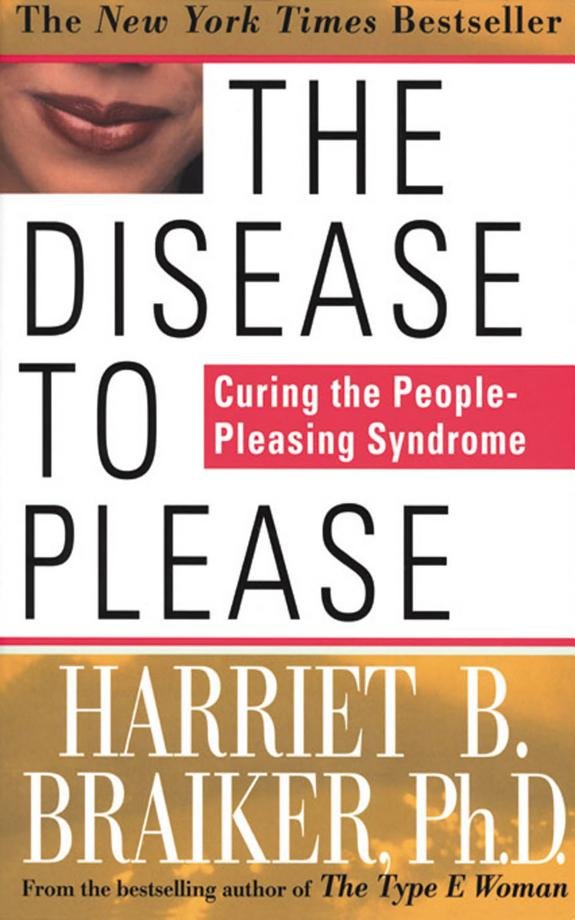
The Disease to Please: Curing the People-Pleasing Syndrome
1. The Disease to Please: Curing the People-Pleasing Syndrome by Harriet B. Braiker
Harriet Braiker was a clinical psychologist, and it shows. This book reads like a thoughtful, thorough diagnosis before it ever gets to the treatment plan. She frames people pleasing not as a personality quirk or a minor social habit but as a genuine psychological syndrome, one driven by deeply held beliefs, compulsive behaviors, and emotional patterns that have often been reinforced over decades. That framing alone tends to be a relief for readers who have spent years wondering why they simply cannot stop doing something they know is hurting them.
Braiker breaks the syndrome into three interlocking components: thoughts, behaviors, and feelings. She is particularly good on the cognitive side of things, walking readers through the specific beliefs that fuel the need to please, things like “if I say no, people will not like me” or “my needs matter less than everyone else’s.” The writing is measured and clear, never sensationalist. She takes the topic seriously without making you feel like a case study.
Where the book is less suited to everyone is in its clinical tone. It is organized more like a self-help program than a casual read, with quizzes, exercises, and structured reflection prompts throughout. Readers who prefer a looser, more narrative approach might find it a bit dry in places. But for someone who wants to genuinely understand the roots of their people pleasing rather than just manage the symptoms, this is one of the most rigorous starting points available.
“People pleasing is not about being nice. It is about managing anxiety. Understanding that distinction is where real change begins.”
This is perfect for readers who want a psychologically grounded explanation of why they people please, and who are willing to work through structured exercises to untangle the patterns behind it.
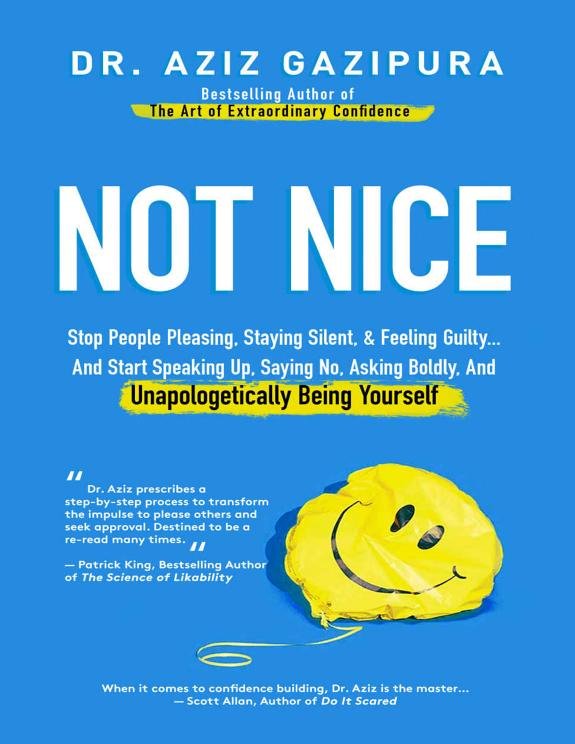
Not Nice: Stop People Pleasing, Staying Silent, & Feeling Guilty… And Start Speaking Up, Saying No, Asking Boldly, And Unapologetically Being Yourself
2. Not Nice: Stop People Pleasing, Staying Silent, and Feeling Guilty… And Start Speaking Up, Saying No, Asking Boldly, And Unapologetically Being Yourself by Aziz Gazipura
Aziz Gazipura does not ease you in gently. From the first chapter, he is making a fairly bold argument: that the “niceness” most people pleasers prize in themselves is not actually a virtue. It is fear wearing a pleasant face. That might sting a little on first read, but Gazipura earns the directness by being equally honest about his own history with people pleasing, social anxiety, and the slow, uncomfortable work of changing those patterns in his own life.
The book is part psychology, part personal memoir, and part practical guide. Gazipura draws on his background as a clinical psychologist and coach, but the tone never feels like a lecture. He writes with a kind of energetic frankness that makes the pages move quickly. He is also unusually good at addressing the internal experience of people pleasing, the specific flavor of dread that comes before saying something someone might not want to hear, and the way guilt rushes in immediately afterward.
It is worth noting that the subtitle is doing a lot of heavy lifting in terms of promises, and some readers find the book more motivational than instructional. If you are looking for detailed, step-by-step communication scripts, this is not quite that. It is more of a mindset shift book, one aimed at dismantling the beliefs that make assertiveness feel dangerous. For that purpose, it works very well. Just do not expect a workbook.
“The goal is not to become someone who stops caring about others. It is to become someone who also cares about themselves.”
This is perfect for people pleasers who need a motivational push to stop apologizing for their own preferences, especially those who suspect their “niceness” has more to do with fear than genuine generosity.
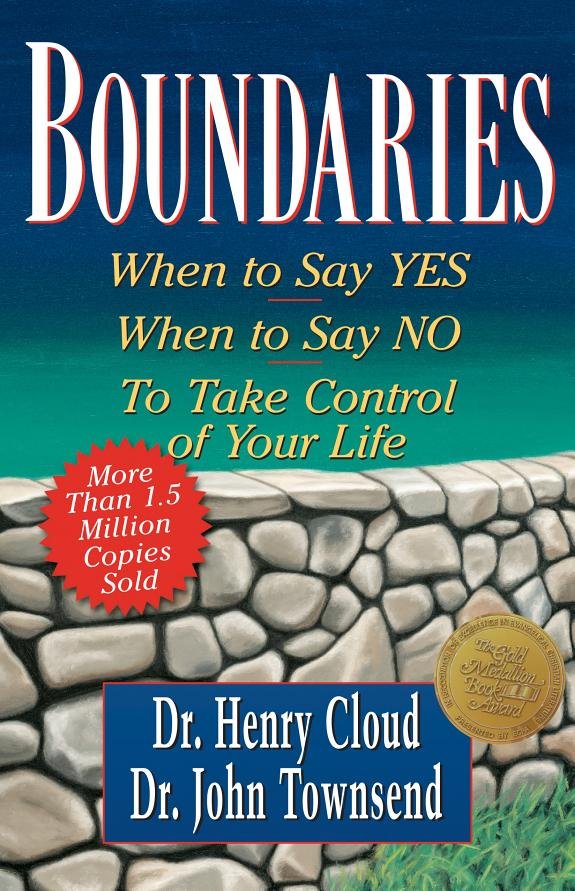
Boundaries: When to Say Yes, How to Say No to Take Control of Your Life
3. Boundaries: When to Say Yes, How to Say No to Take Control of Your Life by Henry Cloud and John Townsend
This book has been around since 1992 and has sold millions of copies, which means a lot of people have found something genuinely useful in it. Cloud and Townsend are both Christian psychologists, and the book is written explicitly from a faith-based perspective, drawing heavily on biblical principles and scripture throughout. That context shapes everything from the framing of personal responsibility to the discussion of love and obligation. For readers who share that framework, it adds depth and resonance. For readers who do not, it may require some translation.
Setting that aside, the core ideas here are solid. The authors define boundaries in a clear, memorable way: they are the property lines of the self, the places where you end and someone else begins. They walk through how healthy boundaries get damaged in childhood, how they show up (or fail to show up) in relationships, work, family, and friendships, and what it actually looks like to rebuild them. The writing is accessible and warm, and the many real-life examples help ground the concepts in recognizable situations.
The book is long and sometimes repetitive, and readers who are not coming from a Christian background may find the frequent scripture references interrupting the flow. But the relational wisdom here is genuinely useful, and the authors are particularly strong on the emotional guilt that comes with setting limits on people you love. That specific tension, wanting to be caring while also protecting yourself, is handled with real nuance.
“You are responsible to others, not for others. That single distinction changes everything about how you show up in relationships.”
This is perfect for readers with a Christian faith background who want a deeply relational, values-grounded approach to understanding why they struggle to say no and how to start changing that.
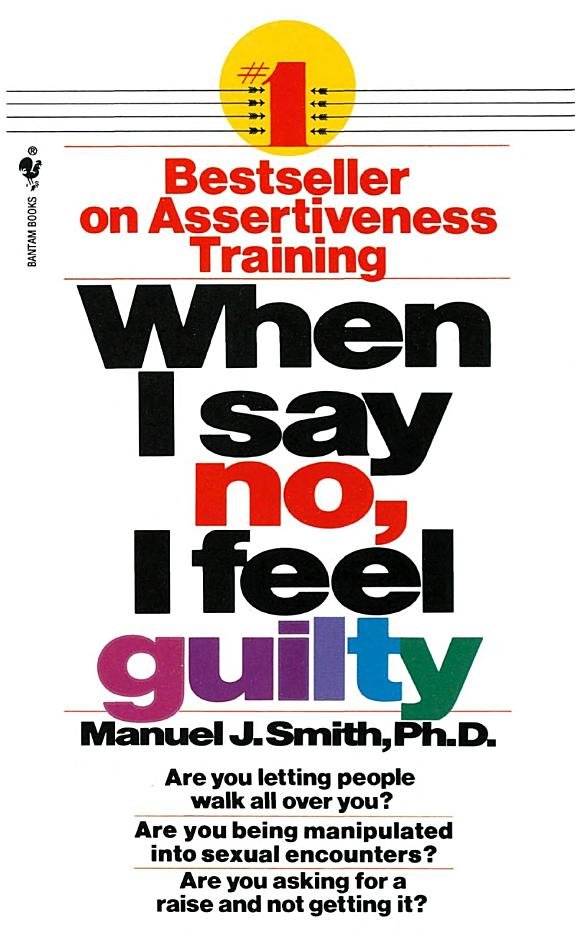
When I Say No, I Feel Guilty: How to Cope, Using the Skills of Systematic Assertive Therapy
4. When I Say No, I Feel Guilty: How to Cope, Using the Skills of Systematic Assertive Therapy by Manuel J. Smith
Published in 1975, this is the oldest book on the list, and it holds up remarkably well. Manuel J. Smith was a behavior therapist, and this book lays out a systematic, skills-based approach to assertiveness that was genuinely ahead of its time. At the center of it is what he calls a “Bill of Assertive Rights,” a list of simple, declarative statements about what every person is entitled to, including the right to change your mind, the right to make mistakes, and the right to say “I don’t know” without justification.
The real heart of the book is a set of specific verbal techniques for handling manipulation and social pressure. The most famous of these is the “broken record” method, which involves calmly repeating your position without escalating or explaining yourself into a corner. Smith is very good at showing how people pleasers get talked out of their own decisions not through force but through social maneuvering, and how to recognize and respond to those patterns without becoming aggressive or cold.
The book does show its age in places. Some of the dialogue examples feel dated, and the clinical framing can feel a bit stiff compared to more recent writing in this space. It is also quite long, and the middle sections can feel repetitive once you have absorbed the core techniques. But as a foundational text on assertiveness as a learnable skill rather than a personality trait, it remains one of the clearest and most practical books in this genre.
“Assertiveness is not about getting your way. It is about the right to express yourself without anxiety, apology, or manipulation.”
This is perfect for readers who want a structured, technique-focused approach to assertiveness, particularly those who find themselves caving under social pressure even when they know what they actually want.
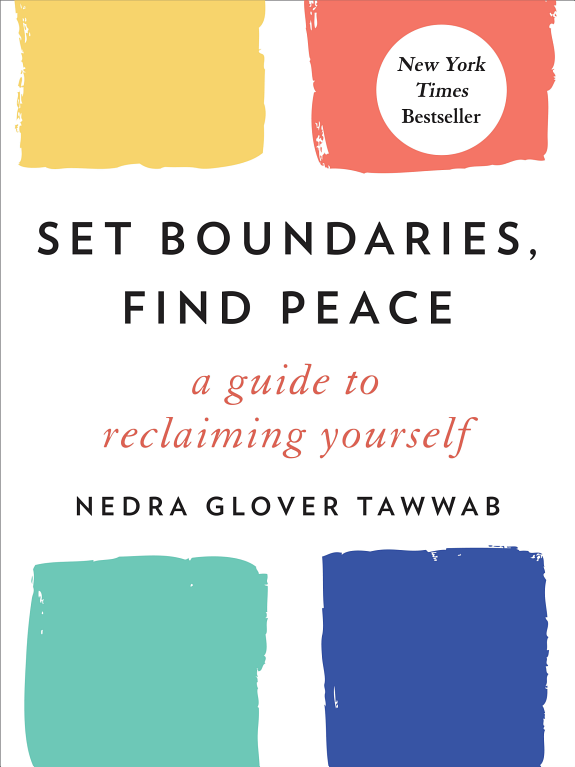
Set Boundaries, Find Peace: A Guide to Reclaiming Yourself
5. Set Boundaries, Find Peace: A Guide to Reclaiming Yourself by Nedra Glover Tawwab
Nedra Glover Tawwab is a therapist who built a large following on social media by posting clear, direct content about mental health and relationships. This book carries that same quality: it is accessible, warm, and refreshingly free of jargon. Tawwab writes as though she is talking to a real person sitting across from her in a therapy office, which makes the material feel immediate rather than abstract.
The book covers a wide range of relationship contexts, including family, romantic partnerships, friendships, work, and even the relationship you have with yourself and with social media. That breadth is one of its strengths. Tawwab is particularly good on the way boundary problems show up differently in different relationships, and on the specific guilt and grief that can accompany setting limits with family members, especially parents. She does not pretend that any of this is easy, which makes the advice feel honest rather than cheerfully unrealistic.
Readers who are already well-versed in this space may find the book covers familiar ground without adding a great deal of new depth. It is more of an entry-level guide than an advanced one, and the writing, while clear and kind, is not especially literary. But for someone just beginning to understand that they have a boundary problem and wanting a gentle, practical place to start, this is one of the most approachable books available.
“Boundaries are not walls. They are the terms under which you are willing to be in a relationship with someone.”
This is perfect for readers who are new to the concept of personal boundaries and want a clear, compassionate, and practically focused guide that covers a wide range of everyday relationships.
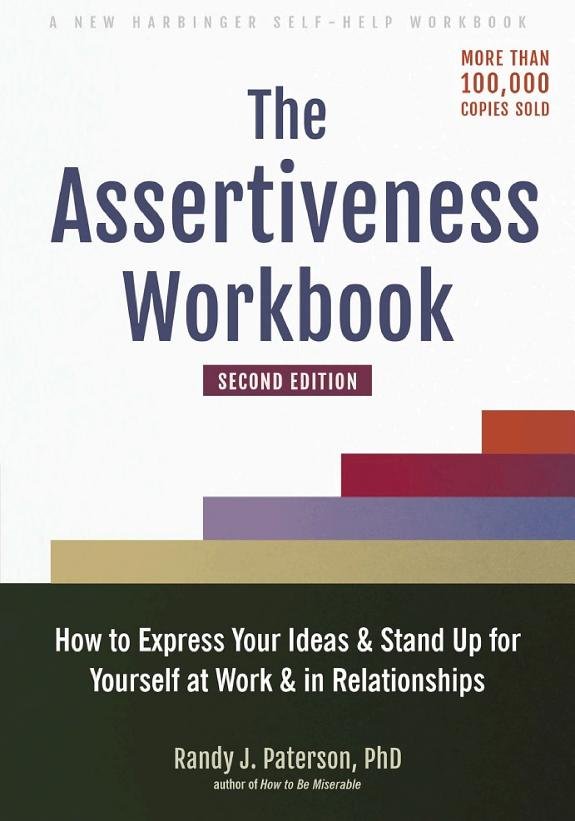
The Assertiveness Workbook: How to Express Your Ideas and Stand Up for Yourself at Work and in Relationships
6. The Assertiveness Workbook: How to Express Your Ideas and Stand Up for Yourself at Work and in Relationships by Randy J. Paterson
Randy J. Paterson is a psychologist who writes with a dry, self-aware humor that makes this workbook considerably more enjoyable than most books with the word “workbook” in the title. He is upfront about the fact that assertiveness is uncomfortable to practice, that you will feel awkward, that other people may react badly at first, and that this is all normal and not a reason to stop. That honesty is refreshing in a genre that sometimes oversells the ease of change.
The book is structured around cognitive behavioral principles, which means it spends time on both the thoughts that block assertiveness and the behavioral skills that build it. There are exercises throughout, ranging from reflection prompts to specific scripts for difficult conversations, and Paterson is good at calibrating the difficulty level so that readers can start with lower-stakes situations before working up to the harder ones. The sections on nonverbal communication and on the specific challenges of assertiveness at work are particularly well done.
This is genuinely a workbook, which means it rewards active engagement rather than passive reading. If you are the kind of person who tends to read self-help books and feel temporarily motivated but never actually do the exercises, this one will not magically change that habit. You have to show up for it. But if you are willing to do the work, the structured format makes it one of the most practically useful books on this list.
“Assertiveness is a skill, not a trait. Skills can be learned by anyone willing to practice them badly for a while first.”
This is perfect for readers who learn best by doing, who want concrete exercises and scripts rather than theory alone, and who are ready to practice assertiveness in small, manageable steps.
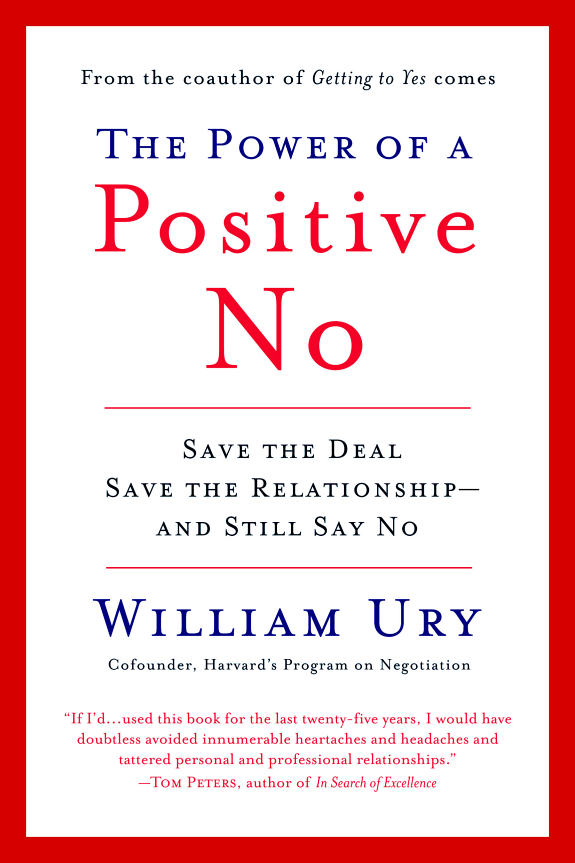
The Power of a Positive No: How to Say No and Still Get to Yes
7. The Power of a Positive No: How to Say No and Still Get to Yes by William Ury
William Ury is one of the co-authors of “Getting to Yes,” the classic negotiation text, and this book can be read as a companion to that work, though it stands perfectly well on its own. His central idea is elegant: a genuine “no” is not a rejection of the other person but an affirmation of something you value. He calls this the “positive no,” a response that begins with a yes to your own needs, moves through a clear no to the request, and ends with a yes to the relationship or to an alternative possibility.
What makes this book different from most of the others on this list is its focus on the relational and strategic dimensions of saying no. Ury is not primarily a psychologist writing about emotional patterns. He is a negotiator writing about communication, and that lens produces some genuinely fresh thinking. He is very good on the fear that saying no will damage relationships, and on how a well-constructed refusal can actually strengthen trust rather than erode it.
The book is more suited to professional and interpersonal negotiation contexts than to deep psychological healing work. Readers who are dealing with significant anxiety around disapproval or who have complex trauma histories related to people pleasing may find this approach a bit too strategic for where they are. But as a communication framework for people who have already done some of the internal work and now want to get better at the actual conversations, it is one of the most thoughtful books in this space.
“The problem is not saying no. The problem is not knowing what you are saying yes to when you do.”
This is perfect for readers who have started to understand their people-pleasing patterns and now want a practical, relationship-aware framework for saying no in a way that is clear, respectful, and grounded in their own values.
Every book on this list is asking a version of the same question: what happens when you start taking your own needs as seriously as you take everyone else’s? The answers they offer are different in tone, method, and emphasis, but they point in the same direction. Saying no is not the end of a relationship. It is often the beginning of an honest one.
If you are new to this territory, starting with Tawwab or Braiker will give you a solid foundation. If you are further along and want practical tools, Paterson and Smith are worth your time. And if you want to rethink the entire framing of what a refusal can mean, Ury’s book is a quietly original contribution to the conversation. You do not have to read all seven at once. Pick the one that matches where you are right now, and go from there. That is, after all, a perfectly good boundary to set.