
8 Books for Women Feeling Disconnected From Themselves
There is a particular kind of exhaustion that comes not from doing too much, but from being too far from yourself for too long. You go through the motions, say the right things, show up where you are needed, and somewhere in all of that, the thread back to who you actually are gets thin and hard to follow. It does not happen overnight, and it rarely announces itself. One day you just notice it, a quiet sense that you are performing your life rather than living it.
The books on this list will not fix that in a weekend. But they will sit with you in it. They come from psychologists, memoirists, poets, and researchers, each approaching the question of self-reconnection from a different angle. Some are lyrical and slow. Some are blunt and a little uncomfortable. All of them were written by women who had, at some point, lost the plot on themselves and found their way back through honesty rather than hustle. If you are somewhere in that middle stretch right now, this list is for you.
Women Who Run with the Wolves
1. Women Who Run with the Wolves by Clarissa Pinkola Estés
Clarissa Pinkola Estés is a Jungian analyst and cantadora, a keeper of old stories, and this book reads exactly like that combination suggests. Dense, mythic, and written in a voice that feels like it is coming from somewhere very old and very sure of itself, it weaves together fairy tales, folklore, and psychological theory to explore what Estés calls the Wild Woman archetype. The central argument is that women carry within them an instinctual, creative nature that gets slowly eroded by culture, by expectation, by the accumulated weight of being told to be smaller and quieter and more manageable.
Each chapter takes a traditional story, Bluebeard, La Llorona, Skeleton Woman, and uses it as a lens for examining how women lose access to their own instincts and how they can reclaim them. The writing is not clinical. It is rich and sometimes overwhelming, and Estés does not seem particularly concerned with whether you are keeping up. That is either a feature or a flaw depending on who you are as a reader.
This is not a quick read, and it is not meant to be. Some chapters will land with startling clarity and others will feel opaque or overly abstract. It rewards patience and re-reading, and many women return to it at different points in their lives and find entirely different things inside it. Think of it less as a book you finish and more as one you live alongside for a while.
“The doors to the world of the wild Self are few but precious. If you have a deep scar, that is a door. If you have an old, old story, that is a door.” This book treats your wounds not as things to overcome but as entry points back to yourself.
This is perfect for women who are drawn to mythology, depth psychology, or a more archetypal way of understanding themselves, and who do not mind a book that asks more of them than it immediately gives.
Untamed
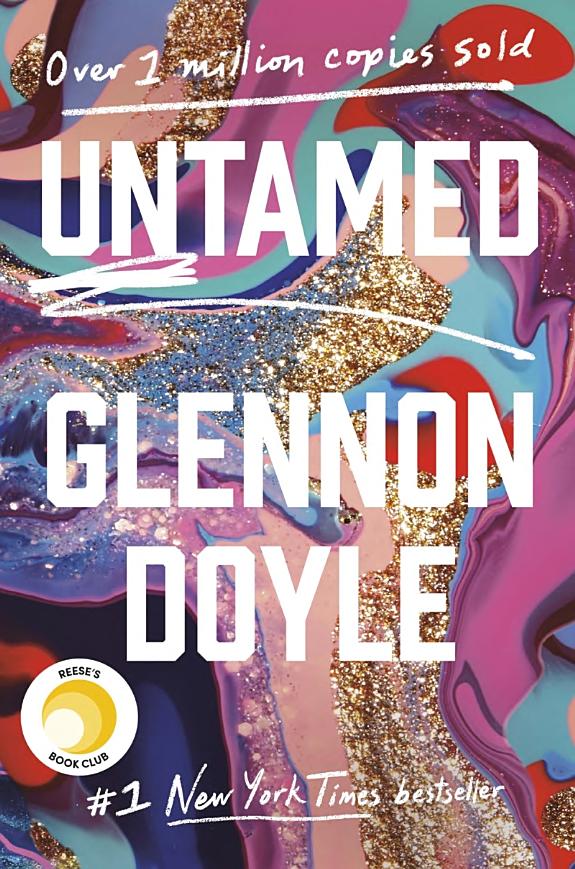
2. Untamed by Glennon Doyle
Glennon Doyle has a voice that is very easy to either love or find grating, and she would probably be fine with that. Untamed is a memoir about the moment she blew up the life she had carefully constructed, a marriage, a public Christian identity, a whole brand built around being a certain kind of woman, and chose something that felt true instead. It is written in short, punchy chapters, and it moves fast.
The central metaphor is a caged cheetah at the zoo, and Doyle uses it to examine how women are domesticated from girlhood, trained to ignore their own instincts in favor of approval. She talks about what she calls the “knowing,” that deep internal signal that tells you what is right for you before your brain has a chance to talk you out of it. Whether you find this concept resonant or a bit vague will probably depend on where you are in your own life when you read it.
Doyle is a skilled storyteller and the book is genuinely funny in places, which helps balance the moments that tip into earnestness. She is also writing from a position of considerable privilege, and she is not unaware of that, though some readers feel she does not grapple with it quite enough. The book does not pretend to have universal answers. It is one woman’s story, told with a lot of conviction.
Doyle writes that the braver thing is not to be fearless, but to feel the fear completely and move anyway. It is a small distinction that turns out to matter quite a lot.
This is perfect for women in the middle of questioning a life that looks fine from the outside but feels hollow from the inside, especially those who appreciate memoir over theory.
Radical Acceptance
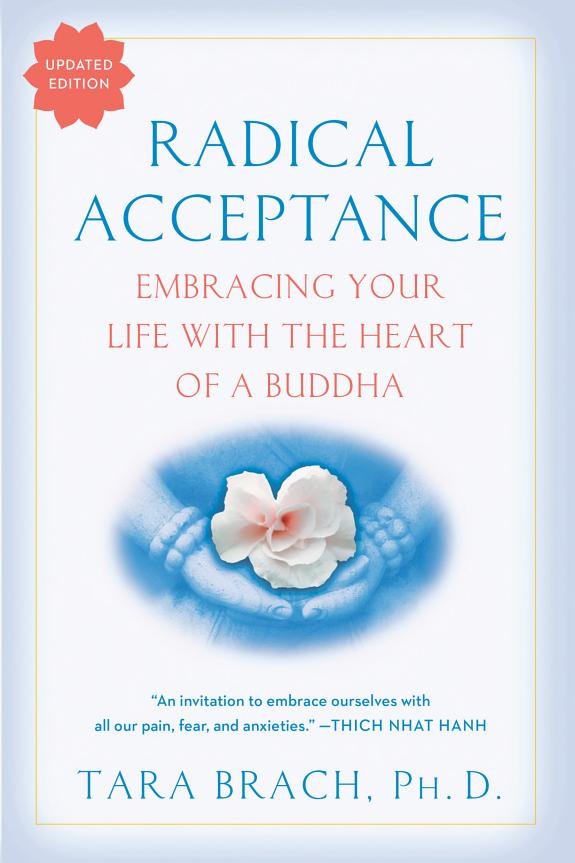
3. Radical Acceptance by Tara Brach
Tara Brach is a psychologist and Buddhist meditation teacher, and this book is one of the gentlest, most quietly serious things you can read if you have spent years at war with yourself. The premise is deceptively simple: a great deal of human suffering comes from what Brach calls the “trance of unworthiness,” the deep, often unconscious belief that we are fundamentally flawed and need to earn our right to exist comfortably in the world. Radical acceptance, in her framework, is not resignation. It is the practice of meeting yourself and your experience without the constant overlay of judgment.
The book draws on Buddhist teachings but is written for a general audience, and Brach is careful to ground her ideas in stories, many from her therapy practice, that feel specific and human rather than abstract. She writes about fear, grief, anger, and desire with a steadiness that does not minimize any of it. Her voice is warm without being saccharine, which is harder to pull off than it sounds.
If you have never engaged with meditation or Buddhist concepts before, some sections may require a little more patience, but Brach explains things clearly and never assumes prior knowledge. This is also not a book for someone in acute crisis who needs practical, immediate tools. It is a book for the long, slow work of learning to stop fighting yourself.
“The boundary to what we can accept is the boundary to our freedom.” Brach makes the case that self-rejection is not a character flaw but a habit, and habits can be changed with enough gentleness and enough time.
This is perfect for women who are exhausted by their own inner critic and want a thoughtful, spiritually grounded approach to self-compassion that does not require any particular religious belief.
Daring Greatly
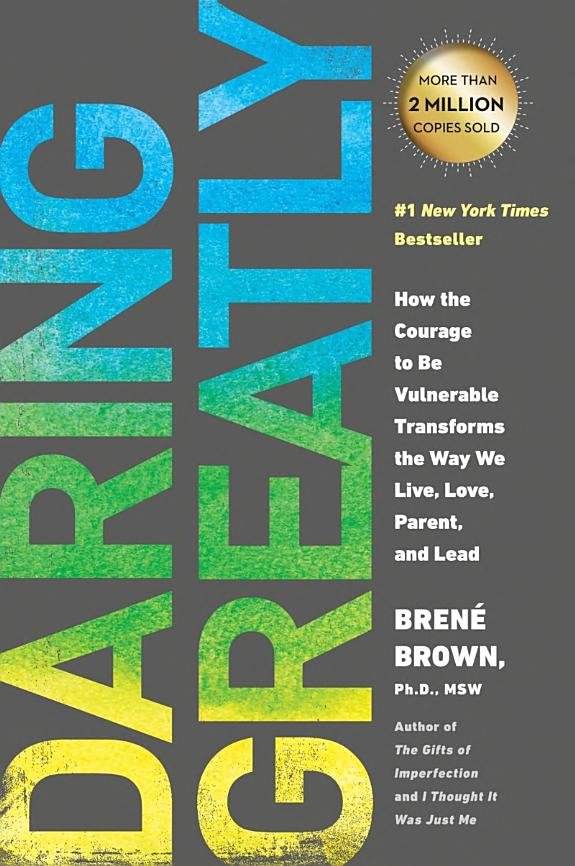
4. Daring Greatly by Brené Brown
Brené Brown spent years researching shame and vulnerability before writing this book, and it shows in the best way. Daring Greatly is built on a fairly counterintuitive idea: that vulnerability, the willingness to show up without guarantees, is not weakness but the actual prerequisite for connection, creativity, and a sense of worthiness. Brown is a researcher by training and a storyteller by instinct, and the combination makes for a book that feels both rigorous and readable.
The title comes from a Theodore Roosevelt speech, the “man in the arena” passage, and Brown uses it to explore what it means to engage fully with your life rather than standing on the sidelines protecting yourself from criticism. She writes about shame with unusual precision, distinguishing it from guilt and tracing the ways it operates differently in men and women. For women, she identifies a particular bind: the expectation to be everything to everyone while never appearing to need anything yourself.
Brown’s style is direct and occasionally blunt, which some readers love and others find a bit much. The book does lean heavily on her own research and personal anecdotes, so if you prefer a wider range of sources, that might feel limiting. But for what it is, a clear-eyed examination of why so many of us shrink ourselves and what it costs us, it delivers.
Brown argues that we cannot selectively numb emotion. When we shut down the feelings we find painful, we also shut down joy, belonging, and the capacity to feel truly seen. That observation alone is worth sitting with.
This is perfect for women who intellectually understand that they are holding back but want to understand the deeper mechanics of why, particularly those who appreciate research-backed ideas presented in an accessible way.
Wild
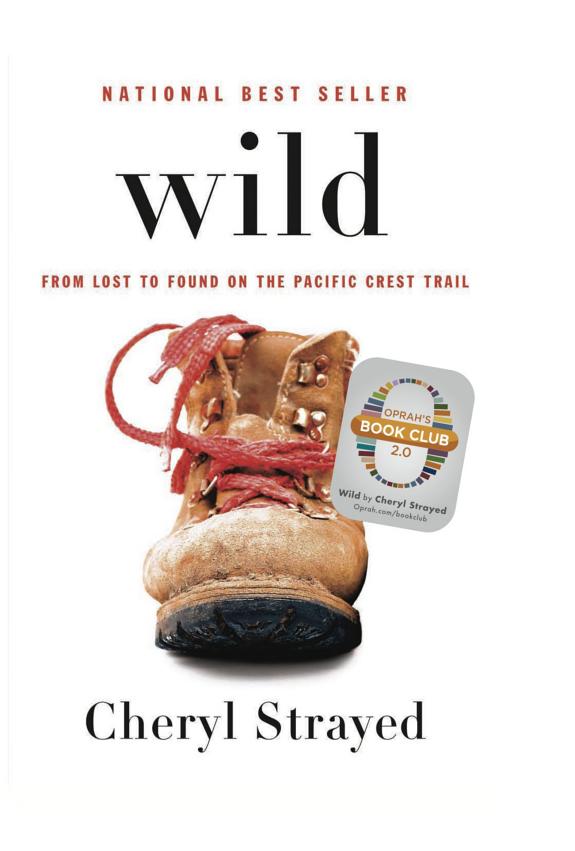
5. Wild by Cheryl Strayed
Cheryl Strayed was twenty-six, recently divorced, grieving her mother, and had spent several years making choices she was not proud of when she decided to hike over a thousand miles of the Pacific Crest Trail alone, with almost no preparation and boots that were the wrong size. Wild is the memoir of that hike, and it is one of the best pieces of nature writing published in the last twenty years, which is a slightly odd thing to say about a book that is really about falling apart and slowly, painfully, not falling apart anymore.
Strayed’s prose is exceptionally good. She does not romanticize her past or her journey. She is honest about the addiction, the grief, the bad decisions, and the physical brutality of the trail in a way that earns the book’s eventual warmth. The wilderness functions in the narrative as both literal challenge and psychological mirror, each day on the trail a negotiation between who she had been and who she was becoming, though she would probably roll her eyes at that phrasing.
This is not a self-help book. There are no frameworks or takeaways. It is a story about a specific woman in a specific moment, and its relevance to your own life will depend entirely on how much you connect with Strayed’s voice and situation. If you are not a fan of memoir or find introspective navel-gazing irritating, this will not convert you. But if you are open to it, it is a quietly extraordinary book.
Strayed writes that the most difficult thing was deciding to go, and that the rest was just walking. It sounds simple. The book makes clear that it was anything but, and that the simplicity was the whole point.
This is perfect for women who connect with physical, embodied experiences of self-discovery and who want a memoir that is honest about mess and failure without being self-pitying about it.
Self-Compassion
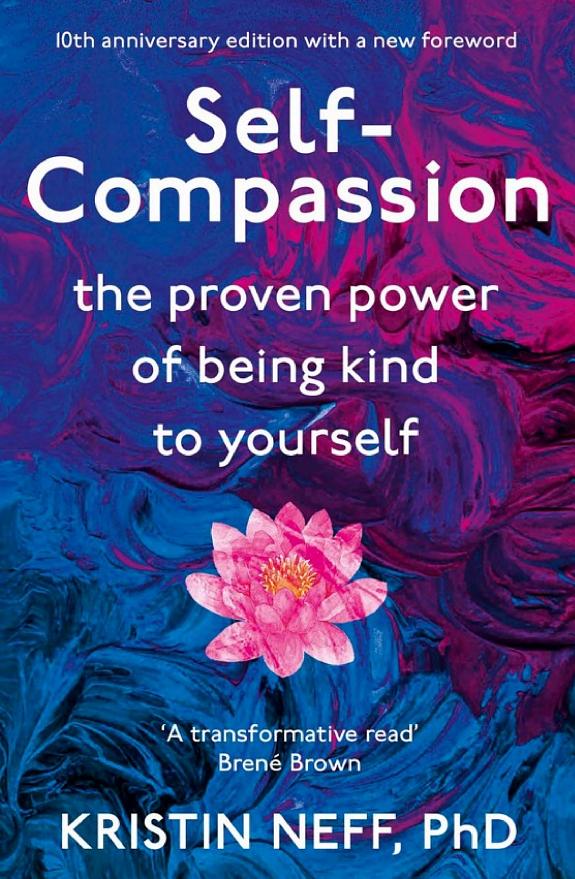
6. Self-Compassion by Kristin Neff
Kristin Neff is a researcher at the University of Texas and one of the leading academic voices on self-compassion, a concept that sounds pleasant and turns out to be surprisingly difficult to practice. The book is built around three components: self-kindness, the recognition of common humanity, and mindfulness. Together, Neff argues, they form a more stable foundation for wellbeing than self-esteem, which is contingent on success and comparison and therefore unreliable exactly when you need it most.
What makes this book valuable rather than just nice is that Neff is rigorous. She draws on a significant body of research, including her own, and she is careful to address the objections that most people raise when they first encounter the idea of being kind to themselves. Will it make me complacent? Will it lower my standards? She answers these questions with data and with logic, and the answers are genuinely reassuring rather than hand-wavy.
Neff also weaves in her own story, including a difficult period in her marriage and her experience raising a son with autism, and those sections give the book a personal weight that purely academic writing would lack. The exercises at the end of each chapter are practical and worth doing, though the book works perfectly well if you just want to read it without completing them. It is also worth noting that this book pairs extremely well with Tara Brach’s work, as both are circling the same territory from slightly different directions.
Neff makes a distinction that many readers find quietly revelatory: self-compassion is not about feeling good. It is about being willing to feel what you feel without adding a layer of self-attack on top of it. The suffering is real. The extra suffering is optional.
This is perfect for women who are deeply skeptical of anything that sounds like self-help fluff and want a research-grounded case for treating themselves with the same basic decency they would extend to a friend.
The Body Is Not an Apology
7. The Body Is Not an Apology by Sonya Renee Taylor
Sonya Renee Taylor is a poet and activist, and this book reads like both. It is the shortest book on this list and also, in some ways, the most direct. The central argument is that the way we are taught to relate to our bodies, as things to be managed, improved, and apologized for, is not a personal failing but a political condition. Body shame, Taylor argues, is not incidental to systems of oppression. It is one of the primary mechanisms through which those systems operate.
Taylor writes about race, disability, size, gender, and sexuality with a clarity that does not flatten the differences between these experiences but does find a common thread running through them: the idea that some bodies are more deserving of dignity than others, and the internalization of that idea by the people whose bodies are deemed insufficient. She is asking you to examine not just how you feel about your own body but where those feelings came from and who benefits from them.
This is not a comfortable book, and it is not trying to be. Taylor is not interested in small adjustments to how you talk to yourself in the mirror. She is interested in a more fundamental reckoning. Some readers will find this scope invigorating. Others may find it more than they were looking for when they picked up a book about self-reconnection. It is worth knowing going in that this is a book with a political argument, not just a personal one.
“Radical self-love is the foundation for radical human love.” Taylor is not talking about bubble baths and positive affirmations. She is talking about dismantling the belief that your worth is conditional, which turns out to be a much larger project than it first appears.
This is perfect for women who want to understand the broader cultural and structural roots of their disconnection from their bodies, particularly those who are interested in how race, size, and identity intersect with self-worth.
The Highly Sensitive Person
8. The Highly Sensitive Person by Elaine Aron
Elaine Aron is a psychologist who identified high sensitivity as a distinct, innate trait in the 1990s, and this book, first published in 1996, remains the foundational text on the subject. If you have spent your life being told you are too sensitive, too intense, too easily overwhelmed, or too much in general, this book may be one of those rare reading experiences where you feel accurately described for the first time. That is not a small thing.
Aron estimates that roughly fifteen to twenty percent of the population has a nervous system that processes sensory and emotional information more deeply than average. This is not a disorder. It is a trait, one with genuine advantages alongside its challenges, and Aron is careful to frame it that way throughout. She covers relationships, work, health, and childhood, and she provides practical strategies for navigating a world that was largely not designed with highly sensitive people in mind.
The writing is clear and accessible without being dumbed down, and Aron includes a self-assessment questionnaire early in the book so you can gauge where you fall on the spectrum. The book does show its age in places, particularly in some of its cultural assumptions, and the research base has expanded considerably since publication, so it is worth supplementing with more recent work if this topic resonates with you. But as an introduction to the concept and a validation of a particular kind of inner experience, it is still the best starting point available.
Aron writes that sensitive people often spend enormous energy trying to appear less sensitive, which is a bit like spending all your time trying to appear shorter. The energy is real. The project is not particularly useful.
This is perfect for women who have always felt like they experience the world more intensely than those around them and have spent years wondering if something is wrong with them, particularly those who are ready to consider that the answer might be no.
Feeling disconnected from yourself is not a personality flaw or a sign that you have failed at some fundamental task. It is, for many women, a predictable result of years spent attending to everyone else’s needs, internalizing other people’s definitions of worth, and quietly setting aside the parts of yourself that did not fit neatly into the roles available to you. These books will not hand you back a finished, polished version of yourself. That is not how any of this works.
What they will do, if you let them, is give you better language for what you are experiencing and a little more permission to take it seriously. Some of them will feel immediately relevant and others might not click until a different season of your life. That is fine. Read the ones that call to you first. Put the others on the shelf for later. The thread back to yourself does not disappear just because you have not found it yet.