
5 Books for Rebuilding Your Life After a Setback
Nobody plans for the floor to drop out. A job loss, a grief that rewrites everything, a relationship that ends badly, a health scare that changes your sense of who you are. These things happen, and when they do, most of us find ourselves standing in the rubble wondering what on earth comes next. The self-help aisle at the bookstore has never been shorter on opinions, but finding something that actually speaks to that particular hollow feeling is harder than it looks.
The books on this list are not cheerful productivity guides dressed up in crisis clothing. They are honest, sometimes uncomfortable, and written by people who either lived through serious loss themselves or spent careers studying how humans survive and recover. Some are rooted in psychology, some in philosophy, some in raw personal memoir. All of them take the reader seriously. If you are somewhere in the middle of a hard season, or helping someone else through one, these are worth your time.
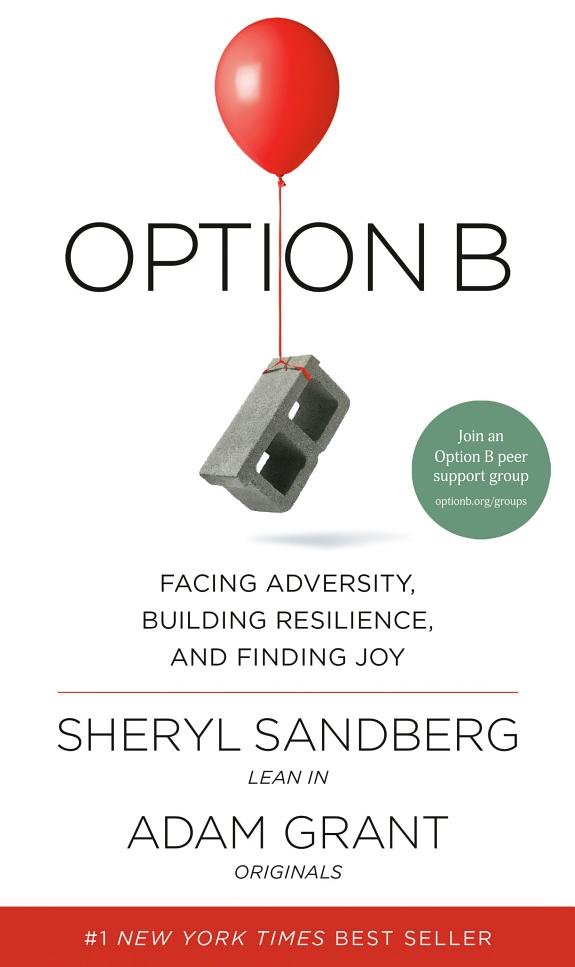
Option B: Facing Adversity, Building Resilience, and Finding Joy
1. Option B: Facing Adversity, Building Resilience, and Finding Joy by Sheryl Sandberg and Adam Grant
Sheryl Sandberg wrote this book after the sudden death of her husband, Dave Goldberg, and she does not pretend the experience was anything other than devastating. Co-written with organizational psychologist Adam Grant, Option B moves between Sandberg’s personal grief and Grant’s research on resilience in a way that never feels clinical or detached. The combination works better than you might expect. Sandberg brings the raw honesty, and Grant brings the framework, and together they make a book that feels both emotionally true and practically useful.
The central idea is built around psychologist Martin Seligman’s concept of the three P’s, the tendencies toward personalization, pervasiveness, and permanence that can trap people inside their pain. Sandberg and Grant argue that resilience is not a fixed trait you either have or don’t. It’s something that can be built, even in the middle of loss, and even when Option A is completely off the table. The title itself comes from a moment when Sandberg wanted her late husband to walk their daughter down the aisle someday, and a friend reminded her that Option A was gone. So they would just have to kick the hell out of Option B.
The writing is warm and accessible, though readers who are uncomfortable with corporate-world references may occasionally find the examples a little boardroom-adjacent. Sandberg is honest about her privilege and her grief in equal measure, which keeps the book grounded. This is not a book that tells you loss is secretly a gift. It tells you that you can find joy again without pretending the loss didn’t happen, which is a far more honest thing to say.
“Resilience isn’t about bouncing back to who you were. It’s about building something new from what remains, and being honest about how long that actually takes.”
This is perfect for anyone who has experienced sudden, unexpected loss and wants a book that pairs emotional honesty with research-backed ways to move forward. It is probably not the right fit for readers who want purely philosophical reflection or who find corporate anecdotes distracting in emotional territory.
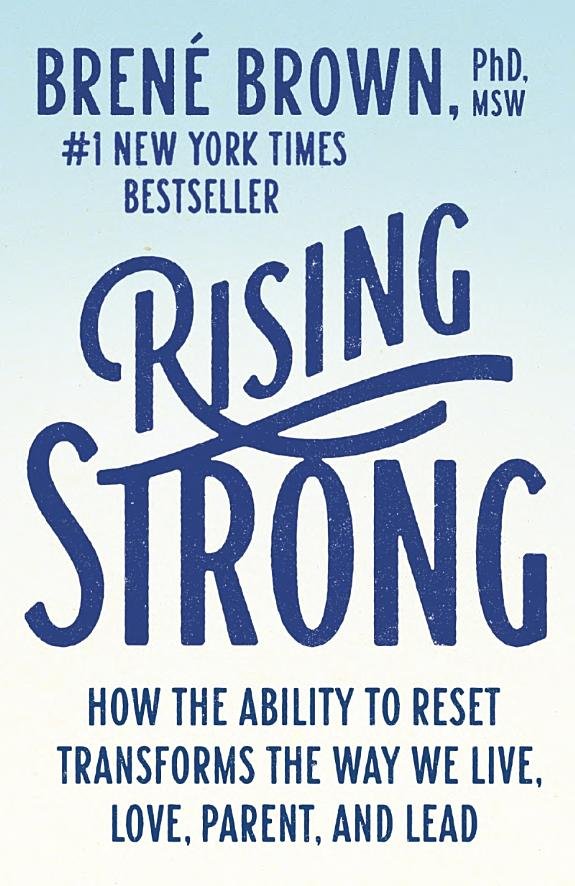
Rising Strong: How the Ability to Reset Transforms the Way We Live, Love, Parent, and Lead
2. Rising Strong: How the Ability to Reset Transforms the Way We Live, Love, Parent, and Lead by Brené Brown
Brené Brown has built a career on the uncomfortable truth that vulnerability is not weakness, and Rising Strong is where she digs into what happens after you fall. Not the falling itself, but the getting back up, which she argues is the part we talk about least and understand worst. Her voice is direct, funny in places, and deeply Southern in a way that makes even difficult ideas feel like a conversation rather than a lecture. She is not above sharing her own embarrassing moments, which is part of what makes her so readable.
The book is organized around what Brown calls the Rising Strong process, which moves through three stages she names the Reckoning, the Rumble, and the Revolution. The Reckoning is recognizing when emotion is driving behavior. The Rumble is the harder work of sitting with the story you are telling yourself and figuring out how much of it is actually true. The Revolution is what changes when you do that work honestly. It sounds tidy in summary, but Brown is careful to show how messy it is in practice, using research, interviews, and her own stories to make the point stick.
Where Brown really earns her place on this list is in her insistence that rising strong is not about pretending the fall didn’t hurt. She pushes back hard against the cultural tendency to skip straight to the comeback story and skip the part where you were lying face down in the dirt. That middle part, she argues, is where the real work happens. It is also, she admits, where most people would rather not spend any time at all, which is exactly why the book is worth reading.
“The story we tell ourselves about why we fell matters as much as the fall. Getting that story right, rather than comfortable, is where rising strong actually begins.”
This is perfect for readers who tend to intellectualize their emotions and need a structured, research-grounded way to process difficult experiences. It may frustrate readers who find Brown’s storytelling style too personal or who are looking for something more philosophically rigorous and less rooted in therapy-adjacent frameworks.
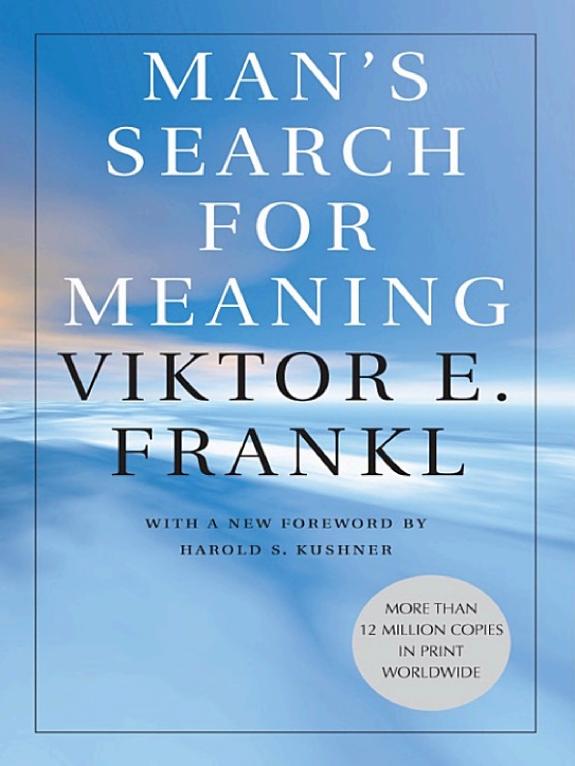
Man’s Search for Meaning
3. Man’s Search for Meaning by Viktor E. Frankl
Viktor Frankl was a psychiatrist in Vienna when he was sent to Auschwitz. He survived four concentration camps, including Dachau, and lost nearly everyone he loved. Man’s Search for Meaning was written in nine days after the war, and it has been in print ever since, which is not an accident. The first half of the book is a memoir of his time in the camps, written with a strange, clear-eyed precision that is more affecting than any amount of dramatic language could be. The second half outlines logotherapy, the psychological approach he developed around the idea that the primary human drive is not pleasure or power but the search for meaning.
Frankl’s central argument is that everything can be taken from a person except the freedom to choose how to respond to a given set of circumstances. He watched this principle tested under conditions most of us cannot imagine, and he writes about it without sentimentality or false comfort. He is not telling you that suffering is secretly good for you. He is saying that suffering without meaning is unbearable, and that meaning can be found even in the worst situations if you are willing to look for it. That is a very different claim, and a more honest one.
The book is short, which means there is no padding and no room for the ideas to lose their edge. Some readers find the second half, the logotherapy section, a little dense compared to the memoir portion, and that is fair. But the memoir alone is worth the price of admission. Reading Frankl describe small moments of beauty noticed through a crack in a cattle car while being transported to a labor camp is the kind of thing that quietly rearranges your sense of what a human being is capable of enduring and still choosing to live with intention.
“Frankl doesn’t offer comfort in the conventional sense. He offers something harder and more durable: the argument that meaning is always available, even when everything else has been stripped away.”
This is perfect for readers who want a philosophically serious, historically grounded exploration of how human beings find purpose in the middle of suffering. It is not the right book for someone in acute crisis who needs warmth and practical steps first. Read this when you are ready to think, not just to feel.
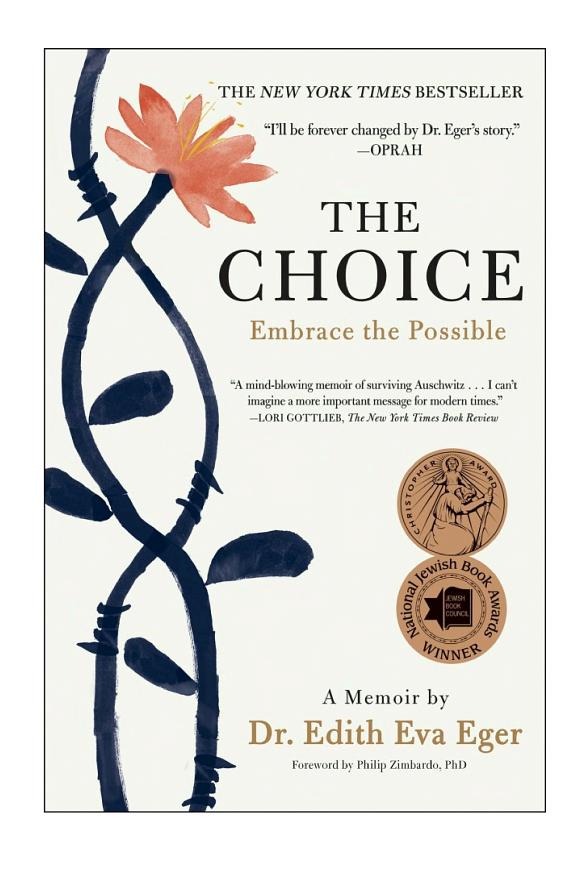
The Choice: Embrace the Possible
4. The Choice: Embrace the Possible by Edith Eva Eger
Edith Eva Eger was sixteen years old when she arrived at Auschwitz. She survived, eventually immigrated to America, raised a family, and became a clinical psychologist specializing in trauma. She wrote The Choice in her late eighties, and the combination of memoir and therapeutic insight it contains is unlike almost anything else in this genre. Her voice is warm and precise at once, and she has the particular authority that comes from someone who has genuinely lived through the worst and come out the other side with something useful to say about it.
The book moves between her wartime experiences and her later work with patients, drawing connections between what she learned in the camps and what she has seen in decades of clinical practice. Eger’s core argument is that we cannot control what happens to us, but we are always making choices about how we respond, even when it doesn’t feel that way. She is careful to distinguish this from toxic positivity or the idea that attitude alone can fix structural problems. The choice she is talking about is an internal one, about whether to remain imprisoned by the past or to work toward freedom, however long that takes.
What sets Eger apart from other writers on this list is the specificity of her compassion. She writes about her patients with great care and without condescension, and she is honest about her own long journey toward healing, which was not linear and did not happen quickly. She spent decades before she was able to return to Auschwitz, and the account of that return near the end of the book is quietly devastating. This is not a book that tells you healing is easy. It tells you it is possible, which is the thing most people actually need to hear.
“Eger’s genius is in showing that the prison we build from our own unexamined pain is often the hardest one to escape, and that the key has always been on the inside.”
This is perfect for readers dealing with grief, trauma, or long-held patterns of suffering who want a book that is both deeply personal and grounded in psychological understanding. Readers who are not ready to sit with heavy historical material may want to approach this one carefully, as the wartime sections are not light reading.
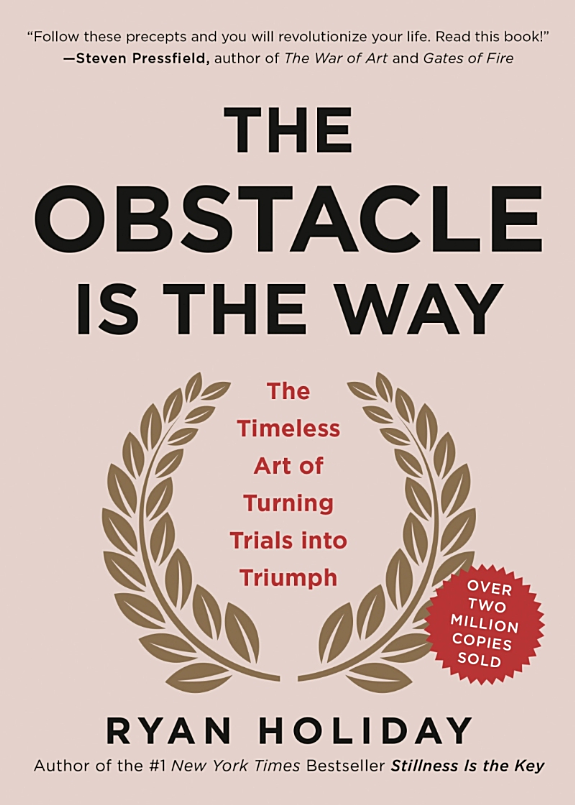
The Obstacle Is the Way: The Timeless Art of Turning Trials into Triumph
5. The Obstacle Is the Way: The Timeless Art of Turning Trials into Triumph by Ryan Holiday
Ryan Holiday writes about Stoic philosophy for people who have never read Marcus Aurelius and are not sure they want to. The Obstacle Is the Way draws heavily on Stoic thinkers, particularly Marcus Aurelius, Epictetus, and Seneca, and translates their ideas into a practical argument for how to approach adversity. The central premise comes from a line in Marcus Aurelius: the impediment to action advances action, and what stands in the way becomes the way. Holiday’s project is to show, through a series of historical examples, how that principle has actually worked in real lives.
The book is structured around three disciplines: perception, action, and will. Perception is about how you see the obstacle. Action is about how you move through it. Will is about what you build inside yourself to endure what cannot be changed. Holiday is a brisk, efficient writer, and the chapters are short, which gives the book an almost motivational rhythm. Some readers find this energizing. Others find it a little relentless, as if the book is slightly too eager to get you back on your feet before you have finished falling.
Where Holiday is strongest is in his historical examples, which range from Ulysses S. Grant to Amelia Earhart to Demosthenes, the ancient orator who reportedly practiced speaking with pebbles in his mouth to overcome a stutter. (Whether or not that story is entirely accurate, it is a good one.) The examples keep the philosophy from feeling abstract, and they give the reader a sense that this is not a new idea but a very old one that has been tested in genuinely difficult circumstances. If you are someone who responds well to the idea that difficulty is a teacher rather than just a punishment, this book will feel like finding a framework you have been looking for without knowing it.
“Holiday doesn’t ask you to be grateful for your obstacles. He asks you to be strategic about them, which is a far more useful and honest request.”
This is perfect for action-oriented readers who want a philosophy-backed, historically grounded approach to pushing through difficulty and building resilience. It is probably not the right fit for readers who are in deep grief and need emotional processing first, as the book’s energy leans toward forward momentum rather than sitting with pain.
There is no single book that fixes a broken season. Anyone who tells you otherwise is probably trying to sell you something. What good books can do is remind you that other people have been in the rubble too, that the feelings you are having are not signs of weakness or failure, and that there are ways of thinking about hard times that make them more bearable and sometimes even instructive. The five books here do that in very different ways, through memoir, philosophy, psychology, and history, but they share a commitment to honesty that makes them worth trusting.
Start with whatever feels most right for where you are right now. If you are deep in grief, Sandberg or Eger might meet you there. If you want something more philosophical and bracing, Frankl or Holiday might be what you need. If you want to understand the emotional patterns keeping you stuck, Brown is a good guide. There is no wrong order, and there is no shame in putting one down and picking up another. Reading, like rebuilding, rarely goes in a straight line.