8 Books That Help You Stop Living in the Past
Most of us have, at some point, found ourselves mentally replaying a conversation from three years ago at two in the morning. The past has a strange gravitational pull. It can feel like the only solid ground, even when standing on it keeps you from moving anywhere new.
The books on this list do not promise to erase your history or hand you a tidy five-step fix. What they offer is something more honest: perspective, language for things you have been struggling to name, and a slow, real shift in how you relate to what has already happened. Some are philosophical, some are rooted in science, one is a novel. All of them have helped real readers loosen the grip of the past and start paying attention to the life that is actually happening right now.
The Power of Now
1. The Power of Now by Eckhart Tolle
Eckhart Tolle writes with the calm certainty of someone who has genuinely worked through something, and that comes through on every page. The central argument is simple enough to state but surprisingly difficult to absorb: nearly all human suffering comes from either replaying the past or dreading the future, and the present moment is the only place where life is actually occurring. Tolle calls the compulsive thinking mind the “pain-body,” and once you have that term, you start noticing it everywhere, including in yourself.
The book blends spiritual philosophy with practical observation. Tolle draws from Buddhism, Christianity, and his own experience of a sudden psychological shift, and somehow it does not feel like a jumble. The writing can get repetitive in places, and some readers find his certainty a little too settled. But for people who have spent years living inside their own heads, the core message lands with real weight.
It is worth noting that this book will frustrate readers who want clinical explanations or research-backed frameworks. Tolle is not interested in neuroscience. He is interested in presence, and the whole book is essentially an extended invitation to try it. If you approach it as philosophy rather than self-help, it tends to go down more easily.
“Realize deeply that the present moment is all you ever have. Make the Now the primary focus of your life.” The simplicity of this is either annoying or clarifying, depending entirely on where you are when you read it.
This is perfect for readers open to spiritual or contemplative frameworks who feel caught in cycles of rumination and want a gentle but persistent nudge toward present-moment awareness.
The Body Keeps the Score
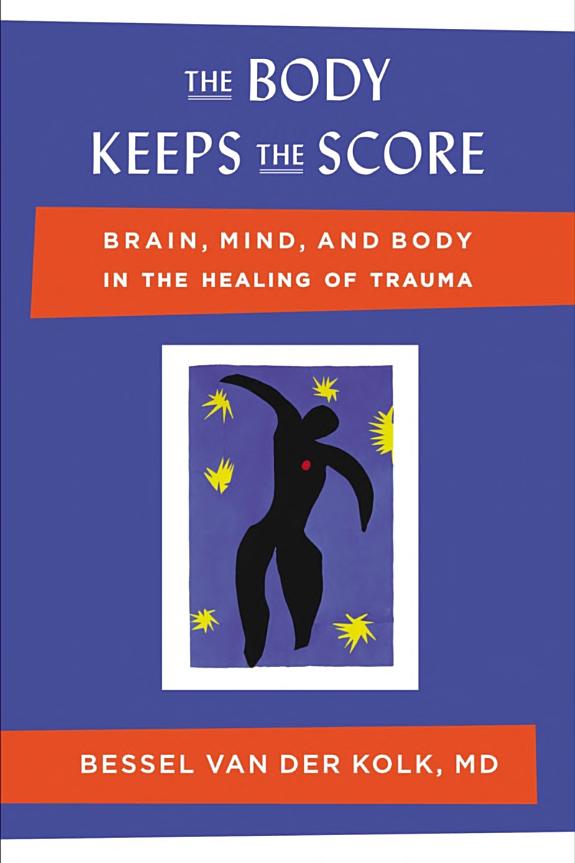
2. The Body Keeps the Score by Bessel van der Kolk
Bessel van der Kolk spent decades working with trauma survivors, and this book is the result of that work. It is dense, thorough, and occasionally harrowing, but it answers a question that many people carry quietly: why does the past feel so physically present, even when you think you have moved on? Van der Kolk’s central argument is that trauma is not just a memory stored in the mind. It lives in the body, shaping posture, breath, and nervous system responses in ways that conventional talk therapy often fails to reach.
The science here is genuine and accessible. Van der Kolk explains how the brain processes threat, why certain memories stay raw while others fade, and what kinds of therapies, from EMDR to yoga to theater, have shown real results for trauma survivors. He is a careful writer, and he grounds every claim in case studies and research without making the book feel like a textbook. There is also a lot of compassion in these pages, which matters when the subject matter is this heavy.
This is not a light read, and it is not designed to be. Readers who have not experienced significant trauma may find some sections feel less personally relevant, though the insights into human psychology are broadly useful. It is also worth knowing that van der Kolk does not offer a simple path forward. The message is more like: healing is possible, and it is complicated, and here is what we know so far.
Understanding that the body holds what the mind tries to bury changes how you approach your own patterns. It is less about willpower and more about learning to feel safe in your own skin again.
This is perfect for anyone who has experienced trauma or supports someone who has, and who wants a research-grounded explanation of why the past can feel so stubbornly present in daily life.
The Gifts of Imperfection
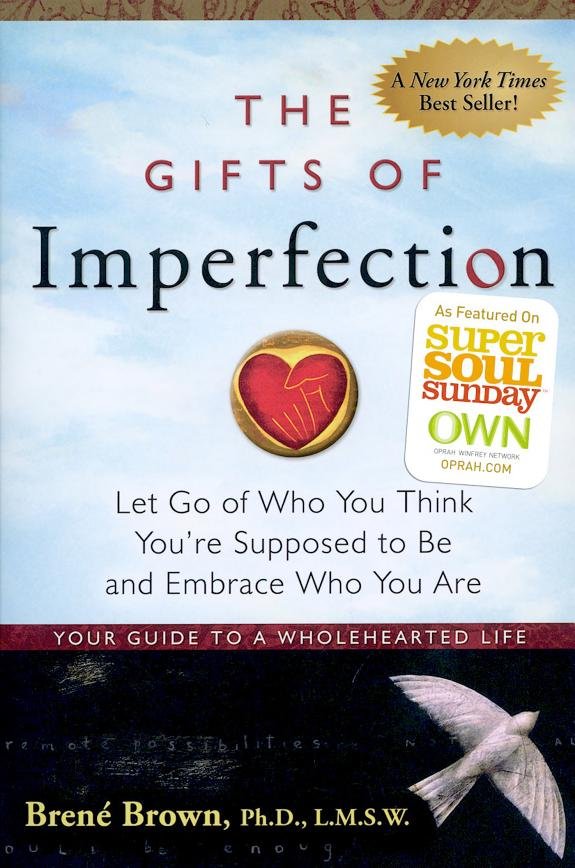
3. The Gifts of Imperfection by Brené Brown
Brené Brown has built a career on researching shame and vulnerability, and this book is one of her most personal. Where some of her later work leans toward leadership and organizations, “The Gifts of Imperfection” stays close to the individual: the quiet ways we hold ourselves to impossible standards, replay our failures, and withhold permission to feel okay until we have somehow earned it. Living in the past, for many people, is really just living inside accumulated shame, and Brown names that clearly.
The book is structured around ten guideposts, which sounds like it could become a checklist, but Brown writes with enough warmth and self-disclosure that it rarely feels clinical. She talks about her own struggles with perfectionism, her resistance to rest, and the slow work of letting go of who she thought she was supposed to be. That honesty is what separates this from a lot of books in the genre. She is not writing from a place of having arrived somewhere. She is writing from the middle of the process.
Readers who prefer hard data or skeptics of the self-help genre may find the tone a bit earnest. Brown is unabashedly warm, and that is either exactly what you need or slightly too much, depending on your temperament. The book also assumes a certain level of emotional safety in the reader’s life, so people in acute crisis may need something more structured alongside it.
The idea that worthiness is not something to be earned but something to be claimed is easy to nod at and genuinely hard to live. Brown does not pretend otherwise.
This is perfect for readers who suspect that their relationship with the past is tangled up with perfectionism and shame, and who want a compassionate, research-informed guide to letting themselves off the hook.
Man’s Search for Meaning
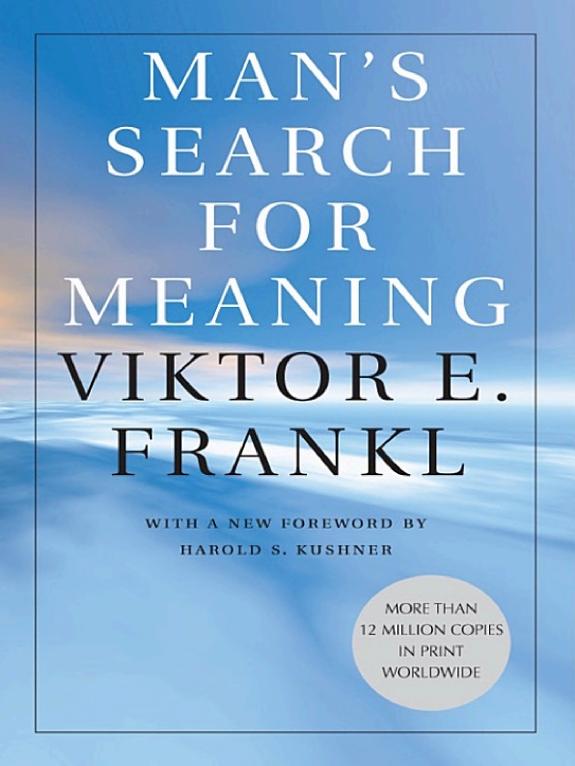
4. Man’s Search for Meaning by Viktor E. Frankl
Viktor Frankl was a psychiatrist who survived Auschwitz, and this book is his account of that experience alongside the psychological theory he developed partly because of it. It is a short book. You can read it in a few hours. But it has a way of sitting with you for a long time afterward, which is not something you can say about most books of any length.
Frankl’s argument is that humans can endure almost anything if they have a reason to. He observed in the camps that the prisoners who survived longest were often not the physically strongest but the ones who had found some thread of meaning to hold onto, a person to return to, a work to complete, a belief to protect. This is not a comfortable argument. It places a quiet responsibility on the reader. But it is also oddly freeing, because it suggests that the past does not determine the future. What determines the future is what you choose to do with the present.
This is not a book about processing grief or working through trauma in a therapeutic sense. Frankl is not a therapist writing a guide. He is a witness and a philosopher writing about what he saw and what it meant. Readers looking for practical exercises or structured reflection will not find them here. What they will find is a perspective that tends to reframe almost everything else.
“When we are no longer able to change a situation, we are challenged to change ourselves.” Few sentences have done more work in fewer words.
This is perfect for readers who want a philosophical anchor when the past feels overwhelming, and who are open to the idea that meaning can be found even in suffering, not despite it.
The Book of Joy
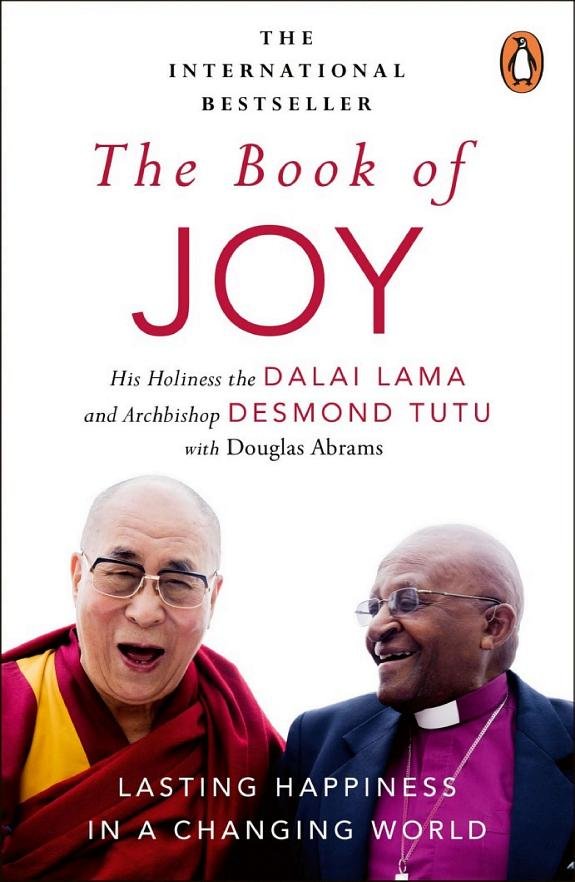
5. The Book of Joy by Dalai Lama and Desmond Tutu
This book came out of a week that two old friends spent together in Dharamsala, India, talking about joy. The Dalai Lama and Desmond Tutu are both men who have faced enormous loss, exile, oppression, and grief, and yet both are known for their laughter. That is not a small thing. The book, written by Douglas Abrams who was present for the conversations, is an attempt to understand how that is possible.
What emerges is a genuinely warm dialogue between two very different traditions. The Dalai Lama approaches suffering through Buddhist frameworks of impermanence and interdependence. Tutu brings a Christian theology of grace and resurrection. They disagree on some things, tease each other constantly, and arrive at a surprisingly coherent shared view: that joy is not the absence of suffering but a relationship with it. Living in the past, in this framing, is a kind of attachment that both men have had to practice releasing, repeatedly, over long lives.
The book is not heavy reading. It is conversational, often funny, and occasionally a bit surface-level for readers who want depth on any single idea. Some of the science-of-happiness material feels like it belongs in a different book. But as a portrait of two people who have genuinely learned to carry the past without being flattened by it, it is quietly extraordinary.
Watching two people who have every reason for bitterness choose joy instead is not an argument you can easily dismiss. It is the kind of evidence that sticks.
This is perfect for readers who want warmth and wisdom over clinical frameworks, and who are moved by the example of real lives lived with grace rather than by abstract principles.
Daring Greatly
6. Daring Greatly by Brené Brown
Yes, this is the second Brené Brown book on this list. She earned it. While “The Gifts of Imperfection” focuses on releasing shame and perfectionism, “Daring Greatly” goes a step further into what becomes possible when you do. The title comes from Theodore Roosevelt’s famous speech about the man in the arena, and the book is essentially an extended argument that vulnerability is not weakness. It is the only reliable path to connection, creativity, and a life that does not feel like a performance.
The connection to living in the past is real: a lot of people stay stuck there because stepping into the present means risking being seen, and being seen means risking rejection or failure. Brown’s research, drawn from thousands of interviews, shows that the people who manage to live fully are not the ones who have found a way to avoid vulnerability. They are the ones who have decided to stop letting the fear of it run the show. That shift is easier said than done, obviously, but Brown gives it enough texture that it starts to feel like something you could actually practice.
If you have already read “The Gifts of Imperfection,” there is some overlap in themes, and a few readers find Brown’s style repetitive across books. This one does lean more into workplace and organizational contexts in its later chapters, which may or may not feel relevant depending on where your own stuck-ness lives.
The idea that armor protects us is one of the more persistent lies we tell ourselves. Brown makes a careful, patient case that it mostly just keeps us isolated.
This is perfect for readers who have started to identify their patterns but feel held back by fear of being seen, and who want both the research and the encouragement to take the next step.
Letting Go: The Pathway of Surrender
7. Letting Go: The Pathway of Surrender by David R. Hawkins
David Hawkins was a psychiatrist and spiritual teacher, and this book is his most accessible work. The central technique he describes is deceptively simple: instead of suppressing or expressing difficult feelings, you allow yourself to feel them fully and then release your resistance to them. He calls this surrender, and he is careful to distinguish it from giving up or passive acceptance. Surrender, in his framework, means stopping the fight against what is, which is different from approving of it.
The book is particularly useful for people who have tried to think their way out of the past and found that it does not work. Hawkins argues that most psychological suffering is maintained not by the original events but by the ongoing resistance to the feelings those events produced. That is a subtle distinction, but once you sit with it, it starts to explain a lot. The writing is clear and methodical, which suits the material. Hawkins is not trying to inspire you. He is trying to give you a tool.
Some readers will find the later chapters, which move into more explicitly spiritual territory including Hawkins’s controversial “Map of Consciousness,” harder to follow or accept. The book works best if you take what is useful and do not feel obligated to buy the whole system. Readers who are firmly skeptical of anything metaphysical may find themselves losing patience about two-thirds of the way through.
The idea that resistance is what keeps pain alive, not the pain itself, is one of those concepts that sounds simple and then quietly reorganizes how you experience a bad day.
This is perfect for readers who have done a lot of thinking and talking about the past without feeling much relief, and who are ready to try a more somatic and surrender-based approach to letting go.
The Midnight Library
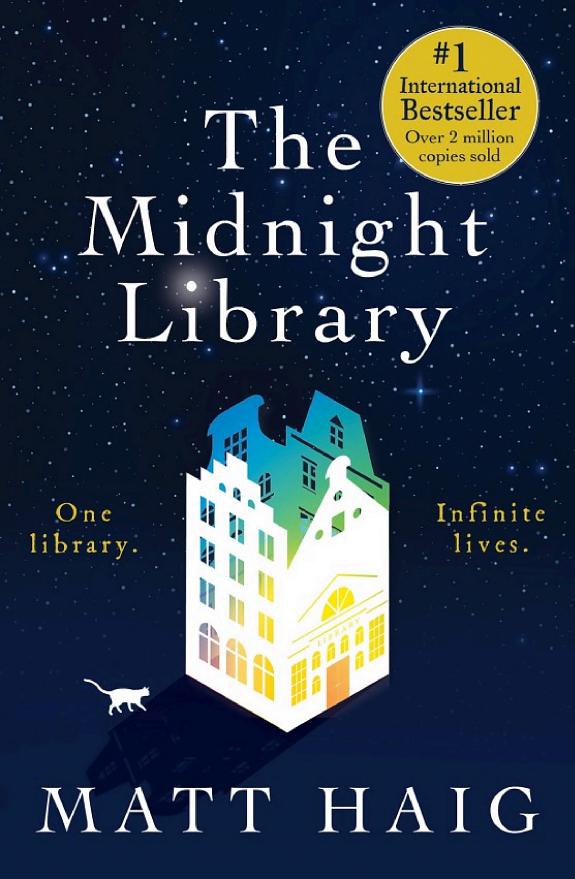
8. The Midnight Library by Matt Haig
One of these books is a novel, and it belongs here. Matt Haig’s “The Midnight Library” follows Nora Seed, a woman who finds herself in a library between life and death where every book represents a life she could have lived if she had made different choices. She gets to try them. The premise could easily become a gimmick, but Haig handles it with enough emotional honesty that it becomes something else: a sustained meditation on regret, possibility, and what it actually means to live a life you can stand behind.
What makes this book useful for people stuck in the past is that it dramatizes the fantasy most of us carry, the idea that a different choice would have led to a fundamentally better life, and then gently dismantles it. Not by arguing that your life is secretly great, but by showing how the self that made those choices is the self that arrived here, and that arriving here is not the catastrophe it sometimes feels like. Haig is a warm writer with a gift for making philosophical ideas feel personal rather than abstract.
This is not the book for someone who wants research or structured guidance. It is fiction, and it works the way fiction works: by putting you inside an experience rather than explaining one to you. Readers who do not connect with Nora’s particular brand of quiet despair may find the emotional stakes harder to access. But for many readers, this is the book that cracks something open that nonfiction never quite reached.
“You don’t have to understand life. You just have to live it.” Haig earns that line by the time it arrives, which is the only way a line like that works.
This is perfect for readers who respond to story more than argument, who have spent time grieving the roads not taken, and who are ready to consider that the life they are actually living might be worth showing up for.
These eight books do not all agree with each other, and that is part of what makes them worth reading together. Tolle wants you in the present moment. Frankl wants you to find meaning in the whole arc of your life, past included. Van der Kolk reminds you that healing is not always a matter of mindset. Haig reminds you that imagination can be a trap as easily as a gift. The disagreements are useful. They push you to figure out what actually resonates with your particular version of being stuck.
None of these books will do the work for you, which is probably something you already knew. But the right book at the right time can shift the angle just enough that things start to look different. If even one of these helps you spend a little less time in the past and a little more time in the life that is actually happening, that is not nothing. That might be exactly enough.