

5 Books for People Who Feel Emotionally Numb
There is a particular kind of exhaustion that comes not from doing too much, but from feeling too little. You go through the motions. You show up. You function. But somewhere along the way, the emotional volume got turned way down, and you are not entirely sure when it happened or how to turn it back up. If that sounds familiar, you are not broken. You are also not alone.
Emotional numbness is one of those experiences that is hard to explain to people who have not felt it. It is not sadness, exactly. It is more like standing behind glass while the rest of the world goes on living in full color. The books on this list were written by researchers, therapists, and clinicians who take that experience seriously. They do not promise quick fixes or cheerful revelations. They offer something more useful: understanding, and a quiet, steady path back toward yourself.
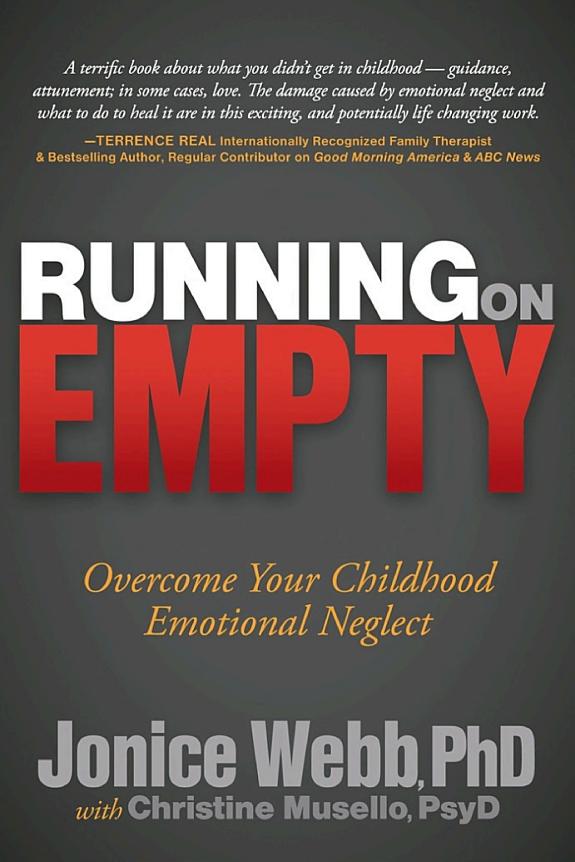
Running on Empty: Overcome Your Childhood Emotional Neglect
1. Running on Empty: Overcome Your Childhood Emotional Neglect by Jonice Webb
Jonice Webb is a psychologist who noticed something her colleagues were not talking about much: the damage caused not by what parents did, but by what they failed to do. Childhood Emotional Neglect, as she defines it, is the subtle but significant experience of growing up in a household where your emotions were consistently overlooked, minimized, or simply not acknowledged. The result, for many adults, is a kind of internal blankness. You learned to need very little from the people around you, and eventually from yourself.
What makes this book work is Webb’s refusal to sensationalize. She is not describing dramatic abuse or obvious trauma. She is describing the quiet, ordinary experience of parents who were distracted, emotionally unavailable, or simply did not know how to engage with a child’s inner life. That ordinariness is exactly what makes it land so hard for so many readers. The book includes a self-assessment early on, and a lot of people report feeling genuinely seen by it for the first time in years, which is both a relief and a little disorienting.
Webb writes with clinical clarity but also with genuine warmth. She explains the mechanisms behind emotional numbness without making you feel like a case study. The second half of the book shifts into practical territory, offering exercises for reconnecting with your emotional experience. They are not flashy exercises. They are quiet, deliberate, and surprisingly effective for people who are willing to sit with discomfort for a few minutes at a time.
“Emotional neglect is invisible, which is part of what makes it so hard to name. This book gives it a name, and that alone is worth a great deal.”
This is perfect for adults who cannot quite explain why they feel emotionally flat, who had childhoods that looked fine from the outside, and who are beginning to suspect that something important was quietly missing.
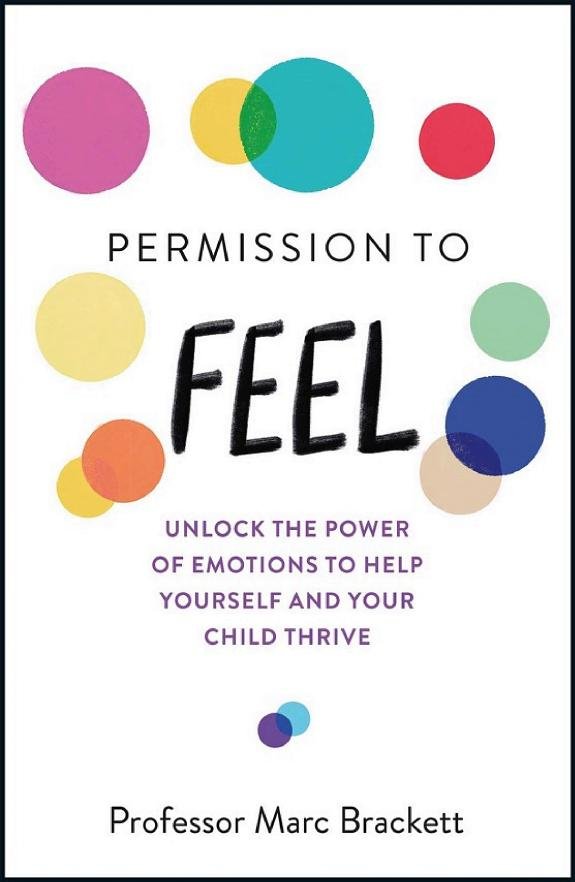
Permission to Feel: Unlocking the Power of Emotions to Help Our Kids, Ourselves, and Our Society Thrive
2. Permission to Feel: Unlocking the Power of Emotions to Help Our Kids, Ourselves, and Our Society Thrive by Marc Brackett
Marc Brackett is the founding director of the Yale Center for Emotional Intelligence, and he opens this book with a personal story rather than a research abstract. As a child, he was struggling quietly until a teacher named Uncle Marvin asked him how he was really doing and actually waited for the answer. That small act of being genuinely witnessed, Brackett argues, is something most of us never quite received. The book builds from that premise into a thorough, readable exploration of what emotional literacy actually means and why so many of us were never taught it.
Brackett developed a framework called RULER, which stands for recognizing, understanding, labeling, expressing, and regulating emotions. It sounds a bit corporate when you list it out like that, but in practice the book makes it feel human and necessary. One of his central arguments is that emotional numbness is not a personality trait or a character flaw. It is a skill gap. We were never shown how to identify what we feel, so we learned to ignore the whole category. That reframe is genuinely useful for people who have spent years wondering what is wrong with them.
The writing is accessible without being dumbed down. Brackett brings in decades of research without burying you in citations, and he is honest about his own emotional struggles throughout. The book is partly aimed at parents and educators, which means some sections will feel less relevant if you are reading purely for yourself. But the core material about adult emotional experience is rich enough to carry the whole thing.
“Brackett makes a quiet but convincing case that most of us are emotionally illiterate, not because we are damaged, but because nobody ever taught us the language.”
This is perfect for people who struggle to name what they are feeling, who want a research-backed but warmly written guide to emotional awareness, and who are open to examining how their upbringing shaped their relationship with emotion.
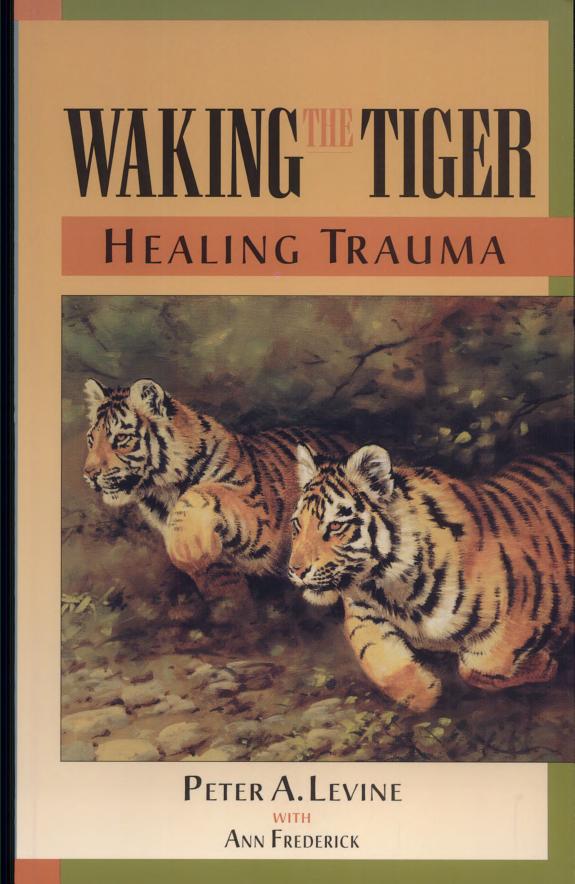
Waking the Tiger: Healing Trauma
3. Waking the Tiger: Healing Trauma by Peter A. Levine
Peter Levine spent decades studying how animals in the wild recover from near-death experiences and what that has to do with human trauma. The answer, he argues, is quite a lot. His central insight is that trauma is not primarily a psychological event stored in memory. It is a physiological event stored in the body, and the nervous system’s incomplete attempts to discharge that stored energy are what produce many of the symptoms we associate with trauma, including emotional numbness. The book is built around this idea, and it unfolds with the patience of someone who has spent a long time thinking about it.
Levine’s approach, which he calls Somatic Experiencing, is grounded in the observation that animals rarely develop lasting trauma responses because they physically complete the survival cycle after a threat passes. Humans, with our capacity for self-consciousness and social inhibition, often interrupt that process. The energy stays locked in the body. Emotional numbness, from this perspective, is not an absence of feeling but a kind of protective freeze, a nervous system response that made sense at some point and has simply not been released.
This is not a light read in the sense of breezy. Levine writes with depth and occasionally with a kind of poetic attentiveness to bodily experience that will either resonate with you deeply or feel a bit abstract. He is not dismissive of psychological approaches, but he is clearly more interested in the body than the talking cure. If you have done a lot of therapy and still feel disconnected from yourself, this book offers a genuinely different angle. Fair warning: it may make you want to shake your arms around in public. That is not necessarily a bad thing.
“Levine reframes emotional numbness not as a psychological failure but as a biological response that the body is still waiting to complete. That is a quietly radical idea.”
This is perfect for people who feel cut off from their physical sensations as well as their emotions, who have tried talk therapy without feeling fully resolved, and who are curious about the connection between the body and emotional experience.
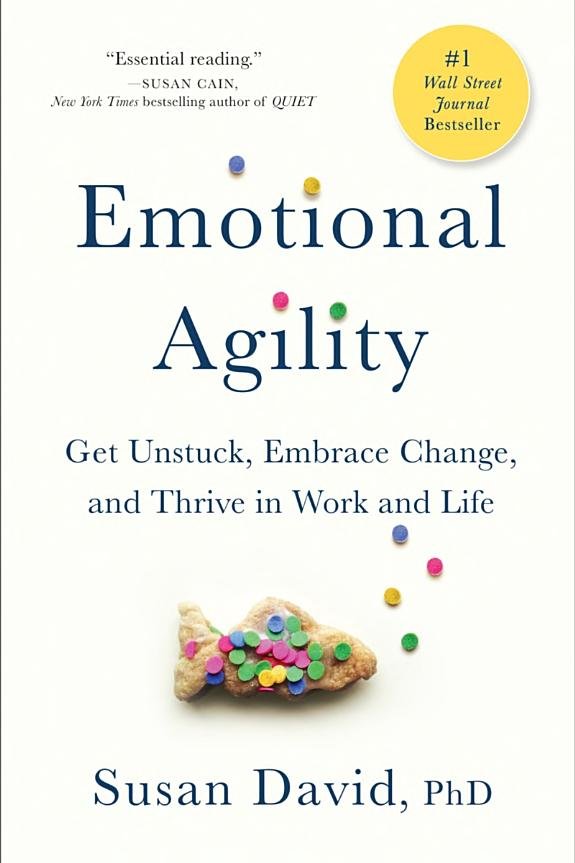
Emotional Agility: Get Unstuck, Embrace Change, and Thrive in Work and Life
4. Emotional Agility: Get Unstuck, Embrace Change, and Thrive in Work and Life by Susan David
Susan David is a psychologist at Harvard Medical School, and she opens this book with a story about a journal she kept as a teenager after her father died, and the strange comfort of being told by a teacher to simply write what was true. That act of honest witnessing became the foundation for her career and, eventually, for this book. Emotional Agility is about learning to relate to your inner experience with flexibility and curiosity rather than suppression or rigidity. It is, in some ways, the practical counterpart to the more clinical books on this list.
David’s core argument is that most of us deal with difficult emotions in one of two unhelpful ways: we bottle them up or we brood on them. Both strategies keep us stuck. Emotional agility is the alternative, a way of noticing your emotions without being controlled by them, of holding your thoughts and feelings loosely enough that they can inform your choices without dictating them. For people who feel numb, the first step she describes is simply learning to notice that the numbness itself is a feeling, a signal worth getting curious about.
The book is well-written and grounded in research, though it leans more toward the self-help end of the spectrum than some of the other titles here. David has a gift for making psychological concepts feel usable rather than theoretical. Some readers who are looking for deep clinical exploration may find it a bit breezy in places, but for people who want a readable, honest, and practically oriented guide to emotional reconnection, it delivers. It also does not assume that you are in crisis, which is quietly refreshing.
“David’s most useful contribution is the reminder that emotions are data, not directives. You do not have to obey them, but you do have to listen to them.”
This is perfect for people who want an accessible, research-informed guide to emotional awareness, who feel stuck in patterns of avoidance or overthinking, and who prefer a warmer, more conversational tone in their reading.
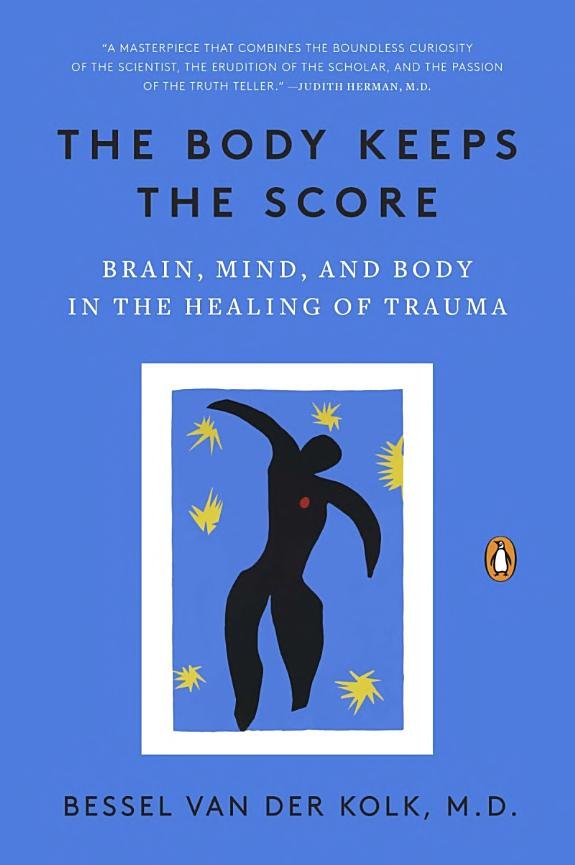
The Body Keeps the Score
5. The Body Keeps the Score by Bessel van der Kolk
Bessel van der Kolk has been studying trauma since the 1970s, and this book is the culmination of that work. It is comprehensive in a way that few books in this space manage to be, covering neuroscience, psychology, developmental theory, and a wide range of treatment approaches across its nearly four hundred pages. The central argument is stated in the title: trauma is not just a mental event. It reshapes the brain, the nervous system, and the very way the body experiences itself. Emotional numbness, in van der Kolk’s framework, is one of the most common and most misunderstood symptoms of that reshaping.
Van der Kolk writes with authority but also with evident compassion for the patients whose stories run through the book. He is critical of approaches that treat trauma as purely a matter of managing thoughts and memories, and he makes a compelling case for the importance of working with the body, with movement, with breath, and with relational attunement. The book covers everything from EMDR to theater to yoga as legitimate therapeutic tools, and it does so without losing scientific rigor. It is a genuinely broad vision of what healing can look like.
This is not a gentle book in terms of its content. Van der Kolk does not shy away from the severity of what trauma does to people, and some of the case studies are difficult to read. People who are in an early or fragile stage of their own healing may find it overwhelming rather than helpful, and that is worth knowing before you pick it up. For those who are ready for it, though, it is one of the most thorough and humane accounts of trauma and recovery available. It will change the way you think about the relationship between your history and your body.
“Van der Kolk makes the case, with decades of evidence behind him, that you cannot think your way out of a body that is still living in the past. You have to work with it directly.”
This is perfect for people who want a deep, comprehensive understanding of how trauma affects the body and brain, who are ready to engage with difficult material, and who feel that conventional approaches to mental health have not fully addressed their experience.
Emotional numbness rarely announces itself dramatically. It tends to settle in quietly, over years, until one day you realize you cannot remember the last time you felt genuinely moved by anything. That is a disorienting place to be, but it is not a permanent one. The books on this list approach that experience from different angles, through childhood, through the body, through neuroscience, through the simple act of learning to name what you feel. None of them promise a fast resolution, and all of them are honest about how long the work can take.
You do not need to read all five. Start with whichever description felt most like it was describing you. That instinct is itself a small act of emotional attunement, and it is as good a place as any to begin.