7 Books for Women Starting Over After Divorce
Divorce has a way of making you feel like you are standing in the middle of a house that has just been gutted, walls stripped bare, wondering where on earth to begin. Whether you initiated the split or it blindsided you completely, the aftermath is its own strange kind of grief. You are not just mourning a relationship. You are mourning a version of your life, maybe a version of yourself.
The good news is that other women have been exactly where you are standing right now, and some of them wrote books about it. Not tidy, everything-is-fine books, but honest ones. The seven titles below cover a wide range of approaches, from deeply personal memoirs to structured workbooks to the occasional dose of no-nonsense humor. There is no single right way to start over, and this list reflects that. Some of these books will feel like a warm conversation with a friend. Others will feel more like sitting down with a therapist. A few might even make you laugh, which, if you have spent the last several weeks crying into your coffee, is not nothing.
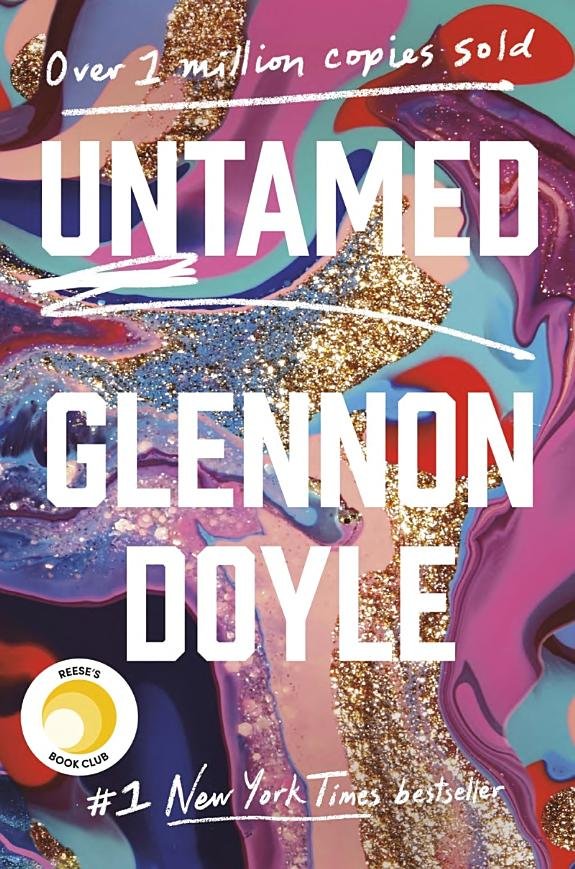
Untamed
1. Untamed by Glennon Doyle
Glennon Doyle did not set out to write a divorce book. She set out to write about the moment she decided to stop performing the life everyone expected of her and start living the one that actually fit. The result is a memoir that is raw, funny, and occasionally infuriating in the best possible way. Doyle writes about her marriage, her faith, her struggles with addiction, and the slow, uncomfortable process of figuring out who she is when she stops trying to be who she was told to be.
Her voice is conversational and direct, the kind of writer who feels like she is talking to you specifically. She does not pretend the journey was clean or simple. She shows the mess, the doubt, the moments of absolute terror that come with choosing yourself when the stakes are enormous. For women who have spent years shrinking themselves to fit a relationship or a role, that honesty lands hard.
It is worth noting that this book is not a how-to guide. There are no steps, no worksheets, no structured plan for rebuilding your life. It is entirely a memoir, and a fairly specific one at that. Doyle’s story involves leaving her marriage for another woman, so readers who are looking for something that mirrors a more conventional divorce experience may find some parts less directly applicable. But the central question she wrestles with, which is essentially “who am I outside of who I was supposed to be,” is one that resonates far beyond the particulars of her situation.
The writing itself is the main event here. Doyle has a gift for articulating feelings that most people can barely name, let alone put into sentences. She is also genuinely funny, which helps when the subject matter gets heavy.
“Untamed” is less a roadmap and more a permission slip. It will not tell you what to do next. It will remind you that you are allowed to decide for yourself.
This is perfect for women who feel like they lost themselves somewhere inside their marriage and need someone to articulate that feeling before they can begin addressing it. It is not ideal for readers who want practical, structured guidance rather than memoir.
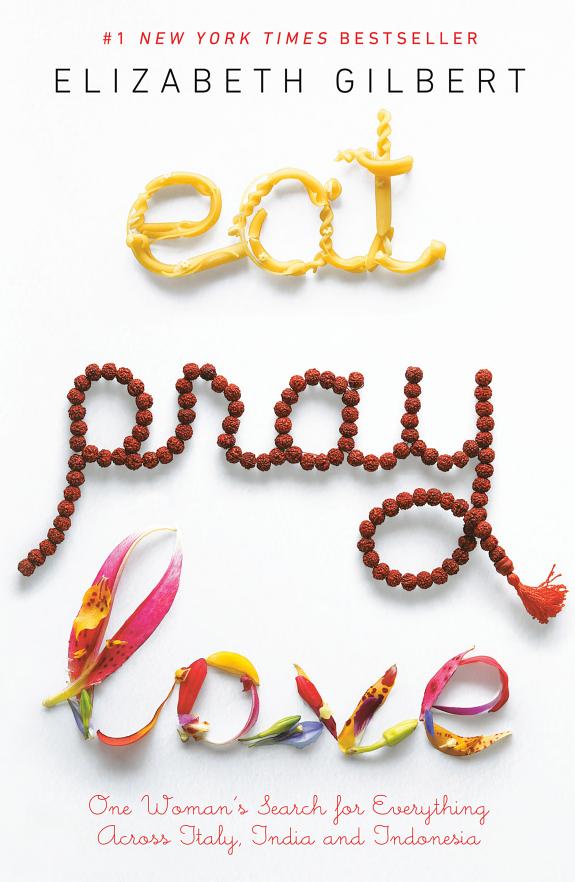
Eat, Pray, Love
2. Eat, Pray, Love by Elizabeth Gilbert
Yes, you have probably heard of it. Yes, it became a movie. And yes, it still holds up as one of the most honest accounts of a woman dismantling her life and trying to figure out what to build in its place. Gilbert wrote this memoir after a painful divorce and a subsequent relationship that also fell apart, leaving her on the floor of her bathroom in the middle of the night, crying and praying for the first time in her adult life. The book follows her year abroad, divided between Italy, India, and Indonesia, as she searches for pleasure, devotion, and balance.
What makes this book endure beyond its cultural moment is Gilbert’s self-awareness. She does not present herself as a hero or a victim. She is frequently a mess, often self-indulgent by her own admission, and genuinely uncertain about whether any of this will work. The Italy section, with its unapologetic focus on food and pleasure and learning to enjoy your own company, is particularly useful reading for anyone who has spent years prioritizing everyone else’s needs over their own.
The spiritual sections, particularly the India portion, can feel slow to readers who are not drawn to meditation or ashram life. And the ending, which involves falling in love again, has frustrated some readers who wanted the book to be about something other than arriving at another relationship. That is a fair critique. But the journey itself, the willingness to step completely outside a familiar life and sit with the discomfort of not knowing, is genuinely worth the read.
Gilbert’s prose is warm, witty, and self-deprecating without being performatively humble. She is a skilled storyteller, and even the quieter passages carry enough personality to keep you reading.
The real gift of “Eat, Pray, Love” is not the travel fantasy. It is the portrait of a woman who chose uncertainty over a comfortable unhappiness, and who sat with that choice long enough to learn something from it.
This is perfect for women who need to be reminded that starting over can involve joy and curiosity, not just grief and recovery. It is less suited to readers who want practical tools or who find personal essays about spiritual seeking too vague to be useful.
You Can Heal Your Life
3. You Can Heal Your Life by Louise Hay
Louise Hay first published this book in 1984, and it has never really gone away. That kind of longevity tends to mean one of two things: either a book has tapped into something genuinely useful, or it has found a very loyal audience willing to overlook its limitations. In Hay’s case, it is honestly a bit of both. The central premise is that many of our physical and emotional struggles are rooted in negative thought patterns and beliefs formed in childhood, and that by changing those patterns, we can change our experience of life.
Hay draws heavily on affirmations, self-love practices, and the idea that you are not defined by your past. For someone emerging from a divorce, particularly one that has left her questioning her worth or replaying years of self-criticism, there is real value in a book that insists, firmly and repeatedly, that you are enough and that healing is possible. The exercises, while simple, can be surprisingly confrontational if you actually do them honestly.
Here is the honest caveat, though. Hay’s framework leans heavily into the idea that our thoughts create our reality, and some of her claims about illness and physical health veer into territory that many readers find uncomfortable or even harmful. If you are someone who tends toward magical thinking in ways that delay practical action, this book could reinforce that tendency rather than counteract it. It works best as a companion to other resources, not as a standalone guide.
The writing is gentle and repetitive by design. Hay believed in saying things multiple times until they sank in, which some readers find comforting and others find tedious. Your mileage will vary depending on how you respond to that approach.
“You Can Heal Your Life” asks you to look at the stories you have been telling yourself about who you are and whether you deserve good things. That is not a small question, even if the book delivers it softly.
This is perfect for women who are working through deep-seated beliefs about their own worth and who respond well to affirmation-based practices. It is not the right fit for readers who want evidence-based psychology or who are skeptical of spiritual self-help frameworks.
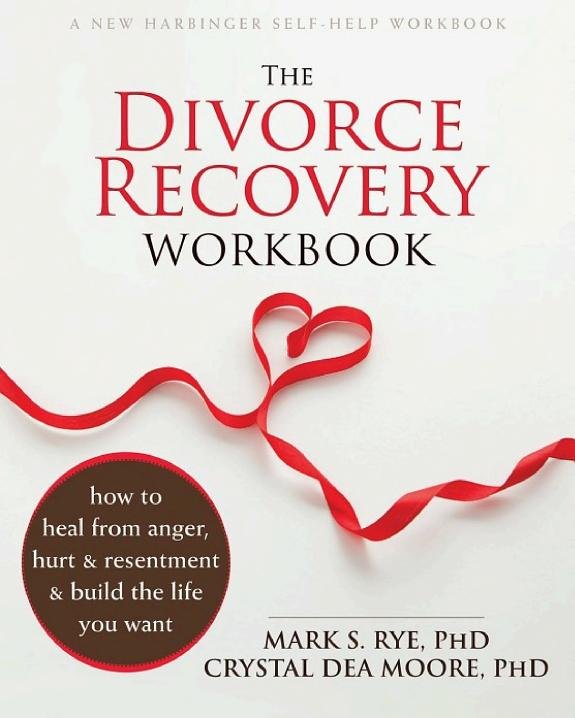
The Divorce Recovery Workbook: How to Heal from Anger, Hurt, and Resentment and Build the Life You Want
4. The Divorce Recovery Workbook by Mark S. Rye and Crystal Dea Moore
If the memoirs on this list are the friends who sit with you while you cry, this workbook is the therapist who eventually says, “Okay, let’s look at what’s actually happening here.” Written by two researchers with backgrounds in psychology and forgiveness studies, this is a structured, research-informed guide that walks you through the emotional stages of divorce recovery with exercises, reflection prompts, and concrete strategies. It is not glamorous. It is genuinely helpful.
The book addresses anger, grief, resentment, and the complicated process of forgiveness, which Rye and Moore are careful to define not as excusing what happened, but as releasing yourself from the weight of carrying it. That distinction matters. Too many books on forgiveness gloss over the legitimate anger that comes with a painful divorce. This one does not. It acknowledges that what you are feeling is real and then offers tools for working through it rather than around it.
The workbook format means you get out of it what you put in. Readers who skim the exercises or fill them in halfheartedly will likely find it less useful than those who are willing to sit with the harder questions. It also assumes a certain level of emotional readiness. If you are still in the very acute phase of shock, you might find it more useful to return to this one once the initial fog has lifted a bit.
The tone is warm but professional, which is a balance that is harder to strike than it sounds. Rye and Moore manage to feel approachable without being condescending, and the research underpinning the exercises gives the book a credibility that purely anecdotal self-help sometimes lacks.
This workbook treats you like an adult who is capable of doing the hard work of healing, and then it actually gives you the tools to do it. That combination is rarer than it should be.
This is perfect for women who are ready to do active, structured work on their recovery and who want something grounded in psychology rather than personal narrative. It is not the right choice for someone looking for comfort reading or inspiration in the early days of shock.
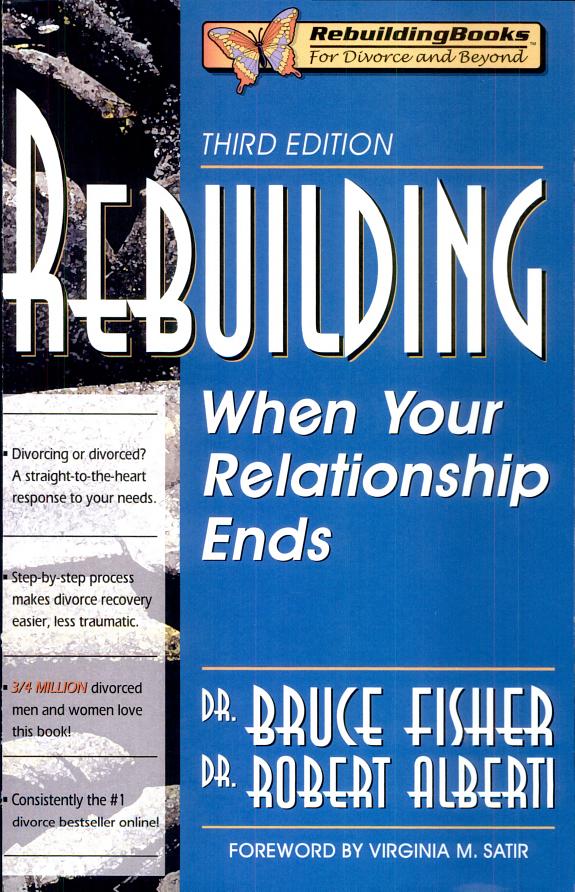
Rebuilding: When Your Relationship Ends
5. Rebuilding: When Your Relationship Ends by Bruce Fisher and Robert Alberti
Bruce Fisher originally developed the “rebuilding blocks” model in the 1970s as part of a divorce recovery seminar, and it has since become one of the most widely used frameworks in divorce counseling. The book identifies nineteen emotional and psychological building blocks, things like denial, loneliness, guilt, grief, anger, and self-worth, that most people need to work through after a significant relationship ends. It is methodical in the best sense of the word.
What sets this book apart from more narrative-driven titles is its clinical grounding combined with genuine accessibility. Fisher and Alberti write clearly and without jargon, and the model they present gives readers a way to understand where they are in the process, which is enormously reassuring when you feel like you are just flailing around in an emotional fog. Knowing that what you are experiencing has a name and a place in a larger sequence does not make it hurt less, but it does make it feel less chaotic.
The book has been updated several times since its original publication, and the current edition addresses some of the ways divorce has changed in recent decades. That said, some readers find the model a bit rigid. Grief and recovery do not always move in neat stages, and if you are someone who resists frameworks or finds them oversimplifying, you may chafe against the structure here. It is also worth noting that the book is not exclusively written for women, which means some of the examples and language are more general than specifically tailored to female experience.
Used alongside a support group or therapy, this book is particularly effective. Fisher originally designed it as a companion to his seminar, and that communal context still enriches the experience of reading it.
“Rebuilding” offers something that is genuinely hard to find in the middle of a divorce: a map. It will not tell you how long the journey takes, but it will show you the terrain.
This is perfect for women who find comfort in structure and who want a research-backed framework for understanding their recovery process. It is less suited to readers who prefer personal narrative or who find stage-based models too prescriptive.
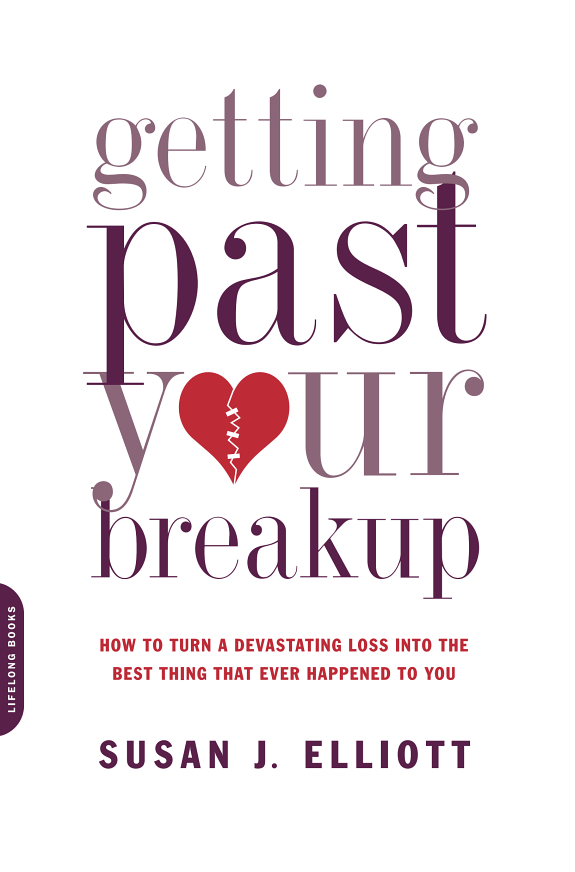
Getting Past Your Breakup: How to Turn a Devastating Loss into the Best Thing That Ever Happened to You
6. Getting Past Your Breakup by Susan J. Elliott
Susan Elliott is a grief counselor and attorney who went through her own devastating breakup and came out the other side with a methodology. This book is the result of years of both personal experience and professional practice, and it shows. Elliott is direct, sometimes bluntly so, and she does not have much patience for the kind of self-pity that keeps people stuck. That is not a criticism. It is actually one of the book’s strengths, because she balances that directness with genuine compassion and a clear understanding of how grief actually works.
The book covers the full arc of post-breakup recovery, from the initial devastation through grief processing, rebuilding self-esteem, and eventually preparing to move forward. Elliott is particularly strong on the subject of “no contact,” which she treats not as a punishment for your ex but as a necessary condition for your own healing. She is also honest about the ways people sabotage their own recovery, whether through rumination, premature dating, or the endless replay of what went wrong.
The subtitle promises that this loss can become “the best thing that ever happened to you,” which is the kind of claim that can feel offensive when you are in the thick of it. Elliott earns it eventually, but readers in the early stages of grief may want to give themselves permission to ignore that framing for a while and just use the practical tools the book offers. The subtitle is also a little breezy for what is actually a fairly substantive and serious book.
Elliott’s voice is no-nonsense but never cold. She has clearly lived through something hard, and that experience gives her writing a credibility that purely academic approaches sometimes lack.
Elliott writes like someone who has been exactly where you are and who is not going to let you stay there indefinitely. That is a particular kind of kindness.
This is perfect for women who are ready to stop circling their grief and start doing the work of moving through it, and who respond well to a direct, structured approach. It is not the best choice for readers who are still in acute shock or who need gentler, more narrative-driven comfort first.
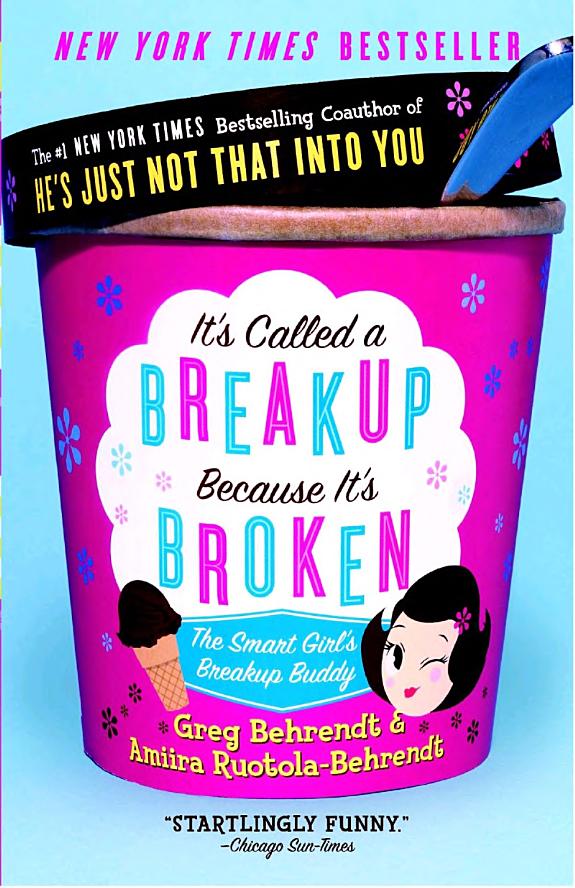
It’s Called a Breakup Because It’s Broken: The Smart Girl’s Break-Up Buddy
7. It’s Called a Breakup Because It’s Broken by Greg Behrendt and Amiira Ruotola-Behrendt
After several entries that are either emotionally intense or clinically structured, it feels right to end with something that has a sense of humor about the whole thing. Greg Behrendt, who co-wrote “He’s Just Not That Into You,” and his wife Amiira wrote this book as a frank, funny, occasionally exasperated guide to getting through a breakup without completely losing your mind. The title alone does a lot of work. It is called a breakup because it is broken. That relationship is not coming back. Now what?
The Behrendts write in a conversational, tag-team style that feels like getting advice from two friends who genuinely like you and genuinely want you to stop texting your ex at midnight. They cover the usual pitfalls, the obsessive checking of social media, the “just one more conversation” trap, the impulse to assign blame in elaborate detail, and they do it with enough humor that the advice lands without feeling preachy. There is a real warmth underneath the jokes.
This book is lighter than most others on this list, and that is intentional. It is not designed to take you through deep psychological work or help you process childhood wounds. It is designed to get you through the first several weeks without doing anything you will deeply regret, and to remind you, with some regularity, that you are going to be okay. For some women, that is exactly what they need before they are ready for the heavier lifting.
Readers who are dealing with a long marriage rather than a shorter relationship may find some of the framing a bit too casual for the scale of what they are going through. The book skews younger in its cultural references and tone, and the divorce-specific complexities of shared finances, children, and legal proceedings are largely outside its scope.
This book will not fix everything. It will make you laugh on a day when you did not think that was possible, and sometimes that is the most useful thing a book can do.
This is perfect for women in the early, chaotic days of a breakup or divorce who need something accessible and genuinely funny to help them get through the week without self-destructing. It is not the right fit for readers looking for deep psychological insight or structured recovery work.
Starting over after divorce is not a single moment. It is a series of small, often unglamorous decisions made over a long stretch of time. Some days you will feel like you are making real progress. Other days you will feel like you are back at the beginning. Both of those experiences are normal, and none of the books on this list will pretend otherwise.
The titles here cover a wide range of needs and approaches because women starting over are not a monolith. Some of you need a memoir that makes you feel less alone. Some of you need a workbook that gives you something concrete to do with your hands and your mind. Some of you need a book that will make you laugh before you can do anything else. There is no wrong place to start. Pick the one that feels right for where you are today, knowing that where you are today is not where you will be six months from now.
Take your time. Be honest with yourself. And maybe hide your ex’s contact information somewhere inconvenient, at least for a little while.