6 Books to Read When Life Feels Heavy
Some seasons of life just sit on your chest. Maybe you can’t name exactly what’s wrong, or maybe you can name it all too well and that’s the problem. Either way, there’s a particular kind of loneliness that comes with feeling like the ground has shifted under you and nobody around you seems to notice.
Books don’t fix that. Let’s be honest upfront. But the right book at the right moment can make you feel less alone in it. It can hand you a sentence that says, quietly, yes, I know this too. The six books below aren’t self-help in the cheerful, fix-yourself-by-Tuesday sense. They’re more like sitting with a very wise, very honest friend who has also been through something. Some will make you cry. One or two might make you laugh a little, which, when you’re in the thick of it, is its own kind of relief.
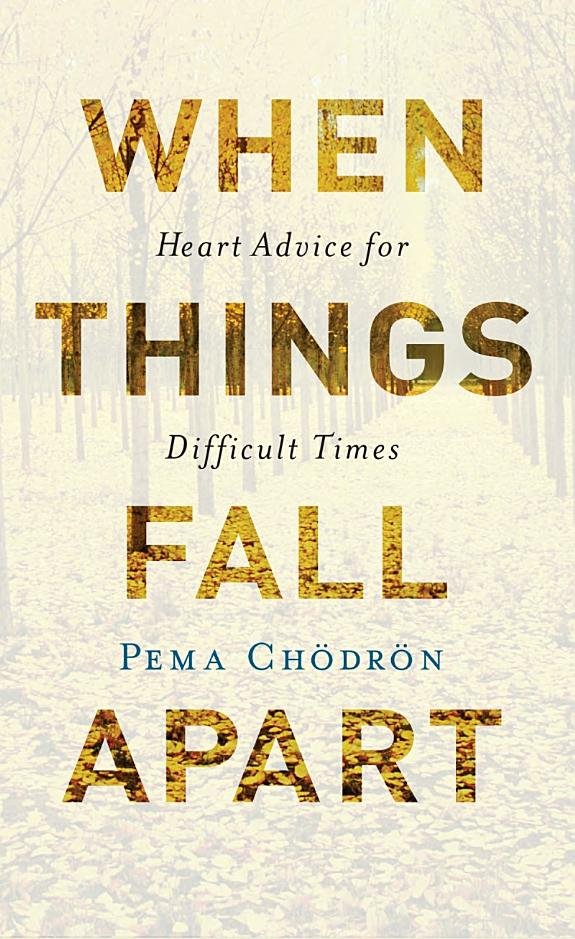
When Things Fall Apart
1. When Things Fall Apart by Pema Chödrön
Pema Chödrön writes the way a very calm person speaks to you when you are not calm at all. She is an American Buddhist nun, and this book grew out of talks she gave during her own period of personal crisis. That origin matters. She is not writing from a place of having figured everything out. She is writing from the middle of it, which is exactly where most readers will find themselves when they pick this up.
The central idea of the book is, to put it plainly, that groundlessness is not the problem. It is the place where real growth begins. Chödrön argues that our instinct to seek solid ground, to close off, to build walls against pain, is actually what prolongs suffering. She introduces concepts from Tibetan Buddhism, like the practice of tonglen and the idea of the bodhichitta, the tender, open heart, without ever making the reader feel like they need a philosophy degree to follow along. The writing is spare and direct and occasionally very funny in a dry, self-aware way.
This is not a book for someone who wants step-by-step instructions or a tidy resolution. There are no action plans here. Chödrön is asking you to sit with discomfort rather than escape it, which is a genuinely difficult ask and she knows it. If you are looking for reassurance that everything will be fine, this book will not give you that. What it offers instead is something rarer: permission to stop fighting what is already here.
“Fear is a natural reaction to moving closer to the truth.” Chödrön writes things like this and somehow they land without feeling like a motivational poster.
This is perfect for readers going through grief, burnout, or a loss of direction who are open to a contemplative, non-religious-but-spiritual approach and have no interest in being told to think positive.
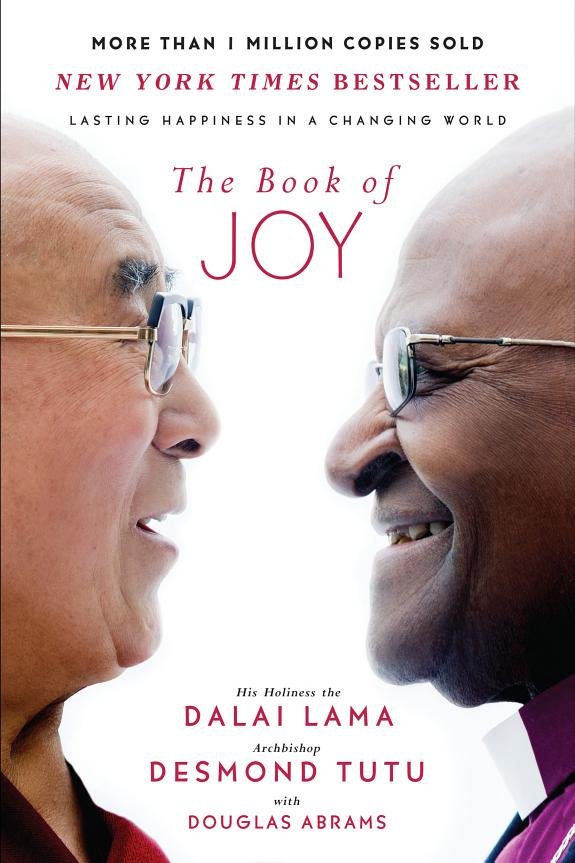
The Book of Joy
2. The Book of Joy by Dalai Lama and Desmond Tutu
Here is a book written by two men who, between them, have survived exile, oppression, apartheid, and the particular indignity of the world repeatedly failing to live up to what it could be. And yet the entire book is about joy. Not happiness, which they are careful to distinguish as a fleeting, circumstance-dependent thing, but a deeper, more durable quality of being. The premise alone is worth sitting with for a moment.
The book was written by journalist Douglas Abrams, who spent a week with the Dalai Lama and Archbishop Tutu in Dharamsala for the Dalai Lama’s eightieth birthday. What emerges is part conversation, part memoir, part practical guide, and entirely warm. These two men clearly delight in each other, and that delight comes through on every page. They tease each other, disagree occasionally, and laugh a great deal. It makes the book feel alive in a way that purely instructional writing rarely does.
The ideas themselves are grounded in both Buddhist and Christian traditions but never feel exclusionary. They talk about the eight pillars of joy, moving through perspective, humility, humor, acceptance, forgiveness, gratitude, compassion, and generosity. None of this is new territory, but hearing it from two people who have had genuine cause for bitterness and chosen otherwise gives it a weight that a younger, luckier author simply could not provide. If you are skeptical of books about joy because they tend to feel naive, this one earns its optimism.
Two men who have faced genuine suffering chose to spend a week talking about joy. That choice, in itself, says something worth hearing.
This is perfect for readers who feel cynical about happiness but are quietly hoping to be persuaded otherwise, and for anyone who finds comfort in dialogue and warmth rather than solitary reflection.
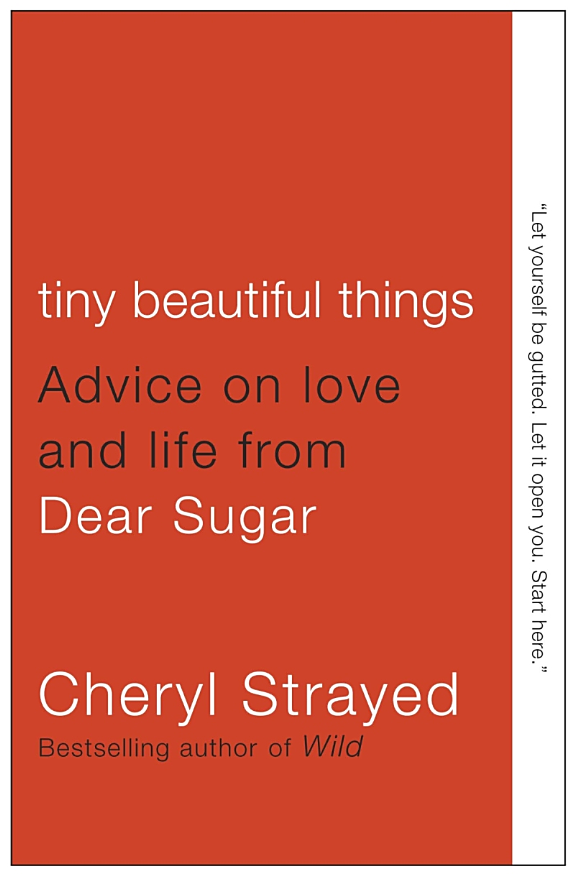
Tiny Beautiful Things
3. Tiny Beautiful Things by Cheryl Strayed
Cheryl Strayed spent several years writing an anonymous advice column called Dear Sugar for The Rumpus. The column was unlike any advice column most people had read before. Rather than offering tidy, practical guidance, Sugar answered letters with stories, with honesty about her own mess, with a kind of fierce, unguarded love for the people writing in. This book is a collection of those columns, and it is one of the most quietly devastating things you will read this year.
Strayed’s voice is singular. She is warm without being soft. She is honest in a way that sometimes stings, but the sting always comes from care rather than judgment. When a grieving father writes in, she writes back about her own mother’s death. When someone asks about regret, she does not dodge it. She went through her own period of serious unraveling, including addiction and infidelity, and she does not hide that. It makes her counsel feel earned rather than performed.
The letters cover an enormous range of human experience: grief, infidelity, addiction, creative failure, family estrangement, the particular ache of being young and lost. What unifies them is Strayed’s refusal to offer easy comfort. She will not tell you it gets better in a bumper sticker way. She will tell you the truth about her own worst moments and somehow, that is more comforting than reassurance would be. This book is not for readers who want distance. It asks you to feel things, and it will make you feel them whether you were planning to or not.
“You don’t have a right to the cards you think you deserve. You have an obligation to play the hell out of the ones you’re holding.” Strayed does not let anyone off the hook, including herself.
This is perfect for readers who are going through something specific and painful and need to feel genuinely seen, not coached, and who can handle raw, unpolished emotional honesty.
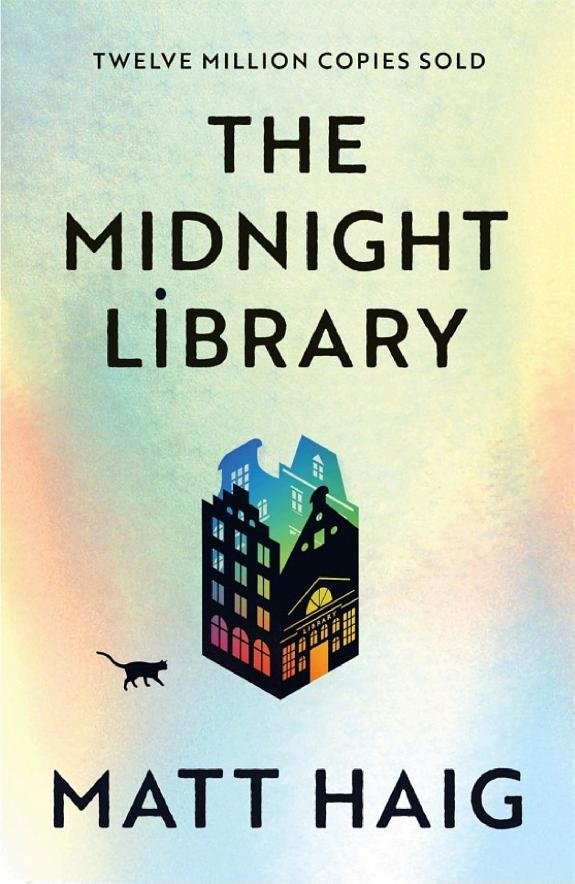
The Midnight Library
4. The Midnight Library by Matt Haig
Matt Haig has written both fiction and memoir about mental health, and The Midnight Library sits in an interesting space between the two. It is a novel, clearly, with a fantastical premise: a woman named Nora Seed, at the lowest point of her life, finds herself in a library that exists between life and death, where every book represents a life she could have lived if she had made different choices. She gets to try them. This is the kind of premise that could easily become sentimental or gimmicky, and occasionally it flirts with both, but Haig mostly pulls it off.
What saves it from becoming a simple fable is that Nora’s alternate lives are not straightforwardly better. The paths she regrets not taking come with their own complications, losses, and disappointments. The book is making a genuine argument about the nature of regret and about the ways we construct narratives of our own failure that are not as accurate as we believe them to be. That argument is wrapped in an accessible, readable story, which makes it easier to absorb than a philosophical essay on the same subject would be.
This is not a demanding read. It moves quickly, the prose is clean and uncomplicated, and the emotional beats are clearly signposted. Some readers will find that comforting. Others who prefer their fiction to be more ambiguous or literary may find it a little neat. That is a fair criticism. But if you are in a dark place and you need something that will hold your hand a little while still saying something true, this is a reasonable choice. It is the literary equivalent of a warm meal: not the most complex thing you have ever eaten, but exactly right for a certain kind of tired.
The book’s central question, what if the life you have is not the wrong one, is a simple question that turns out to be surprisingly hard to answer honestly.
This is perfect for readers dealing with regret, depression, or a sense of having taken the wrong path, particularly those who prefer fiction to self-help and do not mind a story that wears its heart on its sleeve.
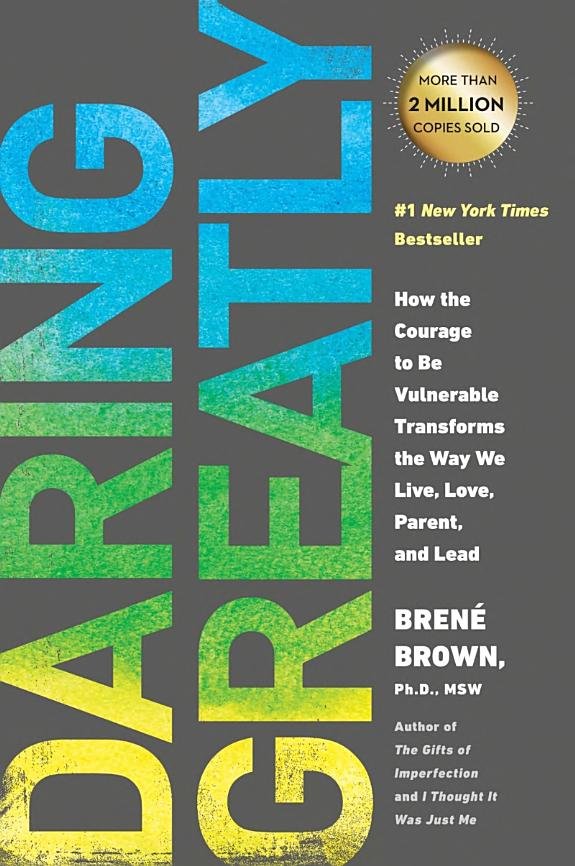
Daring Greatly
5. Daring Greatly by Brene Brown
Brene Brown is a research professor who spent years studying shame and vulnerability, which is an unusual academic focus and also, it turns out, an extremely useful one. Daring Greatly is built around a single, counterintuitive claim: that vulnerability, the willingness to show up and be seen without guarantees, is not weakness. It is the source of connection, creativity, and courage. Brown does not arrive at this conclusion through inspirational thinking. She arrives at it through years of interviews and data, and she is careful to show her work.
The writing is accessible without being dumbed down. Brown has a conversational style and uses a lot of personal anecdote alongside the research, which makes the book feel grounded rather than academic. She is particularly good on shame, which she distinguishes carefully from guilt. Guilt says I did something bad. Shame says I am bad. That distinction, simple as it sounds, opens up a great deal. She also writes honestly about her own resistance to vulnerability, her own armor, which keeps the book from feeling preachy.
If you are skeptical of self-help, Brown’s research background may help. This is not a book of affirmations. It is a book of findings, presented clearly, with practical implications. That said, it is not for everyone. If you are in acute crisis, this may feel like too much of an ask. The book requires a certain amount of readiness to examine your own patterns, and that readiness is not always available when you are in the middle of something very hard. It is better suited to the aftermath, or to a period when you have just enough distance to look at your own habits honestly.
Brown’s argument is essentially that the armor we build to protect ourselves from vulnerability is also what keeps us from the things we most want. That is an uncomfortable observation and she makes no apology for it.
This is perfect for readers who are beginning to emerge from a difficult period and want to understand the patterns that got them there, particularly those who struggle with perfectionism, people-pleasing, or a fear of being truly known.
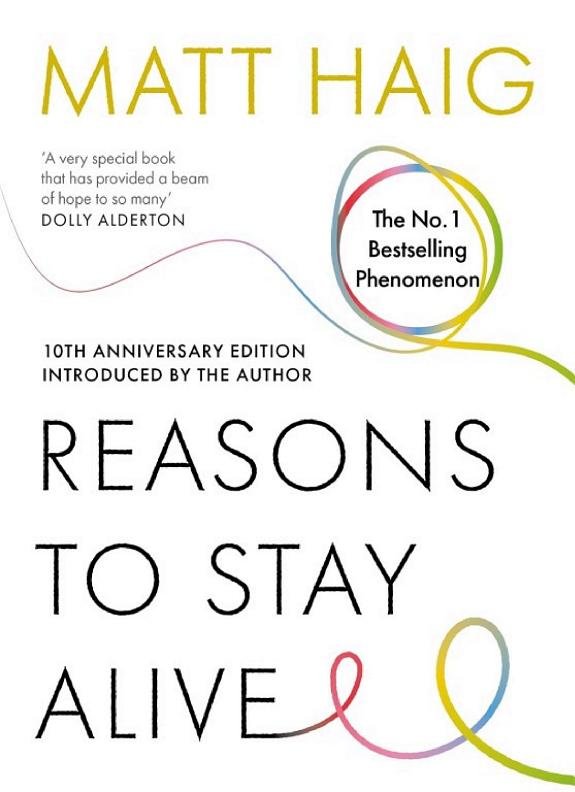
Reasons to Stay Alive
6. Reasons to Stay Alive by Matt Haig
Matt Haig appears twice on this list, which was not planned but is not surprising. He writes about mental health with a directness and lack of drama that is genuinely rare. Reasons to Stay Alive is a memoir about his experience of severe depression and anxiety in his mid-twenties, a period during which he could not leave the house, could barely speak, and was not certain he wanted to survive. He did survive. This book is about how, and also about what he learned from the experience over the years that followed.
The book is structured loosely, moving between memoir, lists, short reflections, and conversations with his past self. It is not a linear narrative and it does not pretend to offer a cure or a clear path through. What it offers is company. Haig is very good at describing the specific texture of depression, the way it distorts perception, the way it lies, without making it feel clinical or distant. He writes about it from the inside, and that inside view is what makes the book useful to people who are in it and valuable to people who want to understand it.
This is one of the few books on this list that addresses suicidal thinking directly, and it does so carefully and honestly. That makes it an important book for some readers and potentially difficult for others. If you are in a very acute place, please also reach out to someone who can help in real time. But if you are looking for a book that will sit with you in the dark without flinching, this is it. Haig does not wrap things up tidily. He acknowledges that depression can return, that life stays complicated, that recovery is not a straight line. That honesty is, oddly, the most comforting thing about it.
“The world is increasingly designed to depress us,” Haig writes, and then, page by page, makes the case for staying in it anyway. He earns that case.
This is perfect for readers who are in or have recently been through a period of depression or anxiety, or for people who love someone who is, and want to understand what it actually feels like from the inside.
None of these books will take away whatever is making life feel heavy right now. That would be too much to ask of any book. But each of them, in its own way, offers something real: the company of someone who has been through something, the reminder that difficulty is not a personal failing, and the quiet suggestion that being human and struggling are not separate things but the same thing.
If you are not sure where to start, let your mood guide you. If you want warmth and conversation, try The Book of Joy. If you want honesty that stings a little in a good way, start with Tiny Beautiful Things. If you need something that meets you in the very darkest place without looking away, Reasons to Stay Alive will do that. There is no wrong choice here. Just pick the one that feels like it might know what you need right now, and let it sit with you for a while.