
5 Books to Help You Trust Yourself Again
At some point, most of us lose the thread. Maybe it happened gradually, after years of second-guessing every decision. Maybe it came all at once, after a failure that felt too big to shake. Either way, the result is the same: you stop trusting yourself. You start asking everyone else what to do. You hesitate where you used to act. You feel like a stranger in your own life.
The good news is that self-trust is not a personality trait you either have or lack. It is something that can be rebuilt, slowly and honestly, with the right kind of help. These five books will not hand you a quick fix or a five-step formula. What they will do is sit with you in the uncertainty, offer something true, and remind you that you are not as lost as you feel. Some of them are rooted in research, some in personal storytelling, and one is basically your most enthusiastic friend refusing to let you give up on yourself. All five are worth your time.
Presence
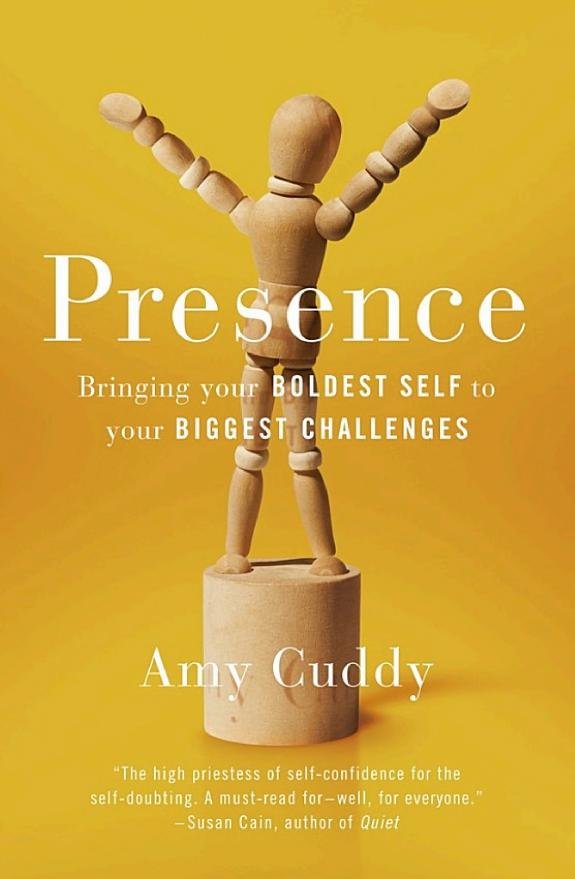
1. Presence by Amy Cuddy
Amy Cuddy is a social psychologist who became famous for a TED talk about body language, but this book is far more nuanced than the power-pose headlines suggested. Cuddy writes with warmth and intellectual rigor, weaving together her own story of recovering from a traumatic brain injury with decades of research on how we show up under pressure. Her voice is accessible without being dumbed down, and she clearly cares about the people reading her work, not just the ideas she is presenting.
The central argument of Presence is that we do not need to fake confidence. We need to access something more genuine: a state of being fully present and connected to our own values, feelings, and capabilities. Cuddy distinguishes between performing confidence for others and actually inhabiting yourself, which is a more useful distinction than most self-help books bother to make. The research she draws on covers everything from how our posture affects our own psychology to how authenticity is perceived in high-stakes situations like job interviews.
Where this book really earns its place is in how practical it is without being prescriptive. Cuddy is not telling you to become a different person. She is helping you stop abandoning the person you already are when things get difficult. That is a quieter promise than most books make, but it is a more honest one. If you have ever walked into a room and felt yourself shrink, this book has something real to say to you.
It is probably not the right fit for readers who want purely philosophical or literary explorations of confidence. The science-heavy sections may feel slow to some. But for anyone who responds well to evidence-based writing that also has genuine emotional depth, Cuddy delivers something worth sitting with.
Presence is not about convincing others you belong. It is about stopping the internal conversation that insists you do not.
This is perfect for readers who want research-backed insight into self-doubt, especially those who feel most like themselves in private but tend to disappear under pressure in public.
The Confidence Code
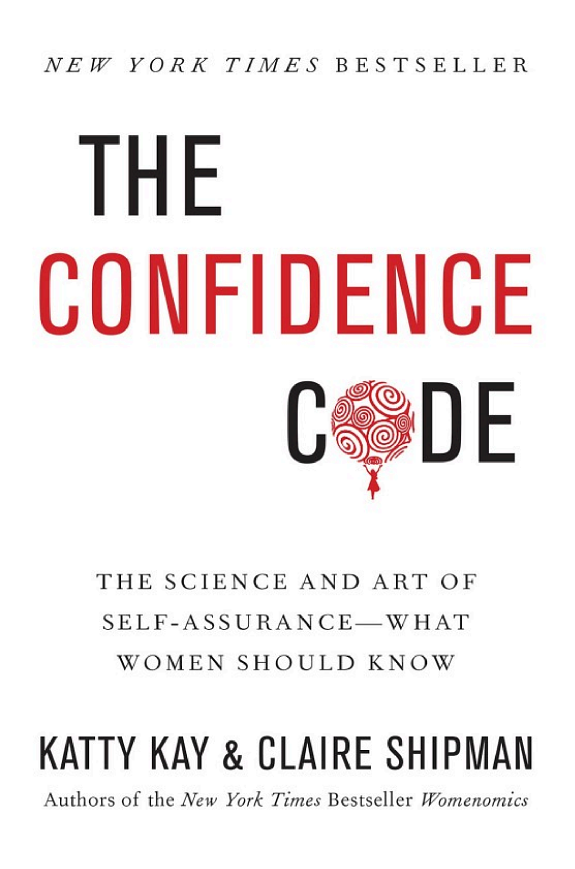
2. The Confidence Code by Katty Kay and Claire Shipman
Katty Kay and Claire Shipman are both accomplished journalists, and it shows. The Confidence Code reads like a really good long-form investigation into a question they found themselves personally unable to answer: why do so many capable, intelligent women struggle to feel confident, even when the evidence of their own competence is sitting right in front of them? Their voice is conversational and sharp, and they are refreshingly willing to admit their own doubts throughout the book, which keeps it from feeling preachy.
The book draws on neuroscience, genetics, psychology, and a series of candid interviews with women across different fields. Kay and Shipman are interested in what confidence actually is at a biological and behavioral level, not just as a vague feeling. They explore how much of it is inherited, how much is shaped by socialization, and what that means for women who have been systematically encouraged to be careful, pleasant, and self-effacing rather than bold and decisive. It is a more structural critique than the cover might suggest.
That said, the book does not stop at diagnosis. The authors push toward action, arguing that confidence is built through doing, through taking risks and tolerating the discomfort of imperfection. The science behind that idea is genuinely interesting. There is a chapter on how rumination and perfectionism actively undermine confidence that is worth the price of the book on its own. (Overachievers, consider this your formal warning.)
Readers who are not women may find some sections less directly applicable, though the core ideas translate broadly. And anyone looking for a deep philosophical meditation rather than a practical investigation might find the tone a little breezy. But as a clear-eyed look at why self-trust erodes and what it actually takes to rebuild it, this book is quietly excellent.
Confidence is not the absence of doubt. It is the decision to act in spite of it, and that decision turns out to be something you can practice.
This is perfect for women who have spent years being told they are capable while privately feeling like they are one mistake away from being found out.
Daring Greatly
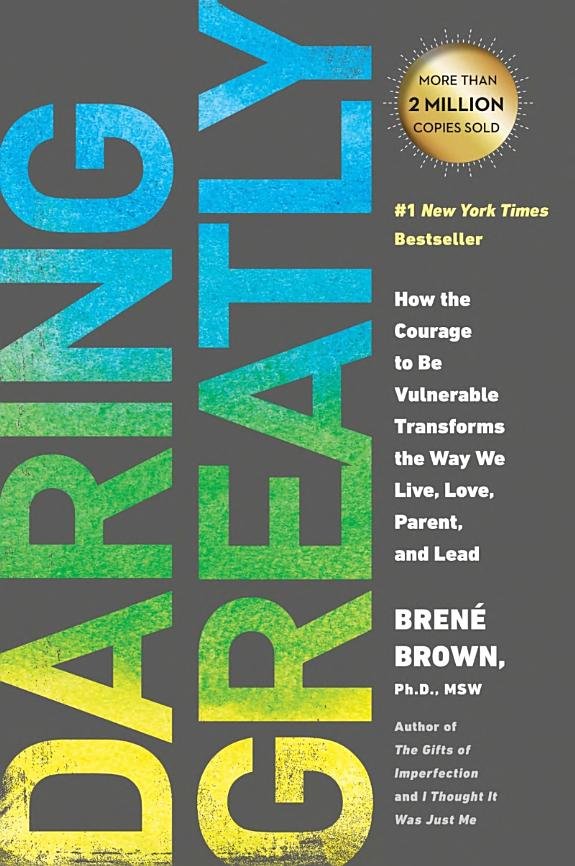
3. Daring Greatly by Brené Brown
Brené Brown spent years studying shame, and what she found is that shame is the primary reason most of us stop trusting ourselves. Not failure. Not criticism. Shame, the deep conviction that we are fundamentally flawed rather than people who have simply done something wrong or fallen short. Daring Greatly is built around that insight, and Brown makes her case with the combination of research, personal honesty, and storytelling that has made her one of the most widely read writers in this space. Her voice is direct, occasionally funny, and completely uninterested in pretending she has it all figured out.
The title comes from a Theodore Roosevelt speech about the person in the arena, covered in dust and sweat, who dares to try. Brown uses it to argue that vulnerability is not weakness. It is the only path to genuine connection, creativity, and self-worth. That sounds like a bumper sticker, but she earns the claim through careful research and through being honest about how terrifying vulnerability actually feels in practice. She does not romanticize it. She just makes a compelling case that the alternative, armoring up and keeping everyone at a distance, costs more than we realize.
The sections on how shame operates differently in men and women are particularly worth reading. Brown is careful not to reduce people to stereotypes, but the patterns she identifies from her research are recognizable in a way that tends to produce that slightly uncomfortable feeling of being seen. There is also a strong section on parenting and how shame gets passed down, which is useful even if you do not have children, because most of us are still carrying the version that was handed to us.
This book is not for readers who are put off by emotional language or who find the therapeutic framing of self-help frustrating. It is also not a quick read in the sense that it asks something of you. But for anyone willing to take it seriously, Daring Greatly is one of the more honest books about why we shrink and what it might look like to stop.
Vulnerability is not the same as oversharing or weakness. It is showing up without guarantees, which turns out to be the only way to actually live.
This is perfect for readers who have built a life that looks fine from the outside but who privately feel disconnected from themselves and unsure why.
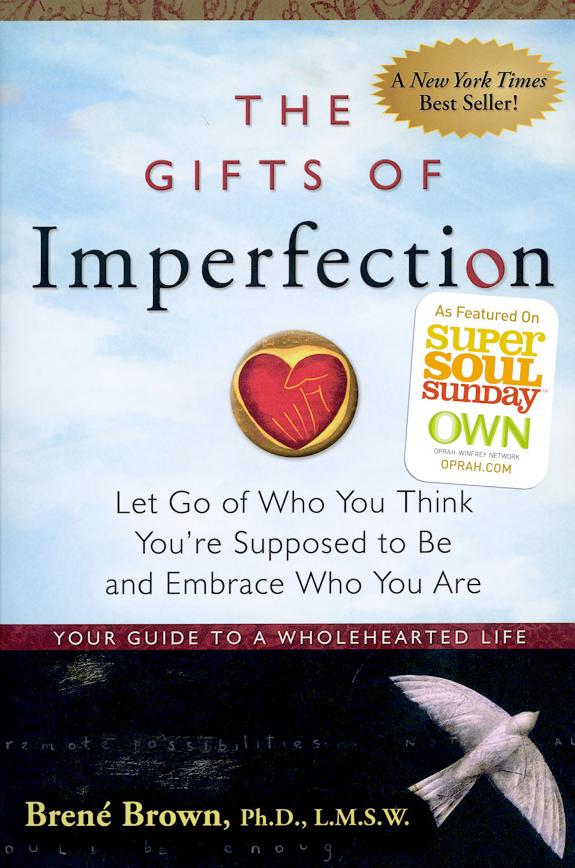
The Gifts of Imperfection
4. The Gifts of Imperfection by Brené Brown
Yes, two Brené Brown books. The overlap is real but smaller than you might expect. Where Daring Greatly is focused on vulnerability and shame as social and relational experiences, The Gifts of Imperfection is more personal and inward, organized around what Brown calls Wholehearted living. It is a quieter book, structured around ten guideposts for letting go of who you think you are supposed to be and embracing who you actually are. If that sentence made you roll your eyes slightly, fair enough. But Brown backs it up with enough specificity that it rarely feels like empty encouragement.
Each guidepost pairs something to let go of with something to cultivate. Letting go of perfectionism and cultivating self-compassion. Letting go of the need for certainty and cultivating intuition and faith. The structure could easily become repetitive, but Brown keeps it grounded by drawing on her own life honestly and by being precise about what she means. She is not asking you to simply decide to feel better about yourself. She is asking you to examine the specific beliefs and behaviors that are keeping you from trusting your own experience.
The chapter on creativity is one of the best things Brown has written. She talks about how unused creativity does not just sit quietly inside us, it curdles into grief and resentment. That is a striking and accurate observation, and it is the kind of thing this book is full of: small, precise truths that land harder than you expect. The writing is warm without being saccharine, which is a harder balance to strike than it looks.
Readers who want data and research front and center may find this one softer than they prefer. It is less academic than Daring Greatly and more reflective. It is also a relatively short book, which some people will love and others will feel is not quite enough. But as a companion to rebuilding self-trust, it earns its place on this list.
Wholehearted living is not about being perfect. It is about engaging with your life fully enough that you stop outsourcing your sense of worth to other people’s opinions.
This is perfect for readers who are tired of performing a version of themselves they do not actually recognize, and who are ready to get a little quieter and more honest about what they actually want.
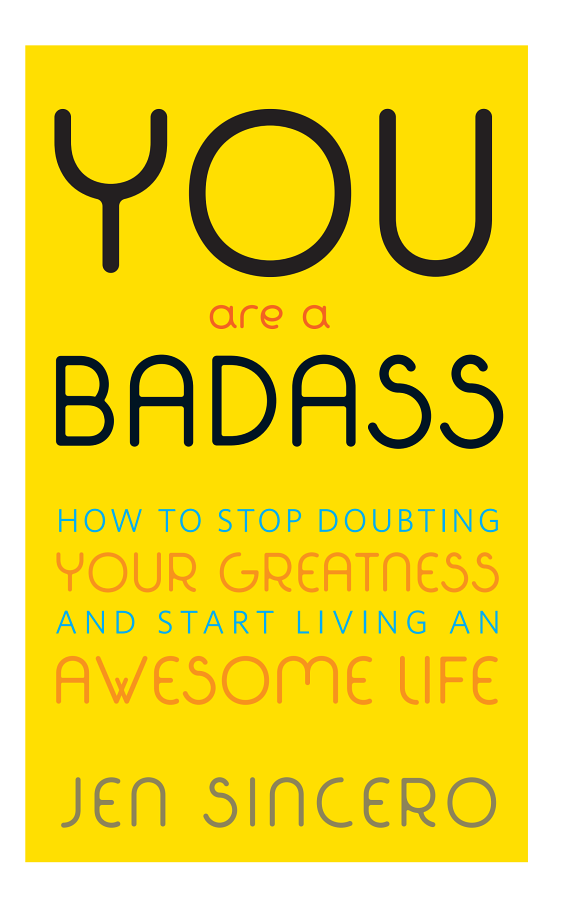
You Are a Badass
5. You Are a Badass by Jen Sincero
Jen Sincero is not trying to be subtle, and honestly, sometimes that is exactly what you need. You Are a Badass is the most overtly motivational book on this list, written in a voice that is loud, funny, and completely committed to the idea that you are getting in your own way and you need to stop. Sincero spent years broke, directionless, and convinced she was somehow exempt from the kind of life she actually wanted, before she started doing the internal work that changed things. She writes from that place, with the slightly exasperated affection of someone who has been exactly where you are and refuses to let you stay there.
The book covers a lot of ground, from understanding your subconscious programming to dealing with fear to the practical mechanics of going after what you want. Some of it borrows from the broader self-help tradition in ways that more skeptical readers will notice. There is a fair amount of discussion about the universe and energy that not everyone will find useful. Sincero is not writing a scientific text. She is writing a pep talk, and she knows it. Within those limits, she is very good at what she does.
What keeps this book from being just noise is Sincero’s self-awareness and her genuine humor. She is not pretending to be enlightened. She is sharing what worked for her with a directness that is, frankly, kind of refreshing after books that are more careful about their claims. There is a chapter about loving yourself that should be insufferable and somehow is not, mostly because Sincero makes fun of herself throughout it. The writing moves fast, the chapters are short, and the overall effect is energizing in a way that some of the more research-heavy books on this list are not designed to be.
This is not the book for readers who need rigorous evidence or who find enthusiastic self-help writing grating. If the phrase “you are a badass” makes you want to put the book down, that is useful information. But for readers who are stuck in their heads, paralyzed by overthinking, and in need of someone to just tell them to go for it already, Sincero is your person.
Most of the limitations you are working around are ones you built yourself, which is actually good news, because it means you can take them apart.
This is perfect for readers who know intellectually that they are capable but keep waiting for permission that is never going to come from anywhere except themselves.
Rebuilding self-trust is not a linear process, and none of these books will pretend otherwise. Some days you will finish a chapter feeling clear and capable, and some days the same words will just sit on the page. That is fine. The point is not to reach a permanent state of unshakeable confidence. The point is to develop a more honest and generous relationship with yourself, one where doubt is allowed to exist without running everything.
If you are not sure where to start, let your instinct guide you. The book that makes you slightly nervous is probably the one worth picking up first. And if you find yourself resisting all five, that is worth noticing too. Sometimes the resistance is the most useful thing on the shelf.