

7 Books That Help You Build Better Habits
Habits are sneaky things. You don’t really notice them working until one day you realize you’ve been reaching for your phone before your feet even hit the floor every single morning. Or, on the better end of things, you’ve somehow managed to exercise three times a week for six months without it feeling like a battle. Either way, the mechanics behind habit formation are genuinely fascinating, and there’s a whole shelf of books dedicated to helping you understand them.
The books gathered here range from deep scientific dives to short, punchy reads built around a single morning routine. Some are backed by decades of behavioral research. Some are written by people who have spent their careers coaching high performers. A few are surprisingly funny for books about self-discipline. What they all share is a serious attempt to answer the same question: why do we do what we do, and how do we do it differently? If you’ve ever tried to build a new habit and watched it quietly collapse by week three, at least one of these books has something useful to say to you.
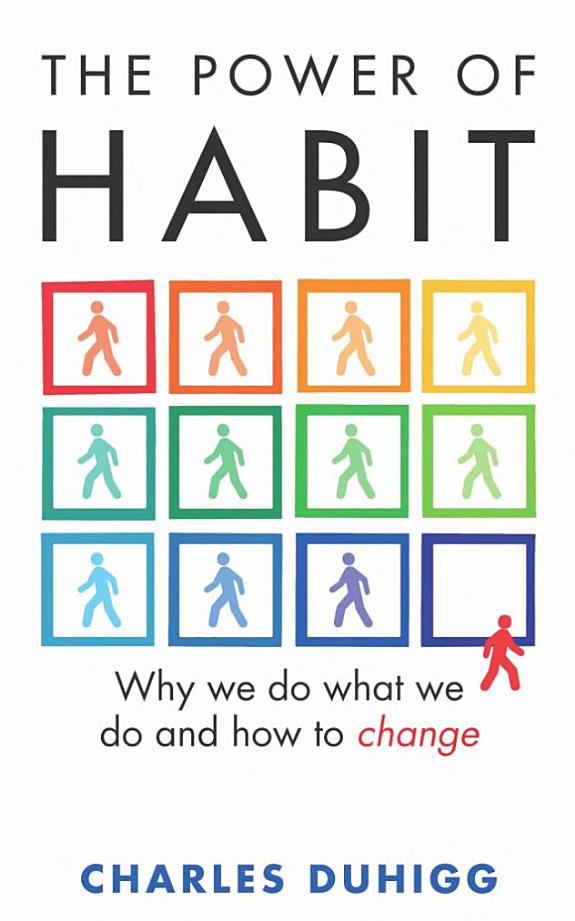
The Power of Habit
1. The Power of Habit by Charles Duhigg
Charles Duhigg is a Pulitzer Prize-winning journalist, and it shows. “The Power of Habit” reads less like a self-help manual and more like a collection of carefully reported stories, each one peeling back a layer of how habits actually work in the brain. The central framework he introduces is the habit loop: cue, routine, reward. It sounds simple, and in concept it is. But Duhigg spends the book demonstrating just how much complexity hides inside that simple loop, from the neuroscience of basal ganglia to the organizational habits of companies like Starbucks and Alcoa.
What makes Duhigg’s writing compelling is that he never lets the science feel dry. He opens with the story of Eugene Pauly, a man who lost his ability to form new memories but could still navigate his neighborhood walk every single day, because the habit lived somewhere else in his brain entirely. That kind of storytelling pulls you in and makes the research land. The book also covers keystone habits, the idea that some habits have an outsized ripple effect on the rest of your life, which is one of the more practically useful concepts in the whole genre.
Where the book can feel slightly frustrating is in the gap between understanding and action. Duhigg explains the loop beautifully, but the prescriptive guidance on actually changing habits is a bit thinner than the diagnosis. You’ll finish the book with a strong mental model of why habits exist, but you may need to do some of your own work to translate that into a concrete plan. That said, as a foundation for understanding the subject, this one is hard to beat.
This is not the right book for someone who wants a quick, step-by-step system to follow. Readers who don’t enjoy narrative nonfiction or detailed case studies may find themselves skimming. But for anyone who likes to understand the “why” before tackling the “how,” Duhigg delivers something genuinely satisfying.
“The Power of Habit” is the book that introduced millions of readers to the habit loop, and it remains one of the most well-reported, readable explorations of why human behavior is so stubbornly consistent, and how that consistency can be redirected.
This is perfect for readers who love narrative nonfiction, want to understand the neuroscience behind habit formation, and don’t mind a slower build toward practical application.
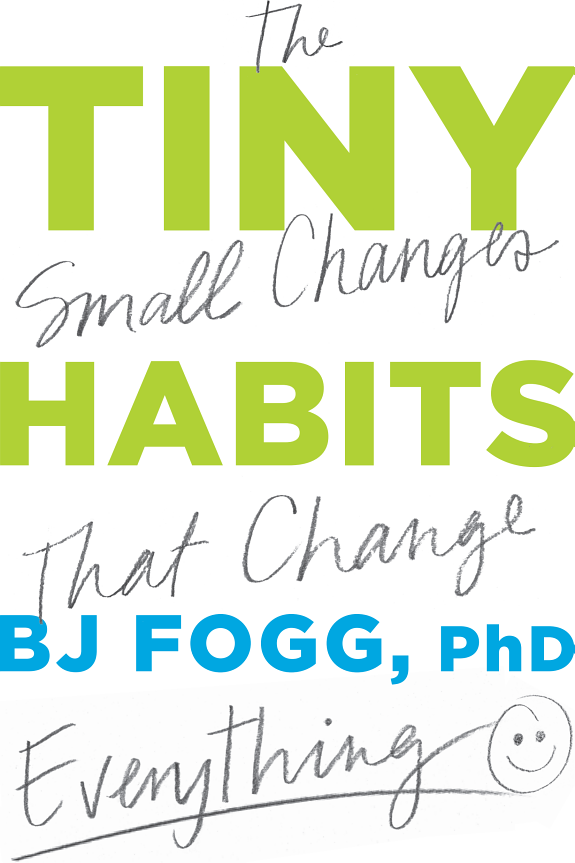
Tiny Habits
2. Tiny Habits by BJ Fogg
BJ Fogg has spent over two decades running the Behavior Design Lab at Stanford, and “Tiny Habits” is the distillation of everything he’s learned about why behavior change is so hard and what actually makes it easier. His core argument is deceptively simple: we’ve been thinking about habit formation wrong. We treat motivation as the engine, and when our motivation fades, we blame ourselves. Fogg argues that motivation is unreliable by nature, and that the real key is making the desired behavior so small that motivation barely matters.
His model, the Fogg Behavior Model, suggests that behavior happens when motivation, ability, and a prompt all converge at the right moment. The practical upshot is that if you want to build a new habit, you should make it tiny, anchor it to something you already do, and celebrate immediately when you complete it. The celebration piece might sound a little odd at first, but Fogg’s explanation of how positive emotion wires habits into the brain is one of the more interesting sections of the book. He’s not talking about throwing a party. He means a small, genuine moment of feeling good.
The writing is warm and accessible, occasionally a bit repetitive in the way that books built around a central framework can be, but never condescending. Fogg is clearly someone who has worked with real people trying to make real changes, and that comes through. He also spends time addressing what he calls “motivation waves,” those brief surges of enthusiasm that lead people to set enormous goals they can’t sustain, and why riding them is usually a mistake.
If you’re already deeply familiar with habit research and looking for something more advanced or philosophically challenging, this one might feel a little light. It’s also not going to help much with breaking deeply entrenched negative habits, where the emotional weight is significant. But as an entry point to building new behaviors with minimal friction, it’s genuinely practical.
Fogg’s insistence that the problem is the design, not the person, is one of the kinder and more honest reframes in this genre. Blaming yourself for failed habits, he argues, is like blaming a seed for not growing in concrete.
This is perfect for people who have tried and failed to build habits through sheer willpower, and who want a gentler, more systematic approach grounded in behavioral science.
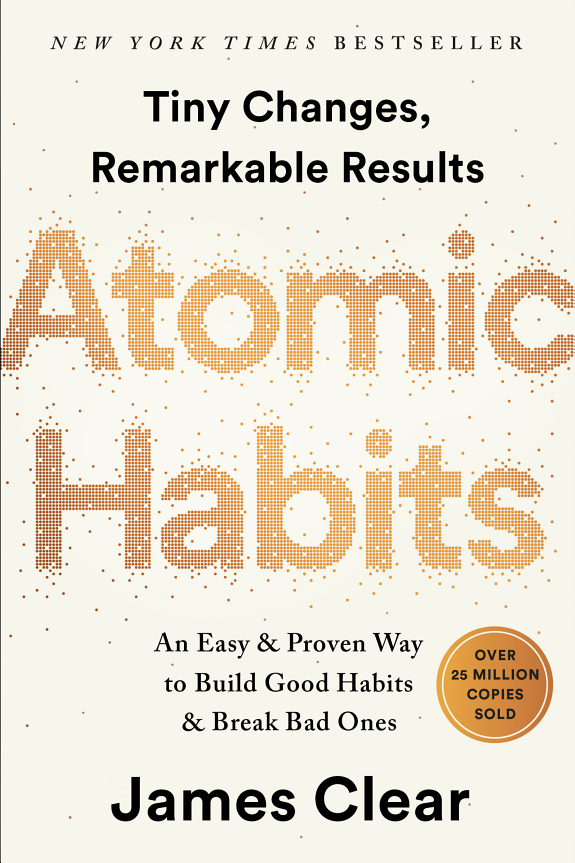
Atomic Habits
3. Atomic Habits by James Clear
James Clear spent years writing about habits, decision-making, and continuous improvement on his website before “Atomic Habits” arrived in 2018 and became one of the best-selling books of the decade. The core premise is that small, consistent improvements compound over time in ways that are easy to underestimate. A one percent improvement every day doesn’t sound like much. Over a year, it adds up to something significant. Clear builds his system around four laws of behavior change: make it obvious, make it attractive, make it easy, and make it satisfying. Each law comes with its inverse for breaking bad habits.
What Clear does particularly well is translate abstract ideas into concrete techniques. Implementation intentions, habit stacking, the two-minute rule, environment design, these aren’t new concepts in behavioral science, but Clear explains them clearly and shows how they fit together into a coherent system. The book is also well-organized, which matters more than it might sound. You can read it straight through, or you can flip to a specific section when you’re trying to solve a particular problem with a habit you’re working on.
The writing is clean and direct. Clear doesn’t overreach into territory he can’t support, and he’s honest about the limits of the framework. One genuinely useful distinction he makes is between outcome-based habits and identity-based habits. Rather than setting a goal to run a 5K, you work on becoming the kind of person who runs. The shift sounds subtle, but it reframes the whole project in a way that many readers find more durable.
Readers looking for deep scientific exploration may find the book a bit surface-level compared to Duhigg or Wood. And if you’ve already read widely in this space, some of the material will feel familiar. But as a practical, well-constructed guide to building and breaking habits, “Atomic Habits” earns its reputation.
Clear’s argument that you don’t rise to the level of your goals but fall to the level of your systems is one of those lines that sounds like a motivational poster but actually holds up under scrutiny.
This is perfect for readers who want a clear, actionable system for habit change and appreciate writing that is direct, well-organized, and grounded in practical application.
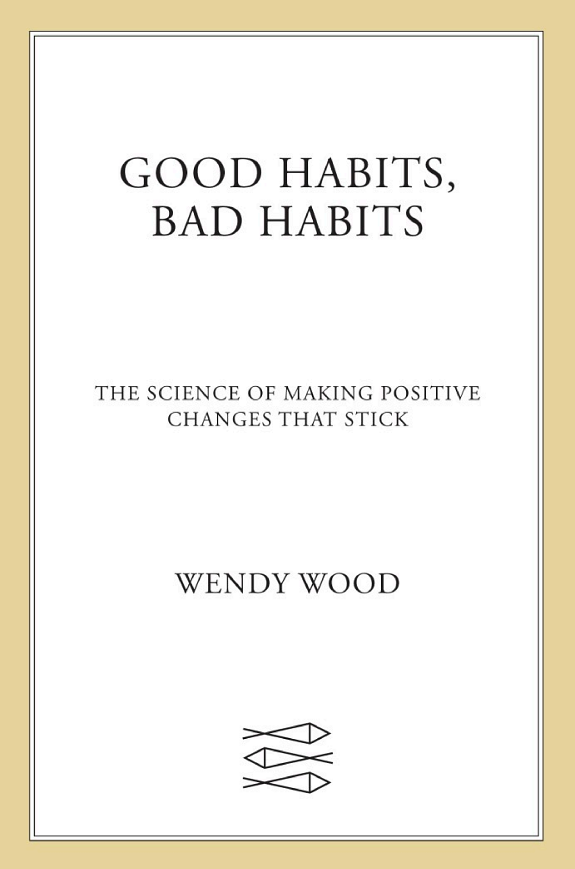
Good Habits, Bad Habits
4. Good Habits, Bad Habits by Wendy Wood
Wendy Wood is a research psychologist who has spent thirty years studying habit formation, and “Good Habits, Bad Habits” is the most rigorously scientific book on this list. Where Duhigg tells stories and Clear builds systems, Wood goes deeper into the research itself, examining what the evidence actually says about how habits form, persist, and change. Her central argument is that habits are not about conscious decision-making at all. They operate through a separate, largely unconscious process that runs on context and repetition rather than intention and motivation.
This distinction matters more than it might seem. Most habit advice focuses on motivation, willpower, and mindset. Wood’s research suggests that these things matter far less than the environment you put yourself in. If you want to change a habit, she argues, you need to change the context that triggers it. This is why people who move to a new city often find it easier to break old habits than people who try to change behavior in the same environment. The contextual cues that maintained the old habit simply aren’t there anymore.
The book covers friction, rewards, and the role of context in shaping behavior with a level of nuance that you won’t find in more popular titles. Wood also addresses the limits of self-control research honestly, which is refreshing in a genre that sometimes oversells what willpower can do. The writing is accessible without being dumbed down, a balance that’s harder to strike than it looks.
This is not the book for someone who wants quick wins or a tidy checklist. Readers who prefer narrative or practical frameworks over research summaries may find the pace a little slow. But for anyone who wants to understand what the science actually says, rather than a popularized version of it, Wood’s book is essential reading.
Wood’s observation that about 43 percent of daily behaviors are performed habitually, in the same context and with little active thought, reframes just how much of your life is running on autopilot without your permission.
This is perfect for readers who want the science behind habit formation presented with rigor and honesty, and who are skeptical of oversimplified frameworks.
The 7 Habits of Highly Effective People
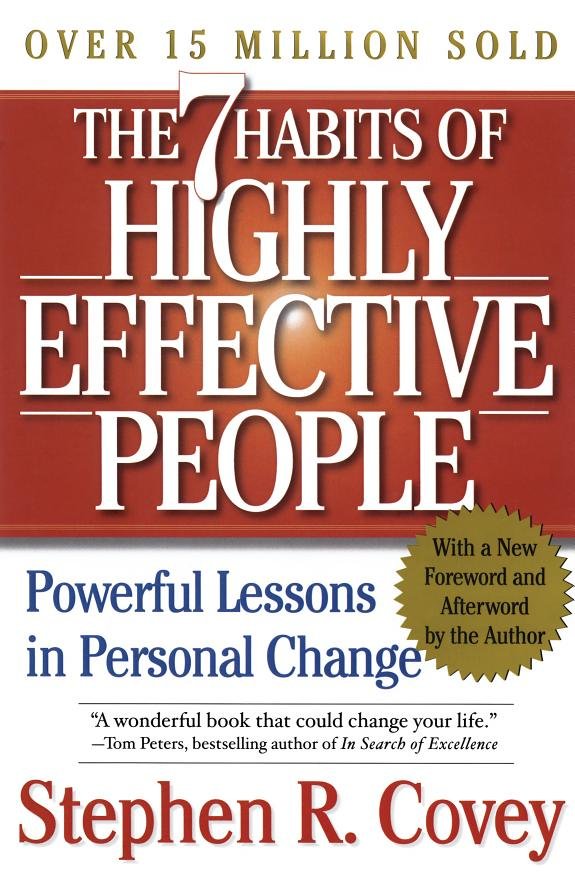
5. The 7 Habits of Highly Effective People by Stephen R. Covey
Stephen Covey published this book in 1989, and it has sold over forty million copies since. There is a reason for that, even if the language and some of the examples feel dated by now. Covey’s approach to habits is fundamentally different from the other books on this list. He is not talking about the mechanics of behavior change or the neuroscience of routine. He is talking about character. His seven habits are built on what he calls principles, things like integrity, fairness, and human dignity, and he argues that lasting effectiveness flows from aligning your habits with those principles rather than just optimizing your behavior.
The seven habits themselves move from personal responsibility and goal-setting through to interdependence and continuous self-renewal. “Begin with the end in mind” and “seek first to understand, then to be understood” have become so widely quoted that they can feel like cliches, but reading them in context gives them more weight. Covey is not writing self-help platitudes. He is making a sustained argument about what it means to live and work with integrity, and the habits he describes are meant to embody that argument in daily practice.
The writing is earnest and occasionally a bit dense. Covey is not trying to be entertaining. He is trying to be thorough, and some readers will find that admirable while others will find it slow. The corporate examples and the family dynamics sections reflect the era in which the book was written, which can create some distance for modern readers. But the underlying framework is coherent and, in many places, still genuinely useful.
This is not the right book for someone looking for quick behavioral hacks or research-backed techniques. Readers who are put off by values-based language or who want something more practical and less philosophical will likely prefer other titles on this list. But for readers interested in the relationship between character, principle, and daily behavior, Covey’s work remains a serious contribution.
Covey’s distinction between the personality ethic, surface-level techniques and attitudes, and the character ethic, deep principles that govern behavior from the inside out, is one of the more honest critiques of the self-help genre ever written within the self-help genre.
This is perfect for readers who want to think about habits in the context of values and long-term character development, rather than as isolated behavioral techniques.
High Performance Habits
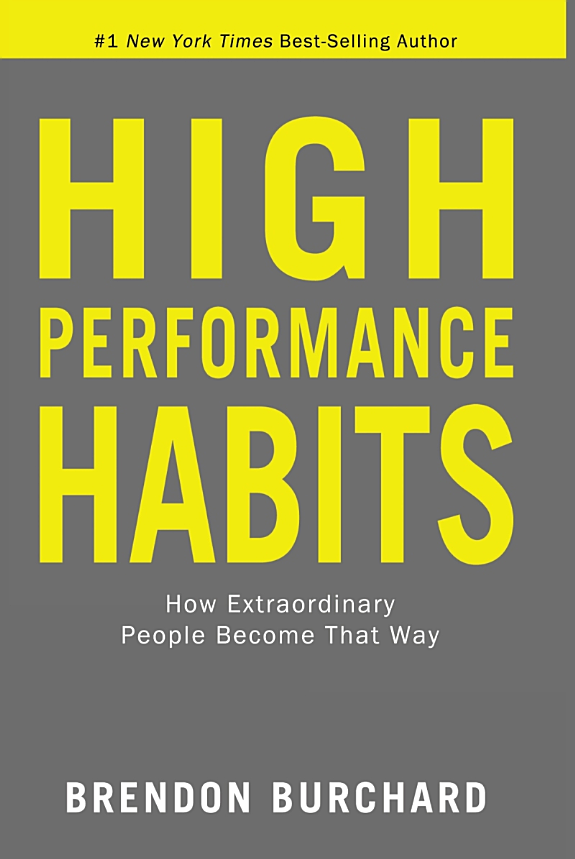
6. High Performance Habits by Brendon Burchard
Brendon Burchard is a high-performance coach who has worked with executives, athletes, and public figures, and “High Performance Habits” is built on a large-scale research study he conducted on what separates people who consistently perform at a high level from those who don’t. The six habits he identifies, seeking clarity, generating energy, raising necessity, increasing productivity, developing influence, and demonstrating courage, are not the micro-habits of the other books on this list. They are broader behavioral orientations that Burchard argues define sustained high performance over time.
The book is more ambitious in scope than most habit books, and that ambition is both its strength and its occasional weakness. Burchard covers a lot of ground, and some sections feel more thoroughly developed than others. The chapters on energy and clarity are particularly good, grounded in specific practices and honest about the difficulty of maintaining them. The chapter on necessity, the idea that you need to feel that your performance matters deeply in order to sustain it, is one of the more psychologically interesting sections of the book.
The writing has the energy you’d expect from someone who makes a living on stage, which means it’s engaging and occasionally a little breathless. Burchard is a believer, and that enthusiasm is contagious even when it tips into the slightly evangelical. If you’re already skeptical of the high-performance coaching world, some of the framing may put you off. But the underlying research is real, and the habits themselves are worth taking seriously.
Readers looking for quiet, minimalist advice about small daily routines will find this book too large in scale. It is aimed at people who are already functioning at a reasonable level and want to perform at a consistently higher one, not at people who are just trying to stop forgetting to drink water. The audience is specific, and the book is honest about that.
Burchard’s finding that high performers are not simply more motivated than others, but that they have learned to generate their own motivation through specific habits rather than waiting for it to arrive, is one of the more practically useful ideas in the book.
This is perfect for driven, goal-oriented readers who are already functioning well and want to understand what consistent high performers do differently over the long term.
Make Your Bed
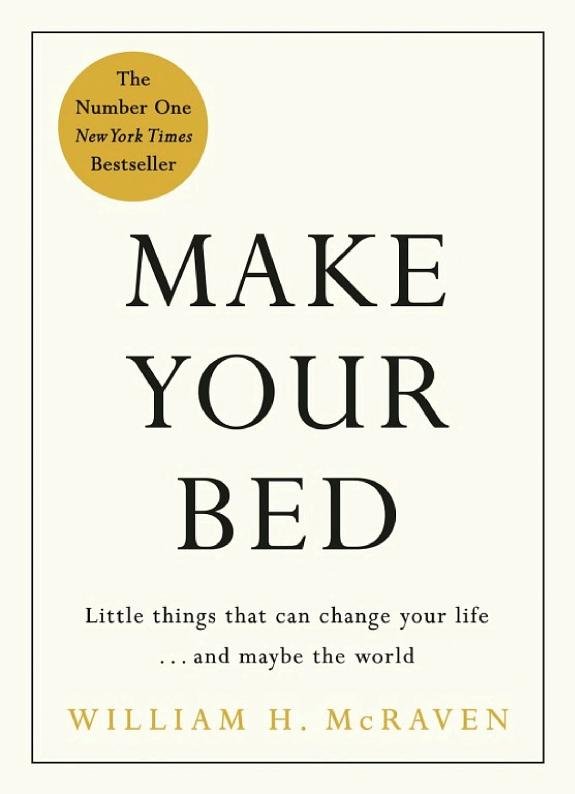
7. Make Your Bed by William H. McRaven
William McRaven is a retired Navy admiral who oversaw the special operations mission that killed Osama bin Laden. “Make Your Bed” began as a commencement speech at the University of Texas in 2014, went viral, and was expanded into a short book. It is the slimmest volume on this list by a significant margin, and the least concerned with research or behavioral science. What it offers instead is something different: a set of lessons drawn from Navy SEAL training, framed as habits of mind and action that McRaven argues apply far beyond the military.
The title habit, making your bed every morning, is presented as a small act that establishes a sense of order and accomplishment before the day has properly started. McRaven is not under any illusion that making your bed will change your life on its own. The point is the principle behind it, that small disciplines, done consistently, build the mental architecture for larger ones. The rest of the book follows a similar pattern, each chapter drawing a lesson from a specific moment in SEAL training and connecting it to a broader way of operating in the world.
The writing is direct and unpretentious. McRaven does not oversell his ideas or claim more than the material supports. There’s a dry, soldierly humor running through the book that keeps it from feeling preachy, which is a real achievement given the subject matter. It reads in about ninety minutes, and it doesn’t outstay its welcome. For a book that could easily have been a motivational lecture, it has a surprising amount of genuine warmth.
This is not a book for readers who want depth, nuance, or research. Anyone looking for a comprehensive framework or scientific grounding will find it too thin. It’s also specifically rooted in a military ethos that won’t resonate with everyone. But as a short, honest meditation on discipline, resilience, and the value of small daily acts, it delivers exactly what it promises.
McRaven’s central point is less about beds and more about the quiet dignity of doing small things well, a habit of attention that, practiced daily, turns out to matter quite a lot.
This is perfect for readers who want a short, grounded read about discipline and daily habits, and who appreciate wisdom drawn from direct experience rather than research or theory.
There is no single book on this list that will fix everything. That’s worth saying plainly. If there were, the habit section at your local bookshop wouldn’t be three shelves deep. What these books offer, taken together, is a genuinely varied set of lenses for thinking about why behavior is so hard to change and what can actually help. Duhigg gives you the science in story form. Fogg gives you a gentler approach built on design rather than discipline. Clear gives you a clean system. Wood gives you the research without the gloss. Covey connects habits to character. Burchard aims at sustained high performance. McRaven keeps it short and honest.
The best approach is probably to start with whatever feels most relevant to where you are right now. If you’re frustrated and want to understand why your habits keep failing, start with Fogg or Wood. If you want a practical system to follow, Clear is the obvious choice. If you’re in a reflective mood and want to think about the bigger picture of how you’re living, Covey is worth the time. And if you only have ninety minutes and a strong cup of coffee, McRaven will do nicely. Any of these books is a reasonable place to start. The habit of reading about habits, at least, is one that tends to pay off.