
6 Books About Narcissistic Relationships Worth Reading
There is a particular kind of exhaustion that comes from loving someone who consistently makes you feel like the problem. You second-guess your own memory. You apologize for things you did not do. You spend enormous energy trying to figure out what you did wrong this time, and somehow the answer is always just out of reach. If any of that sounds familiar, you are not alone, and you are not crazy.
Books cannot replace therapy, and they will not undo years of emotional harm overnight. But the right book can do something quietly significant: it can name what happened to you. That moment of recognition, reading a paragraph and thinking, yes, that is exactly it, can be the first real breath of relief after a long time underwater. The six books below cover narcissistic relationships from several angles, whether the person in your life is a partner, a parent, a coworker, or someone you have not quite figured out how to label yet. Some of these books lean clinical, some lean personal, and all of them have something genuine to offer.
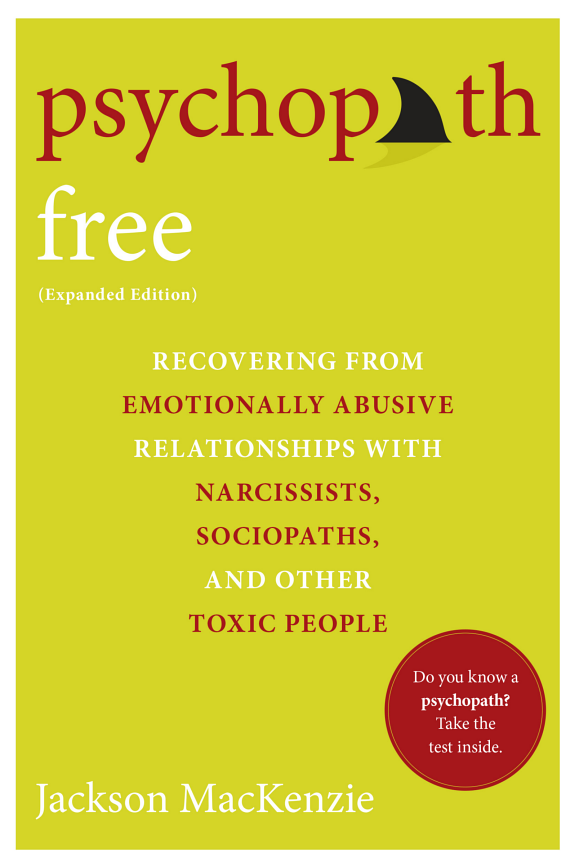
Psychopath Free: Recovering from Emotionally Abusive Relationships With Narcissists, Sociopaths, and Other Toxic People
1. Psychopath Free: Recovering from Emotionally Abusive Relationships With Narcissists, Sociopaths, and Other Toxic People by Jackson MacKenzie
Jackson MacKenzie wrote this book after his own recovery from a toxic relationship, and that personal foundation shows on every page. The voice is warm, direct, and occasionally blunt in the way that only someone who has actually lived through something can manage. MacKenzie does not write like a clinician standing at a safe distance. He writes like a friend who has already been through the worst of it and wants to help you understand what just happened to you.
The central ideas here revolve around the patterns that emotionally abusive people follow, the idealization phase, the devaluation, the discard, and the confusing cycle of intermittent reinforcement that keeps victims hooked long after they know something is wrong. MacKenzie walks through these patterns with enough specificity that readers often find themselves nodding along in uncomfortable recognition. He also addresses the recovery side with genuine care, including the strange grief that comes from mourning a person who may never have been real in the way you believed.
The book is not without its limitations. Some mental health professionals have noted that MacKenzie uses clinical terms like psychopath and sociopath loosely, and the framing can occasionally feel like it flattens complex situations into tidy categories. If you are someone who prefers academic rigor, this one might frustrate you a little. But for someone in the raw early stages of trying to make sense of what happened, the accessible language is often exactly what is needed.
“Recovery is not about becoming cold or guarded. It is about learning to trust your own instincts again, the ones that were systematically undermined.”
This is perfect for anyone in the early stages of recovery from a confusing or painful relationship who needs clear language, emotional validation, and a structured framework to understand what they experienced.
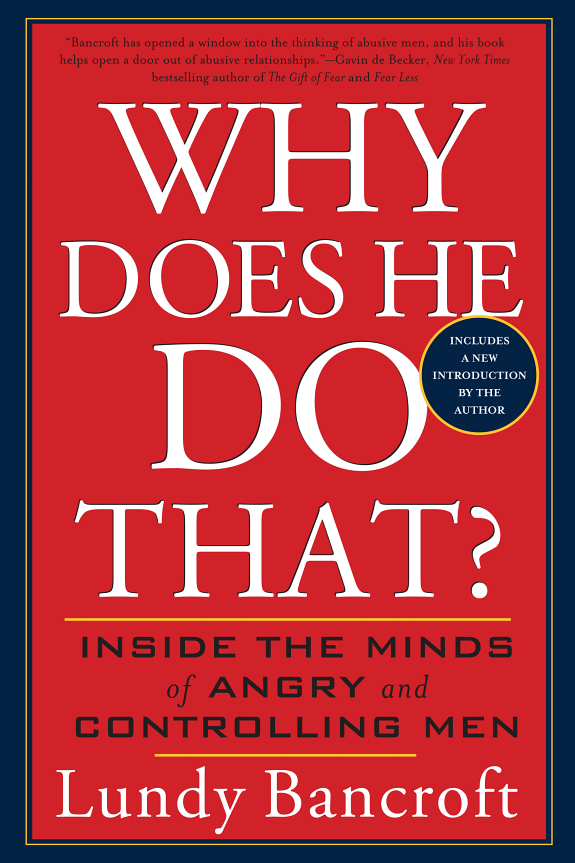
Why Does He Do That? Inside the Minds of Angry and Controlling Men
2. Why Does He Do That? Inside the Minds of Angry and Controlling Men by Lundy Bancroft
Lundy Bancroft spent years working directly with abusive men in counseling programs, and that experience gives this book a credibility that is difficult to argue with. He is not theorizing from the outside. He is reporting from the room where these conversations actually happened. The result is a book that cuts through a lot of the mythology surrounding why controlling men behave the way they do, and the answer Bancroft arrives at is less comfortable but more honest than most people expect.
The core argument of the book is that abusive behavior is not primarily about anger, mental illness, or a troubled childhood. It is about entitlement and the belief that a man has the right to control his partner. This reframing matters enormously because it shifts the focus away from fixing the abuser and toward understanding the dynamic clearly. Bancroft spends considerable time mapping out the different types of controlling men, from the Demand Man to the Water Torturer, and readers often find that one of these portraits fits someone in their life with unsettling precision.
It is worth noting that the book is specifically focused on male abusers in heterosexual relationships. That is not a flaw so much as a scope limitation, and Bancroft is upfront about it. Readers looking for insight into female abusers, same-sex relationship dynamics, or narcissistic behavior outside of intimate partnerships will need to look elsewhere. But within its stated focus, this book is extraordinarily thorough and honest about a subject that too many people still treat as complicated when it really is not.
“An abuser is not out of control. He is making choices, and he is very good at choosing the right moments to make them.”
This is perfect for women in or recently out of controlling relationships who want a clear-eyed, no-nonsense explanation of why their partner behaved the way he did, without excuses dressed up as explanations.
The Covert Passive-Aggressive Narcissist: Recognizing the Traits and Finding Healing After Hidden Emotional and Psychological Abuse
3. The Covert Passive-Aggressive Narcissist: Recognizing the Traits and Finding Healing After Hidden Emotional and Psychological Abuse by Debbie Mirza
Covert narcissism is, in some ways, harder to identify than the loud, grandiose kind because the person causing harm often appears humble, kind, and even victimized themselves. Debbie Mirza focuses her entire book on this specific type, and in doing so she fills a gap that many other books on narcissism leave wide open. Readers who have spent years thinking they were dealing with a sensitive, misunderstood person often find this book the most validating thing they have ever read.
Mirza writes with a gentle but unflinching clarity. She describes the subtle tactics that covert narcissists use, the quiet sulking, the indirect criticism, the way they position themselves as perpetually wounded while leaving their partners feeling perpetually guilty. There is also a strong emphasis on the healing journey, and Mirza brings genuine compassion to that section of the book. She acknowledges how disorienting it is to grieve someone who hurt you, especially when that person never looked like the villain from the outside.
The writing style is conversational and accessible rather than clinical, which will suit some readers and feel a little light to others. Those hoping for a deep psychological framework or citations from peer-reviewed research will not find that here. What they will find is a book written by someone who clearly understands this experience from the inside, and who has helped a great many people feel seen by putting it into words. That is not nothing. In fact, for many readers, it is exactly everything.
“The confusion you feel is not weakness. It is the natural result of being in a relationship where reality was quietly and consistently rewritten around you.”
This is perfect for people who have sensed that something was deeply wrong in a relationship but could never quite point to obvious cruelty or dramatic incidents, and who need help naming the quiet, insidious patterns they lived with.
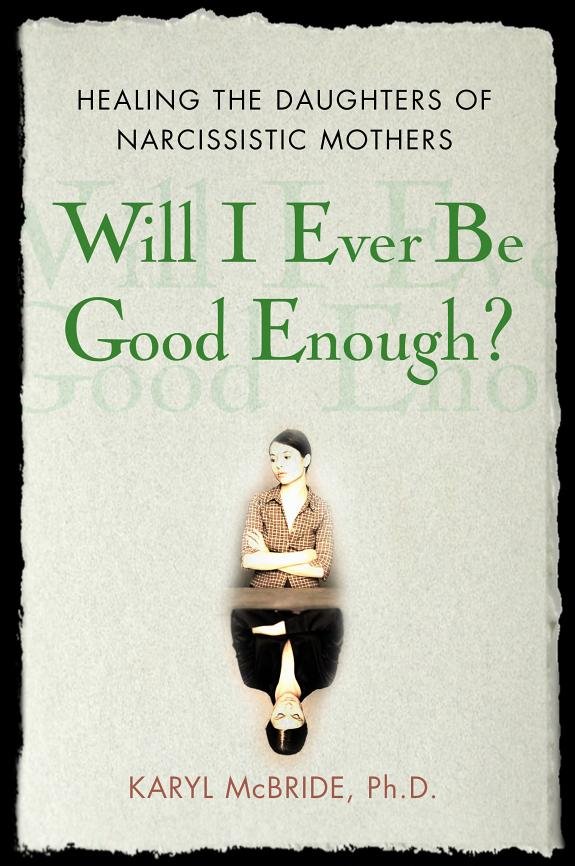
Will I Ever Be Good Enough? Healing the Daughters of Narcissistic Mothers
4. Will I Ever Be Good Enough? Healing the Daughters of Narcissistic Mothers by Karyl McBride
Karyl McBride is both a therapist and a daughter of a narcissistic mother, and she brings both of those perspectives to bear in a book that many women describe as the first time they felt truly understood. The mother-daughter relationship carries its own particular weight in this conversation because the harm here is foundational. It does not begin in adulthood when you are theoretically capable of leaving. It begins before you even have language for what is happening to you.
McBride walks through the ways narcissistic mothering shapes a daughter’s sense of self, her relationships, her ability to trust her own perceptions, and her deeply rooted belief that she is somehow fundamentally not enough. The book is structured to move from recognition into recovery, and McBride offers practical exercises throughout that help readers begin to untangle the messages they absorbed in childhood from the truth about who they actually are. It is careful, methodical work, and the book respects the pace that kind of healing requires.
It is worth saying clearly that this book is written specifically for daughters, not sons, and while some of the dynamics will resonate across genders, men looking for similar guidance may find the framing less directly applicable. The book also focuses heavily on mothers, so readers dealing with narcissistic fathers as the primary figure in their childhood may find some sections less relevant. Within its focus, though, this is a deeply thoughtful and thoroughly researched resource that takes the subject with exactly the seriousness it deserves.
“When your mother could not mirror you back to yourself with love and accuracy, you learned to see yourself through a cracked glass. The work of healing is learning to look somewhere else.”
This is perfect for adult women who grew up feeling invisible, criticized, or like they were in constant competition with their own mother, and who are ready to understand those patterns and begin the long work of healing from them.
The Wizard of Oz and Other Narcissists: Coping with the One-Way Relationship in Work, Love, and Family
5. The Wizard of Oz and Other Narcissists: Coping with the One-Way Relationship in Work, Love, and Family by Eleanor D. Payson
Eleanor Payson is a psychotherapist, and this book has a slightly more clinical feel than some of the others on this list, though it never becomes dry or inaccessible. The central metaphor is a good one: the narcissist, like the Wizard of Oz, is a figure who projects an enormous and intimidating image while hiding something much smaller and more fragile behind the curtain. It is a frame that helps readers understand both the grandiosity they encounter and the profound insecurity that drives it, without excusing the behavior that insecurity produces.
One of the things that distinguishes this book is its scope. Payson covers narcissistic relationships across multiple contexts, including romantic partnerships, family systems, and workplace dynamics. That breadth makes it useful for people who are not just trying to understand a single relationship but who are beginning to recognize a pattern across different areas of their life. The book also spends meaningful time on the question of why certain people are drawn to narcissists, which is handled with care and without blame.
The writing is measured and thoughtful, which is a strength but can also mean the book moves more slowly than something like MacKenzie’s. Readers looking for urgent, emotionally immediate writing may find the pacing a little deliberate. But for someone who is past the acute phase of crisis and wants to develop a deeper understanding of narcissistic personality dynamics, Payson’s careful approach is genuinely valuable. This is a book to sit with rather than race through.
“Understanding the narcissist’s inner world does not mean accepting their behavior. It means you stop taking the performance personally, and that changes everything.”
This is perfect for readers who want a thoughtful, psychologically grounded exploration of narcissism across multiple life contexts, particularly those who are also curious about their own patterns and why certain relationships have repeated themselves.
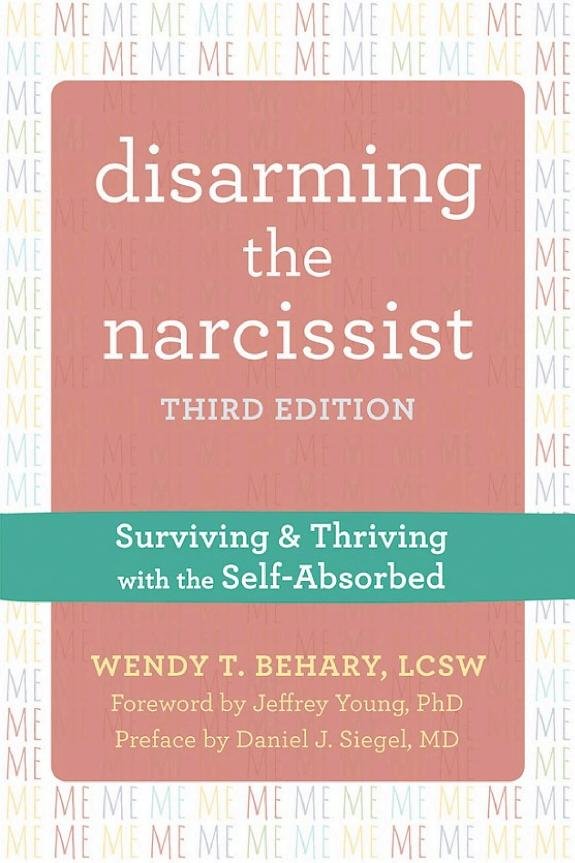
Disarming the Narcissist: Surviving and Thriving with the Self-Absorbed
6. Disarming the Narcissist: Surviving and Thriving with the Self-Absorbed by Wendy T. Behary
Most books on narcissistic relationships are primarily about understanding what happened to you and finding a way out. Wendy Behary’s book takes a different angle: what do you do when leaving is not an option, or not yet an option? The narcissist in question might be a parent you are still in contact with, a co-parent you share children with, a sibling at family gatherings, or a boss you cannot afford to quit. Behary, a therapist who specializes in treating narcissistic personalities, offers practical strategies for navigating those ongoing relationships with more sanity and less damage to yourself.
The approach is rooted in schema therapy, a cognitive framework that helps explain why narcissists behave the way they do and how to communicate with them in ways that are more likely to get results. Behary is not asking readers to excuse or enable narcissistic behavior. She is asking them to understand it well enough to stop engaging with it in ways that make things worse. That is a subtle but important distinction, and she draws it clearly throughout the book.
This book is not for everyone. Readers who are in the early stages of recognizing abuse and working up the courage to leave may find the focus on staying and managing counterproductive to where they are in their process. The strategies here require a certain emotional stability and distance that is not always available to someone who is still in the thick of it. But for readers who have done some of the foundational healing work and now need practical tools for unavoidable ongoing contact, this book is one of the most genuinely useful things available on the subject. It is also, quietly, one of the more compassionate, because Behary never lets you forget that you matter in this equation too.
“You cannot change the narcissist. But you can change how you respond, and that shift, small as it sounds, can transform the entire dynamic of an interaction.”
This is perfect for people who cannot simply cut a narcissist out of their life and need concrete, research-backed communication strategies for managing ongoing contact while protecting their own wellbeing.
Reading about narcissistic relationships is not always a comfortable experience. Sometimes you pick up one of these books hoping to understand someone else and end up understanding yourself in ways you were not entirely prepared for. That is okay. That is actually part of how this works.
None of these books will do the healing for you, and none of them should be treated as a substitute for professional support if you are dealing with something serious. But they can give you language, context, and the quiet but significant relief of knowing that what you experienced has a name, that other people have lived it, and that there is a way through. Start with whichever book speaks most directly to your situation. There is no wrong place to begin.