5 Books Every Woman With Anxiety Should Read
Anxiety has a way of making you feel like you are the only person who has ever lain awake at 2 a.m. cataloguing every awkward thing you said in 2014. You are not. And while no book is going to fix everything, the right one at the right moment can genuinely shift something inside you. Not in a dramatic, overnight way, but in the quiet, slow way that actually lasts.
The five books on this list were chosen because they each offer something different. Some are practical and workbook-style, some are deeply personal, and one was written nearly sixty years ago and still holds up better than most modern self-help titles. What they share is honesty. None of them pretend that managing anxiety is simple or that a good attitude is all you need. They meet you where you are, which is exactly what you need when your nervous system is already doing too much.
The Anxiety and Phobia Workbook
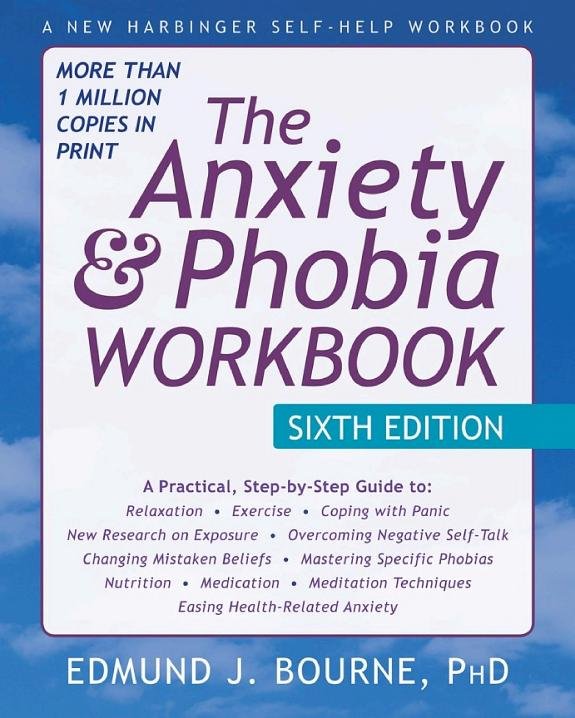
1. The Anxiety and Phobia Workbook by Edmund J. Bourne
Edmund Bourne has been revising and updating this workbook since 1990, and the fact that it keeps selling says something real about its usefulness. It is not a breezy read. It is structured, thorough, and occasionally a little dry, which is fine because it was never trying to be a beach read. Bourne is a clinical psychologist who writes with the careful precision of someone who has spent decades actually helping anxious people, not just writing about them.
The central ideas here cover a wide range of anxiety-related experiences, from generalized worry to panic disorder to specific phobias. Bourne walks you through relaxation techniques, cognitive restructuring, lifestyle changes, and exposure therapy principles in a way that is accessible without being condescending. The workbook format means you are not just reading, you are doing something, filling in exercises, tracking patterns, identifying triggers. For people who feel better when they have a concrete task in front of them, that structure is genuinely steadying.
The author’s voice is warm but clinical, which suits the material. He is not trying to be your friend or your therapist. He is trying to give you tools, and he does. The book works best when used alongside professional support, and Bourne himself says as much, which is a mark of integrity you do not always find in the self-help genre.
This is one of the few anxiety books that respects your intelligence while also acknowledging that knowing something intellectually and actually doing it are two very different problems.
This is perfect for women who want a structured, evidence-based approach to understanding their anxiety and are ready to do some genuine work on the page. It is not ideal for readers looking for narrative or emotional storytelling, or for anyone who finds workbook formats more stressful than soothing.
Untamed
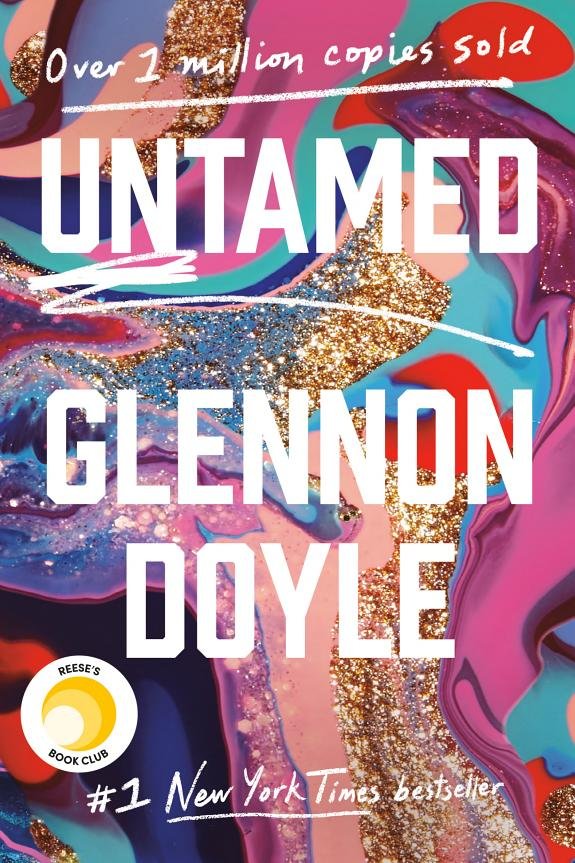
2. Untamed by Glennon Doyle
Glennon Doyle did not set out to write a book about anxiety. She set out to write about her own life, specifically the moment she decided to stop performing the version of herself that everyone expected and start paying attention to what she actually felt. The result is a memoir that reads like a long, honest conversation with a friend who has been through it and is not going to sugarcoat anything for you.
The central idea is that much of women’s anxiety comes from a lifetime of being trained to override their own instincts. Doyle calls this the conditioned self, the one that smiles and shrinks and keeps the peace and then wonders why it feels so exhausted and afraid. Her argument is not that you can think your way out of anxiety but that you can begin to trust yourself in small moments, and that this trust, built slowly, changes something fundamental. It is not a clinical framework. It is a personal one, and it lands differently because of that.
Her voice is conversational, funny in places, and unsparing about her own failures and contradictions. She is not presenting herself as someone who has it figured out. She is presenting herself as someone who got tired of pretending, and that honesty is what makes the book resonate so widely. Some of her conclusions are sweeping and some readers will push back on them, which is actually a sign of a book worth reading.
Doyle’s contribution is not a technique or a framework. It is permission, and for a lot of women, that turns out to be the thing they needed most.
This is perfect for women whose anxiety is tangled up with people-pleasing, identity, or the feeling of living a life that does not quite fit. It is not the right book for readers who want clinical tools or structured exercises, or for anyone who finds personal memoir frustrating when the stakes feel this high.
Hope and Help for Your Nerves
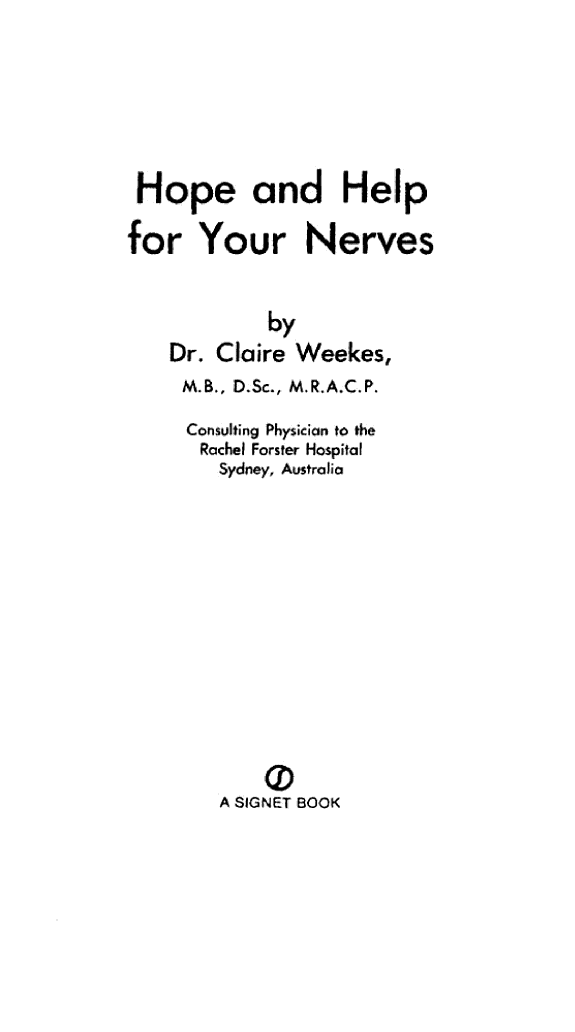
3. Hope and Help for Your Nerves by Claire Weekes
Claire Weekes was an Australian physician who published this book in 1969, and the fact that it is still in print and still being recommended by therapists tells you almost everything you need to know. She understood anxiety at a physiological and psychological level before the modern vocabulary for it had even been established, and she wrote about it with a clarity and compassion that most contemporary books cannot match.
Her central insight is deceptively simple: the reason anxiety persists is not the initial fear but the fear of the fear. She called it second fear, the panic you feel about your own symptoms, the alarm you experience when your heart races or your legs go weak, which then feeds the cycle and keeps it spinning. Her approach involves what she called acceptance, not resignation, but a genuine willingness to let the sensations be there without fighting them. It sounds counterintuitive. It works.
Weekes writes with the directness of a doctor who genuinely wants her patients to get better and has no patience for vague reassurances. She is specific, practical, and kind without being soft. The book is short by modern standards and reads quickly, which is a mercy when you are anxious and struggling to concentrate. Some of the cultural references are dated, and the gendered framing occasionally shows its age, but the core of what she is teaching has not aged at all.
Weekes figured out something in 1969 that a lot of people are still paying good money to learn in therapy today. That is not a criticism of therapy. It is a compliment to her.
This is perfect for women dealing with panic attacks, nervous exhaustion, or the feeling that their anxiety has taken on a life of its own. It is less suited to readers looking for modern neuroscience framing or those whose anxiety is primarily rooted in external circumstances rather than internal nervous system patterns.
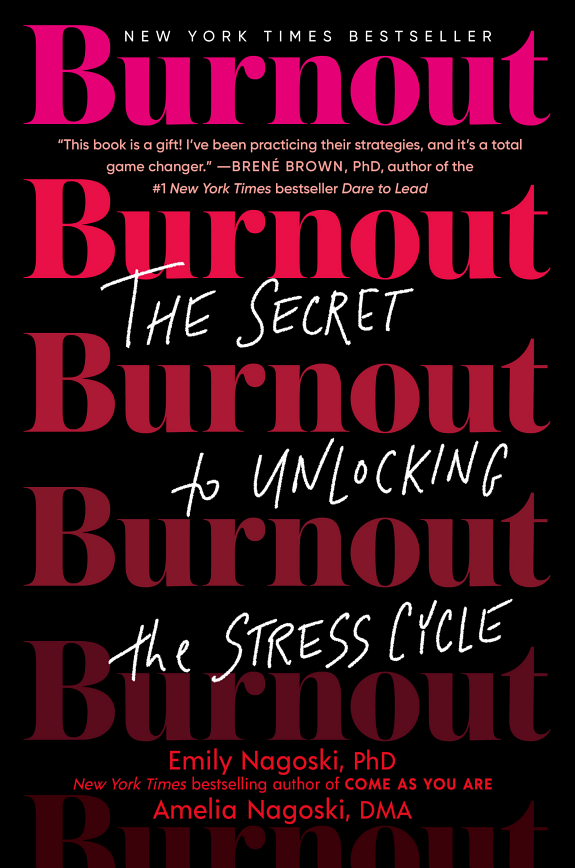
Burnout: The Secret to Unlocking the Stress Cycle
4. Burnout: The Secret to Unlocking the Stress Cycle by Emily Nagoski and Amelia Nagoski
Emily Nagoski is a sex educator and researcher, and her sister Amelia is a conductor and choral director, which makes them an unusual pair to write a book about stress. It turns out they are exactly the right pair. Their different backgrounds give the book a texture that most wellness titles lack, part rigorous science, part lived experience, part genuine humor. Yes, there are jokes. Good ones. Reading a chapter about the stress response cycle has rarely been this enjoyable.
The central argument is that stress and the stressor are two different things, and most of us are so focused on dealing with the stressor that we forget to complete the stress cycle in our bodies. Anxiety, in their framing, is often what happens when that cycle gets stuck. The book draws on solid research to explain why women in particular are more likely to experience chronic stress and burnout, and it does so without being preachy or making you feel like the problem is society and therefore unfixable. They give you actual things to do: physical movement, creative expression, connection, rest.
The Nagoski sisters write together in a voice that feels genuinely collaborative, warm and occasionally self-deprecating. They are not selling a lifestyle. They are sharing what they know and what has helped them, and that honesty keeps the book grounded. Some readers will want more depth on the clinical side, and the book does lean toward the accessible end of the spectrum. That is a feature, not a flaw, for most people picking it up.
The stress cycle concept alone is worth the price of the book. Once you understand it, you will never look at a long walk or a good cry the same way again.
This is perfect for women who feel chronically exhausted, overwhelmed by responsibilities, or like they are running on empty no matter how much they rest. It is not the right fit for readers looking for deep clinical theory or those who prefer a more somber, serious tone in their nonfiction.
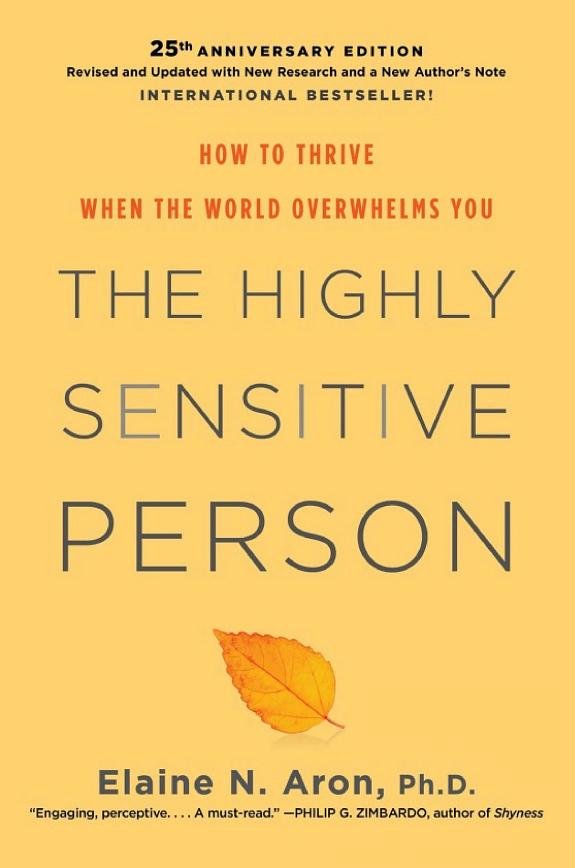
The Highly Sensitive Person: How to Thrive When the World Overwhelms You
5. The Highly Sensitive Person: How to Thrive When the World Overwhelms You by Elaine N. Aron
Elaine Aron introduced the concept of high sensitivity as a legitimate personality trait in the mid-1990s, and it quietly changed the way a lot of people understood themselves. The core idea is that roughly fifteen to twenty percent of the population processes sensory and emotional information more deeply than average. This is not a disorder. It is not a weakness. It is a trait with genuine advantages and genuine costs, and Aron writes about both with care.
For women with anxiety, this book can be something of a revelation, particularly if you have spent years being told you are too sensitive or that you feel things too deeply. Aron does not pathologize sensitivity. She contextualizes it, explaining why highly sensitive people are more prone to overstimulation and anxiety, and what specific strategies help. Her writing is measured and thoughtful, the voice of a researcher who is also highly sensitive herself and has done a considerable amount of her own work on the subject.
The book includes self-assessment tools, practical guidance, and chapters on relationships, work, and childhood that feel genuinely relevant rather than padded. Some of the advice is fairly general, and readers who are not highly sensitive may find the framework less applicable to their experience. But for those who recognize themselves in the description, the effect of reading it can be something close to relief. Finally, a framework that explains why the grocery store on a Saturday feels like a minor emergency.
Aron’s most valuable contribution is the reframe. Sensitivity is not something to be fixed. It is something to be understood, and understanding it changes how you manage it entirely.
This is perfect for women who have always felt more affected by noise, crowds, criticism, or emotional intensity than those around them, and who suspect their anxiety and their sensitivity are connected. It is less useful for readers whose anxiety has different roots, or for anyone who finds trait-based frameworks too broad to be actionable.
None of these books will make anxiety disappear. That is worth saying plainly. But each of them offers something real, whether that is a better understanding of what is happening in your nervous system, a framework for why you feel what you feel, or simply the comfort of knowing that someone else has been here and found a way through. Sometimes that is enough to make the next step feel possible.
If you are not sure where to start, let your instinct guide you. The book that catches your attention is probably the one your nervous system is asking for. Trust that. And if one of them does not resonate, that is fine too. Reading is not a prescription, and you are allowed to put something down without guilt. That, come to think of it, is not bad advice for managing anxiety in general.