

5 Books That Genuinely Improve Social Skills
Most of us were never formally taught how to talk to people. We just sort of figured it out, or didn’t, and then spent years wondering why certain conversations felt so awkward while watching other people breeze through rooms full of strangers like they were born doing it. The good news is that social skills are not some fixed trait you either have or don’t. They are learnable. Genuinely, practically learnable.
The five books below cover a wide range of social territory, from first impressions and small talk to high-stakes negotiations and the quiet art of charisma. Some are older classics that have held up remarkably well. Others are newer and grounded in research. None of them will turn you into a slick, manipulative people-pleaser, and the best ones are honest about that distinction. What they will do is give you real tools, real frameworks, and a better understanding of why human interaction works the way it does.
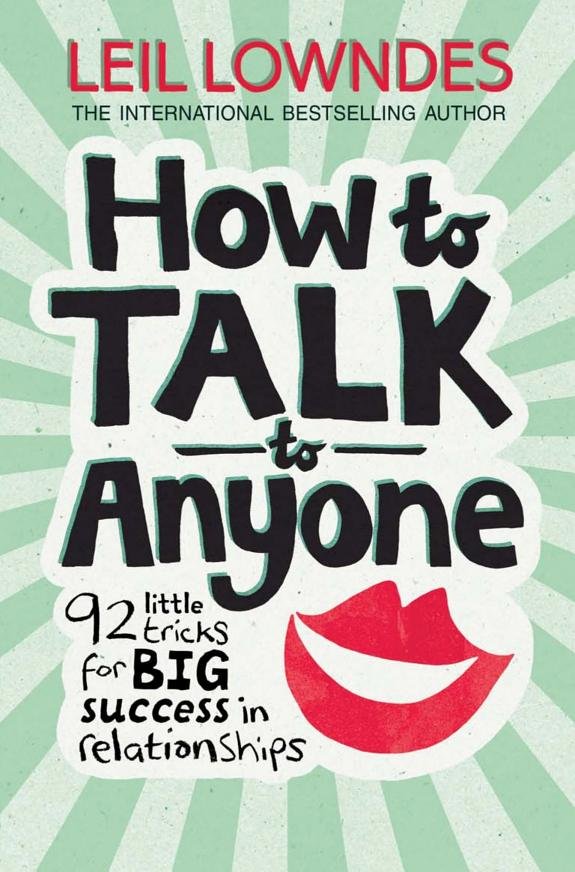
How to Talk to Anyone: 92 Little Tricks for Big Success in Relationships
1. How to Talk to Anyone: 92 Little Tricks for Big Success in Relationships by Leil Lowndes
Leil Lowndes writes the way a sharp, slightly theatrical aunt might talk to you over dinner, full of enthusiasm, specific advice, and a confident belief that she knows exactly what you need to hear. The book delivers exactly what the title promises: 92 concrete techniques for navigating social situations, from the moment you walk into a room to the way you handle phone calls and compliments. The writing is breezy and fast, which means you can move through it quickly and dog-ear the parts that feel most relevant to your own stumbling blocks.
The techniques themselves range from the immediately useful to the slightly theatrical. Some, like making strong eye contact and learning to really listen before responding, are timeless. Others, like specific scripts for working a cocktail party, will suit certain personalities more than others. Lowndes is not subtle, and she is not trying to be. She wants results, and she wants them to show up the next time you walk into a room full of strangers. For readers who like their advice direct and actionable, that approach is genuinely refreshing.
Where the book occasionally stumbles is in tone. A few of the techniques edge toward performance rather than genuine connection, and some readers find that a little uncomfortable. If you are someone who values authenticity above all else in social interaction, you might raise an eyebrow at some of the more calculated-sounding tricks. But taken as a toolkit rather than a script, the book has a lot to offer, especially for people who feel genuinely lost in unstructured social settings.
“The biggest mistake people make in conversation is trying to think of something interesting to say. The secret is to make the other person feel interesting.”
This is perfect for people who want practical, ready-to-use techniques for social situations and are not bothered by advice that leans more toward strategy than introspection. It is not the right fit for readers looking for deep psychological theory or a more nuanced take on authentic connection.
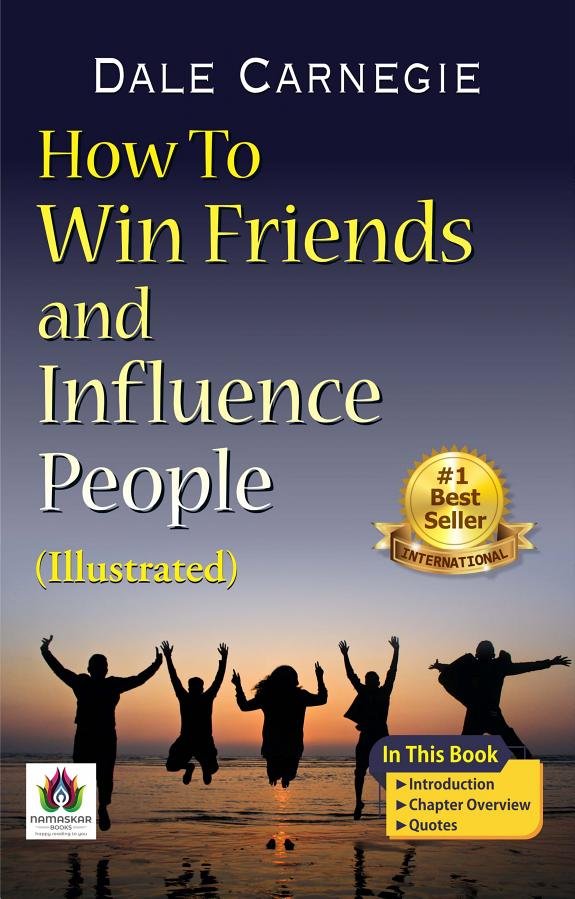
How to Win Friends and Influence People
2. How to Win Friends and Influence People by Dale Carnegie
Published in 1936, this book has sold tens of millions of copies, and the fact that it still appears on reading lists nearly a century later says something worth paying attention to. Dale Carnegie’s central argument is deceptively simple: people respond well to genuine interest, sincere appreciation, and being made to feel understood. The writing is warm and anecdotal, built around real stories that Carnegie collected from his lectures, and it reads more like a conversation than a textbook.
The principles Carnegie outlines, things like remembering names, letting other people talk about themselves, and avoiding arguments when possible, sound almost too obvious when you list them out. But the book’s real value is in the way it forces you to examine how rarely most of us actually practice these things. It is one thing to know you should listen more carefully. It is another to sit with Carnegie’s examples and realize how often you have been doing the opposite without noticing.
Some readers bristle at the word “influence” in the title, worried the book will teach manipulation. It really doesn’t. Carnegie is consistent throughout about the difference between genuine interest in other people and hollow flattery. He is not asking you to fake anything. He is asking you to actually pay attention. That said, the book’s age does show in places. Some of the examples feel dated, the gender dynamics are very much of their era, and a modern reader will occasionally need to translate the context. None of that undermines the core ideas, but it is worth knowing going in.
“You can make more friends in two months by becoming interested in other people than you can in two years by trying to get other people interested in you.”
This is perfect for readers who want a foundational, time-tested framework for building genuine relationships in both personal and professional life. It is not ideal for anyone who needs cutting-edge research or finds older writing styles frustrating.
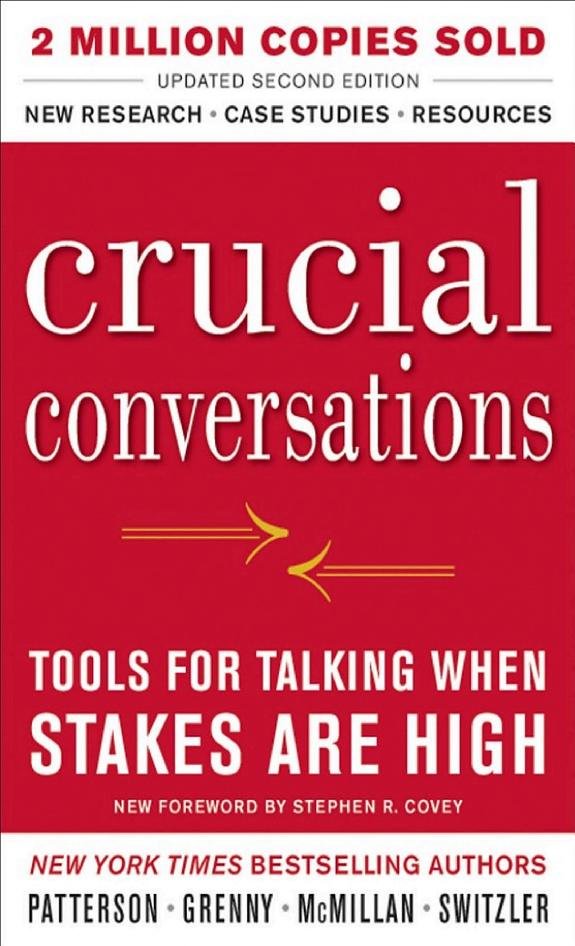
Crucial Conversations: Tools for Talking When Stakes Are High
3. Crucial Conversations: Tools for Talking When Stakes Are High by Kerry Patterson, Joseph Grenny, Ron McMillan, Al Switzler
Most books about social skills focus on the easy stuff, small talk, first impressions, making people like you. Crucial Conversations goes somewhere harder. It is specifically about the conversations we tend to either avoid entirely or handle badly: the performance review that goes sideways, the relationship disagreement that turns into a fight, the moment when something important needs to be said and the stakes feel too high to say it clearly. Four authors collaborated on this one, which occasionally gives the prose a slightly committee-written feel, but the content more than compensates.
The central idea is that when conversations become high-stakes, most people either go silent or go aggressive, and neither response gets anyone where they want to go. The book offers a structured approach to staying in dialogue, keeping the conversation safe for both parties, and actually saying what needs to be said without blowing everything up. The concept of a “shared pool of meaning” is one of the more useful mental models in the whole genre: the idea that good conversations happen when both people feel safe enough to contribute their honest perspective to a shared understanding.
The book is thorough and well-organized, and the examples are drawn from workplaces, families, and relationships in ways that feel recognizable. If anything, it can occasionally feel a little clinical, like you are learning a process rather than developing intuition. But for anyone who has ever walked away from an important conversation wishing they had handled it differently, and who hasn’t, the frameworks here are genuinely useful. This is a book that rewards re-reading when you are facing something specific.
“The single biggest problem in communication is the illusion that it has taken place.” The authors would add: especially when the topic actually mattered.
This is perfect for managers, partners, parents, or anyone who regularly faces difficult conversations and wants a concrete method for navigating them without damage. It is less suited to readers looking for help with casual social interaction or general confidence-building.
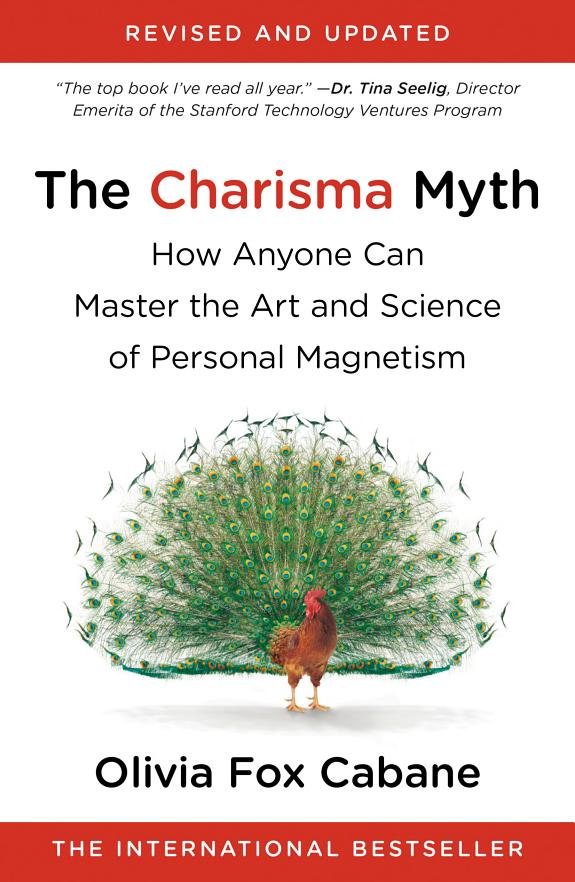
The Charisma Myth: How Anyone Can Master the Art and Science of Personal Magnetism
4. The Charisma Myth: How Anyone Can Master the Art and Science of Personal Magnetism by Olivia Fox Cabane
The title makes a claim that the book actually backs up, which is not always a given in this genre. Olivia Fox Cabane argues that charisma is not a personality trait you are born with. It is a set of behaviors, specifically the combination of presence, power, and warmth, that can be learned and practiced. She draws on social psychology research, interviews with executives and performers, and her own work as a coach to build a case that is more rigorous than you might expect from a book with “magnetism” in the subtitle.
What sets this book apart from others in the social skills space is its attention to the internal side of charisma. Cabane spends considerable time on things like managing self-doubt, dealing with discomfort in social situations, and the way your internal state affects how other people perceive you. The idea that you can be technically doing all the right things, good eye contact, open body language, attentive listening, and still come across as flat or inauthentic if your internal experience is misaligned is a genuinely useful insight. It explains a lot about why social skills advice sometimes doesn’t translate from the page to real life.
The book includes practical exercises throughout, some of which feel a bit unusual at first, visualization techniques, body scans before high-stakes interactions, but they are grounded in research and the reasoning behind each one is explained clearly. Cabane is a good writer with a dry sense of humor, and the book moves at a comfortable pace. It is not a quick fix, but it is one of the more honest accounts of what actually goes into becoming someone people want to be around.
“Charisma has nothing to do with energy or enthusiasm. It comes from a deep sense of presence, and presence is something you can practice.”
This is perfect for people who feel socially competent on paper but somehow still don’t land the way they want to, and for anyone curious about the psychology behind first impressions. It is probably not the right starting point for someone who just wants simple tips without the underlying theory.
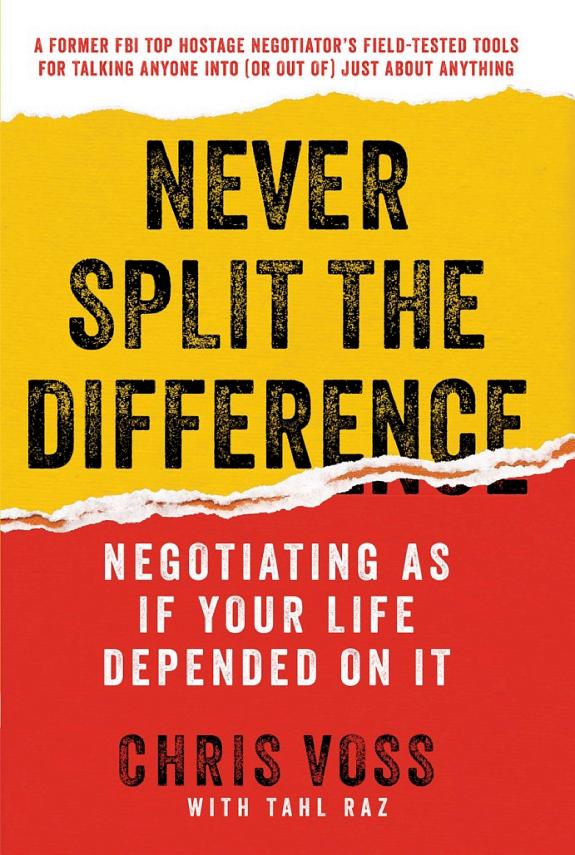
Never Split the Difference: Negotiating As If Your Life Depended On It
5. Never Split the Difference: Negotiating As If Your Life Depended On It by Chris Voss
Chris Voss spent decades as an FBI hostage negotiator, which means his experience with high-pressure human communication is, to put it mildly, more intense than most authors in this space. Never Split the Difference is technically a negotiation book, but its lessons about listening, empathy, and understanding how people actually make decisions under pressure make it one of the more useful books you can read about human interaction in general. The writing has real personality, which helps, and Voss tells his stories well.
The core of the book is a set of techniques built around what Voss calls tactical empathy, the practice of genuinely understanding another person’s perspective and making them feel heard before trying to move them in any direction. The famous “mirroring” technique, where you repeat the last few words someone said to keep them talking, sounds almost absurdly simple until you try it and discover how well it actually works. Voss is also good on the concept of “no” as a useful part of negotiation rather than a dead end, which runs counter to a lot of conventional advice and is more honest about how people actually think.
Where this book occasionally oversells itself is in the framing. Not every conversation is a hostage negotiation, and some of the more dramatic framing can make the techniques feel higher-stakes than they need to be for everyday use. But the underlying ideas about listening, validation, and the difference between a deal that feels forced and one that feels chosen are genuinely applicable far beyond salary negotiations or car buying. If you have ever felt like you were talking at someone rather than with them, this book has something useful to say about why.
“The most dangerous negotiation is the one you don’t know you’re in.” Which, when you think about it, describes most conversations that go wrong.
This is perfect for anyone who wants to become a better listener, handle disagreements more effectively, or simply understand why some conversations feel collaborative and others feel like a tug of war. It is less suited to readers who are put off by business-world framing or who want a gentler, more relationship-focused approach.
Social skills are one of those things that feel both deeply personal and endlessly improvable, which makes them a genuinely interesting subject to read about. The five books above cover different corners of the same territory: the surface-level stuff like body language and conversation starters, the harder stuff like difficult conversations and genuine presence, and the strategic stuff like negotiation and influence. None of them are the final word on any of it, and you will probably find yourself disagreeing with parts of each one. That is fine. Good reading works that way.
If you are just starting out, Carnegie or Lowndes will give you accessible entry points with immediate takeaways. If you are further along and want something that goes deeper, Cabane and Voss reward more careful reading. And if there is a specific hard conversation you have been avoiding, Crucial Conversations might be the most directly useful book on this list. Start wherever feels most relevant to where you actually are right now.