

5 Books About Secure Attachment Worth Reading
Most of us figured out relationships the hard way. We repeated patterns we did not fully understand, clung too tightly or kept everyone at arm’s length, and wondered why connection felt so complicated. Attachment theory, which has been around since the mid-twentieth century, offers a framework for understanding why we relate the way we do. And the good news, according to decades of research, is that our patterns are not fixed. Security can be learned.
The books on this list approach that idea from different angles. Some are written for couples, some for parents, some for individuals quietly working through anxious tendencies on their own. None of them promise overnight transformation, and none of them should. What they offer instead is something more useful: clarity about why you behave the way you do, and practical tools for doing things differently. Whether you are brand new to attachment theory or have been reading about it for years, there is something here worth sitting with.
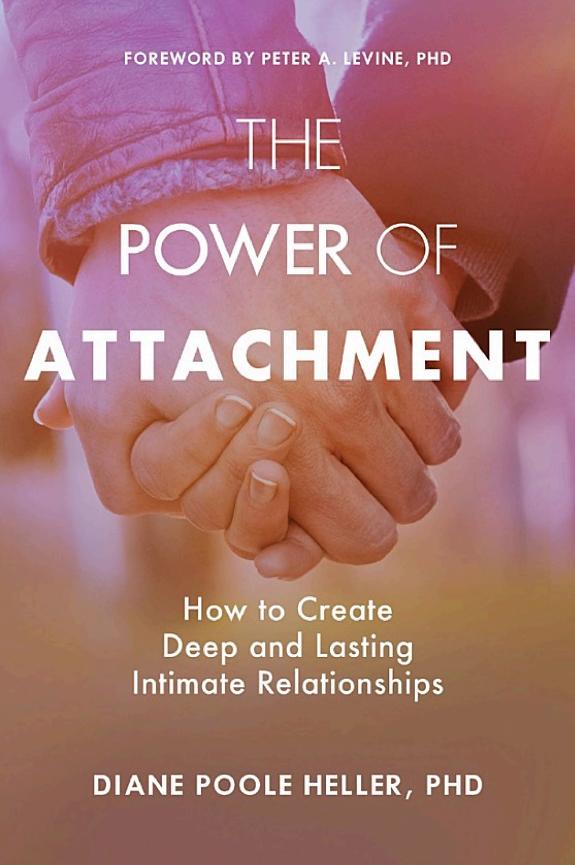
The Power of Attachment: How to Create Deep and Lasting Intimate Relationships
1. The Power of Attachment: How to Create Deep and Lasting Intimate Relationships by Diane Poole Heller
Diane Poole Heller has spent decades working at the intersection of trauma and attachment, and that background shows throughout this book. She does not simply describe the four attachment styles and leave you to figure out the rest. Instead, she walks through how early relational experiences shape the nervous system, why certain triggers feel so outsized in adult relationships, and how the body holds patterns that the thinking mind cannot always access on its own. It is one of the more somatic approaches to attachment you will find in the popular press.
Heller’s voice is warm and clinically grounded without being cold or academic. She draws on her own experiences as a therapist and, occasionally, as a person who has done her own work, which keeps the book from feeling like a lecture. There are exercises woven throughout, many of them body-based, designed to help readers move from intellectual understanding into something more felt. If you have ever read about attachment styles and thought, yes, I understand this conceptually, but nothing has actually changed, this book is aimed squarely at that gap.
The weakest moments come when the writing leans a little heavily into spiritual language, which will resonate with some readers and feel like a detour for others. It is also a book that rewards slow reading. Rushing through it to collect information misses the point entirely. The exercises only work if you actually do them, which, admittedly, is true of most workbooks and most therapy.
Understanding your attachment style is only the beginning. The real work is in feeling how those patterns live in your body and learning to respond rather than react.
This is perfect for readers who already have some familiarity with attachment theory and want to go deeper, particularly those who sense that their patterns are rooted in early or relational trauma and are open to body-based approaches to healing.
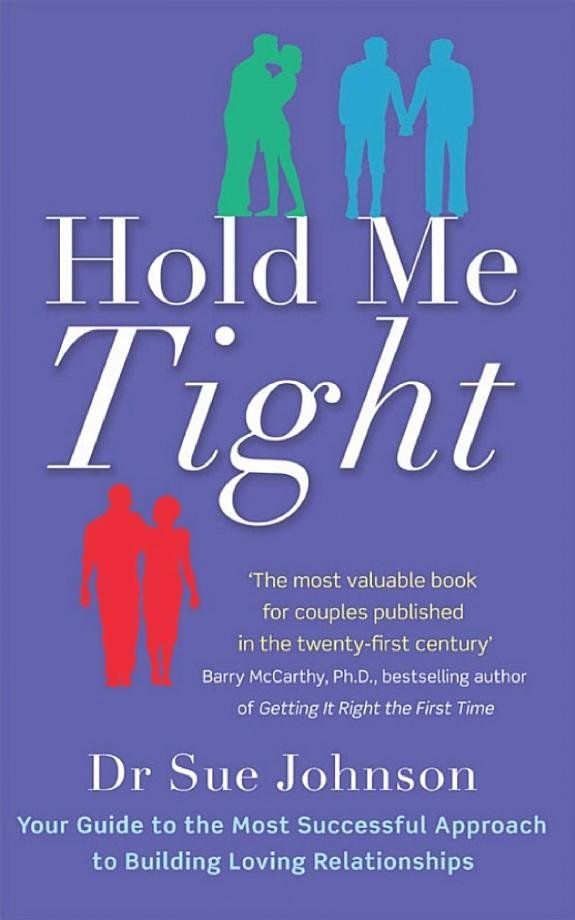
Hold Me Tight: Seven Conversations for a Lifetime of Love
2. Hold Me Tight: Seven Conversations for a Lifetime of Love by Sue Johnson
Sue Johnson is the creator of Emotionally Focused Therapy, which is one of the most well-researched couples therapy approaches in existence, and this book is her attempt to bring that work to a general audience. The central argument is straightforward: adult romantic love is an attachment bond, and most relationship conflict is really a protest against disconnection. When you understand that, the fights that seemed to be about dishes or money or who forgot to call start to look very different.
The book is structured around seven conversations that couples can work through together, each one designed to help partners identify their negative cycles, access the deeper emotions underneath their conflict, and rebuild a sense of safety and closeness. Johnson writes with real conviction, and her case studies, drawn from her clinical work, are specific enough to feel true without being sensationalized. You will probably recognize yourself and your partner in at least one of them, possibly more than you would like.
This is not a book you can read passively. It asks couples to be honest with each other about fear and longing, which is uncomfortable work. Readers who are in genuinely high-conflict relationships or dealing with unaddressed trauma may find that working through these conversations without a therapist present is difficult. And if your partner has no interest in reading it with you, a fair amount of its value is lost. Still, as an introduction to EFT and to thinking about love through an attachment lens, it is hard to beat.
Most arguments between partners are not really about the surface issue. They are about the deeper question: are you there for me when I need you?
This is perfect for couples who feel stuck in the same arguments and want a research-backed framework for understanding their dynamic, especially those willing to do the vulnerable work of reading and discussing it together.
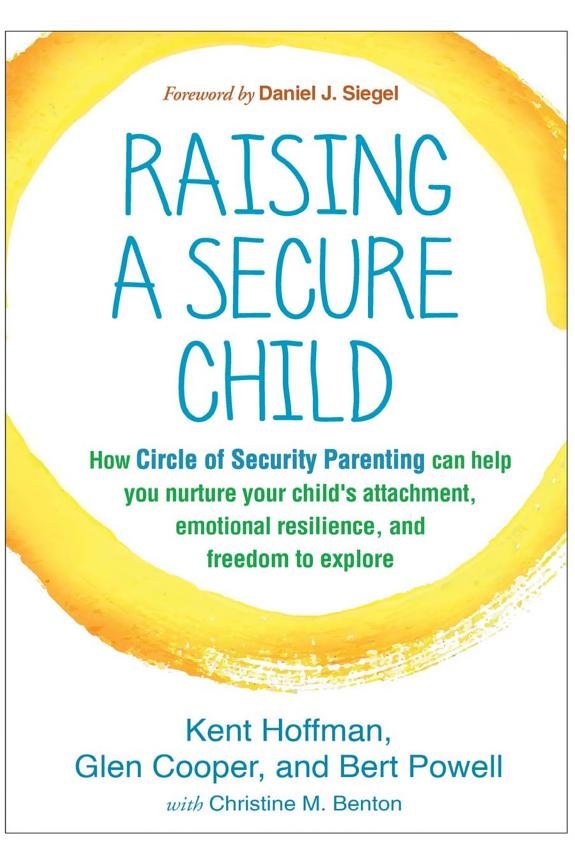
Raising a Secure Child: How Circle of Security Parenting Can Help You Nurture Your Child’s Attachment, Emotional Resilience, and Freedom to Explore
3. Raising a Secure Child: How Circle of Security Parenting Can Help You Nurture Your Child’s Attachment, Emotional Resilience, and Freedom to Explore by Kent Hoffman, Glen Cooper, and Bert Powell
The Circle of Security program has been used in clinical and community settings for years, and this book brings its core ideas to parents who may never set foot in a parenting group. The central image, a circle that represents both a child’s need to explore and their need to return to a safe haven, is simple enough to remember in the middle of a difficult moment, which is exactly the point. Parenting books that only make sense when you are calm and well-rested are not very useful.
Hoffman, Cooper, and Powell write with genuine compassion for parents, including the parts of parenting that are shaped by our own unresolved attachment histories. There is a chapter on what the authors call shark music, the internal alarm that goes off when a child’s emotional need triggers something uncomfortable in us, that is worth the price of the book on its own. It reframes parental reactivity not as failure but as information, which is a kinder and more useful way to approach the inevitable moments when you lose your patience.
The book is less useful as a discipline guide or a practical how-to for specific parenting challenges. It is more concerned with the relational quality underneath behavior than with strategies for managing behavior itself. Parents looking for concrete scripts or step-by-step approaches to tantrums may feel a little underserved. But parents who want to understand why connection matters and how to offer it more consistently will find this deeply useful.
Children do not need perfect parents. They need parents who are willing to reflect on their own patterns and repair the relationship when things go wrong.
This is perfect for parents of young children who want to understand attachment from the inside out, particularly those who are curious about how their own childhood experiences might be shaping the way they respond to their child’s emotions.
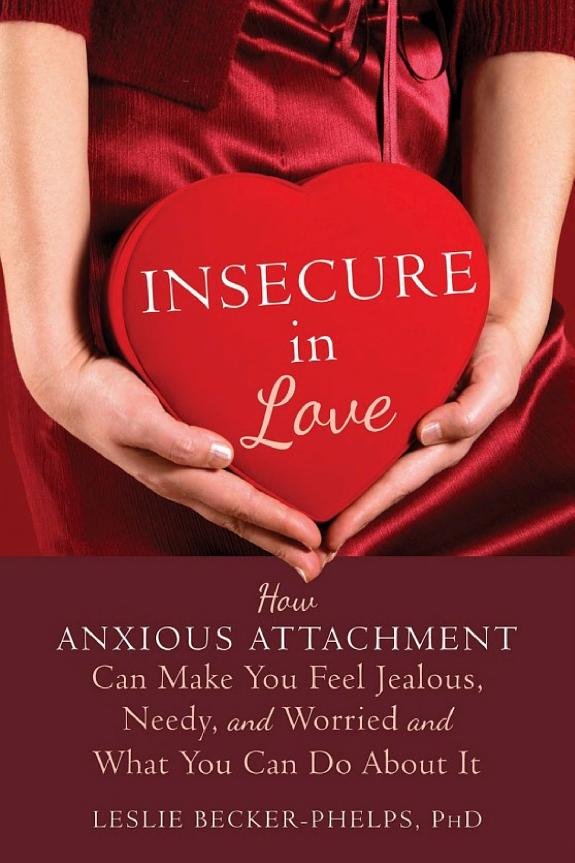
Insecure in Love: How Anxious Attachment Can Make You Feel Jealous, Needy, and Worried and What You Can Do About It
4. Insecure in Love: How Anxious Attachment Can Make You Feel Jealous, Needy, and Worried and What You Can Do About It by Leslie Becker-Phelps
Anxious attachment gets a lot of attention in popular psychology circles, often in ways that are more shaming than helpful. Becker-Phelps takes a different approach. She is a psychologist who writes with real empathy for people who experience the relentless self-doubt and fear of abandonment that characterizes anxious attachment, and she is careful throughout to frame these patterns as understandable responses to early experiences rather than character flaws to be overcome through willpower.
The book combines psychoeducation with cognitive and mindfulness-based exercises, drawing on Compassionate Self-Awareness as an organizing framework. That means it asks readers to observe their own thoughts and feelings with curiosity rather than judgment, which sounds simple and is actually quite difficult when you are in the middle of spiraling about a text that has gone unanswered for three hours. The exercises are practical and specific, and Becker-Phelps does a good job of explaining the reasoning behind each one rather than just handing you a worksheet.
The focus is narrowly on anxious attachment, which is both a strength and a limitation. If you identify more with avoidant or disorganized patterns, this book will offer some useful insight but is not really written for you. It also leans more toward individual self-work than toward relational repair, so readers hoping for guidance on how to communicate their needs to a partner may want to pair it with something like Johnson’s book. As a compassionate guide for anxiously attached individuals trying to understand themselves, though, it stands on its own.
The goal is not to stop caring about your relationships. It is to care without being consumed by fear of losing them.
This is perfect for individuals who recognize anxious attachment in themselves and want a compassionate, structured guide to understanding their patterns and building a more stable sense of self in relationships.
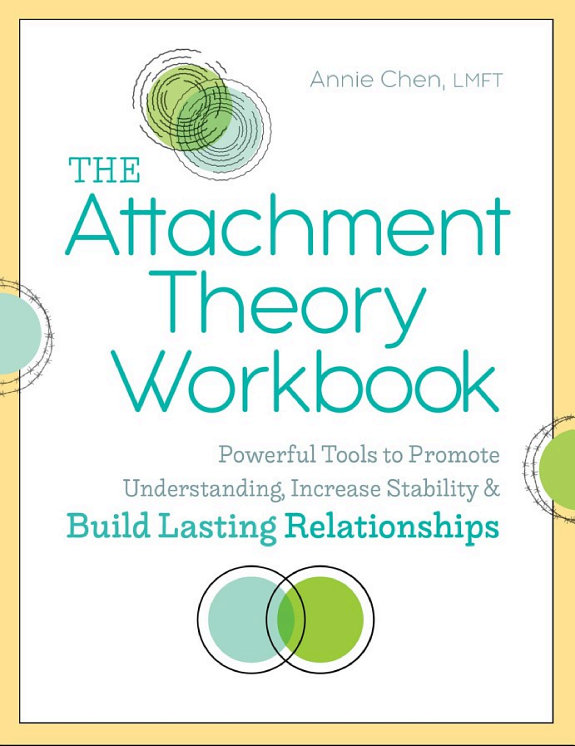
The Attachment Theory Workbook: Powerful Tools to Promote Understanding, Increase Stability, and Build Lasting Relationships
5. The Attachment Theory Workbook: Effective Tools to Promote Understanding, Increase Stability, and Build Lasting Relationships by Annie Chen
Annie Chen’s workbook is the most explicitly practical entry on this list, and that is its main appeal. Where some attachment books spend a lot of time building theoretical scaffolding before getting to the exercises, Chen moves fairly quickly into reflection prompts, self-assessments, and skill-building activities. The format suits readers who learn by doing, who find that writing things down helps them process in a way that reading alone does not.
The workbook covers all four attachment styles and includes material relevant to romantic relationships, friendships, and family dynamics, which gives it a broader scope than some of the more narrowly focused titles in this space. Chen’s writing is clear and accessible without being dumbed down, and she does a decent job of acknowledging the complexity of attachment without getting lost in it. The tone throughout is encouraging without veering into the kind of relentless positivity that starts to feel hollow after a while.
As with any workbook, you get out of it what you put in. Skimming the exercises and telling yourself you will come back to them is a very human thing to do, and also a way to get very little from the book. It is also worth noting that workbooks of this kind work best as supplements to therapy or other relational support rather than as standalone interventions for people dealing with significant trauma or relational distress. Chen does not overstate what self-directed work can accomplish, which is honest and appropriate.
Self-awareness is the starting point, not the destination. The real work is in bringing what you learn here into your actual relationships.
This is perfect for self-directed learners who want a structured, hands-on introduction to attachment theory and are looking for a workbook they can move through at their own pace, either independently or alongside therapy.
Attachment is one of those topics that tends to expand the more you read about it. You start by looking up why you get anxious when someone does not text back, and you end up thinking about your earliest relationships and the ways they quietly shaped everything that came after. That is not a bad thing. It is actually kind of the point.
The books on this list will not hand you a quick fix, and none of them claim to. What they offer is something more durable: a language for understanding yourself and the people you love, and some practical tools for building the kind of connection that actually holds. Start with whichever one speaks most directly to where you are right now. There is no wrong entry point.