

6 Books for Navigating Difficult Conversations
Most of us have at least one conversation we have been quietly dreading for weeks. Maybe it is with a coworker who keeps taking credit for your ideas. Maybe it is with a parent who still treats you like you are twelve. Maybe it is with yourself, which is somehow the hardest one of all. Whatever the situation, the instinct to avoid it is completely understandable, and also, if we are being honest, rarely helpful.
The good news is that difficult conversations are a skill, not a personality trait you either have or do not. These six books approach that skill from different angles, some philosophical, some deeply practical, some rooted in decades of research. None of them promise that hard talks will become easy. What they do offer is something more useful: a way to walk into those conversations feeling a little less like you are defusing a bomb.
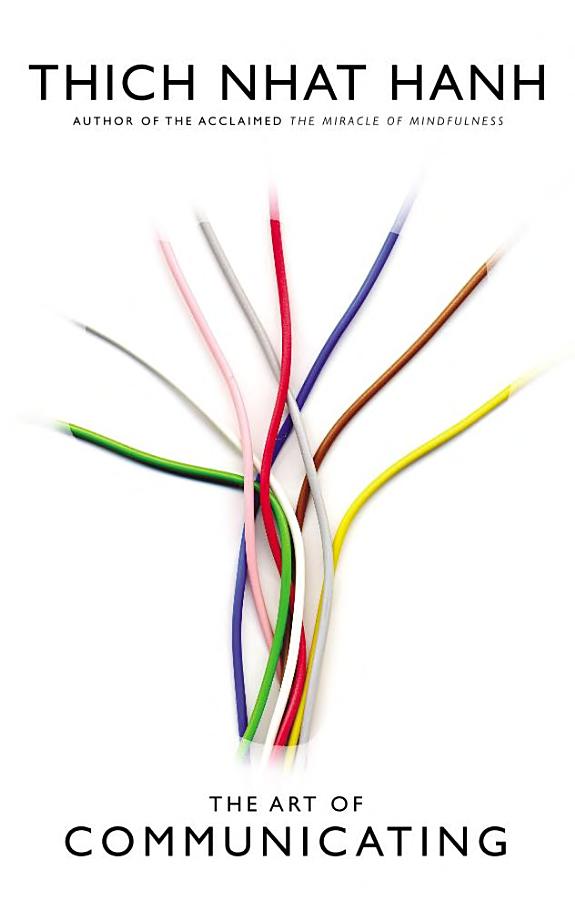
The Art of Communicating
1. The Art of Communicating by Thich Nhat Hanh
Thich Nhat Hanh was a Vietnamese Zen Buddhist monk, poet, and peace activist, and his writing has a quality that is genuinely rare: it slows you down. This short book is not a communication manual in the traditional sense. There are no frameworks, no scripts, no acronyms to memorize. What Hanh offers instead is something more foundational, a way of approaching conversation that begins with how you are actually listening, not just waiting for your turn to speak.
The central idea is that communication breaks down not because we lack the right words but because we are not truly present with the person in front of us. Hanh draws on Buddhist concepts like deep listening and loving speech to argue that the quality of our attention shapes everything else. It sounds simple. It is genuinely difficult to practice, which is part of what makes the book worth returning to.
The writing is gentle and unhurried, which some readers will find calming and others will find a little too soft for the gritty conversations they are trying to navigate. Hanh is not going to help you prepare for a performance review or a custody negotiation. His territory is the interior work that makes those conversations possible in the first place.
“The most important thing is that we listen with the intention to understand, not to respond. That shift alone can change everything about a conversation before a single word is spoken.”
This is perfect for readers who feel emotionally reactive in hard conversations and want to work on the inner life that drives their communication, especially those drawn to mindfulness or contemplative approaches.
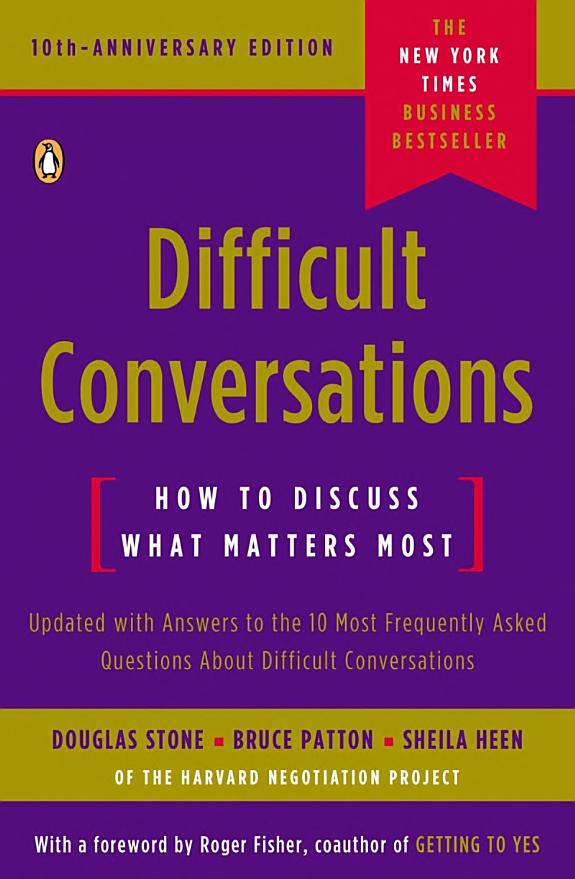
Difficult Conversations: How to Discuss What Matters Most
2. Difficult Conversations: How to Discuss What Matters Most by Douglas Stone, Bruce Patton, Sheila Heen
If there is one book on this list that earns the word “foundational,” it is this one. Stone, Patton, and Heen came out of the Harvard Negotiation Project, and it shows. The research is rigorous, but the book never feels like a textbook. It reads more like a very smart friend who has thought deeply about why conversations go sideways and is finally explaining it to you in plain language.
The core insight is that every difficult conversation is actually three conversations happening at once. There is the “what happened” conversation, where both parties argue about facts and intent. There is the feelings conversation, which most people try to suppress entirely and which then leaks out in unhelpful ways. And there is the identity conversation, the quiet internal one about what this situation says about who you are as a person. Understanding these three layers does not make the conversation easy, but it does make the chaos feel a lot more legible.
The authors are particularly good on the topic of intent versus impact, pointing out that we tend to judge others by their actions and ourselves by our intentions, which is a recipe for circular arguments that never resolve. The book is thorough, occasionally a touch long in its examples, but consistently generous with actionable guidance. If you only read one book from this list, this is probably the one to start with.
“We assume we know the other person’s intentions based on the impact their words had on us. But impact and intent are not the same thing, and conflating them is where most difficult conversations lose their footing.”
This is perfect for anyone dealing with a specific conflict they need to work through, whether at home or at work, and who wants a structured, research-backed way to think about what is actually happening beneath the surface.
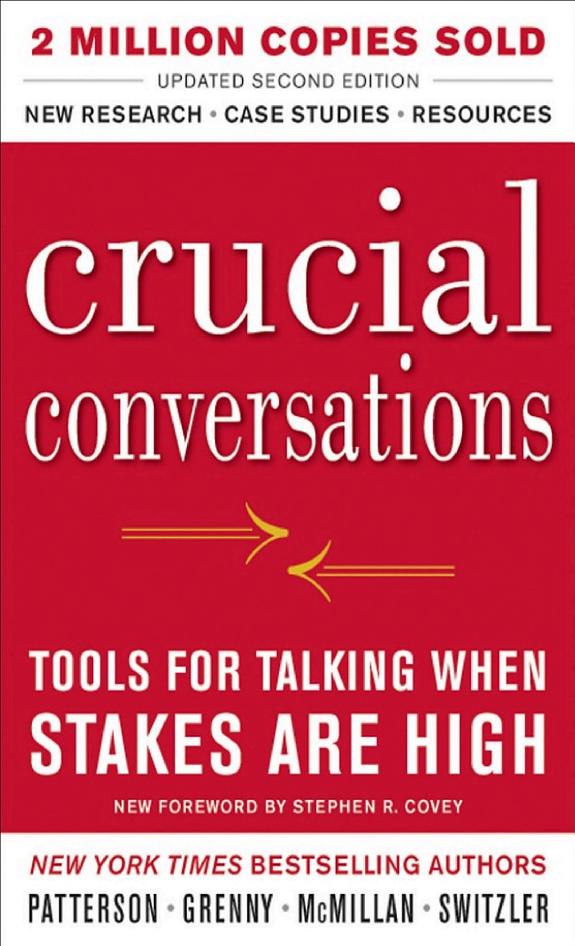
Crucial Conversations: Tools for Talking When Stakes Are High
3. Crucial Conversations: Tools for Talking When Stakes Are High by Kerry Patterson, Joseph Grenny, Ron McMillan, Al Switzler
Where “Difficult Conversations” helps you understand what is happening, “Crucial Conversations” is more focused on what to actually do. Patterson, Grenny, McMillan, and Switzler define a crucial conversation as one where the stakes are high, opinions differ, and emotions run strong. By that definition, most of us are in one at least once a week and probably handling it by either going silent or going loud, which are the two failure modes the book spends a lot of time addressing.
The authors introduce the concept of a “pool of shared meaning,” the idea that productive conversations happen when both people feel safe enough to contribute their honest perspective. When people feel unsafe, they either clam up or blow up, and nothing useful gets added to the pool. A lot of the book is devoted to practical techniques for creating and maintaining that safety, including how to notice when you have left it and how to find your way back without making things worse.
The writing is breezy and the examples are sometimes a bit corporate in flavor, which might feel slightly dated depending on your context. People who prefer a more nuanced, literary approach to these topics may find the tone a little too motivational-seminar. But for readers who want concrete tools and do not mind a slightly enthusiastic delivery, this book delivers consistently.
“The single biggest mistake people make in high-stakes conversations is trying to win. The goal is not to win. The goal is to find the truth together, which requires both people to feel safe enough to actually say it.”
This is perfect for managers, team leaders, or anyone in a workplace environment where high-pressure conversations are frequent and the cost of getting them wrong is real.
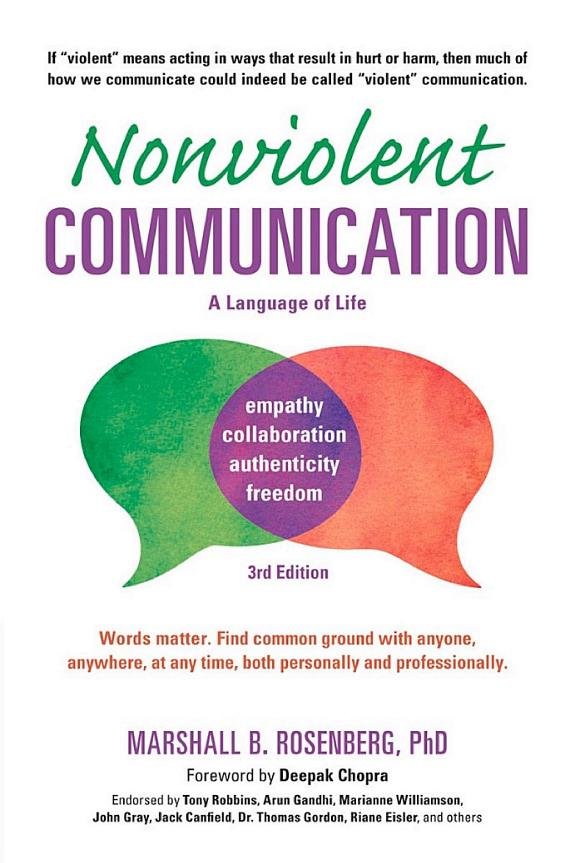
Nonviolent Communication: A Language of Life
4. Nonviolent Communication: A Language of Life by Marshall B. Rosenberg
Marshall Rosenberg spent decades working as a mediator in some of the world’s most fractured communities, from schools in inner cities to conflict zones internationally. Nonviolent Communication, or NVC, is the framework he developed along the way, and it is built on a deceptively simple premise: most conflict arises not from evil intentions but from unmet needs that people do not know how to express without blaming or demanding.
The NVC model asks you to observe without evaluating, identify your feelings, connect those feelings to underlying needs, and make a clear request rather than a demand. It sounds almost too tidy when laid out like that, and Rosenberg would be the first to admit that practicing it in a heated moment is much harder than understanding it on the page. The book is full of transcripts from real conversations, which are both instructive and occasionally a little too neat in the way they resolve.
Some readers find NVC genuinely revelatory, a complete reorientation of how they think about conflict. Others find the language it encourages a bit stilted in real-world use, particularly the phrase “when you do X, I feel Y because I need Z.” Used mechanically, it can sound like a therapy exercise rather than a human conversation. The underlying ideas, though, are worth sitting with regardless of whether you adopt the exact vocabulary.
“Most of us were taught to communicate in ways that moralize, blame, and demand. NVC asks us to unlearn that and replace it with something that connects rather than separates.”
This is perfect for people who notice that their conflicts tend to escalate quickly into blame and defensiveness, and who want a framework rooted in empathy and genuine needs rather than winning arguments.
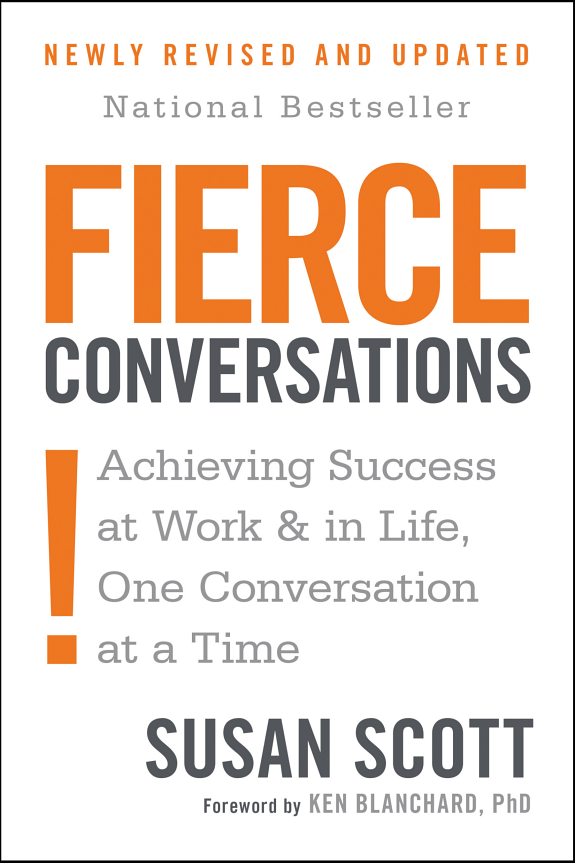
Fierce Conversations: Achieving Success at Work and in Life One Conversation at a Time
5. Fierce Conversations: Achieving Success at Work and in Life One Conversation at a Time by Susan Scott
Susan Scott has a slightly different problem with difficult conversations than most of the other authors on this list. Her concern is not that we handle them badly. It is that we avoid them so thoroughly that we end up living and working inside a fog of half-truths and polite fictions. “Fierce Conversations” is a book about the cost of that avoidance, and it is written with the kind of directness that makes you feel a little called out.
Scott’s central argument is that the conversation is the relationship. Not the context for the relationship, not a tool within the relationship, but the relationship itself. Every time you soften a truth that needs to be said, or nod along when you actually disagree, you are quietly eroding something. The book is partly a manifesto for honesty and partly a practical guide to having conversations that are real, which Scott defines as ones where both people leave knowing something true was exchanged.
The tone here is more assertive than some readers will be comfortable with. Scott is not particularly interested in tiptoeing, and her examples skew heavily toward professional settings and leadership contexts. If you are looking for help with deeply personal or emotionally delicate conversations, this may not be the right fit. But if your issue is that you keep having the same polite, useless conversation over and over without anything actually changing, Scott is exactly the right person to shake you out of it.
“The conversation you are avoiding is the one you most need to have. The longer you wait, the more it costs you, and usually the person on the other side of it as well.”
This is perfect for leaders, entrepreneurs, and professionals who suspect they have been too accommodating for too long and are ready to have the real conversations their work and relationships actually require.
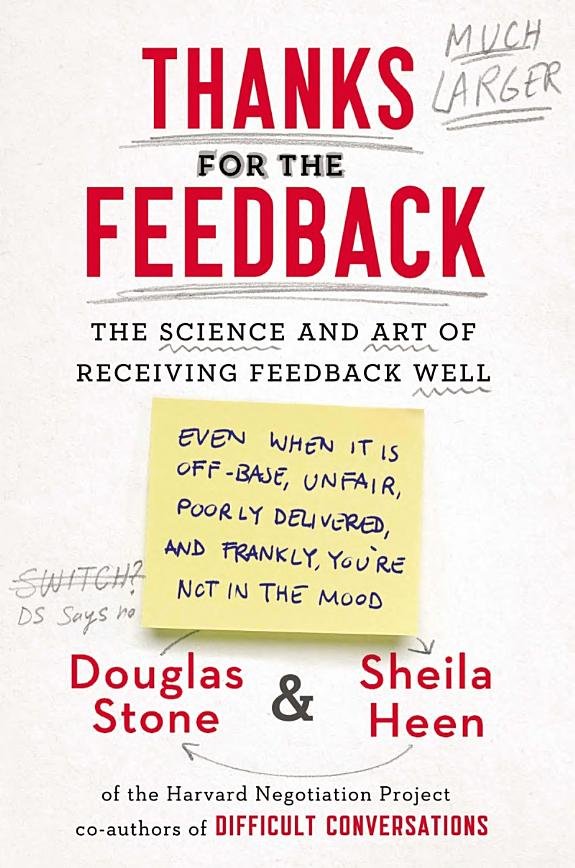
Thanks for the Feedback: The Science and Art of Receiving Feedback Well
6. Thanks for the Feedback: The Science and Art of Receiving Feedback Well by Douglas Stone, Sheila Heen
Most books about difficult conversations focus on what to say. Stone and Heen, returning here from their earlier work on “Difficult Conversations,” focus on something that gets far less attention: what to do when someone else is saying something hard to you. Receiving feedback well turns out to be a surprisingly complex skill, and this book makes a compelling case that it is also one of the most consequential ones you can develop.
The authors identify three kinds of feedback, appreciation, coaching, and evaluation, and explain why the giver and receiver so often end up in different conversations because they are operating from different assumptions about which kind is being offered. They also get into the “identity quake” that feedback can trigger, that feeling of threat that makes you want to dismiss, deflect, or quietly stew rather than actually hear what is being said.
What sets this book apart is its honesty about how hard it is to be a gracious receiver, even when the feedback is accurate, even when you asked for it, even when the person giving it clearly means well. Stone and Heen do not pretend this is simple. They also do not let you off the hook, which feels fair. The book is occasionally a little dense in its middle sections, but the payoff for patient readers is a genuinely fresh way of thinking about one of the most uncomfortable experiences in professional and personal life.
“We tend to think the problem with feedback is the people who give it badly. But our ability to receive it well matters just as much, and we have far more control over that than we usually admit.”
This is perfect for anyone who knows they get defensive when criticized, who has ever dismissed useful feedback because of how it was delivered, or who works in an environment where performance reviews and peer critique are a regular part of life.
None of these books will make hard conversations disappear. That is not really the point. What they offer, collectively, is a set of lenses for understanding what is actually happening when things get tense, and some genuine tools for doing better. Whether you gravitate toward Hanh’s contemplative approach or Scott’s unflinching directness probably says something about where you are right now, and both are valid places to start.
The honest truth is that most of us will read one of these, feel briefly inspired, and then revert to old habits the next time someone says something that makes our ears go hot. That is not failure. That is just how change works. Pick the book that speaks to your particular struggle, read it slowly, and give yourself room to practice. The conversations worth having are worth getting better at, even if it takes a while.