

6 Books That Will Change Your Habits for Good
Habits are sneaky things. You do not decide to reach for your phone the moment you wake up. You just do it. You do not choose to pour that second cup of coffee while staring blankly at your inbox. It happens. And somewhere between all those small, automatic moments, a whole life takes shape. That is either a comforting thought or a slightly unsettling one, depending on the day.
The good news is that habit science has come a long way, and so has the writing about it. The books on this list are not all the same. Some are rooted in psychology research, some are personal and funny, and some read almost like a course you wish you had taken in school. What they share is a genuine attempt to explain why we behave the way we do and what, if anything, we can do about it. Whether you want to exercise more, stop procrastinating, or simply understand yourself a little better, there is something here for you.
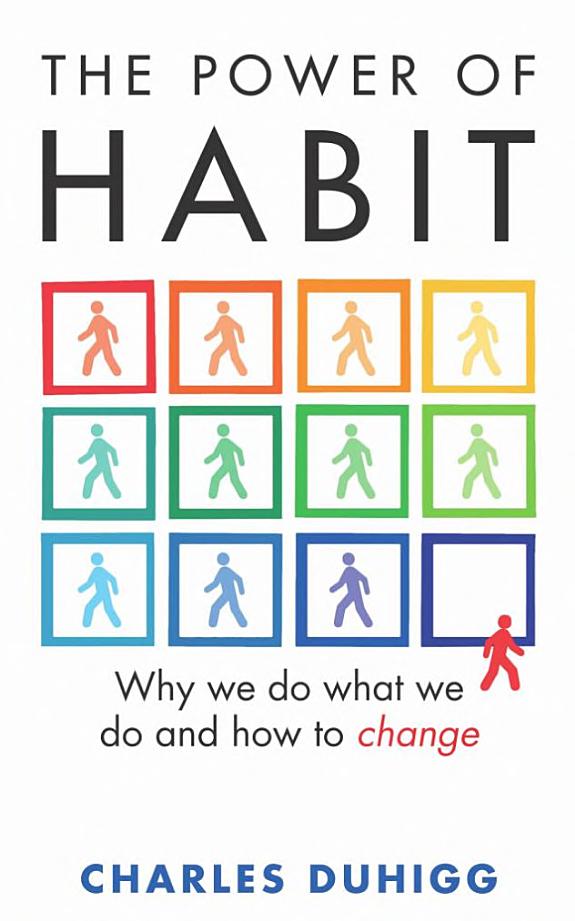
The Power of Habit: Why We Do What We Do in Life and Business
1. The Power of Habit: Why We Do What We Do in Life and Business by Charles Duhigg
Charles Duhigg is a journalist, and it shows in the best possible way. The Power of Habit reads less like a self-help manual and more like a series of deeply reported stories that happen to teach you something important. He opens with the concept of the habit loop, a three-part cycle of cue, routine, and reward, and then spends the rest of the book showing how that loop plays out in individual lives, corporations, and even social movements. It is a wider lens than most habit books attempt.
The writing is engaging and the anecdotes are genuinely interesting. You get stories about Alcoa’s safety record, Febreze’s rocky start as a product, and a woman named Lisa who walked into a research lab and changed how scientists thought about habit formation. Duhigg has a gift for making research feel alive, and he never lets the science get so dense that it loses you. The business examples are plentiful, which works well if you find organizational behavior interesting and feels like a detour if you do not.
Where the book is slightly less satisfying is in its practical application. Duhigg identifies the loop clearly and explains how to diagnose your own habits, but the steps for actually changing them are somewhat vague by the end. You come away with a solid framework and a lot of fascinating examples. The translation from framework to daily life is largely left to you.
Understanding the structure of a habit does not automatically give you the ability to change it, but it does give you a place to start. Duhigg’s real contribution is making that structure visible.
This is perfect for readers who love narrative nonfiction, enjoy business and psychology case studies, and want a broad conceptual foundation before diving into more tactical habit books.
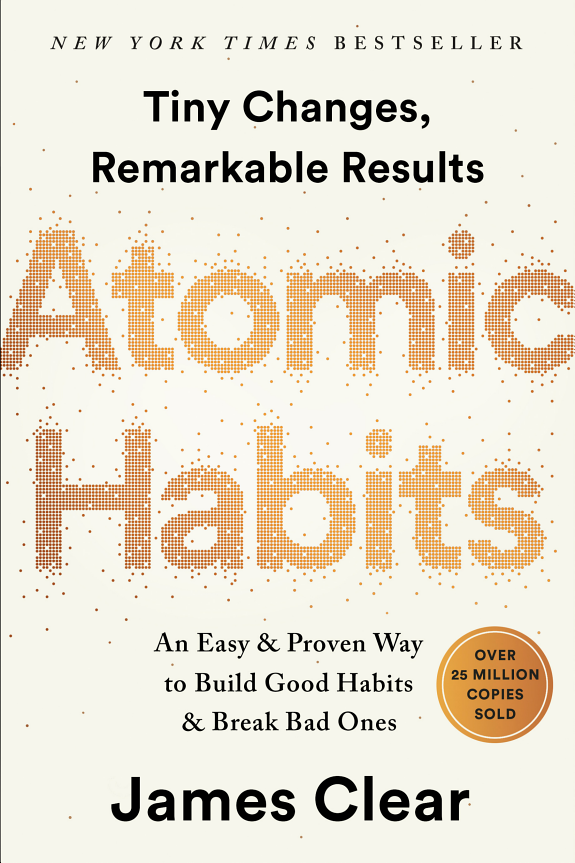
Atomic Habits
2. Atomic Habits by James Clear
James Clear spent years writing about habits on his website before this book arrived, and that background shows. Atomic Habits is precise, well-organized, and almost relentlessly practical. The central argument is that small habits compound over time in ways that are easy to underestimate, and that the real problem with habit change is usually the system rather than the person. Clear is not interested in motivation speeches. He wants to redesign your environment and your identity.
The four laws of behavior change, make it obvious, make it attractive, make it easy, and make it satisfying, give the book a clean structure that makes it easy to revisit specific sections. Clear draws on research from psychology and behavioral economics, but he translates it into concrete strategies without losing the nuance. The idea of identity-based habits, the notion that lasting change comes from deciding who you want to be rather than what you want to achieve, is one of the more genuinely useful framings in recent habit writing.
If you are already well-read in this space, some of the material will feel familiar. Clear synthesizes a lot of existing research rather than presenting entirely new findings, which is not a flaw exactly, but worth knowing. He is also relentlessly optimistic in tone, which some readers find motivating and others find a touch unrealistic when life gets complicated. Still, as a practical guide that you can actually use, it is hard to beat.
Clear’s argument that you do not rise to the level of your goals but fall to the level of your systems is one of those ideas that sounds simple and then quietly rearranges how you think about your own failures.
This is perfect for people who want a clear, actionable framework for building habits and are less interested in theory for its own sake than in strategies they can apply this week.
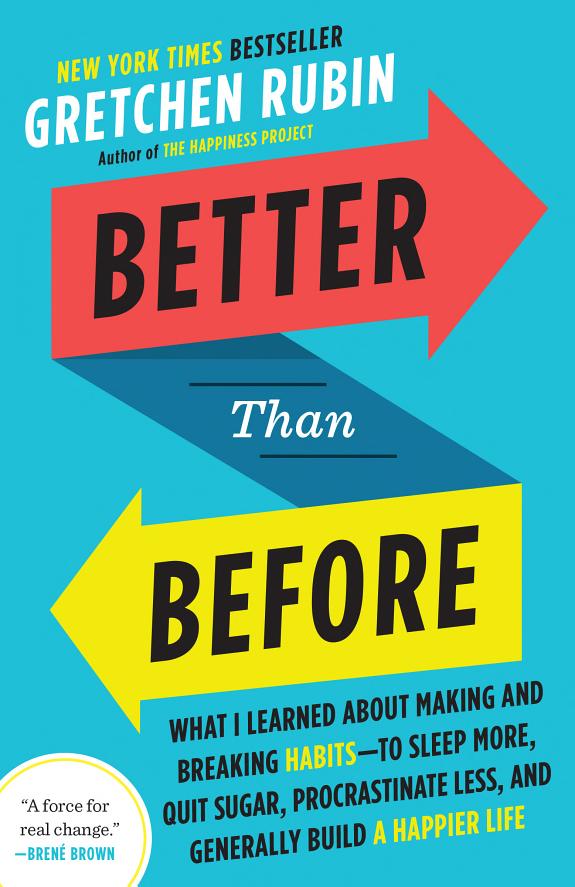
Better Than Before: What I Learned About Making and Breaking Habits–to Sleep More, Quit Sugar, Procrastinate Less, and Generally Build a Happier Life
3. Better Than Before: What I Learned About Making and Breaking Habits by Gretchen Rubin
Gretchen Rubin is a polarizing figure in the self-help world, and Better Than Before is a good example of why. It is personal, chatty, and organized around her own experience rather than a clean scientific framework. She is upfront about this from the start. Her central contribution is the Four Tendencies framework, a way of categorizing people based on how they respond to inner and outer expectations. Knowing whether you are an Upholder, Questioner, Obliger, or Rebel, she argues, is essential to understanding which habit strategies will actually work for you.
The book covers a lot of ground, from scheduling to convenience to the role of treats in sustaining good habits, and it does so with warmth and a fair amount of humor. Rubin writes like someone who has thought very hard about her own life and wants to share what she found. That personal quality is either the book’s greatest strength or its most significant limitation, depending on your taste. If you find her relatable, you will find the book generous and full of useful observations. If you find her self-focused, it can feel like reading someone’s very organized diary.
The science here is lighter than in Duhigg or Clear. Rubin draws on research but does not go deep into it, and some of her categories feel more intuitive than empirically rigorous. That said, the Four Tendencies has genuinely helped a lot of people understand why certain approaches have never worked for them, and that kind of self-knowledge has real value even if it does not come with a randomized controlled trial attached.
The most honest thing Rubin does is insist that there is no single habit strategy that works for everyone. That acknowledgment alone puts her ahead of a lot of books in this genre.
This is perfect for readers who enjoy personal, reflective writing and want to understand their own tendencies before building a habit plan that is actually suited to their personality.
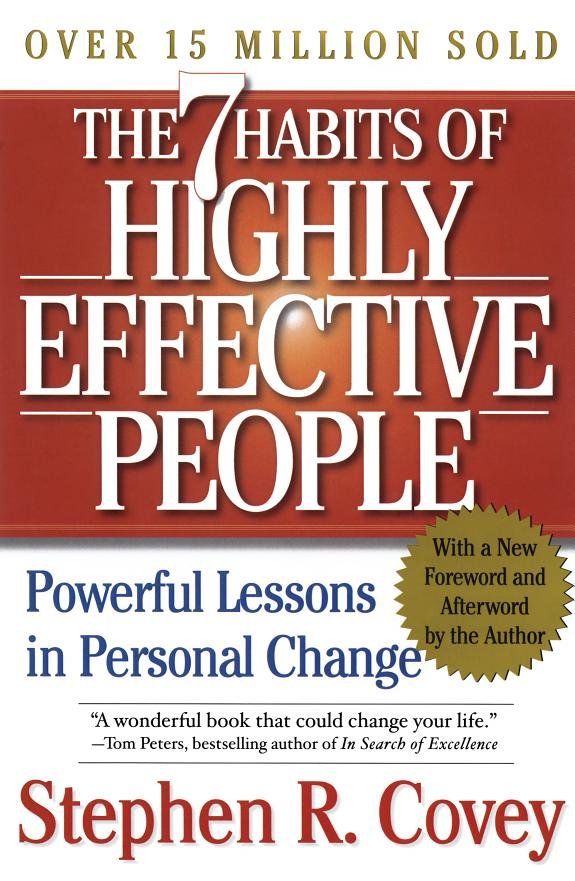
The 7 Habits of Highly Effective People
4. The 7 Habits of Highly Effective People by Stephen R. Covey
This book is old enough to have been assigned to your parents in a corporate training seminar, and yet here it is, still selling, still being cited, still sitting on the shelves of people who have underlined half of it. Stephen Covey published The 7 Habits of Highly Effective People in 1989, and its age is both a feature and a complication. The ideas about proactivity, prioritization, and interdependence hold up remarkably well. Some of the examples and the overall tone feel very much of their era.
Covey is not really writing about habits in the behavioral science sense that Duhigg or Clear are. He is writing about character and values and the kind of person you want to become. The habits he describes, be proactive, begin with the end in mind, put first things first, think win-win, seek first to understand, synergize, and sharpen the saw, are more like principles for living than daily routines. That distinction matters. If you come to this book expecting concrete tactics for breaking a bad habit, you will be disappointed. If you come to it looking for a framework for how to orient your life, you might find it quietly useful.
The prose is dense in places and earnest throughout. Covey takes himself seriously, which some readers appreciate and others find exhausting. The corporate and family examples lean heavily toward a particular worldview, and not everyone will see their own life reflected back at them. Still, the habit of sharpening the saw, the idea of regularly renewing your physical, mental, emotional, and spiritual resources, is one of those concepts that seems obvious until you notice how rarely anyone actually does it.
Covey’s real argument is that effectiveness is not a technique but a character trait, and that lasting change requires working from the inside out rather than the outside in.
This is perfect for readers interested in the philosophical and values-driven side of personal development, particularly those willing to engage with a more traditional, principle-centered approach to how they live and work.
Good Habits, Bad Habits: The Science of Making Positive Changes That Stick
5. Good Habits, Bad Habits: The Science of Making Positive Changes That Stick by Wendy Wood
Wendy Wood is a social psychologist who has spent roughly thirty years studying habits, and it shows on every page. Good Habits, Bad Habits is probably the most rigorously scientific book on this list, and it is also one of the most underrated. Wood’s central argument is that we massively overestimate the role of willpower and motivation in behavior change, and underestimate the role of context and environment. Habits, she argues, are not about who you are. They are about where you are and what surrounds you.
Her concept of friction, the idea that making a bad habit harder to perform and a good habit easier is more effective than trying to think your way to better behavior, is both well-supported by research and immediately applicable. She also writes thoughtfully about the role of reward and repetition in forming habits, and about why context change, moving to a new city, starting a new job, is such a strong window for building new routines. This is not just interesting trivia. It reframes how you think about your own failed attempts at change.
The book is academic in origin but readable in execution. Wood does not write with Duhigg’s narrative flair or Clear’s motivational energy, but she writes with clarity and precision, and she is not afraid to complicate the picture when the research calls for it. If you have read other habit books and found them a bit too breezy about the science, this is the one to pick up next. It will not tell you that changing your habits is easy. It will tell you, with considerable evidence, what actually works.
Wood’s most useful insight is also her most humbling one: most of what we do every day is not the result of deliberate choice but of context. Change the context and you change the behavior, often more effectively than any amount of motivation ever could.
This is perfect for skeptical readers, science-minded people, and anyone who has tried and failed with other habit systems and wants to understand the research behind why change is so hard and what actually makes it stick.
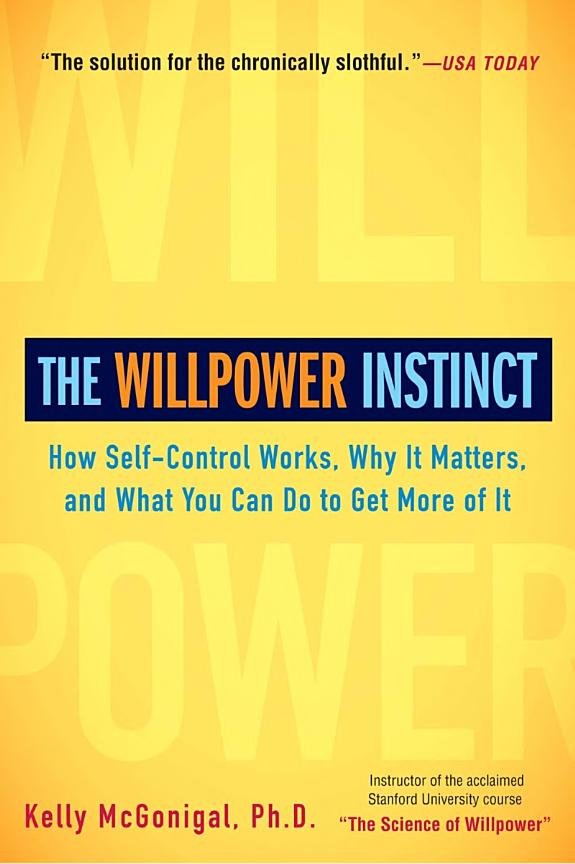
The Willpower Instinct
6. The Willpower Instinct by Kelly McGonigal
Kelly McGonigal is a health psychologist at Stanford who turned her popular course on the science of self-control into this book, and the classroom origins are a genuine strength. The Willpower Instinct is structured like a ten-week course, with each chapter building on the last and including exercises you can actually try. It is one of the more interactive books on this list, and it rewards readers who are willing to engage with it rather than just read it passively. Skimming this one is a bit like skimming a workout.
McGonigal draws on neuroscience, psychology, and behavioral economics to explain what willpower actually is, how it works in the brain, and why it fails so reliably under stress. She introduces the concept of willpower as a limited resource that can be depleted and replenished, and she spends a lot of time on the counterintuitive ways that people undermine their own self-control. The chapter on how guilt and self-criticism make bad habits worse, not better, is worth the price of the book on its own. It is one of those sections that makes you want to call someone and apologize for all the times you told them to just try harder.
The book is warm without being saccharine, and McGonigal is honest about the limits of self-control as a strategy. She is not selling the idea that you can willpower your way to a perfect life. She is explaining the mechanics of self-regulation so that you can use it more wisely and stop blaming yourself when it runs out. That is a more compassionate and, frankly, more accurate message than a lot of habit books manage. Readers who want a quick-fix approach or who are not interested in the neuroscience behind behavior may find the depth here more than they bargained for.
McGonigal’s most valuable contribution is reframing willpower failures as information rather than character flaws. Understanding why you caved is far more useful than feeling bad about it.
This is perfect for readers who want to understand the psychology and neuroscience of self-control, especially those who struggle with stress-driven habits and want a compassionate, research-backed approach to building resilience.
What strikes me most about reading these six books together is how differently they answer the same basic question. Duhigg wants you to understand the loop. Clear wants you to redesign your systems. Rubin wants you to know your tendency. Covey wants you to examine your values. Wood wants you to change your environment. McGonigal wants you to stop being so hard on yourself. None of them are wrong. They are just looking at the same complicated human problem from different angles.
The honest truth is that no single book is going to hand you a new life. But a good book can shift how you see a problem, and sometimes that shift is exactly what you needed. If even one of these changes the way you think about your morning routine, your phone habits, or why you keep eating crackers at midnight despite your best intentions, it has done its job. Start with whichever one sounds most like you. You can always come back for the others.