
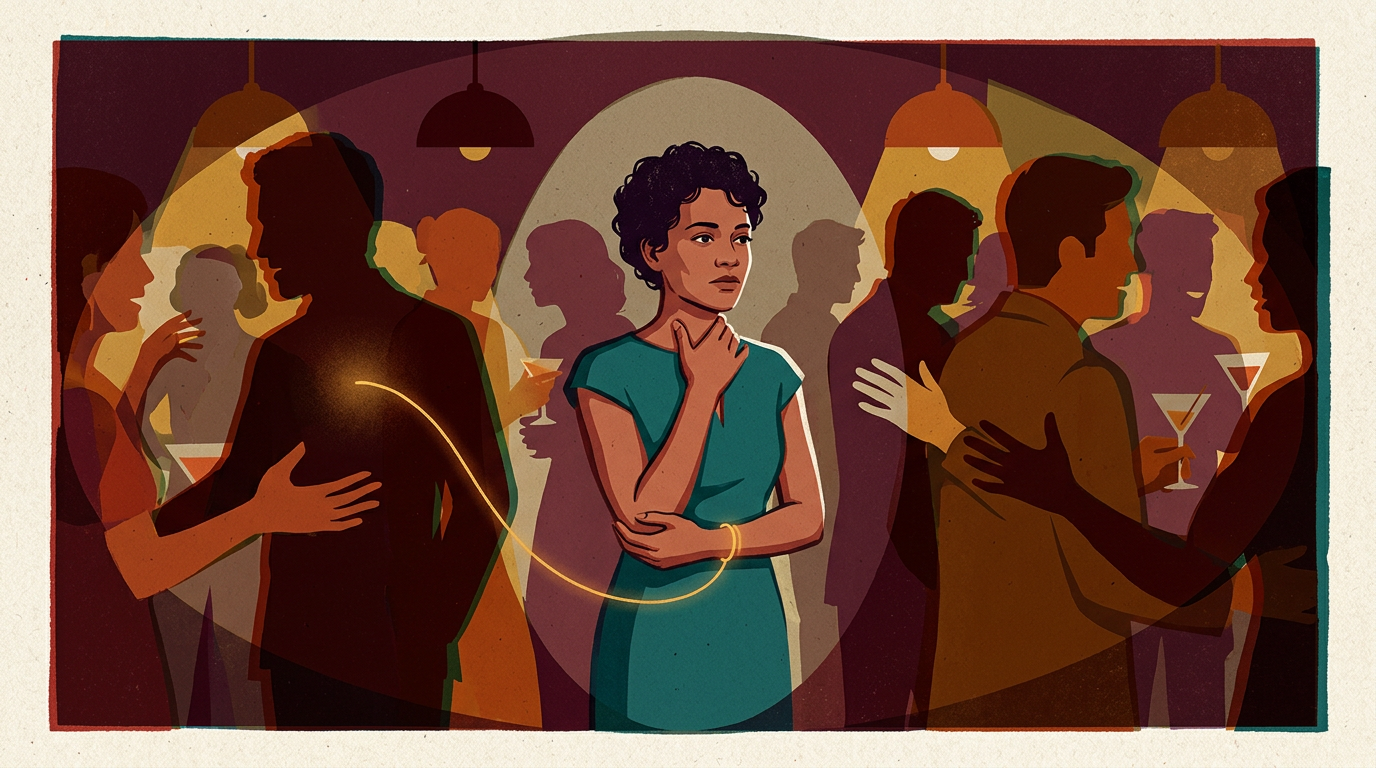
7 Books That Teach You How to Read People
There is a moment most of us have experienced: sitting across from someone and feeling, deep in your gut, that something is off. The words sound fine. The smile looks right. But something does not add up. That instinct is not magic. It is your brain picking up on signals you have not yet learned to consciously recognize.
Reading people is a skill, and like most skills, it can be studied and improved. The books on this list come from former FBI agents, psychologists, behavioral researchers, and communication experts who have spent careers decoding the signals human beings send out constantly, whether they mean to or not. Some of these books are methodical and research-heavy. Others read almost like stories. All of them will change the way you pay attention to the people around you.
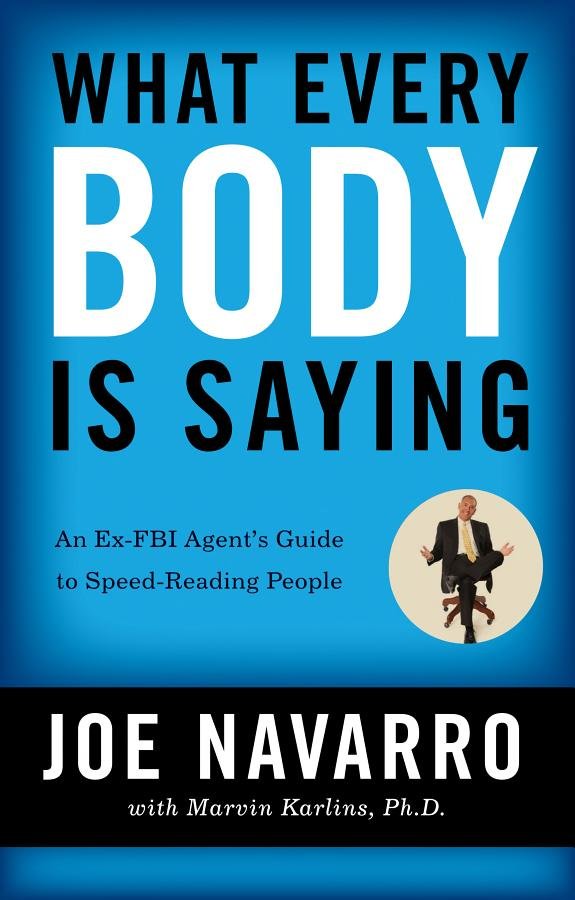
What Every Body is Saying
1. What Every Body is Saying by Joe Navarro
Joe Navarro spent twenty-five years as an FBI counterintelligence agent, and this book is essentially the distilled product of all that fieldwork. His central argument is that the body, not the face, is where the most reliable nonverbal signals live. While most people fixate on facial expressions when trying to read someone, Navarro directs your attention to the feet, the torso, the hands, and the way people orient themselves in space. It sounds counterintuitive until he explains the neuroscience behind it, and then it becomes very hard to look at a room full of people the same way again.
The writing is clear and practical, peppered with real examples from interrogations and everyday life. Navarro is not trying to turn you into a human lie detector, and he is careful to say so. He is more interested in helping you understand comfort and discomfort, confidence and anxiety, genuine engagement and polite withdrawal. The distinction matters. This is not a book about catching liars so much as it is a book about understanding what people are actually feeling in any given moment.
The structure is logical and easy to follow, moving through different regions of the body in sequence. Some readers find the repetition a little heavy, since Navarro does hammer certain points home more than once. But for a first serious book on nonverbal communication, it is hard to find a more grounded and trustworthy starting point. The photographs included throughout help considerably.
Navarro makes the case that our bodies betray our true emotional states far more honestly than our faces do, because we have far less conscious control over them.
This is perfect for anyone new to body language who wants a credible, research-backed foundation rather than pop psychology guesswork.
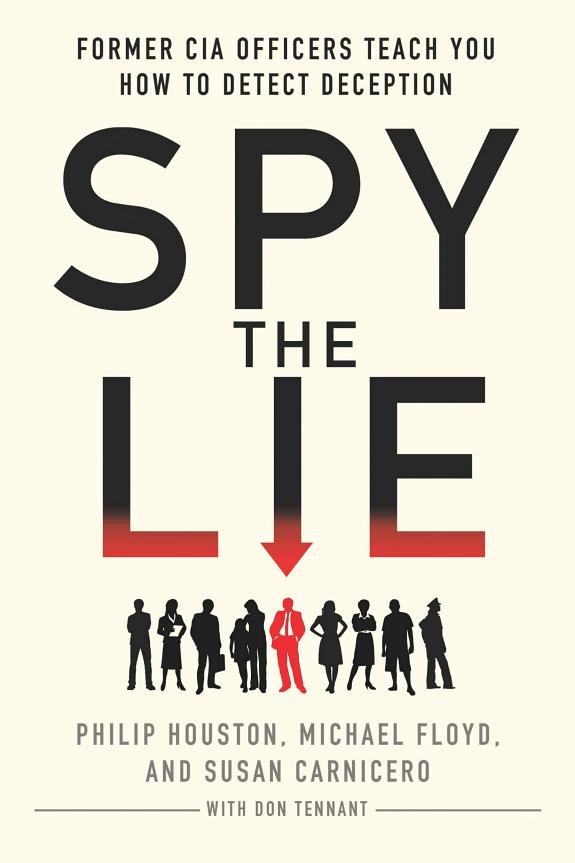
Spy the Lie
2. Spy the Lie by Philip Houston, Michael Floyd, Susan Carnicero, and Don Tennant
Four authors might sound like a committee project, but this one works. Philip Houston, Michael Floyd, and Susan Carnicero are all former CIA officers who developed and refined deception detection techniques during actual intelligence work. Don Tennant helped shape the writing. The result is a book that feels authoritative without being dry, and specific without being paranoid.
The core idea is that people who are lying tend to respond to questions in predictable ways, and that these patterns can be spotted if you know what to look for. The authors focus heavily on verbal behavior, which sets this book apart from most body language guides. They walk through the kinds of answers that signal deception, including non-answers, deflections, attacks on the questioner, and what they call “convincing statements” that people offer up when they feel their credibility is being challenged. The examples are drawn from real interrogations and, helpfully, from well-known public cases that readers will recognize.
This is not a light read in the sense that it asks you to internalize a fairly specific framework and then practice it. The authors are clear that reading deception is a skill that requires repetition and calibration, not a party trick you can deploy after one afternoon with a book. If you are not willing to put in that kind of effort, this may frustrate you. But if you are genuinely curious about how professional deception detection actually works, this is one of the most honest and detailed accounts available to a general audience.
The authors are refreshingly upfront that no single signal proves a lie, and that the real skill lies in recognizing clusters of deceptive behavior rather than isolated tells.
This is perfect for professionals who conduct interviews or negotiations, and for anyone who wants to understand the verbal mechanics of deception rather than just the physical ones.
The Like Switch
3. The Like Switch by Jack Schafer and Marvin Karlins
Jack Schafer spent years as a behavioral analyst for the FBI, where part of his job involved turning hostile sources into cooperative ones. The Like Switch is his guide to the principles he used to do exactly that, applied to everyday relationships. It is a book about reading people, yes, but it is equally a book about influencing how people read you, which turns out to be deeply connected.
Schafer introduces what he calls the “friendship formula,” a framework built around proximity, frequency, duration, and intensity of contact. He explains why certain small behaviors, a slight eyebrow raise, a genuine smile, mirroring someone’s posture, signal friendliness to the brain before conscious thought has a chance to weigh in. The book is full of specific, applicable techniques, and Schafer writes with a warmth that makes the material feel less clinical than it might otherwise.
Where this book earns its place on this list is in its treatment of reading people as a two-way process. You cannot really understand what someone is communicating without also understanding what you are communicating back to them, and how that shapes what they reveal. That loop is something many books in this space ignore entirely. The tone is occasionally a little self-helpy, which may put off readers who prefer a more detached analytical style. But the underlying content is solid and genuinely useful.
Schafer’s insight that likeability is largely a set of learned, repeatable behaviors rather than an innate quality is both reassuring and quietly unsettling.
This is perfect for people who want to improve their social intelligence and understand the signals that govern first impressions and trust-building.

You Can Read Anyone
4. You Can Read Anyone by David J. Lieberman
David Lieberman takes a different approach than most authors in this space. Rather than cataloguing physical signals or building broad frameworks, he focuses on specific, high-stakes situations: figuring out whether someone is genuinely interested in you, determining if a person is trustworthy, reading a room before making a decision. Each chapter is structured around a practical question you might actually find yourself asking about someone in your life.
His method leans heavily on psychological principles, particularly around how people behave when they are trying to manage impressions versus when they are acting naturally. Lieberman argues that the most revealing moments come not from watching someone’s face but from introducing small variables into an interaction and observing how they respond. It is a more active approach to reading people than most books advocate, and it is both interesting and a little unnerving in its effectiveness.
The writing is accessible and the chapters are short, which makes this a good book to pick up and put down rather than read straight through. Some of the scenarios feel slightly contrived, and a few of the techniques require a level of social boldness that not every reader will be comfortable with. But the underlying psychology is sound, and Lieberman is good at explaining the “why” behind each technique rather than just handing you a list of tricks to memorize.
Lieberman’s most useful contribution is reminding readers that people reveal themselves most clearly not in what they say but in how they respond when you change the conditions around them.
This is perfect for readers who want situational, practical guidance rather than general theory, especially in professional or personal contexts where trust is genuinely at stake.

Blink
5. Blink by Malcolm Gladwell
Blink is probably the most famous book on this list and also the most debated. Malcolm Gladwell’s argument is that rapid, unconscious judgments, the kind that happen in the first two seconds of encountering something, are often more accurate than deliberate, extended analysis. He builds this case through a series of vivid stories, from art experts detecting a fake sculpture to couples researchers predicting divorce from a brief conversation.
As a piece of writing, Blink is genuinely enjoyable. Gladwell is one of those writers who can make you feel like you are learning something profound while also being thoroughly entertained, which is rarer than it sounds. The book does an excellent job of making the case that human beings are capable of processing enormous amounts of information below the level of conscious awareness, and that this capacity deserves more respect than we typically give it.
Where Blink becomes complicated is in its relationship with the research it draws on. Some of the studies Gladwell cites have not held up especially well to replication, and critics have noted that the book is better at celebrating intuition than at explaining when to trust it versus when to override it. That is a meaningful gap. Blink is not a how-to guide so much as an invitation to take your instincts more seriously, which is valuable, but readers looking for a systematic method for reading people will need to pair it with something more structured. It is also not for people who are already skeptical of pop science writing, because it will confirm every suspicion they have about the genre.
Gladwell’s real contribution here is not a method but a permission slip: the idea that the quick read you form of a person in the first moments of meeting them is worth taking seriously and understanding better.
This is perfect for curious, open-minded readers who enjoy narrative nonfiction and want a thought-provoking introduction to the science of rapid judgment before diving into more technical material.
Emotions Revealed
6. Emotions Revealed by Paul Ekman
Paul Ekman is the researcher who, over decades of meticulous study, identified a set of universal facial expressions that appear across cultures with remarkable consistency. If you have ever watched the television show Lie to Me, the main character is based on Ekman. This book is his attempt to bring that research to a general audience, and it is one of the most carefully constructed entries on this list.
The focus is entirely on the face and the emotions it expresses, particularly the micro-expressions that flicker across a person’s features in fractions of a second before the conscious mind can suppress them. Ekman walks through the seven universal emotions, including anger, fear, disgust, contempt, sadness, surprise, and enjoyment, and explains the specific muscle movements associated with each. It is precise work, and Ekman writes about it with the care of someone who has spent a career getting the details right.
This is not a breezy read. Ekman is a scientist first and a popularizer second, and the book reflects that. The chapters on specific emotions are thorough to the point of being dense in places, and some readers will find themselves wishing he would move along a little faster. But the depth is also the point. If you want to genuinely understand facial expressions rather than just pick up a few party tricks, Ekman’s rigor is exactly what you need. The book also includes exercises for training yourself to spot micro-expressions, which is a practical touch that elevates it beyond pure theory. Not for readers who want quick takeaways.
Ekman’s work forces a humbling realization: most of us walk through the world missing a continuous stream of emotional information that is literally written on the faces of everyone we meet.
This is perfect for readers who want a serious, research-grounded understanding of facial expressions and emotional recognition, and who are willing to do the work of actually practicing what they learn.
The Definitive Book of Body Language
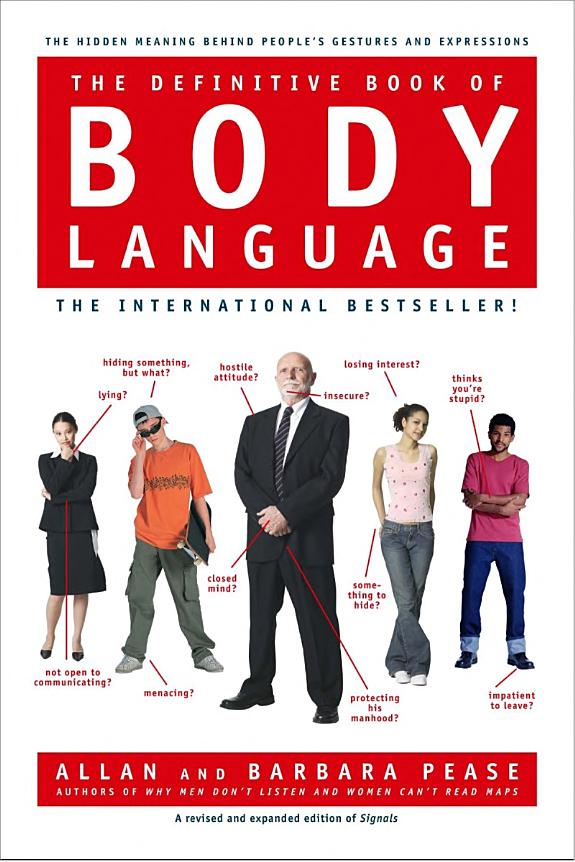
7. The Definitive Book of Body Language by Allan Pease and Barbara Pease
Allan and Barbara Pease have been writing about communication and human behavior for decades, and this book is their most comprehensive effort. It covers an enormous range of nonverbal signals, from handshakes and eye contact to territorial behavior and the signals people send in group settings. The scope is genuinely impressive, and the Peases write with a light, accessible touch that makes even the denser sections feel approachable.
One of the book’s strengths is its cultural awareness. The authors spend real time on how body language signals vary across cultures, which is something many books in this space skip over entirely. A gesture that signals openness in one country can signal aggression in another, and the Peases take those differences seriously. This makes the book more useful for anyone who works or travels internationally, or who simply lives in a diverse community.
The book is not without its critics, and some of the claims are broader than the research fully supports. The Peases have a tendency to present findings with more certainty than the underlying studies warrant, and a few of the cultural generalizations are painted with a wider brush than they should be. Readers with a background in psychology may find themselves raising an eyebrow here and there. But as a comprehensive, readable reference on nonverbal communication, it earns its place on any shelf dedicated to understanding people. Think of it as a very good starting map rather than the final word.
The Peases understand that body language is not a code to crack but a conversation to follow, and their book works best when read with that spirit of curiosity rather than the desire to expose or outwit.
This is perfect for readers who want a broad, well-organized overview of body language across many contexts, and who appreciate accessible writing over academic precision.
None of these books will turn you into a human polygraph, and honestly, that is probably for the best. What they will do is slow you down and sharpen your attention. You will start noticing things you used to filter out: the way someone’s posture shifts when a certain topic comes up, the micro-expression that crosses a face before the practiced smile takes over, the question that gets answered with another question. That kind of attention is worth cultivating.
The best approach is to treat these books as overlapping lenses rather than competing systems. Navarro and Ekman give you the scientific grounding. Schafer and Lieberman give you the practical application. Gladwell gives you the philosophical framing. Houston and his colleagues give you the professional edge. The Peases give you the broad map. Together, they cover the territory about as well as any set of books can. Start with whichever one sounds most interesting to you, because the book you actually read is always more useful than the one sitting on your shelf waiting for the right moment.