5 Books for Adult Children of Emotionally Immature Parents
There is a particular kind of confusion that comes from growing up with a parent who was physically present but emotionally somewhere else entirely. You were fed, clothed, driven to soccer practice. And yet something was always missing, something you could never quite name. Many people spend decades carrying that unnamed thing before they finally stumble across a book that puts language to it, and the relief is almost disorienting.
If you are somewhere on that journey, whether you are just beginning to connect the dots or you have been in therapy for years and want to go deeper, the right book can be a genuine companion. Not a cure, not a shortcut, but a companion. The five books below approach the subject from different angles, some clinical, some deeply personal in tone, and together they offer a fairly complete picture of what emotional immaturity in parents looks like, how it shapes children, and what recovery can actually feel like in practice.
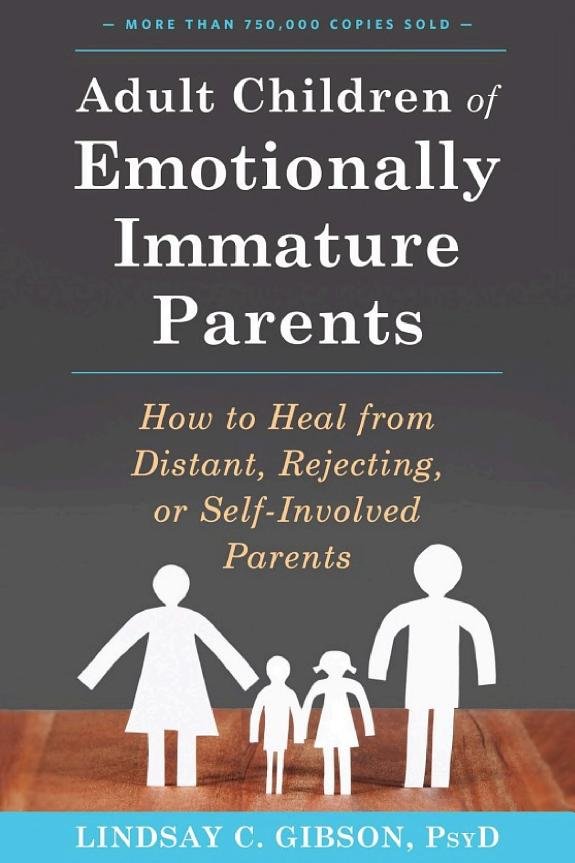
Adult Children of Emotionally Immature Parents
1. Adult Children of Emotionally Immature Parents by Lindsay C. Gibson
This is the book that, for a lot of people, starts everything. Lindsay C. Gibson is a clinical psychologist, and her writing reflects that background in the best possible way. She is precise without being cold, and she has a gift for describing emotional dynamics that most of us have lived through but never had the vocabulary to articulate. The central argument is straightforward: some parents, regardless of their intentions, are simply not emotionally mature enough to meet their children’s inner needs. The consequences of that gap ripple forward for decades.
Gibson identifies four types of emotionally immature parents, the emotional parent, the driven parent, the passive parent, and the rejecting parent, and she walks through each with enough specificity that readers frequently find themselves recognizing a parent, or even themselves, with uncomfortable clarity. She also spends meaningful time on the children themselves, particularly the “internalizers” who quietly absorb everything and the “externalizers” who act it out. That distinction alone is worth the price of the book for many readers.
The tone throughout is calm and validating without being saccharine. Gibson does not spend the book telling you your parents were monsters. She explains how people become emotionally immature, which is actually more useful if you are trying to understand rather than simply assign blame. The final chapters offer practical strategies for managing these relationships in adulthood, though readers looking for deep therapeutic exercises may find this section a little brief.
“Emotionally immature parents fear genuine emotion and find deep personal intimacy intolerable. They may seem engaged on the surface, but they consistently redirect connection back to themselves.” This is the kind of observation that makes readers stop, reread the sentence, and sit quietly for a moment.
This is perfect for anyone who has ever felt vaguely lonely inside their own family and could not explain why, especially readers who want a clear, well-organized introduction to the concept before diving into heavier therapeutic work.
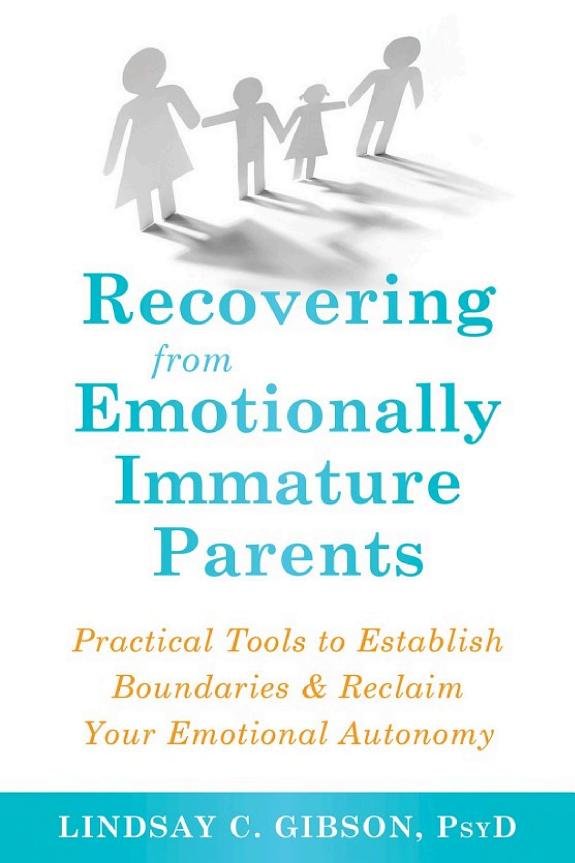
Recovering from Emotionally Immature Parents
2. Recovering from Emotionally Immature Parents by Lindsay C. Gibson
If the first Gibson book is the diagnosis, this one is closer to the treatment plan. Published a few years after its predecessor, “Recovering from Emotionally Immature Parents” picks up where that conversation left off and goes considerably further into the practical work of healing. Gibson assumes you already understand the framework and are ready to actually do something with it, which makes this a genuinely useful follow-up rather than a retread.
The book leans heavily on the concept of what Gibson calls “maturity awareness,” which is essentially the practice of seeing your parents clearly and responding to who they actually are rather than who you needed them to be. That sounds simple, and in some ways it is. But Gibson is honest about how difficult it is to stop hoping, even as an adult, that a parent will finally show up differently. She gives that grief real space, which feels important.
There are guided reflections and prompts throughout, which some readers will find invaluable and others will skip entirely. If you are the kind of person who writes in the margins of books, you will probably get a lot out of those sections. If you prefer to read straight through and process internally, the prose itself still carries plenty of substance. Gibson also addresses the complicated question of whether to stay in contact with emotionally immature parents, and she handles it with nuance rather than a one-size-fits-all answer, which is refreshing.
Recovery here is not about confronting your parents and getting an apology that may never come. It is about developing a relationship with yourself that no longer depends on their capacity to see you.
This is perfect for readers who have already worked through the first Gibson book and are ready to move from understanding into active healing, particularly those who want structured reflection alongside the reading.
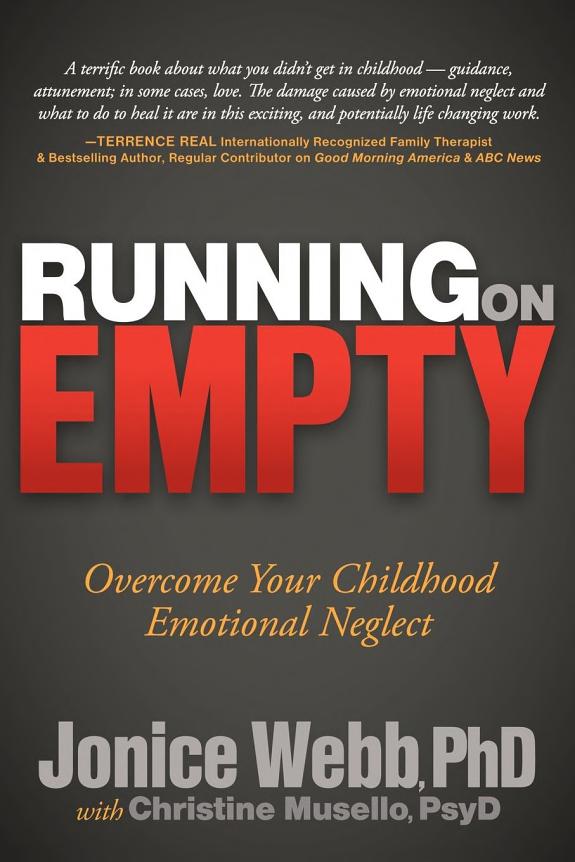
Running on Empty: Overcome Your Childhood Emotional Neglect
3. Running on Empty: Overcome Your Childhood Emotional Neglect by Jonice Webb
Jonice Webb tackles something that is genuinely tricky to write about: the absence of something rather than the presence of something harmful. Childhood emotional neglect, as Webb defines it, is not abuse. It is not cruelty. It is the consistent failure of parents to notice, attend to, and respond to a child’s emotional needs. And because nothing dramatic happened, many adults who experienced it spend years dismissing their own pain as invalid. Webb’s great contribution is simply insisting that the nothing was, in fact, something.
The writing is accessible and warm, pitched at a general reader rather than a clinical audience. Webb uses composite case studies throughout to illustrate her points, which helps keep abstract concepts grounded in recognizable human experience. She identifies a cluster of feelings and behaviors that tend to show up in adults who experienced emotional neglect as children, things like difficulty identifying emotions, a persistent sense of emptiness, and an inexplicable feeling of being different from other people. For some readers, this list is the first time they have ever felt accurately described.
The second half of the book shifts toward recovery and offers concrete exercises for building emotional awareness and self-compassion. Webb is not asking you to become a different person. She is asking you to start paying attention to the person you already are, which turns out to be harder and more rewarding than it sounds. The book is not particularly long, which is either a feature or a limitation depending on how deeply you want to go. It opens doors without always walking you all the way through them.
The most painful part of emotional neglect is that it teaches children to neglect themselves. The work of recovery is, in large part, learning to do the opposite.
This is perfect for adults who had childhoods that looked fine from the outside but left them feeling strangely hollow, and who have struggled to justify their own pain because nothing “bad enough” seemed to happen.
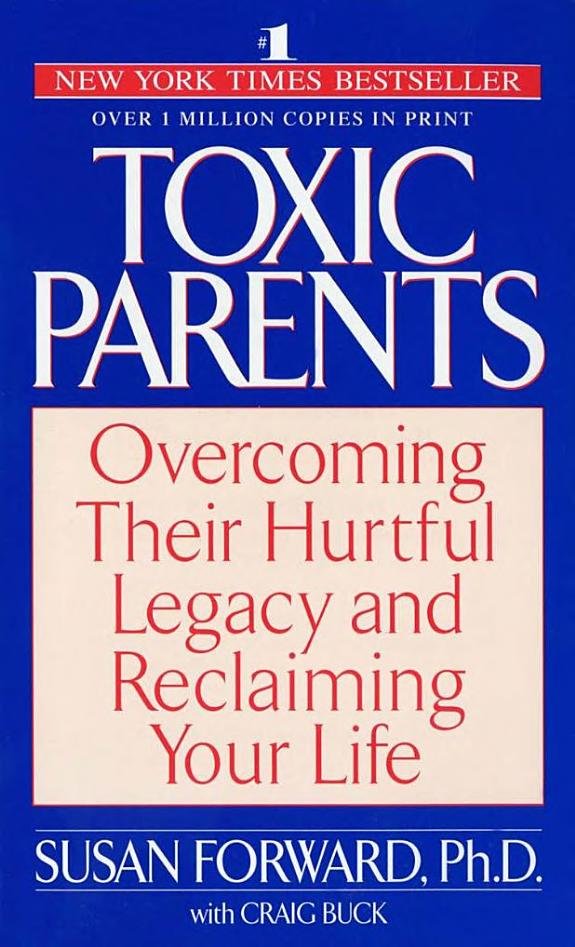
Toxic Parents: Overcoming Their Hurtful Legacy and Reclaiming Your Life
4. Toxic Parents: Overcoming Their Hurtful Legacy and Reclaiming Your Life by Susan Forward
Susan Forward is not subtle, and she is not trying to be. Originally published in 1989 and still in print for good reason, “Toxic Parents” takes a more direct approach than the other books on this list. Forward, a therapist with decades of clinical experience, is comfortable using strong language about harmful parental behavior, and she does not spend much time hedging. For readers who have spent years minimizing what happened to them, that directness can feel like a hand reaching through the page.
The book covers a wide range of parental behavior, from the merely inadequate to the genuinely abusive, including alcoholic parents, physically abusive parents, emotionally abusive parents, and those Forward calls “the controllers.” Each section combines explanation with case studies drawn from Forward’s clinical work, and the voices of real clients give the book a texture that purely theoretical writing often lacks. You feel less alone reading it, which is not a small thing.
Forward also addresses the guilt that so many adult children carry, the sense that criticizing your parents, even privately, is a form of betrayal. She pushes back on that firmly. The chapters on confrontation are useful but should be approached thoughtfully, and Forward herself acknowledges that direct confrontation is not right for every situation or every person. This is not a book that will tell you what to do with your specific family. It will, however, help you see your history more clearly and give you permission to take your own experience seriously. That permission, for many readers, is the whole point.
Forward argues that honoring your parents does not require pretending that what they did was acceptable. You can love someone and still acknowledge the harm they caused. Those two things are not mutually exclusive.
This is perfect for readers whose experiences with their parents cross into clearly harmful territory and who need a book that will not ask them to soften their own narrative, particularly those who have struggled with guilt around holding parents accountable.
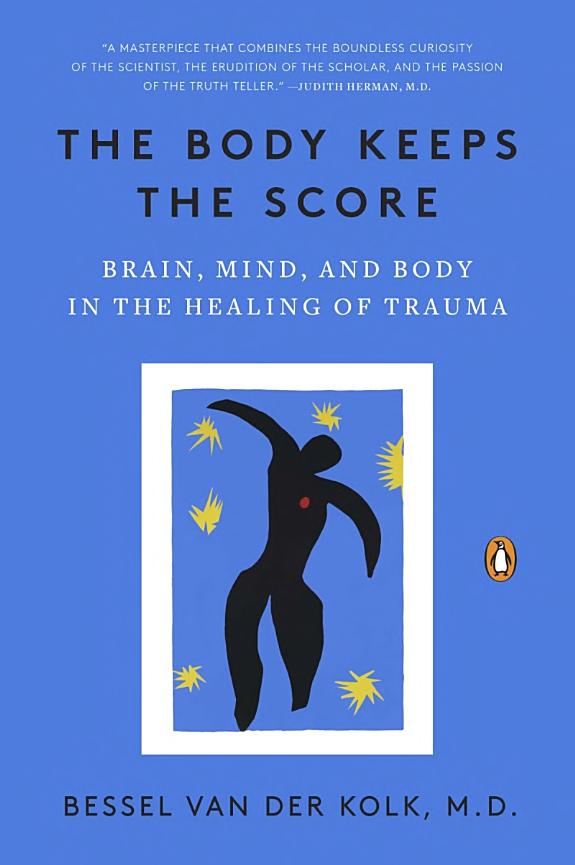
The Body Keeps the Score
5. The Body Keeps the Score by Bessel van der Kolk
Bessel van der Kolk is a psychiatrist and researcher who has spent his career studying trauma, and this book is the culmination of decades of that work. It is the heaviest read on this list in every sense, longer, denser, and more clinically detailed than the others. But it earns its place here because it addresses something the other books touch on but do not fully explore: the way early emotional experiences live in the body long after the mind has tried to move on.
Van der Kolk’s central argument is that trauma, including the chronic relational trauma of growing up with emotionally immature or neglectful parents, does not stay neatly stored in memory. It reorganizes the nervous system. It shows up as physical symptoms, as inexplicable anxiety, as a body that remains on alert long after the original threat is gone. For readers who have done years of talk therapy and still feel stuck in certain patterns, this explanation can be genuinely clarifying. It is not that you have not tried hard enough. It is that the approach may not have been addressing the right layer.
The book covers a wide range of therapeutic approaches, from EMDR to yoga to neurofeedback, and van der Kolk discusses the research behind each with appropriate rigor. It is not a self-help book in the traditional sense. You will not finish it with a tidy action plan. What you will finish it with is a much richer understanding of why healing from a difficult childhood can feel so stubbornly physical, and a sense of the many paths that researchers and clinicians are exploring. It is worth noting that this book is not for everyone. Readers who are early in their healing process or who are easily overwhelmed by clinical detail may want to save it for later.
Van der Kolk writes that being able to feel safe with other people is probably the single most important aspect of mental health, and that safe connections are fundamental to meaningful and satisfying lives. For those who never had that safety modeled, building it is the work of a lifetime.
This is perfect for readers who have already done significant emotional work and want to understand the neurological and physiological dimensions of childhood trauma, especially those who feel their healing has plateaued with talk therapy alone.
None of these books will fix everything. That is worth saying plainly, because the self-help section of any bookstore can make it seem like the right read is all that stands between you and wholeness. What these books can do is offer language, context, and a sense of company on a journey that can feel very isolating. Knowing that what you experienced has a name, that researchers and clinicians have studied it, that other people have sat with the same confusion you carry, matters more than it might seem like it should.
Start wherever feels right. If you are new to this territory, Gibson’s first book is probably the gentlest entry point. If you have been sitting with these questions for years, van der Kolk might be the piece you have been missing. There is no wrong order, and there is no timeline you are supposed to be on. Reading at your own pace, pausing when something hits hard, putting a book down and coming back to it later, all of that is part of the process too.
Take good care of yourself while you read. This material has a way of stirring things up, which is ultimately useful, but it helps to have support around you, whether that is a therapist, a trusted friend, or simply the knowledge that what you are doing takes real courage.