

7 Books for Healing After a Breakup
Nobody warns you about the grocery store. You go in for milk and end up standing in the cereal aisle for ten minutes because you used to buy his favorite kind. Breakups have a way of ambushing you in the most ordinary places, and the grief that follows can feel completely disproportionate to what anyone else seems to think you should be feeling. You are not being dramatic. You are just heartbroken.
Books have a particular gift for this kind of pain. They do not get tired of hearing about it. They do not suggest you download a dating app after two weeks. The right book at the right moment can feel like sitting across from someone who has been exactly where you are and survived it, which is sometimes the only reassurance that actually helps. The seven books below cover a wide range of approaches, from raw emotional honesty to structured journaling to practical day-by-day guides, because people heal differently and there is no single correct way to put yourself back together.

Tiny Beautiful Things: Advice on Love and Life from Dear Sugar
1. Tiny Beautiful Things: Advice on Love and Life from Dear Sugar by Cheryl Strayed
Cheryl Strayed wrote the Dear Sugar advice column anonymously for years, and what she produced was less a collection of practical tips and more a series of deeply personal essays that happen to be addressed to strangers in pain. This book gathers those columns, and reading it feels like finding letters that were somehow written specifically for you. Strayed does not flinch. She writes about her own grief, her own failures, her own long climb back toward something resembling wholeness, and she does it with a prose style that is genuinely beautiful without ever feeling showy.
The voice here is the whole point. Strayed is warm but unsentimental, compassionate but unwilling to let anyone off the hook, including herself. When someone writes in about a lost relationship, she does not just answer the surface question. She goes underneath it, to the fear or the longing or the self-deception that is really driving it. That quality makes this book useful for breakups even though it is not specifically about them. It is about how we survive loss of any kind, and how we eventually stop just surviving and start actually living again.
This is not a book with a plan or a checklist. There are no stages of grief helpfully numbered for you. If you are looking for structure, this will frustrate you. But if you are in the kind of pain that makes structured advice feel hollow, Strayed’s voice can reach places that more clinical books simply cannot. Some of the letters in here will make you cry on public transportation. Consider yourself warned.
“You don’t have a right to the cards you believe you should have been dealt. You have an obligation to play the hell out of the ones you’re holding.”
This is perfect for readers who find comfort in beautiful writing and raw honesty, who are not yet ready for practical steps but desperately need to feel less alone in their grief.
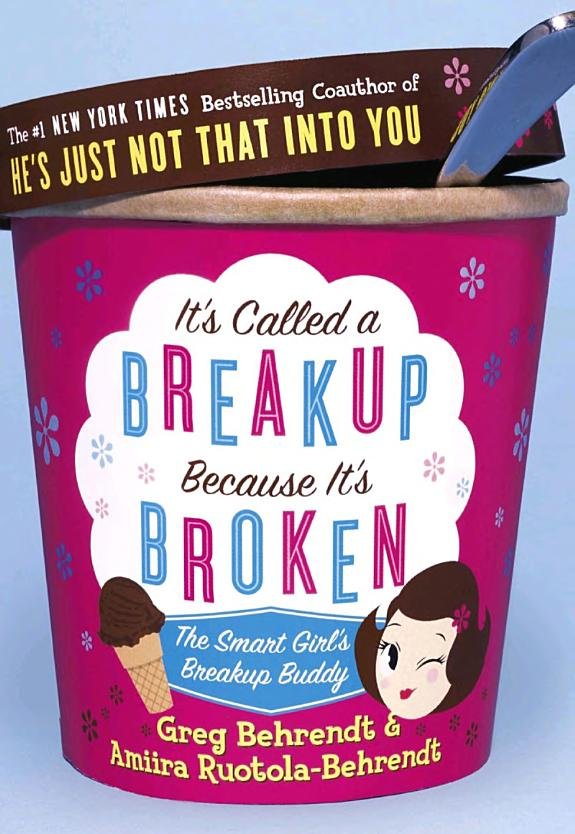
It’s Called a Breakup Because It’s Broken: The Smart Girl’s Break-Up Buddy
2. It’s Called a Breakup Because It’s Broken: The Smart Girl’s Break-Up Buddy by Greg Behrendt and Amiira Ruotola
Greg Behrendt co-wrote “He’s Just Not That Into You,” and this follow-up has a similar energy: frank, slightly irreverent, and deeply unwilling to let you spend six months pretending your ex might come back. Written with his wife Amiira Ruotola, who had her own share of painful breakups before they met, the book has a conversational tone that feels like advice from a friend who genuinely likes you and also genuinely refuses to coddle you. That combination is rarer than it sounds.
The central argument is right there in the title. Something was broken, that is why it ended, and the sooner you accept that, the sooner you can stop auditing every text message he ever sent you for hidden meaning. The book is practical and occasionally funny, which is a useful quality in a breakup guide because laughter is genuinely one of the better medicines available. Behrendt and Ruotola include exercises, affirmations, and what they call “breakup rules,” none of which feel preachy because they deliver them with enough self-awareness to keep things from tipping into self-help cliche.
The tone skews toward women recovering from heterosexual relationships, and some of the pop culture references are dated enough to remind you this was written in 2005. It is also not the right book if your breakup involved serious trauma or a long marriage. The breezy approach that makes it so readable for some situations can feel slightly dismissive in heavier ones. But for the kind of breakup where you need someone to firmly and kindly tell you to stop checking his Instagram, this delivers.
The book insists that a breakup is not a reflection of your worth, it is information about compatibility, and there is a meaningful difference between those two things.
This is perfect for someone in the early, obsessive phase of a breakup who needs a no-nonsense friend to interrupt the spiral with some humor and perspective.
Getting Past Your Breakup: How to Turn a Devastating Loss into the Best Thing That Ever Happened to You
3. Getting Past Your Breakup: How to Turn a Devastating Loss into the Best Thing That Ever Happened to You by Susan J. Elliott
Susan J. Elliott is a therapist and attorney who also runs a widely read blog on breakup recovery, and this book carries the weight of both credentials. It is thorough in a way that some readers will find enormously reassuring and others might find a little exhausting. Elliott takes the position that most people do not fully grieve their losses, and that unprocessed grief from past relationships quietly sabotages future ones. Her program is designed to make you do the actual work rather than just read about it.
The structure here is genuinely useful. Elliott walks readers through grief, then self-inventory, then rebuilding, and she does not rush any of it. She is particularly good on the subject of no-contact, explaining not just what it is but why it matters psychologically, which makes it easier to stick to when your resolve is wavering at eleven on a Tuesday night. She also addresses the way old wounds get activated by new losses, which gives the book a depth that purely practical breakup guides tend to skip.
The subtitle promises this will become the best thing that ever happened to you, and that framing might feel premature or even irritating when you are in the middle of acute pain. Elliott earns that promise eventually, but you have to do the work she outlines to get there. This is not a passive reading experience. There are journaling exercises and self-assessments throughout, and the book is most valuable if you actually engage with them rather than reading past them. If you want something you can absorb from the couch without picking up a pen, this may not be your entry point.
Elliott argues that grieving a relationship fully, rather than rushing past the pain, is what actually prevents you from repeating the same patterns in the next one.
This is perfect for someone who senses that their breakup is connected to older patterns and who wants a structured, therapeutic approach to understanding and changing them.
The Breakup Bible: The Smart Woman’s Guide to Healing from a Breakup or Divorce
4. The Breakup Bible: The Smart Woman’s Guide to Healing from a Breakup or Divorce by Rachel Sussman
Rachel Sussman is a licensed psychotherapist based in New York who has spent years working with people navigating the end of relationships, and this book reads like the distilled wisdom of that practice. It is calm and professional without being cold, which is a balance that is genuinely hard to strike. Sussman takes breakups seriously as psychological events, not just inconveniences to be processed and moved past, and that respect for the reader’s experience comes through on every page.
One of the things that sets this book apart is its attention to the different kinds of endings people face. Sussman addresses not just the standard romantic breakup but also divorce, the end of a long-term partnership without marriage, and the particular grief of a relationship that ended before it really had a chance to begin. She also covers the complicated emotional territory of breakups where one person wanted out and the other did not, which is honest about the fact that those two people are having very different experiences and need different kinds of support.
The book includes practical tools, cognitive behavioral techniques, and exercises that Sussman uses in her actual therapy practice. It is grounded in clinical research without feeling like a textbook. That said, it is aimed specifically at women, and the framing throughout assumes a heterosexual relationship. Readers outside that demographic may still find it useful but will have to do some mental translation. It is also not particularly funny, which is fine, but worth noting if you are someone who needs a little levity mixed in with the hard work.
Sussman reframes the end of a relationship not as a failure but as a redirection, one that is painful precisely because something real and meaningful was lost.
This is perfect for someone who wants a therapist’s perspective without the cost of weekly sessions, particularly if the relationship that ended was serious or long-term.
How to Heal a Broken Heart in 30 Days: A Day-by-Day Guide to Saying Good-bye and Getting On With Your Life
5. How to Heal a Broken Heart in 30 Days: A Day-by-Day Guide to Saying Good-bye and Getting On With Your Life by Howard Bronson and Mike Riley
The thirty-day structure of this book is both its greatest strength and the thing most likely to annoy you. Bronson and Riley walk you through a single day at a time, with each entry offering a short reflection, a practical suggestion, and an affirmation. On days when you cannot imagine reading anything longer than a paragraph, that format is a genuine gift. On days when you feel like you should be further along than Day 11, it can feel slightly reductive. Grief does not follow a calendar, and the authors know this, but the structure exists to give you something to hold onto when everything else feels formless.
The tone is gentle and encouraging without veering into the kind of cheerfulness that makes you want to throw a book across the room. Bronson and Riley are clearly writing from a place of genuine empathy, and the daily entries cover a wide range of territory, from the physical symptoms of heartbreak to the way loneliness can distort your memory of a relationship into something better than it actually was. That last point is one the book returns to usefully, because idealization of an ex is one of the most common and most counterproductive things people do in the aftermath of a breakup.
Thirty days is, of course, not actually enough time to heal from a significant relationship. The authors are not claiming otherwise. What they are offering is a framework for the first month, which is often the hardest, and a set of daily practices that can help you function when functioning feels impossible. If you are coming out of a long relationship or dealing with grief that is complicated by other factors, you will almost certainly need more than this book alone. But as a companion for the acute early phase, it is practical and kind.
The book’s quiet wisdom is that healing is not a feeling that arrives all at once but a series of small daily choices that accumulate into something that eventually resembles okay.
This is perfect for someone who is overwhelmed and needs a simple, manageable daily structure to get through the first brutal month after a breakup.
Heal Your Broken Heart: A 60-Day Journal and Guided Exercises to Move On
6. Heal Your Broken Heart: A 60-Day Journal and Guided Exercises to Move On by Lisa Marie Bobby
Lisa Marie Bobby is a therapist and founder of Growing Self Counseling and Coaching, and this journal takes a distinctly therapeutic approach to breakup recovery. Rather than reading about healing, you are actively doing it, which is the premise of the sixty-day format. Each day presents a prompt or exercise designed to help you process what happened, understand your own patterns, and gradually rebuild your sense of self outside the relationship. It is one of the more interactive entries on this list, and its value is almost entirely proportional to how honestly you engage with it.
Bobby is particularly thoughtful about the difference between grieving a relationship and grieving the future you imagined with that person, which are often two distinct losses that get tangled together. Separating them out is genuinely useful work, and the journal format gives you space to do it at your own pace. The sixty-day structure is more forgiving than a thirty-day one, acknowledging that real emotional processing takes time and that some days you will need to sit with a prompt for a while before you have anything honest to write.
This is emphatically not a passive book. If you are in the phase of a breakup where you mostly want to consume things rather than produce them, this will feel like homework in the least welcome sense. It also requires a baseline of self-awareness and willingness to be uncomfortable with your own answers, which not everyone is ready for immediately after a relationship ends. But for someone who is past the initial shock and ready to do the actual interior work, this journal offers a structured and thoughtful path through it.
Bobby’s approach rests on the idea that understanding why a relationship ended, honestly and without self-deception, is what makes it possible to build something healthier next time.
This is perfect for someone who processes emotions through writing and wants a therapist-guided journaling practice to move through grief with intention and self-awareness.
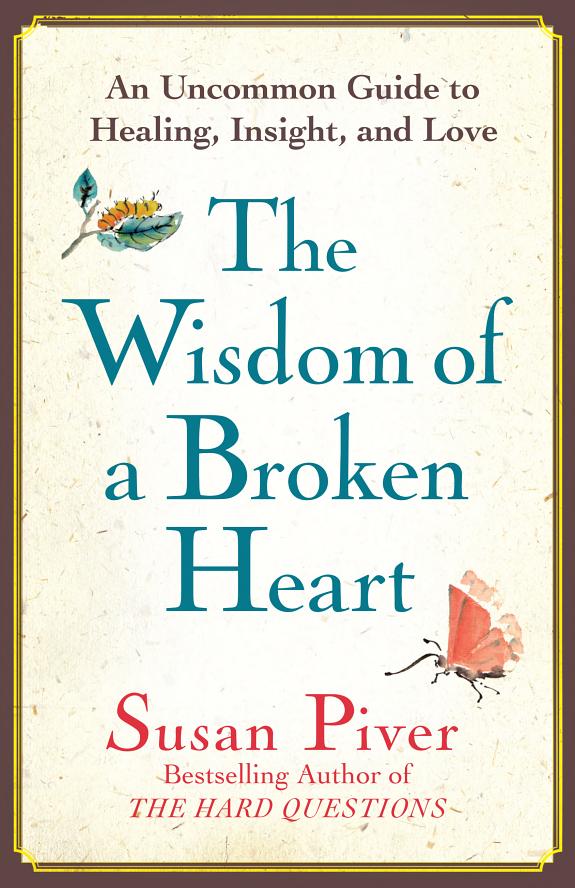
The Wisdom of a Broken Heart
7. The Wisdom of a Broken Heart by Susan Piver
Susan Piver is a Buddhist teacher and author, and this book approaches heartbreak from a direction that is genuinely different from everything else on this list. Rather than treating pain as a problem to be solved or a phase to be moved through as quickly as possible, Piver suggests that the tenderness and vulnerability of a broken heart are actually a kind of opening. Not in a greeting card way. In a specific, meditative, sit-with-this-discomfort way that draws on Buddhist teachings about impermanence and compassion. It sounds abstract until you read it, and then it makes a surprising amount of sense.
Piver writes from personal experience as well as from her practice as a teacher, and that combination gives the book an authority that purely philosophical approaches sometimes lack. She is not asking you to be grateful for your pain or to reframe it into something positive. She is asking you to stop running from it, because running is what keeps it in charge. The meditation practices she includes are accessible to people with no prior experience, and they offer a different kind of tool than journaling or cognitive exercises, one that works on the body as much as the mind.
This book will not resonate with everyone. If the words “Buddhist perspective” make you want to close the tab, that is useful information. Piver is not preachy about her framework, but it is genuinely present throughout, and readers who have no interest in contemplative practice may find themselves skipping the sections that matter most. It is also not a book for the very earliest days of a breakup, when the pain is too acute for anything that requires stillness. But for someone who has moved past the initial crisis and wants to understand what this experience might actually be teaching them, it is quietly remarkable.
Piver writes that the broken heart is not a sign that you loved wrong, but evidence that you loved at all, and that this capacity is worth protecting rather than armoring against.
This is perfect for someone drawn to contemplative practice or mindfulness who wants to understand their heartbreak as a spiritual experience rather than purely an emotional one.
Healing from a breakup is not linear and it is not quick, regardless of what any thirty-day or sixty-day title might imply. Some days you will feel genuinely better and then wake up the next morning right back at the beginning, and that is not a failure of the process. That is just what grief does. The books on this list offer different kinds of company for different stages of that journey, and it is worth thinking about which kind of support you actually need right now rather than which kind you think you should need.
If you are in acute pain and need to feel less alone, start with Strayed. If you need someone to firmly interrupt the obsessive thinking, try Behrendt and Ruotola. If you are ready to do deeper work on patterns and self-understanding, Elliott, Sussman, or Bobby will serve you well. If you want daily structure for the early weeks, Bronson and Riley have you covered. And if you are ready to sit with the harder questions about what this experience is actually asking of you, Piver is waiting. There is no wrong choice. There is only where you are right now, and the next small step from there.