7 Books for Healing From Friendship Breakups
Nobody warns you about friendship breakups. There are no greeting cards for them, no culturally accepted mourning period, and no one is bringing you a casserole when your best friend of fifteen years suddenly stops returning your texts. You are just supposed to carry on, apparently, as if a significant piece of your life did not just quietly collapse.
The grief is real, though. So is the confusion, the replaying of conversations, the wondering what you did wrong or whether you did anything wrong at all. Friendships end in all kinds of ways, through betrayal, through slow fading, through one dramatic fight that neither person recovers from, or simply through two lives drifting apart until there is nothing left to hold them together. Whatever brought you here, these seven books offer something useful: perspective, language for what you are feeling, and a gentle nudge toward whatever comes next.
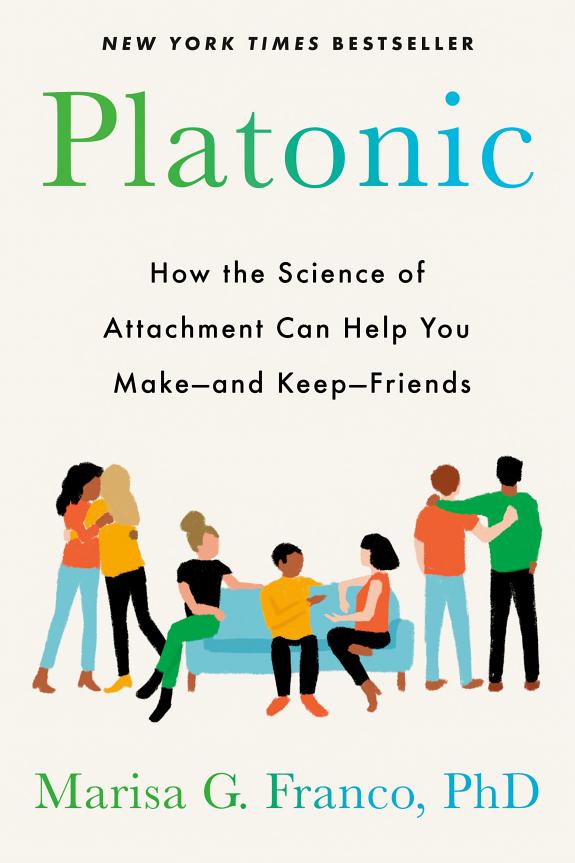
Platonic: How the Science of Attachment Can Help You Make—and Keep—Friends
1. Platonic: How the Science of Attachment Can Help You Make and Keep Friends by Marisa G. Franco
Marisa G. Franco is a psychologist who writes about friendship with the kind of warmth and rigor you rarely find together. Platonic draws heavily on attachment theory, the same framework therapists use to explain romantic relationship patterns, and applies it to friendships. The result is a book that does not just describe the problem but actually helps you understand why you relate to friends the way you do, and why some friendships seem to fall apart no matter how much you care.
If you have ever wondered why losing a close friend feels eerily similar to a romantic breakup, Franco has an answer for you. She argues that our attachment styles shape every close relationship we have, and that the same anxious or avoidant patterns that trip us up in romance are quietly at work in our friendships too. Reading this book after a friendship loss can feel like finally getting a diagnosis for something you have been describing in vague, frustrated terms for years.
Franco is also refreshingly direct about the cultural neglect of friendship. She names the loneliness epidemic without leaning on it as a crutch, and she offers concrete, research-backed suggestions for building and repairing close bonds. The tone is warm but never saccharine. She trusts her readers to handle nuance, which is a kindness in itself.
Understanding your attachment style does not excuse the way a friendship ended, but it can help you stop carrying all the blame for it.
This is perfect for readers who want to understand the psychological roots of their friendship patterns, especially those who find themselves repeatedly losing close friends and are not quite sure why.
When Friendship Hurts: How to Deal with Friends Who Betray, Abandon, or Wound You
2. When Friendship Hurts: How to Deal with Friends Who Betray, Abandon, or Wound You by Jan Yager
Jan Yager has been studying friendship for decades, and this book is one of the most straightforward, practical guides to navigating the painful side of it. Where some books on friendship focus on building new connections, Yager plants herself firmly in the territory of friendships that have gone wrong, and she does not flinch from how badly they can hurt. The betrayal, the abandonment, the slow realization that someone you trusted was not who you thought they were. She covers all of it.
The book is organized around different types of difficult friends, from the competitive friend to the one who simply disappears when you need them most. Yager draws on surveys and interviews with real people, which gives the book a grounded, human quality. You are not just reading theory. You are reading about experiences that will likely feel familiar in uncomfortable ways. There is something quietly validating about that.
Yager also addresses the practical question of what to do, whether to confront, to distance yourself, or to end the friendship entirely. She does not pretend these decisions are easy, but she offers a framework for thinking them through. If you are in the thick of a friendship that is hurting you and you are not sure what your next move should be, this book is a useful companion.
That said, readers looking for deep emotional processing or literary writing will find this one a bit clinical. It reads more like a handbook than a memoir, which is either exactly what you need or not quite what you are after, depending on where you are in the grieving process.
Sometimes the most important thing you can do after a friendship hurts you is simply name what happened, clearly and without softening it for anyone else’s comfort.
This is perfect for someone who is in the middle of a painful friendship situation and needs practical guidance on how to assess it and decide what to do next.
The Friend Who Got Away: Twenty Women’s True Life Tales of Friendships that Blew Up, Burned Out or Faded Away
3. The Friend Who Got Away: Twenty Women’s True Life Tales of Friendships that Blew Up, Burned Out or Faded Away by Jenny Offill and Elissa Schappell
This anthology does something that no self-help book quite can. It sits with you. Edited by Jenny Offill and Elissa Schappell, two writers with serious literary credentials, The Friend Who Got Away collects twenty essays from women writing honestly about friendships that ended, each one different in its shape and texture and ache. The contributors include well-known writers alongside others you may not have heard of, and the quality is consistently high.
What makes this collection so useful for healing is that it refuses to tidy things up. Some of the essays arrive at understanding. Others do not. Some friendships ended because someone behaved badly. Others dissolved for reasons that are genuinely impossible to pin down, which is its own kind of grief. Reading these essays, you are reminded that friendship loss is one of the least talked about and most universal human experiences. That reminder, oddly, helps.
The writing itself is often beautiful. These are not confessional pieces in the overwrought sense. They are careful, honest, and occasionally very funny in the way that only comes from real distance on a painful thing. A few essays will probably hit closer to home than you expect, which is the whole point of good personal essays. If you have been feeling like your friendship grief is somehow illegitimate or excessive, this book will talk you out of that very gently.
This is not a book for readers who want actionable advice. There are no exercises, no frameworks, no steps. It is purely literary. But sometimes that is exactly the medicine.
A friendship that fades away without a clear reason can be harder to mourn than one that ended in a fight, because there is no moment to point to, no wound to name.
This is perfect for readers who find comfort in literary nonfiction and want to feel less alone in their grief through the honest experiences of other women who have been there too.
The Friendship Fix: The Complete Guide to Choosing, Losing, and Keeping Up with Your Friends
4. The Friendship Fix: The Complete Guide to Choosing, Losing, and Keeping Up with Your Friends by Andrea Bonior
Andrea Bonior is a clinical psychologist and longtime advice columnist, and that combination gives The Friendship Fix a distinctive voice. It is warm and conversational, the kind of book that feels like talking to a very sensible friend who also happens to have a graduate degree in human behavior. Bonior covers the full arc of adult friendship, from making new friends to navigating conflict to letting go of friendships that have run their course.
The sections on ending friendships and recovering from them are particularly good. Bonior does not treat friendship breakups as a minor inconvenience to be quickly processed and moved past. She acknowledges the genuine grief involved and gives it appropriate space. She also addresses the guilt that often accompanies being the one who ends a friendship, which is something that rarely gets discussed. If you were the one who pulled away, and you are carrying some complicated feelings about that, this book sees you.
Bonior writes with a light touch and occasional humor that keeps the book from feeling heavy even when the subject matter is not. She includes reflection questions throughout, which makes it a good choice if you like to engage actively with what you are reading rather than just absorbing it passively. Think of it as a workbook that also happens to read well as a straightforward book.
Readers who are deep in acute grief may find the practical, forward-looking tone a bit brisk. This book is better suited to someone who is a little further along in processing a friendship loss and is ready to think about what comes next.
Letting go of a friendship is not the same as failing at it. Some friendships simply have a natural end, and recognizing that is an act of honesty, not defeat.
This is perfect for someone who wants a comprehensive, approachable guide to the full landscape of adult friendship, including the messy business of when and how friendships end.
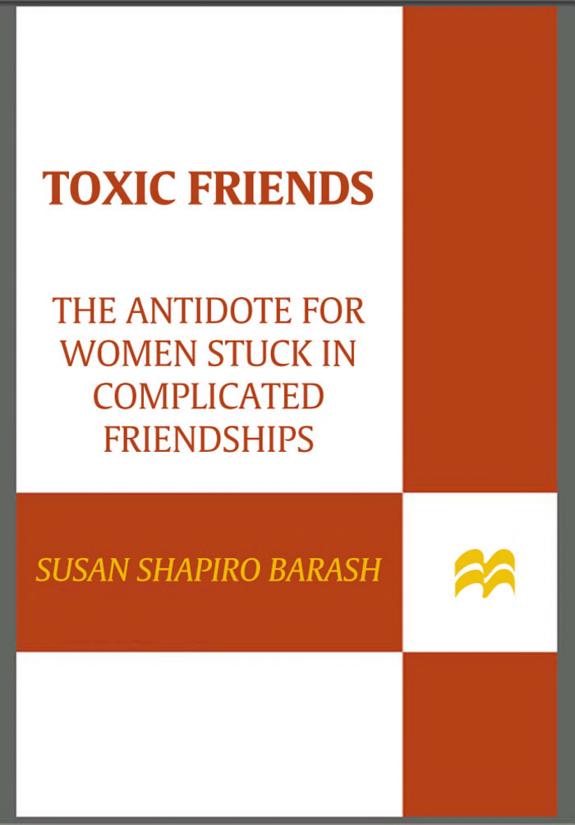
Toxic Friends: The Antidote for Women Stuck in Complicated Friendships
5. Toxic Friends: The Antidote for Women Stuck in Complicated Friendships by Susan Shapiro Barash
Susan Shapiro Barash has written extensively about women’s social dynamics, and Toxic Friends draws on interviews with hundreds of women to map out the different ways female friendships can become harmful. The book identifies specific types of toxic friendship patterns, the competitive friend, the user, the one who makes you feel small, and examines why women so often stay in these friendships long past the point of benefit.
One of the more interesting threads in the book is Barash’s exploration of why these friendships are so hard to leave. There is a cultural expectation that women will be loyal, nurturing, and endlessly forgiving in their friendships, and Barash argues that this expectation keeps many women trapped in relationships that are quietly eroding their confidence and wellbeing. That framing is useful, particularly for anyone who has spent years making excuses for a friend’s bad behavior and then felt blindsided by the eventual falling out.
The book is research-heavy and grounded in real women’s stories, which gives it credibility. It can be a little repetitive in places, and the typology of toxic friends occasionally feels reductive, as real people tend to be more complicated than categories suggest. But as a tool for recognizing patterns and giving yourself permission to step back from a friendship that is doing you harm, it does its job well.
This one is specifically written for women, and the dynamics it describes are rooted in female friendship culture. Men reading it may find it less directly applicable, though the underlying psychology is not entirely gender-specific.
Recognizing that a friendship has been toxic does not mean you were foolish for caring about it. It means you were human, and humans are wired to hope the best of the people they love.
This is perfect for women who have recently ended, or are considering ending, a friendship that has left them feeling consistently drained, diminished, or confused about their own worth.
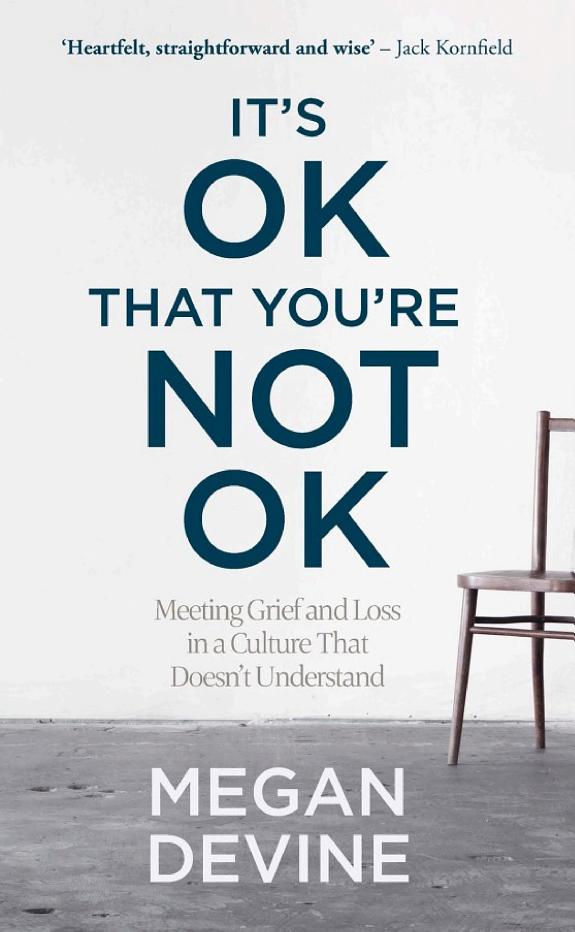
It’s OK That You’re Not OK: Meeting Grief and Loss in a Culture That Doesn’t Understand
6. It’s OK That You’re Not OK: Meeting Grief and Loss in a Culture That Doesn’t Understand by Megan Devine
Megan Devine wrote this book after the sudden death of her partner, and it is primarily known as a book about bereavement. But its central argument applies with striking precision to friendship loss, which is this: grief does not need to be fixed. It needs to be witnessed. Devine is openly critical of a culture that rushes people toward healing, toward silver linings and lessons learned, and she makes a compelling case that this rushing actually makes grief worse, not better.
Reading this book after a friendship breakup can feel like someone finally telling you the truth. Yes, it hurts this much. No, you do not need to be over it by now. No, there is not always a lesson that makes it worth it. Devine’s voice is direct and unsparing, which is exactly what grief sometimes needs. She is not unkind. She is just honest in a way that most books about loss are not.
The book also does something quietly radical, which is to acknowledge that some losses are not socially recognized as losses at all, and that this lack of recognition makes the grief harder to bear. Friendship loss sits squarely in that category. There is no funeral for a friendship. No one asks how you are doing three months later. Devine’s framework for understanding disenfranchised grief, grief that does not get cultural permission to exist, is one of the most useful things you can read if you are feeling like you are grieving too much or too long for something the world does not take seriously.
If you are looking for practical steps or a path forward, this is not quite the right book. It is more concerned with validating where you are than with moving you somewhere else. That is either exactly right or a little frustrating, depending on what you need.
The goal is not to get over your grief. The goal is to learn to carry it, and to build a life that is big enough to hold both the loss and everything else.
This is perfect for anyone who is deep in the grief of a friendship loss and needs permission to feel exactly as bad as they feel, without being rushed toward resolution or gratitude.
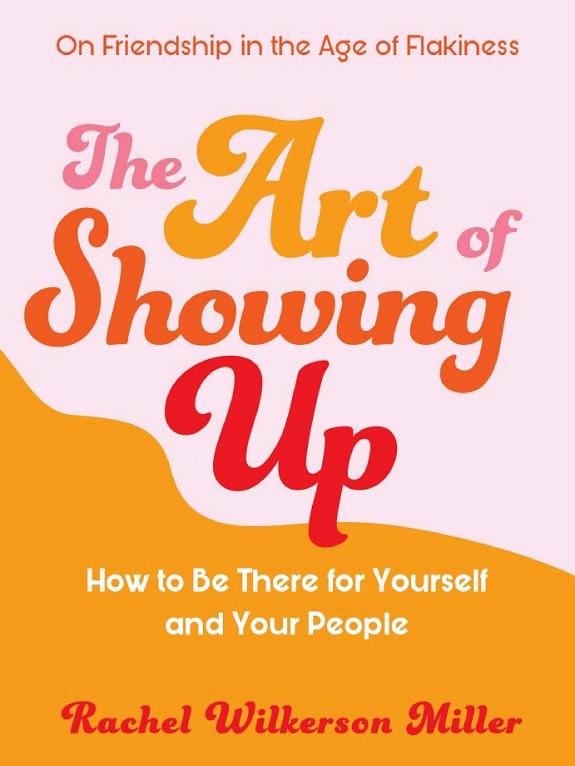
The Art of Showing Up: How to Be There for Yourself and Your People
7. The Art of Showing Up: How to Be There for Yourself and Your People by Rachel Wilkerson Miller
Rachel Wilkerson Miller writes about friendship with the kind of practical, unsentimental warmth that is genuinely rare. The Art of Showing Up is not specifically about friendship breakups, but it belongs on this list because of what it offers on the other side of one: a thoughtful, grounded framework for what good friendship actually looks like, and how to be better at both giving and receiving it. After a friendship ends, especially a painful one, it is easy to feel either cynical about close friendships or uncertain about your own role in what went wrong. This book helps with both.
Miller covers topics like how to support friends through hard times, how to communicate honestly without blowing things up, and how to maintain friendships across distance and life changes. She writes from personal experience as well as research, and her voice is conversational and funny in a low-key way. She is also refreshingly honest about her own failures and awkward moments in friendship, which makes the book feel like a conversation rather than a lecture.
There is a chapter on showing up for yourself that is particularly worth reading in the context of healing from a friendship loss. Miller argues that the way you treat yourself in hard moments sets the template for how you let others treat you, which is a simple idea but one that lands differently when you are in the middle of grieving a relationship. Taking care of yourself is not a consolation prize. It is the foundation.
This book will not speak to you if you are in acute pain and not yet ready to think about future friendships. It is a book for building and tending, not for grieving. But when you are ready to look forward, it is a genuinely good companion.
Being a good friend is a skill, not just a feeling. And like any skill, it can be learned, practiced, and improved, even after you have gotten it wrong before.
This is perfect for someone who has processed the worst of a friendship loss and is now ready to think about how to build and sustain healthier, more intentional friendships going forward.
Friendship breakups occupy a strange, unacknowledged corner of human grief, real enough to knock the wind out of you, invisible enough that most people will not think to ask how you are doing. If these books do one thing collectively, it is to push back against that invisibility. The loss is real. The grief is legitimate. And you are not alone in it, even when it very much feels that way.
Different books on this list will be right for different moments. Some are for the thick of it, when you just need someone to tell you it is okay to feel as bad as you feel. Others are for a little further down the road, when you are ready to understand what happened and think about what comes next. There is no correct order and no required timeline. Read what you need, when you need it, and give yourself the same patience you would offer a friend going through something hard.
Which, when you think about it, is probably a good place to start.