

7 Books for Learning How to Let Go of Resentment
Resentment is a strange thing to carry. It feels justified, even righteous, right up until the moment you realize it has been quietly running your life. You replay the conversation, rehearse what you should have said, and somehow the person who hurt you gets to live rent-free in your head for years. Most of us know this feeling. Few of us know what to actually do about it.
The books on this list approach forgiveness from very different angles. Some are rooted in psychology, some in spirituality, and at least one will probably make you laugh before it makes you think. None of them promise that letting go is easy, and that honesty is exactly why they are worth reading. If you have been waiting for permission to put down a grudge you have been hauling around for longer than you care to admit, consider this your invitation.
Radical Forgiveness: A Revolutionary Five-Stage Process to Heal Relationships, Let Go of Anger and Blame, and Find Peace in Any Situation
1. Radical Forgiveness: A Revolutionary Five-Stage Process to Heal Relationships, Let Go of Anger and Blame, and Find Peace in Any Situation by Colin Tipping
Colin Tipping writes with the conviction of someone who has watched forgiveness work in situations where it seemed genuinely impossible. His background as a workshop facilitator comes through clearly, and the book reads less like a self-help manual and more like a guided conversation. The central idea is that our grievances are not random, that the people who hurt us are, in some spiritual sense, giving us exactly what we need to grow. That framing will either resonate with you immediately or make you put the book down on page twelve.
The five-stage process Tipping outlines is structured and repeatable, which is useful for people who need something concrete to hold onto when emotions are running high. He includes worksheets and exercises throughout, so this is not a book you simply read and shelve. It asks you to participate. The spiritual framework is loosely New Age in orientation, drawing on ideas about the soul and divine orchestration that sit outside mainstream religious traditions.
Where the book genuinely earns its place on this list is in its insistence that forgiveness is not about excusing behavior. Tipping is clear that you can fully acknowledge harm done to you while still choosing to release your attachment to the story of being wronged. That distinction matters, and he returns to it often enough that it actually sinks in.
Radical Forgiveness asks you to consider that your pain might be purposeful, which is either a comforting idea or a deeply annoying one, depending on where you are in the healing process.
This is perfect for readers who are open to spiritual or metaphysical frameworks and want a structured, worksheet-driven approach to working through a specific relationship wound. It is not the right fit for readers who prefer strictly secular, research-backed content.
Unoffendable: How Just One Change Can Make All of Life Better
2. Unoffendable: How Just One Change Can Make All of Life Better by Brant Hansen
Brant Hansen is a radio host, and it shows in the best possible way. His writing is conversational, quick, and genuinely funny. He opens with the provocative claim that humans are not actually entitled to their anger, and then spends the rest of the book making a surprisingly compelling case for that position. The humor is not decoration here. It is the delivery mechanism for ideas that might otherwise feel too confrontational to sit with.
The theological backbone of the book comes from a Christian perspective, specifically the idea that anger and the right to be offended belong to God rather than to us. Hansen is careful not to be preachy about this, and even readers who do not share his faith will find the core argument worth wrestling with. He distinguishes between moral outrage over injustice and the personal, ego-driven offense-taking that most of us are actually guilty of, and that distinction is where the book gets genuinely useful.
Hansen is also honest about how countercultural this idea is. We live in a time when being offended is practically a social currency, and he does not pretend that choosing to be unoffendable will make you popular. He just argues, with warmth and a few well-placed jokes, that it will make you freer. The book is short enough to read in a weekend, which is part of its charm.
Hansen makes the case that most of our anger is less about justice and more about ego, and he does it without making you feel terrible about yourself, which is a genuine writing achievement.
This is perfect for readers who appreciate humor alongside substance and are comfortable with a Christian framework for thinking about anger and forgiveness. Readers who prefer a secular or clinical approach may find the theological grounding a bit much.
Forgive for Good: A Proven Prescription for Health and Happiness
3. Forgive for Good: A Proven Prescription for Health and Happiness by Fred Luskin
Fred Luskin is a researcher at Stanford, and this book is the most clinically grounded entry on this list. He founded the Stanford Forgiveness Project and has spent years studying what forgiveness actually does to the body and mind. The results are striking. Chronic resentment is genuinely hard on your health, raising stress hormones and keeping your nervous system in a low-grade state of alarm. Luskin is not making a moral argument for forgiveness so much as a physiological one, and that reframing is refreshing.
The writing is clear and accessible without being dumbed down. Luskin introduces the concept of a “grievance story,” the narrative you tell yourself about being wronged, and argues that most of our suffering comes not from the original wound but from the story we keep rehearsing. Learning to change the story is the heart of his method. He walks through this process with specific techniques drawn from cognitive behavioral therapy and stress management research.
One of the book’s strengths is its range of examples. Luskin worked with groups in Northern Ireland and Sierra Leone, people dealing with violence and loss on a scale most readers will never experience, and the fact that his methods showed measurable results in those contexts gives the whole project a weight it might otherwise lack. This is not a book about forgiving your annoying coworker. It can handle the heavy stuff.
Luskin reframes forgiveness as something you do for your own nervous system rather than as a gift to the person who hurt you, and that small shift in perspective makes the whole project feel a lot more achievable.
This is perfect for readers who want research-backed techniques and a secular, psychological approach to releasing resentment. It may feel too clinical for readers looking for emotional depth or spiritual guidance.
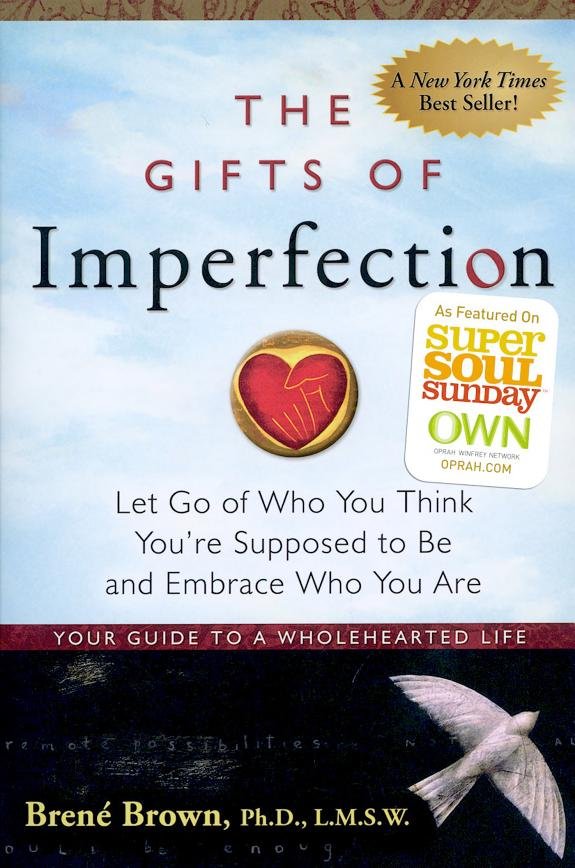
The Gifts of Imperfection
4. The Gifts of Imperfection by Brené Brown
Brené Brown is a researcher who writes like a storyteller, which is one of the reasons her books find such wide audiences. The Gifts of Imperfection is not strictly a book about forgiveness, but it belongs on this list because resentment almost always has shame and perfectionism hiding underneath it. Brown argues that we hold onto grudges in part because we cannot tolerate the vulnerability of letting go, and that insight cuts closer to the bone than most explicitly forgiveness-focused books manage to.
The book is built around ten guideposts for what Brown calls wholehearted living, and several of them are directly relevant to releasing resentment. Her sections on cultivating gratitude, letting go of what people think, and practicing compassion are particularly strong. She writes from her own experience of struggling with these things, which keeps the tone honest rather than instructional. You never feel lectured at.
Brown’s research background means she is not just offering opinion. She draws on years of qualitative interviews to ground her claims, and while this book is lighter on explicit methodology than some of her other work, the foundation is still there. The writing is warm, occasionally self-deprecating, and moves at a pace that respects the reader’s time.
Brown’s central insight is that wholehearted living requires releasing the armor we wear to avoid being hurt again, and that armor is often made entirely out of old resentments we have mistaken for protection.
This is perfect for readers who want to understand the emotional roots of resentment, particularly those connected to shame and self-worth, rather than a step-by-step forgiveness process. It may feel too broad for readers looking for targeted guidance on a specific grievance.
The Book of Forgiving: The Fourfold Path for Healing Ourselves and Our World
5. The Book of Forgiving: The Fourfold Path for Healing Ourselves and Our World by Desmond Tutu and Mpho Tutu
There are very few writers in the world who have the moral authority to speak about forgiveness the way Desmond Tutu does. As the chair of South Africa’s Truth and Reconciliation Commission, he sat with survivors of apartheid-era atrocities and watched forgiveness happen in conditions that seemed to make it impossible. His daughter Mpho Tutu co-wrote this book, and their different perspectives, one a globally recognized figure, one a pastor working with ordinary grief, give the text a welcome range.
The fourfold path they describe moves through telling your story, naming the hurt, granting forgiveness, and renewing or releasing the relationship. It is simple in outline and genuinely difficult in practice, and the Tutus do not pretend otherwise. What makes this book different from most in the genre is the weight of real history behind it. When Desmond Tutu writes about forgiving the unforgivable, he is not speaking hypothetically.
The book is also deeply personal. Mpho Tutu writes about her own experience of loss and the struggle to forgive, and those passages are among the most moving in the book. The spiritual perspective is broadly Christian but not exclusive, and the emphasis on human dignity and shared humanity gives the text a universal quality that transcends any single tradition. It is, quietly, one of the most serious books on this list.
The Tutus make a distinction between forgiving and forgetting, between releasing your own pain and excusing someone’s behavior, and they hold that distinction with a clarity that only comes from having seen forgiveness tested at the very edge of human experience.
This is perfect for readers dealing with serious, deep-rooted wounds and those who want a framework grounded in both personal experience and historical gravity. It may feel too spiritually oriented for readers seeking a purely psychological approach.
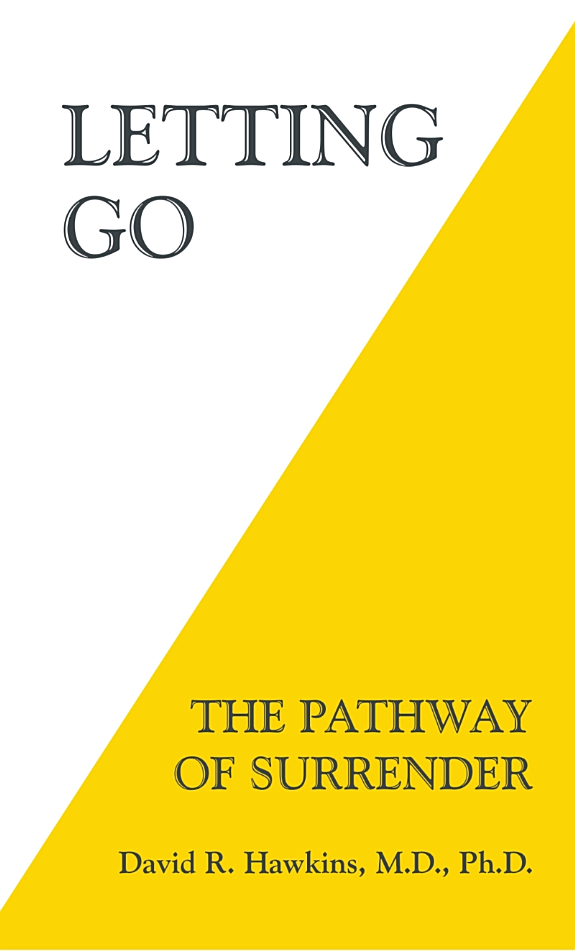
Letting Go: The Pathway of Surrender
6. Letting Go: The Pathway of Surrender by David R. Hawkins
David Hawkins writes from a place of deep familiarity with consciousness research and spiritual psychology, and Letting Go is probably his most accessible book. The central technique he teaches is deceptively simple: rather than suppressing or analyzing negative emotions, you allow yourself to feel them fully and then release your attachment to them. The method sounds almost too easy until you try it, at which point it becomes clear why he wrote an entire book about it.
Hawkins applies this surrender technique to everything from grief and fear to pride and resentment, and the chapters on anger and guilt are particularly relevant for readers working through long-held grudges. His writing style is calm and somewhat clinical, which suits the subject matter. He is not trying to excite you. He is trying to help you get quiet enough to actually feel what you have been avoiding.
The book draws on Hawkins’s broader framework of consciousness levels, which he developed in his earlier work Power vs. Force. You do not need to have read that book to follow this one, but some familiarity with his ideas about emotional energy helps. The spiritual orientation here is non-denominational and leans toward what might broadly be called perennial wisdom traditions. It is a book that rewards slow reading and returning to.
Hawkins argues that most of our suffering comes not from our emotions themselves but from our resistance to feeling them, and that the path through resentment is not around it but directly through the feeling itself.
This is perfect for readers interested in consciousness-based or contemplative approaches to emotional healing, particularly those who have found talk therapy or cognitive approaches insufficient on their own. It is not a good fit for readers who want practical, action-oriented exercises or a faith-based framework.
Total Forgiveness: Achieving God’s Greatest Challenge
7. Total Forgiveness: Achieving God’s Greatest Challenge by R.T. Kendall
R.T. Kendall served as the senior minister of Westminster Chapel in London for twenty-five years, and this book carries the weight of a long pastoral career spent watching people struggle with bitterness. His approach is explicitly Christian and unapologetically so, rooted in biblical texts and theological reflection. If that framework is not yours, this may not be the right book. But for readers who share that foundation, it is one of the most honest and demanding treatments of forgiveness available.
What separates this book from gentler treatments of the subject is Kendall’s insistence on what total forgiveness actually requires. He argues that real forgiveness means not telling anyone what was done to you, not allowing the person to feel guilty, and actively praying for their wellbeing. He is not unaware of how difficult this sounds. He writes openly about his own struggle to forgive a person who had wronged him, and that vulnerability keeps the book from feeling preachy even when the standard it sets is high.
Kendall also addresses the difference between forgiving and trusting, a distinction that matters enormously for people who have been seriously harmed. Forgiveness, in his framework, does not require reconciliation or the restoration of a relationship. It is an internal act, a releasing of the right to punish, and that clarification makes the whole project feel less like an impossible demand and more like a genuine path forward.
Kendall’s definition of total forgiveness is demanding enough that reading it is a little uncomfortable, which is probably the point. He is not describing the easy version of letting go, but he makes a convincing case that the easy version does not actually work.
This is perfect for readers coming from a Christian tradition who want a serious, theologically grounded treatment of forgiveness that does not soften the challenge. Readers outside that tradition or those looking for a secular framework will want to look elsewhere on this list.
None of these books will do the work for you, and any of them that promised to would be lying. What they can do is give you a framework, a language, and sometimes just the reassurance that what you are trying to do is genuinely hard and genuinely worth doing. The right book depends entirely on where you are starting from, whether that is a fresh wound, a decades-old grievance, or a vague sense that you have been carrying something heavy for longer than you can quite remember.
If you are not sure where to begin, start with the book whose approach feels least threatening. Forgiveness has a way of building on itself. One small release tends to make the next one a little easier, and sometimes the best thing a book can do is simply convince you that letting go is possible at all. That turns out to be more than enough to get started.