

7 Books That Seriously Increase Self-Awareness
There is a particular kind of discomfort that comes from not quite understanding yourself. You react to something and then wonder why. You make the same choice for the fifth time and feel genuinely baffled. Most of us spend years in that fog, half-aware that something is going on beneath the surface but not sure how to look at it clearly. Books, the right ones anyway, can hand you a flashlight.
The seven books collected here are not quick fixes or feel-good platitudes. Some of them will challenge you. A couple might annoy you before they help you. What they share is a serious commitment to helping readers understand the interior life, the patterns, the fears, and the stories we carry around without realizing it. If you have ever wanted to understand yourself a little better, this list is a reasonable place to start.
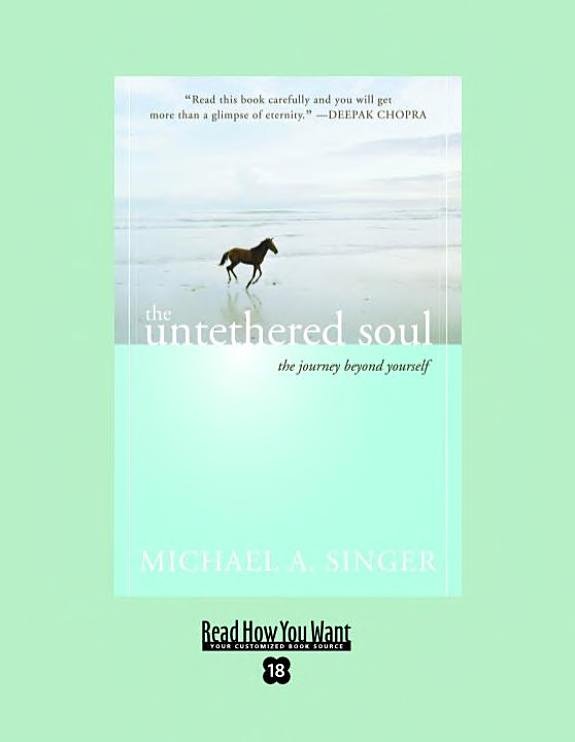
The Untethered Soul
1. The Untethered Soul by Michael A. Singer
Michael A. Singer opens this book with a question that sounds almost too simple: who are you? Not your name, not your job, not your opinions. Who is the one noticing all of those things? That question turns out to be surprisingly difficult to sit with, and Singer spends the rest of the book helping you do exactly that. His central argument is that most of us have confused ourselves with the voice in our heads, the running commentary that judges, worries, and narrates every moment of the day.
Singer’s background blends yoga philosophy with a kind of plain-spoken practicality that makes the ideas feel accessible rather than abstract. He writes about the concept of the “seat of consciousness,” the observer who watches thoughts and feelings come and go without being consumed by them. It sounds straightforward until you try it, and then you realize how much energy you have spent being dragged around by every passing thought. The book is genuinely gentle in its approach, which makes some of its more radical ideas land more quietly than you expect.
The writing style is calm and repetitive in a way that is either meditative or slightly maddening, depending on your temperament. Singer circles back to the same core ideas from different angles, which works well if you find the concepts slippery and less well if you prefer a book that keeps moving forward. The later chapters on energy and the heart can feel a little vague compared to the crisp opening sections.
“There is nothing more important to true growth than realizing that you are not the voice of the mind. You are the one who hears it.”
This is perfect for readers who feel overwhelmed by their own thoughts, who have a passing interest in meditation or mindfulness, and who want a gentle but genuinely substantive introduction to the idea of inner observation. It is less suited to readers who want concrete behavioral exercises or who find spiritual frameworks frustrating.
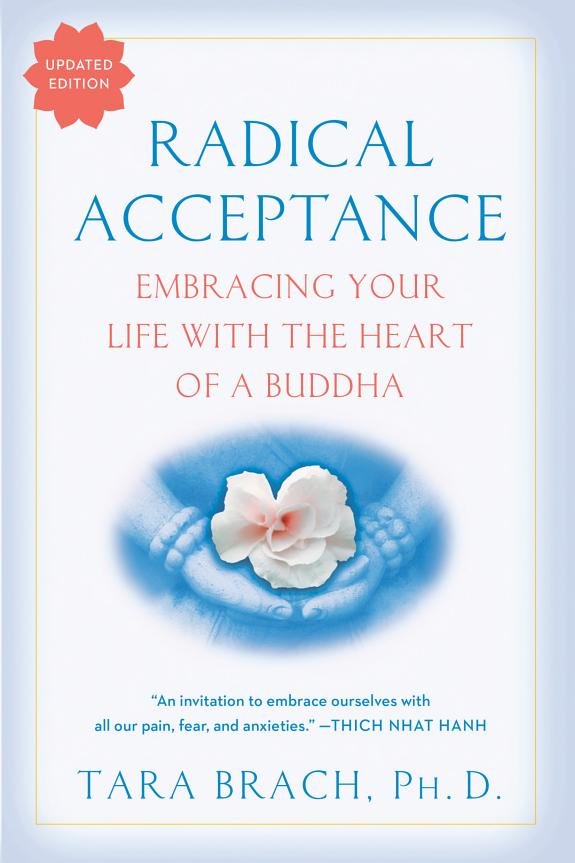
Radical Acceptance
2. Radical Acceptance by Tara Brach
Tara Brach is a psychologist and a Buddhist meditation teacher, and that combination turns out to be a particularly useful one for a book about self-awareness. The central idea here is what she calls the “trance of unworthiness,” the deep, often unconscious belief that we are somehow not enough. Brach argues that most of our self-defeating patterns, the avoidance, the overachieving, the constant busyness, are strategies to manage that feeling rather than face it directly.
What makes this book distinctive is its warmth. Brach writes with real compassion, and she illustrates her ideas with patient stories drawn from her therapy practice and her own experience. She is not asking you to simply think more positively or to override difficult emotions. She is asking you to turn toward them, to meet your fear or shame or grief with the same kindness you might offer a good friend. That is harder than it sounds, and she knows it.
The RAIN practice she introduces, Recognize, Allow, Investigate, Nurture, has become one of the more widely used tools in mindfulness-based therapy, and the book explains it clearly and without unnecessary ceremony. Some readers find the Buddhist framing enriching, while others find it slightly distancing. The clinical anecdotes occasionally feel a bit tidy, where every patient arrives at insight at just the right moment, but that is a small complaint against a book that is mostly honest about how difficult this work is.
“The boundary to what we can accept is the boundary to our freedom.”
This is perfect for people dealing with self-criticism, shame, or anxiety who want both a psychological framework and a meditative practice to work with. It may not resonate as strongly with readers who are put off by Buddhist terminology or who prefer a more secular, research-driven approach.
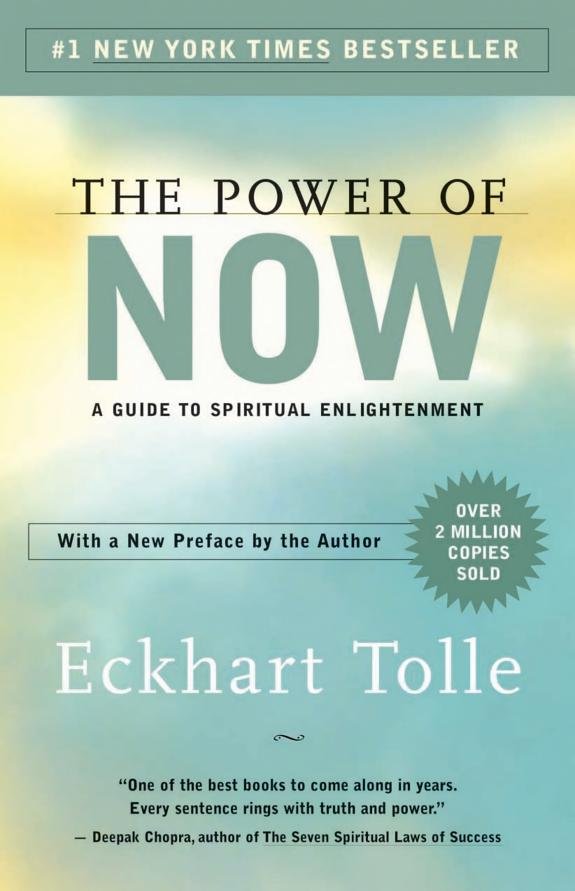
The Power of Now
3. The Power of Now by Eckhart Tolle
Few books in recent decades have been as widely read or as widely argued about as this one. Eckhart Tolle’s core claim is that the vast majority of human suffering comes from our habit of living either in the past or the future, replaying old grievances or rehearsing future anxieties, and that the present moment is the only place where genuine peace is available. If that sounds obvious, the experience of actually trying to stay present for more than thirty seconds will quickly convince you it is not.
Tolle writes in a question-and-answer format that gives the book an odd, slightly oracular quality. He is responding to an imagined reader, which can feel intimate or a little self-important depending on your mood. His prose is calm and deliberate, and at its best it creates a genuine sense of stillness on the page. The concept of the “pain-body,” the accumulated emotional residue we carry from past experiences, is one of the more interesting psychological ideas in the book, even if the terminology takes some getting used to.
It is worth being honest about the book’s limitations. Tolle can be repetitive, and his dismissal of the thinking mind as almost entirely problematic will frustrate readers who value analytical thought. The book also tends to present its insights as universal truths rather than perspectives worth testing, which some readers find inspiring and others find a bit much. Still, for readers willing to engage with it on its own terms, there is something genuinely useful here about the habit of presence.
“Realize deeply that the present moment is all you ever have. Make the Now the primary focus of your life.”
This is perfect for readers who feel chronically anxious about the future or stuck in past regrets, and who are open to a spiritually oriented approach to those patterns. It is not the right fit for readers who want scientific grounding for their self-awareness work or who find New Age framing off-putting.
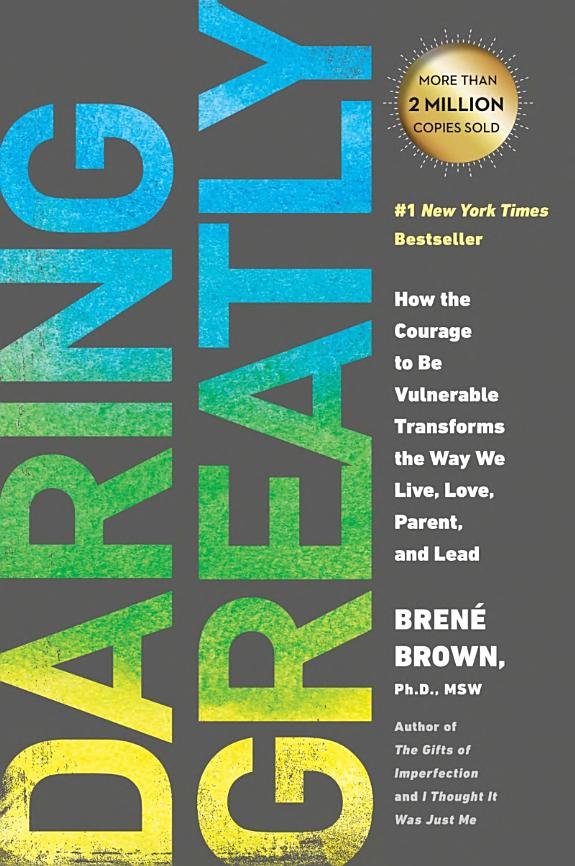
Daring Greatly
4. Daring Greatly by Brené Brown
Brené Brown spent years as a shame researcher before she became a household name, and that background shows in this book. “Daring Greatly” is built around the argument that vulnerability, the willingness to show up and be seen without guarantees, is not a weakness but the very foundation of courage, connection, and authentic living. Brown is drawing on extensive qualitative research, and she is careful to distinguish between what she found and what she believes, which is a level of intellectual honesty that is easy to appreciate.
The book is particularly strong on the mechanics of shame. Brown distinguishes between shame and guilt in a way that is genuinely clarifying: guilt is “I did something bad,” while shame is “I am bad.” That distinction, simple as it sounds, has real implications for how we understand our own self-critical thoughts and how we respond to failure. Her concept of “the arena,” drawn from a Theodore Roosevelt speech, gives the book a memorable frame for thinking about what it costs us to hold back from full engagement with our own lives.
Brown’s voice is warm, funny in places, and occasionally a little too reliant on her own story as evidence. The book can feel slightly repetitive in its middle sections, and some of the workplace applications feel like they belong in a different book. But the core ideas are solid, and the writing has a directness that keeps things moving. This is self-awareness literature that is firmly grounded in human relationships rather than interior contemplation alone.
“Vulnerability is not winning or losing; it’s having the courage to show up and be seen when we have no control over the outcome.”
This is perfect for people who recognize patterns of perfectionism, people-pleasing, or emotional withdrawal in themselves and want to understand where those patterns come from. Readers looking for a more contemplative or philosophical approach may find the research-and-anecdote format a bit brisk.
The Four Agreements
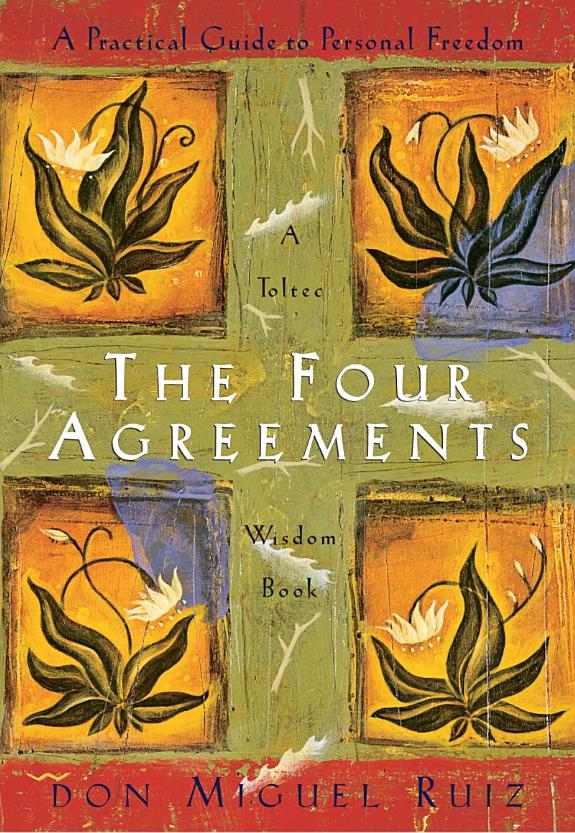
5. The Four Agreements by Don Miguel Ruiz
Don Miguel Ruiz draws on Toltec wisdom traditions to lay out four principles that, he argues, underlie most of our unnecessary suffering. Be impeccable with your word. Do not take anything personally. Do not make assumptions. Always do your best. Written out like that, they look like the kind of advice you might find on a motivational poster, and it is fair to say that the book’s reputation has occasionally suffered from being reduced to those four lines. The actual argument behind each one is more interesting than the slogan version suggests.
The most psychologically rich of the four is the second agreement, do not take anything personally. Ruiz argues that almost everything other people say and do is a projection of their own inner world, their fears, their wounds, their beliefs, and that taking it personally is a kind of self-centered misreading of reality. That idea, when you actually sit with it, has a way of defusing a surprising number of interpersonal grievances. The first agreement, being impeccable with your word, extends well beyond simple honesty to include the way we speak to ourselves, which is where a lot of self-awareness work actually lives.
The book is short, which is either a virtue or a limitation depending on what you want from it. Ruiz moves quickly and does not linger long enough on any idea for it to fully unfold. The Toltec framework gives it a distinctive flavor but also means the ideas are presented more as received wisdom than as something you are invited to interrogate. Readers who want to be challenged rather than reassured may find it a little smooth.
“Nothing other people do is because of you. It is because of themselves.”
This is perfect for readers who want a short, accessible entry point into self-awareness and who are drawn to wisdom traditions rather than Western psychology. It is less suited to readers who want depth, nuance, or a framework they can push back against.
Emotional Intelligence
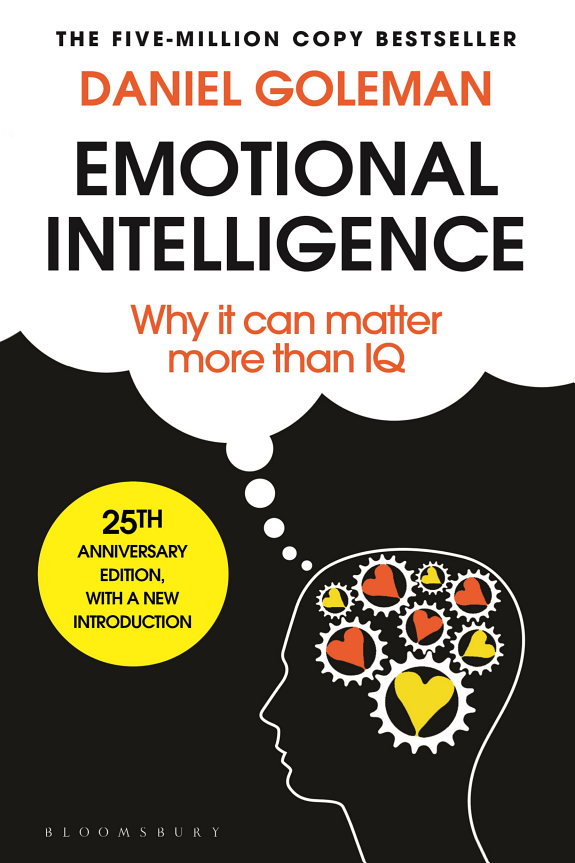
6. Emotional Intelligence by Daniel Goleman
Daniel Goleman’s 1995 book arrived at a moment when the scientific study of emotion was just beginning to reshape how psychologists and educators thought about human capability. His central argument is that the traditional conception of intelligence, the kind measured by IQ tests, tells only a partial story about how well people navigate their lives. Emotional intelligence, which he breaks down into self-awareness, self-regulation, motivation, empathy, and social skill, turns out to matter enormously for everything from personal relationships to professional success.
The self-awareness component is where the book is most directly relevant here. Goleman draws on neuroscience, particularly the work of researchers studying the amygdala and emotional memory, to explain why we sometimes react to situations before we have consciously processed them. Understanding that process, the way old emotional learning can hijack present-moment responses, is one of the more useful things a person can take from this book. It gives a biological grounding to experiences that otherwise feel mysterious or shameful.
Goleman writes as a science journalist, which means the book is readable and well-organized but occasionally oversimplifies the research it draws on. Some of the studies he cites have not aged as well as the broader framework, and the sections on education and workplace applications can feel dated. Still, as an introduction to why emotions are not the opposite of intelligence but an integral part of it, the book holds up well. It is the kind of reading that makes you look back at your own history with new vocabulary.
“People with well-developed emotional skills are also more likely to be content and effective in their lives, mastering the habits of mind that foster their own productivity.”
This is perfect for readers who want a research-grounded explanation for why emotional awareness matters and how it works neurologically. It is less suited to readers looking for a personal, introspective reading experience or for those who want the most current neuroscience rather than the foundational arguments.
The Road Less Traveled
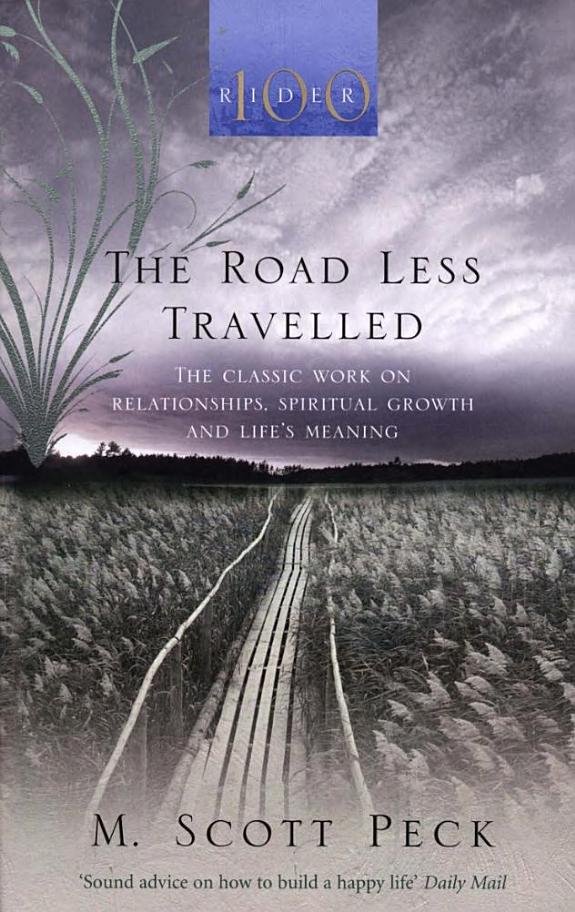
7. The Road Less Traveled by M. Scott Peck
M. Scott Peck opens with three words that have probably stopped more readers cold than any other opening in self-help literature: “Life is difficult.” Not “life can be difficult” or “life is sometimes difficult.” Just: life is difficult. And then he argues that once you truly accept that, rather than spending your energy resisting or resenting it, something important shifts. That is the book in miniature, and the rest of it is an extended, thoughtful unpacking of what genuine psychological and spiritual maturity actually requires.
Peck was a psychiatrist, and this book draws heavily on his clinical experience. He writes about discipline, love, grace, and what he calls the “work of attention,” the active, deliberate effort to see ourselves and others clearly. His treatment of love is particularly worth noting because he defines it not as a feeling but as a commitment to the spiritual growth of another person, which is a more demanding and more interesting definition than most of us operate with day to day. The self-awareness thread runs through all of it: you cannot do any of this work without first being willing to look honestly at yourself.
The book was published in 1978, and some of it shows its age. Peck’s religious framework, broadly Christian but ecumenically inclined, will resonate with some readers and feel like a barrier for others. His views on certain psychological issues reflect the thinking of his era rather than current understanding. But the core chapters on discipline and the nature of love remain among the most honest and demanding things written in this genre. This is not a comfortable book. It expects something from you, which is probably why it has stayed in print for nearly fifty years.
“The truth is that our finest moments are most likely to occur when we are feeling deeply uncomfortable, unhappy, or unfulfilled. For it is only in such moments, propelled by our discomfort, that we are likely to step out of our ruts and start searching for different ways or truer answers.”
This is perfect for readers who want a serious, demanding exploration of personal growth that does not flinch from difficulty, and who are comfortable with a framework that includes spiritual and religious dimensions. It is not the right choice for readers who want a secular, contemporary approach or who are looking for something encouraging and gentle.
Self-awareness is not a destination you arrive at and then stay. It is more like a practice you return to, sometimes willingly and sometimes because something has gone sideways and you need to figure out why. The books on this list approach that practice from genuinely different angles, some through meditation and presence, some through psychology and research, some through philosophy and hard-earned wisdom. None of them will do the work for you, but the good ones will make you want to.
If you are not sure where to start, let your instinct guide you. The book that makes you slightly uncomfortable is often the one you need. And if you read one and it does not land, that is fine too. The right book at the wrong moment is just a book. Come back to it later. It might say something completely different.