
5 Books About Emotional Maturity Worth Reading
Emotional maturity is one of those things everyone assumes they have until a difficult conversation proves otherwise. Maybe you shut down when someone criticizes you. Maybe you find yourself stuck in the same relationship patterns no matter how many times you swear things will be different. Maybe you just want to stop reacting and start responding. Whatever brought you here, you are in good company.
The books on this list approach emotional maturity from different angles. Some dig into childhood and family dynamics. Some focus on the practical mechanics of self-awareness. Others sit quietly with the harder, more spiritual work of accepting who you are. None of them promise a quick fix, and honestly, that is part of why they are worth your time. Growing up emotionally is slow, sometimes uncomfortable work. These books are honest about that, and they are better for it.
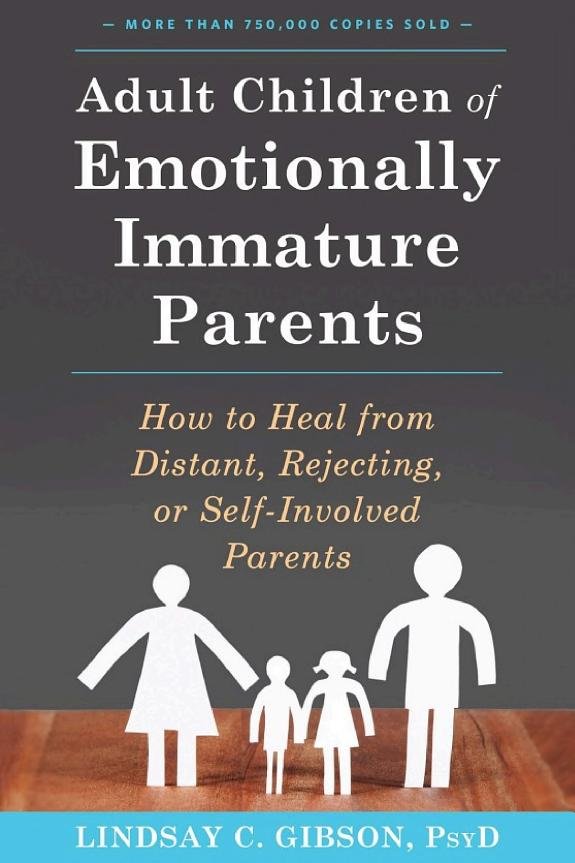
Adult Children of Emotionally Immature Parents
1. Adult Children of Emotionally Immature Parents by Lindsay C. Gibson
Lindsay C. Gibson is a clinical psychologist, and it shows. Her writing has the calm, measured quality of someone who has sat with a lot of pain and learned how to talk about it without dramatizing it. This book is built around a deceptively simple idea: many people who struggle emotionally as adults were raised by parents who were never emotionally equipped to meet their children’s needs. Not abusive, necessarily. Just unavailable in ways that left a mark.
Gibson walks through the different types of emotionally immature parents, from the emotionally distant to the self-involved, and she does so with enough specificity that many readers will recognize someone they love immediately. That recognition can be jarring. It can also be a relief. The book spends equal time on the adult children themselves, particularly on what Gibson calls “internalizers,” people who turned their emotional confusion inward and blamed themselves for years.
The writing is accessible without being shallow. Gibson does not reduce complex family dynamics to simple villains and victims. She acknowledges that emotionally immature parents were often shaped by their own difficult childhoods, while still being clear that understanding someone does not mean excusing the harm they caused. That balance is harder to strike than it sounds, and she manages it well.
“Understanding where your emotional patterns came from is not about assigning blame. It is about finally giving yourself permission to stop carrying what was never yours to carry.”
This is perfect for adults who grew up feeling lonely or misunderstood within their own families, people in therapy who want supplementary reading, and anyone who has ever wondered why certain emotional wounds feel so disproportionately deep.
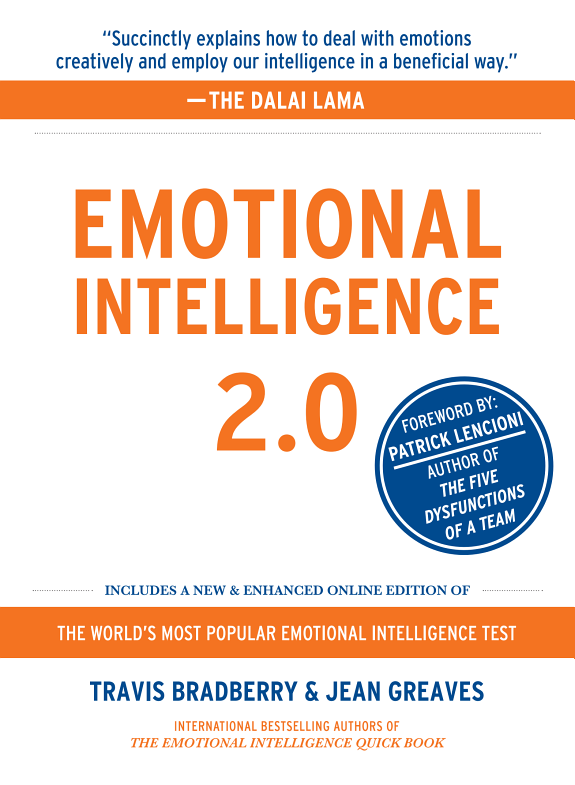
Emotional Intelligence 2.0
2. Emotional Intelligence 2.0 by Travis Bradberry
Travis Bradberry takes a decidedly different approach. Where Gibson is introspective and clinical, Bradberry is practical and almost businesslike. This book grew out of research conducted through TalentSmart, a company that studies emotional intelligence in workplace settings, and that origin is visible on every page. If you are hoping for something that reads like literary nonfiction, this is probably not it. If you want a structured, actionable framework for improving how you manage your emotions and your relationships, this delivers.
The book is organized around four core skills: self-awareness, self-management, social awareness, and relationship management. Each section comes with concrete strategies, and the book includes an access code for an online assessment so you can get a baseline score before you start. That assessment is genuinely useful, not just a marketing gimmick. Knowing where you actually struggle is more helpful than guessing.
Bradberry writes clearly and without pretension. The tone is encouraging without being cheerleader-ish, which is a balance a lot of self-improvement books miss entirely. Some readers will find the corporate framing a little sterile, and the strategies occasionally feel like they belong in a management training seminar rather than a personal development book. That is a fair criticism. But the core ideas are solid, and the accessibility of the writing means most people will actually finish it, which counts for a lot.
“You cannot manage what you do not notice. The first step toward emotional intelligence is simply paying closer attention to what is happening inside you before it spills outward.”
This is perfect for people who prefer practical frameworks over reflective prose, professionals looking to improve how they navigate workplace relationships, and readers who want something structured and measurable rather than open-ended.
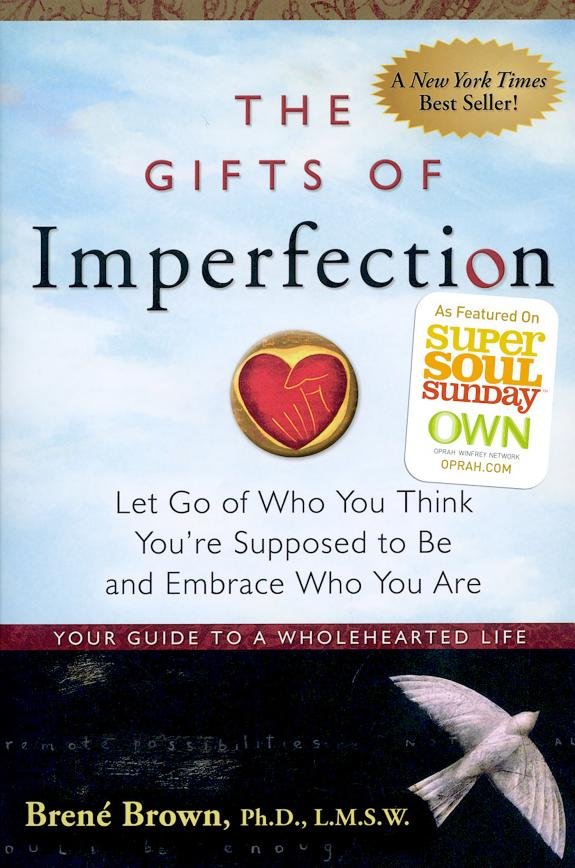
The Gifts of Imperfection
3. The Gifts of Imperfection by Brené Brown
Brené Brown has become such a cultural fixture that it can be easy to forget how genuinely good her books are. This one, published in 2010, is in some ways her most personal. It is built around ten guideposts for what she calls “wholehearted living,” a phrase that could easily tip into self-help cliche but mostly does not, because Brown is too honest a writer to let it. She roots every idea in her own research on shame and vulnerability, and she is not shy about including her own failures as evidence.
The central argument is that most of us spend enormous energy trying to earn our worthiness, performing competence or likability or success in hopes that someone will finally confirm we are enough. Brown’s point is that worthiness is not something you earn. It is something you practice believing. That shift sounds small. For a lot of readers, it is not small at all.
The prose is warm and conversational, occasionally to a fault. Brown writes the way she talks, which means the book moves quickly and feels personal, but it also means some sections lack the depth you might want. Readers who prefer rigorous, densely argued nonfiction may find it a little breezy. That said, the emotional honesty here is real. Brown is not selling a polished version of herself. She is sharing the messy, ongoing work of trying to live with more courage and less armor.
“Worthiness does not have a checklist. The people who feel most worthy are not the ones who finally achieved everything. They are the ones who decided to stop waiting.”
This is perfect for people who struggle with perfectionism or chronic self-criticism, readers who connect with warm, personal writing styles, and anyone who has spent too long waiting to feel ready before fully showing up in their own life.
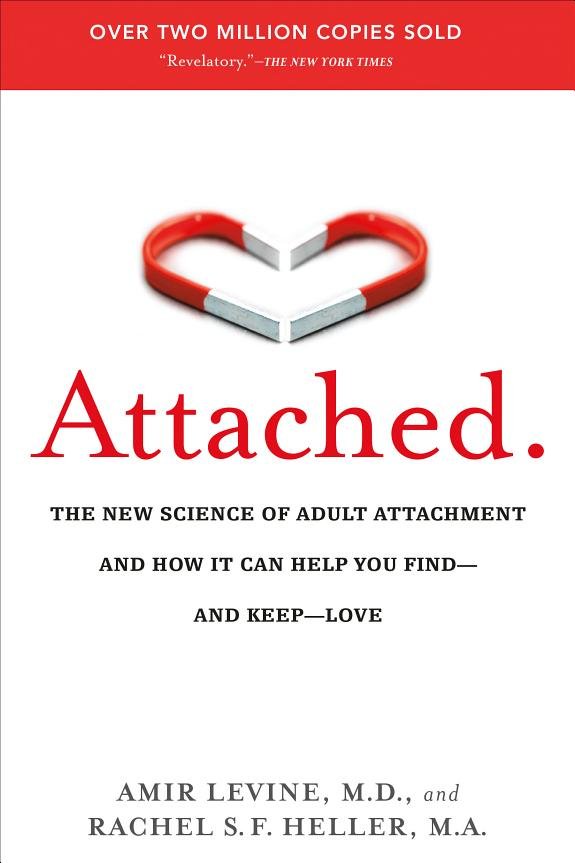
Attached
4. Attached by Amir Levine
Amir Levine is a neuroscientist and psychiatrist, and his co-author Rachel Heller brings a background in social and organizational psychology. Together they wrote what has become one of the most widely recommended books on adult relationships, and the reason is not hard to identify. Attachment theory has been around for decades in academic psychology, but Levine and Heller were among the first to translate it clearly for a general audience. The result is a book that makes a lot of people feel seen in ways they did not expect.
The basic framework is this: adults, like children, tend toward one of three attachment styles in close relationships, secure, anxious, or avoidant. Each style shapes how you communicate, how you handle conflict, and how you interpret your partner’s behavior. The book walks through each style in detail, with enough real-world examples that most readers will recognize themselves fairly quickly. Some will recognize their partners, which can be either clarifying or mildly alarming, depending on the relationship.
What separates this from generic relationship advice is the science behind it. Levine does not moralize. He does not tell you that anxious attachment is a character flaw or that avoidant people are broken. He explains the nervous system logic behind each style, which makes it easier to approach your own patterns with curiosity rather than shame. The book is not without limitations. The three-category model is a simplification, and some readers will find themselves sitting uncomfortably between categories. But as an introduction to why we behave the way we do in close relationships, it is hard to beat.
“Your attachment style is not your destiny. But understanding it is the first honest step toward choosing how you want to love.”
This is perfect for people who notice recurring patterns in their romantic relationships, readers who want a science-backed framework rather than intuitive advice, and anyone who has ever been told they are “too much” or “too distant” and wanted to understand why.
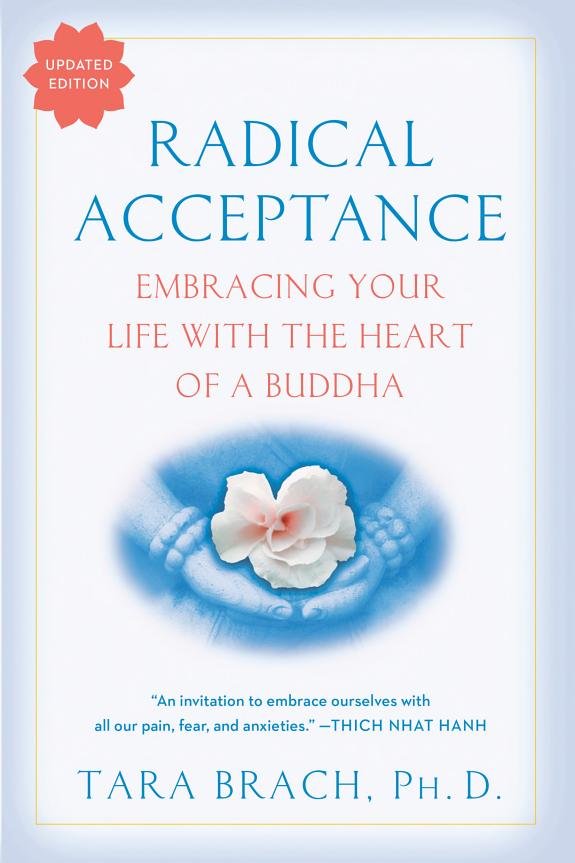
Radical Acceptance
5. Radical Acceptance by Tara Brach
Tara Brach is a psychologist and a Buddhist meditation teacher, and Radical Acceptance draws on both traditions in a way that feels organic rather than forced. The book opens with the concept of the “trance of unworthiness,” the pervasive, often unconscious belief that something is fundamentally wrong with us. It is a quiet kind of suffering, and Brach writes about it with a tenderness that is hard to manufacture. She has clearly lived some of what she is describing.
The practice she offers is exactly what the title suggests: radical acceptance, a willingness to meet your experience, including your fear, your anger, your grief, with complete presence rather than resistance. This is not passive resignation. Brach is careful to distinguish between accepting what is happening internally and accepting harmful external circumstances. The acceptance she describes is an inner posture, a way of meeting yourself without flinching.
The book weaves together meditation instructions, client stories from her therapy practice, and Buddhist teachings in a way that feels cohesive rather than scattered. Some readers who are not drawn to Buddhist frameworks may find certain sections harder to connect with, and that is worth knowing before you pick it up. But even if the spiritual language is not your native tongue, the psychological insights here are substantial. Brach has a gift for articulating experiences that most people have felt but never quite found words for. That alone makes the book worth sitting with.
“The most courageous thing many of us will ever do is stop running from ourselves and simply stay.”
This is perfect for readers open to mindfulness and meditation practices, people who feel a persistent undercurrent of shame or self-judgment, and anyone drawn to the intersection of psychology and contemplative traditions.
None of these books will do the work for you. That is the honest truth about reading on emotional maturity: insight is just the beginning. The harder part is taking what you understand about yourself and actually doing something different, in real conversations, in real relationships, in the moments when your old patterns feel most familiar and most safe.
But reading still matters. It gives you language for things you have been carrying without names. It reminds you that the struggles you thought were uniquely yours are actually quite human. And occasionally, if you are lucky, a single paragraph lands in exactly the right way at exactly the right time, and something shifts. That is enough reason to keep reading.
Start with whichever book speaks most directly to where you are right now. There is no wrong entry point into this kind of work.