6 Books for Personal Growth in Your 30s
Your 30s have a funny way of arriving uninvited and immediately demanding answers to questions you thought you had more time to figure out. Career pivots, relationship shifts, the slow realization that you cannot keep running on the same habits you had at 22. It is a decade that tends to shake things loose, and that is not entirely a bad thing.
The books on this list were chosen because they actually hold up under the weight of real adult life. Not every self-help book earns a place on the shelf, but these six have a way of meeting you where you are, whether you are quietly questioning everything or loudly falling apart. Some are philosophical, some are practical, and one or two will probably make you sit with the book closed for a few minutes before you can move on. That is usually a good sign.
The Subtle Art of Not Giving a F*ck
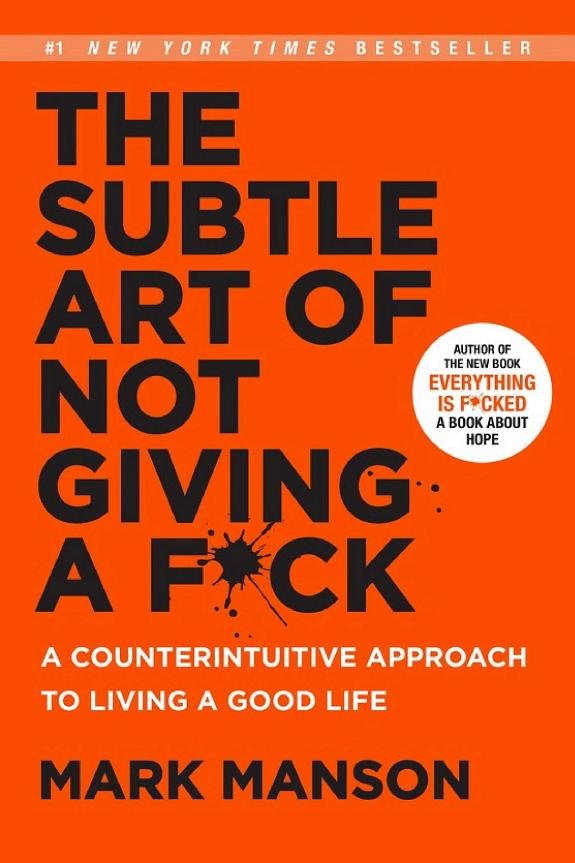
1. The Subtle Art of Not Giving a F*ck by Mark Manson
Mark Manson writes like the friend who got tired of being polite about hard truths. His central argument is deceptively simple: you have a limited number of things you can genuinely care about, so the quality of your life depends almost entirely on choosing them wisely. What sounds obvious on the surface turns out to be surprisingly difficult to actually practice, especially when you have spent your 20s being told that positivity and ambition are always virtues.
The book leans heavily on Manson’s own stumbling path through early adulthood, which gives it a credibility that purely theoretical self-help tends to lack. He draws on some genuine philosophical depth, including ideas from Stoicism and existentialism, without ever making you feel like you accidentally wandered into a lecture hall. His voice is conversational, occasionally crude in a way that feels earned rather than performed, and consistently honest about the fact that growth is uncomfortable and often slow.
Where the book earns its place in the 30s reading list is in its treatment of responsibility. Manson is not interested in blame or victimhood. He is interested in what you are going to do with the situation you are actually in, regardless of how you got there. That particular reframe tends to land differently once you have a few years of adult decisions behind you.
“The desire for a more positive experience is itself a negative experience. And, paradoxically, the acceptance of one’s negative experience is itself a positive experience.”
This is perfect for readers who are exhausted by relentless optimism culture and want a more grounded, honest framework for deciding what actually matters to them. It is probably not the right fit for anyone who finds casual profanity distracting or who prefers a more gentle, nurturing tone in their reading.
Daring Greatly
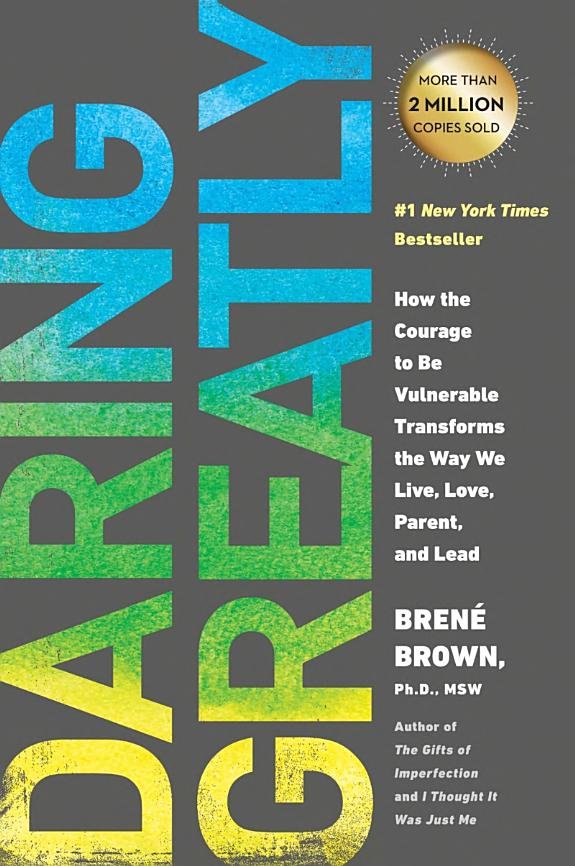
2. Daring Greatly by Brené Brown
Brené Brown spent years researching shame and vulnerability before writing this book, and it shows in the best possible way. Daring Greatly is not a motivational pep talk. It is a carefully argued case for why letting yourself be seen, fully and without armor, is not weakness but the actual foundation of meaningful connection, creativity, and courage. The title comes from a Theodore Roosevelt speech, which sets the tone nicely.
Brown’s writing is warm without being saccharine. She shares her own research findings alongside personal stories that feel genuinely vulnerable rather than strategically disclosed for effect. Her breakdown of the difference between guilt and shame alone is worth the price of the book. Guilt says you did something bad. Shame says you are something bad. That distinction, simple as it sounds, has a way of reorganizing how you think about your own inner critic.
In your 30s, when you are likely navigating more complex relationships, higher professional stakes, and a growing awareness of your own patterns, this book offers a vocabulary for things you have probably been feeling without quite being able to name. Brown is particularly good on perfectionism, which she frames not as a high standard but as a form of self-protection that consistently backfires.
“Vulnerability is not winning or losing. It’s having the courage to show up and be seen when we have no control over the outcome.”
This is perfect for people who recognize that their defenses are costing them something real in their relationships or creative work, and who are ready to examine where those defenses came from. Readers who are deeply skeptical of qualitative research or who find emotional self-examination tedious may find the approach frustrating.
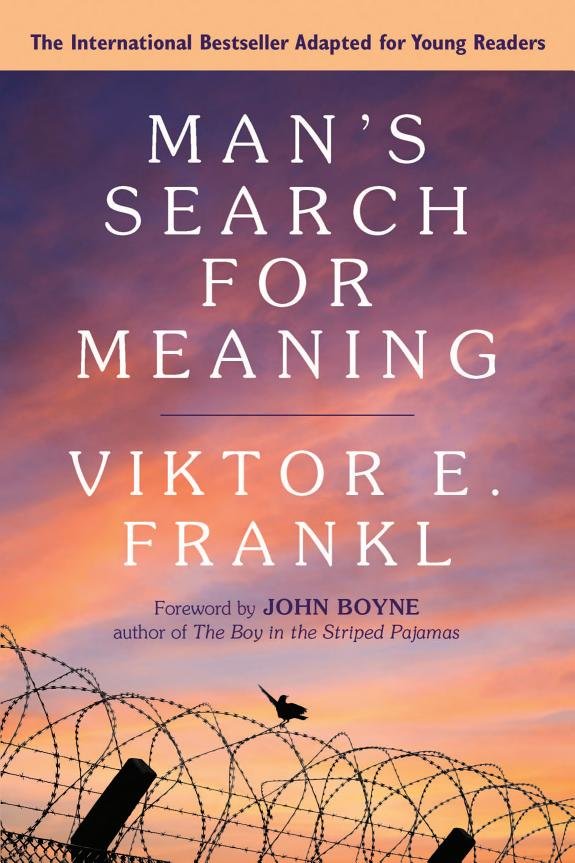
Man’s Search for Meaning
3. Man’s Search for Meaning by Viktor E. Frankl
Viktor Frankl was a psychiatrist and Holocaust survivor who wrote this book in nine days, drawing on his experiences in Nazi concentration camps to develop a theory of human meaning. That sentence alone should tell you this is not a light read. It is, however, one of the most important books written in the twentieth century, and its brevity, the whole thing is under two hundred pages, makes it more concentrated rather than less serious.
The first half is memoir, and it is unflinching. Frankl observes his fellow prisoners and himself with the detached precision of a scientist and the grief of a human being who has lost almost everything. What he notices is that survival was not primarily a function of physical strength. The people who endured longest, psychologically at least, were those who had found or maintained a sense of purpose. Something to live for, even in conditions designed to strip all meaning away.
The second half introduces logotherapy, Frankl’s therapeutic framework built around the idea that the primary human drive is not pleasure or power but meaning. This is where the book becomes directly applicable to the quieter existential questions that tend to surface in your 30s. Not crisis-level questions necessarily, but the persistent low hum of wondering whether what you are doing with your time actually matters to you.
“When we are no longer able to change a situation, we are challenged to change ourselves.”
This is perfect for readers who are grappling with questions of purpose and are willing to sit with genuinely difficult material in order to find clarity. It is not a comfortable read, and anyone looking for quick, actionable steps will find the philosophical density challenging.
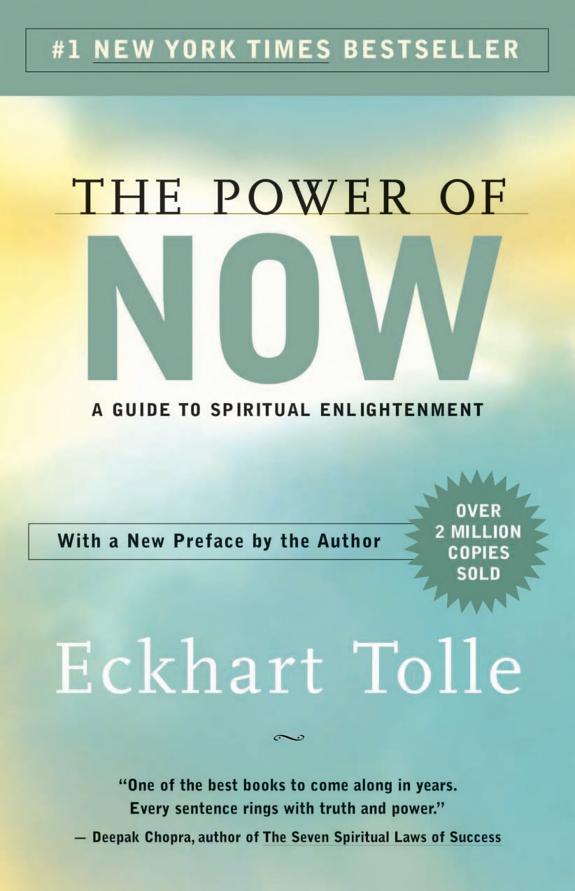
The Power of Now
4. The Power of Now by Eckhart Tolle
Eckhart Tolle writes about presence in a way that either clicks immediately or takes several attempts to penetrate, depending entirely on where you are when you first pick it up. The core idea is that most human suffering is generated not by present circumstances but by the mind’s compulsive habit of replaying the past or rehearsing the future. The present moment, the actual now you are inhabiting right this second, is almost always more workable than the narrative your mind constructs around it.
The book is structured as a kind of extended dialogue, with Tolle addressing questions from an imagined reader. This format keeps it from feeling like a lecture, though the writing does occasionally drift into territory that reads as more mystical than practical. That is not necessarily a criticism. Some of the most useful ideas in this book resist being reduced to a tidy action item, and Tolle seems aware of that. He is asking you to experience something rather than simply understand it.
For readers in their 30s who are carrying a significant amount of anxiety about where they are supposed to be by now, or who are processing regret about roads not taken, the central practice Tolle describes offers genuine relief. Not as a permanent fix, but as a skill that gets more useful the more you return to it. It is the kind of book you might read once and then pick up again every few years and find something entirely different in it.
“Realize deeply that the present moment is all you ever have. Make the Now the primary focus of your life.”
This is perfect for readers who are drawn to contemplative or spiritual approaches to wellbeing and who are willing to engage with ideas that cannot be fully captured in a bullet point summary. Readers who prefer strictly evidence-based, secular frameworks will likely find the metaphysical language a barrier.
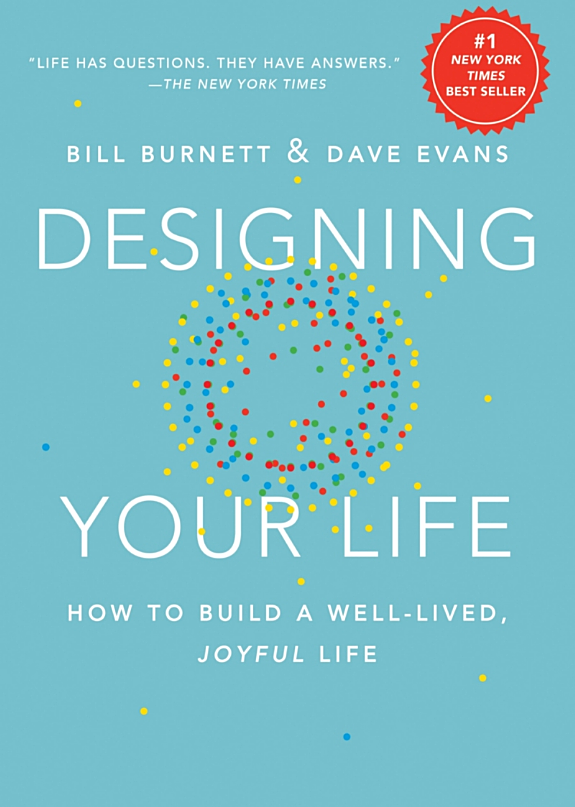
Designing Your Life: How to Build a Well-Lived, Joyful Life
5. Designing Your Life: How to Build a Well-Lived, Joyful Life by Bill Burnett and Dave Evans
Bill Burnett and Dave Evans are Stanford design professors who got tired of watching students graduate with no idea how to build a life they actually wanted, so they created a course and eventually a book around applying design thinking to the problem of existence. That sounds more clinical than it reads. The book is practical, genuinely funny in places, and unusually honest about the fact that there is no single correct answer to how your life should look.
The central insight is that most people approach life planning the way they might approach a math problem, assuming there is one right answer and that failing to find it means failure. Design thinking works differently. It encourages prototyping, iteration, and the acceptance that you will need to test ideas in the real world before you know whether they actually suit you. This reframe alone tends to reduce a significant amount of the pressure that accumulates around career and life decisions in your 30s.
The exercises throughout the book are worth doing rather than skimming. There is one called the Good Time Journal, which tracks when you feel engaged and energized versus drained, that has a quiet way of revealing patterns you might have been too busy to notice. The authors are also refreshingly direct about the fact that some people are stuck not because they lack information but because they are holding onto assumptions that stopped being useful years ago.
“You cannot think your way to a good life. At some point you have to stop planning and start building.”
This is perfect for readers who feel stuck or directionless and want a structured, hands-on approach to figuring out what they actually want. It is probably not satisfying for readers who are looking for philosophical depth or who are already clear on their direction and simply need motivation to act on it.
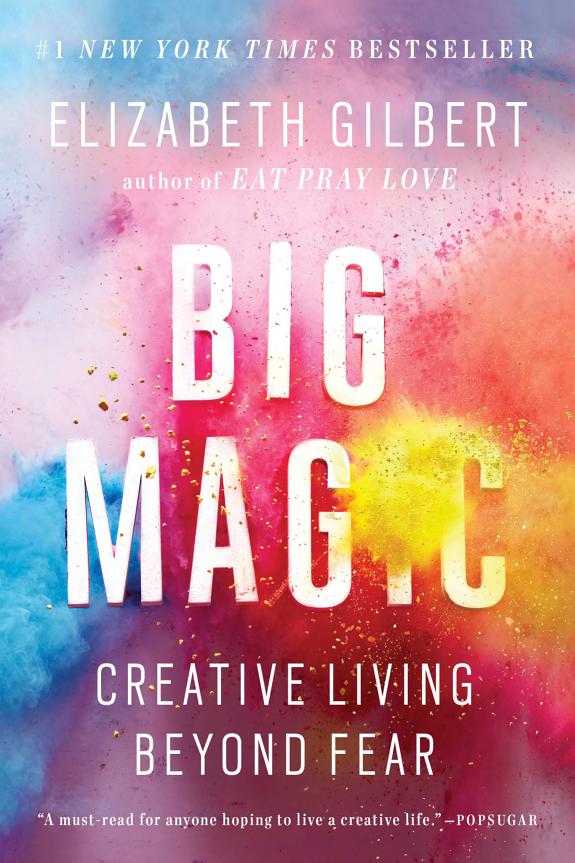
Big Magic: Creative Living Beyond Fear
6. Big Magic: Creative Living Beyond Fear by Elizabeth Gilbert
Elizabeth Gilbert wrote Big Magic for people who have a creative impulse they have been quietly suppressing, usually out of some combination of fear, practicality, and the nagging suspicion that they are not talented enough to justify the attempt. Her argument is not that everyone should quit their job and write a novel. It is that a life with some form of creative engagement in it is simply more interesting and more alive than one without, and that fear is a terrible reason to forgo that.
Gilbert’s voice is warm, opinionated, and occasionally eccentric in a way that works. She has a somewhat mystical view of creativity, treating ideas almost as independent entities that seek out willing collaborators, and she presents this with enough self-awareness that it reads as charming rather than precious. Whether you take the metaphor literally or not, the underlying point holds: waiting until you feel ready or worthy is a reliable way to never start anything.
What separates this book from generic creativity encouragement is Gilbert’s honesty about the relationship between creative work and suffering. She is firmly against the idea that you must be in agony to make something worthwhile. She is also clear that you should not expect your creative work to pay your bills, at least not initially, and that removing that pressure often frees you to actually do the work. That is a genuinely useful distinction that a lot of creative advice skips over entirely.
“Done is better than good. Showing up is better than waiting for the perfect moment that will never come.”
This is perfect for readers who have shelved a creative interest or project out of fear and need a gentle but direct push back toward it. Readers who want rigorous craft advice or a structured creative methodology will need to look elsewhere, as this book is more about mindset than technique.
None of these books will fix your 30s, and honestly, your 30s probably do not need fixing so much as they need honest attention. What this list offers is six different lenses through which to examine what is actually going on in your life and what you might want to do about it. Some will resonate immediately. Others might sit on the shelf for a year before the right moment arrives.
That is how good books tend to work. They wait patiently until you are ready for them. The only real mistake is deciding you already know everything they have to say before you have actually sat down with them. Pick one that makes you slightly uncomfortable and start there. That is usually the right place to begin.