

7 Books About Avoidant Attachment Worth Reading
There is a particular kind of loneliness that comes with avoidant attachment. Not the loud, obvious kind, but the quieter variety where you keep people at arm’s length and then wonder why you feel so disconnected. Or maybe you are on the other side of it, loving someone who seems to vanish emotionally right when you need them most. Either way, you have probably spent some time staring at the ceiling, trying to make sense of it all.
Attachment theory has been around since the 1960s, but it has had something of a renaissance lately, and for good reason. The research is genuinely useful. Understanding why you relate to people the way you do, especially in romantic relationships, can shift things in ways that years of vague self-reflection sometimes cannot. The seven books below cover the subject from different angles, some are more clinical, some more conversational, and some are workbook-style guides you can sit with over a weekend. None of them promise miracles, but all of them offer something real.
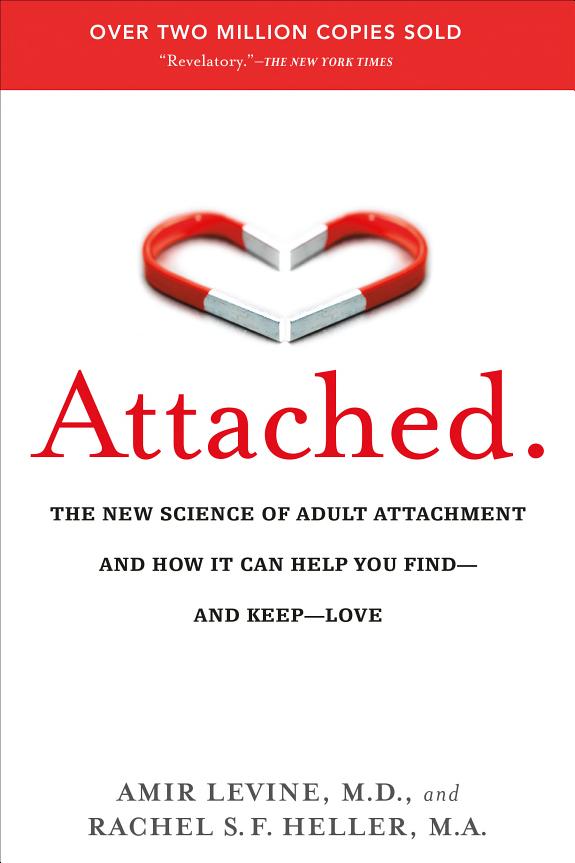
Attached: The New Science of Adult Attachment and How It Can Help You Find—and Keep—Love
1. Attached: The New Science of Adult Attachment and How It Can Help You Find and Keep Love by Amir Levine and Rachel Heller
If you are just beginning to explore attachment theory, this is probably the book most people hand you first, and there is a reason for that. Amir Levine, a neuroscientist and psychiatrist, teams up with Rachel Heller to translate decades of attachment research into something genuinely readable. The writing is clear without being dumbed down, and the authors do a good job of explaining the three main attachment styles, anxious, avoidant, and secure, without making any of them sound like a personality flaw you are stuck with forever.
The book spends considerable time on the avoidant style specifically, exploring the deactivating strategies that avoidant individuals use to create emotional distance. Things like focusing on a partner’s small imperfections, mentally checking out during intimate moments, or convincing themselves they are just “not the relationship type.” Reading those sections can feel uncomfortably familiar if you recognize yourself in them, or equally illuminating if you have been on the receiving end of that behavior.
What Levine and Heller do particularly well is resist the urge to villainize avoidant people. The style developed for a reason, usually as a sensible adaptation to early caregiving environments, and the authors treat it with that kind of contextual respect. They also offer practical guidance on how to communicate needs more effectively across different attachment pairings, which is where the book earns its keep beyond the theoretical.
Understanding avoidant attachment is not about labeling people as emotionally unavailable and moving on. It is about recognizing a pattern that made sense once and learning whether it still serves you now.
This is perfect for anyone who is new to attachment theory and wants a solid, research-grounded introduction, though readers looking for deep therapeutic exercises rather than conceptual explanation may want to pair it with a workbook.
Healing Your Attachment Wounds: How to Create Deep and Lasting Intimate Relationships
2. Healing Your Attachment Wounds: How to Create Deep and Lasting Intimate Relationships by Diane Poole Heller
Diane Poole Heller comes at attachment from a trauma-informed angle, which gives this book a different texture than most others in the genre. She is a therapist who has spent decades working with somatic experiencing, a body-based approach to healing, and that perspective shows throughout. This is not just a book about understanding your attachment style intellectually. It is about recognizing how attachment patterns live in the body and the nervous system, not just the mind.
For avoidant readers specifically, Heller’s framing can be revelatory. She explains how avoidant attachment often involves a kind of physiological shutdown, a learned suppression of attachment needs that happens below the level of conscious thought. That framing tends to reduce self-blame, which is genuinely helpful. It is hard to change something you think is simply a character flaw, but easier to work with something you understand as an adaptive response that can be gradually rewired.
The book draws on transcripts from Heller’s workshops, which gives it a conversational, almost workshop-like quality. Some readers find this engaging. Others find it a bit uneven as a reading experience. It is worth knowing going in that this is not a tightly structured academic text but something more experiential in spirit.
Attachment wounds are not just stored in memory. They are stored in the way we breathe, the way we tense up, and the way we instinctively move toward or away from the people we love.
This is perfect for readers who are already somewhat familiar with attachment theory and want to explore the somatic, body-level dimension of healing, though it may feel a bit abstract for those who prefer highly structured, step-by-step guidance.
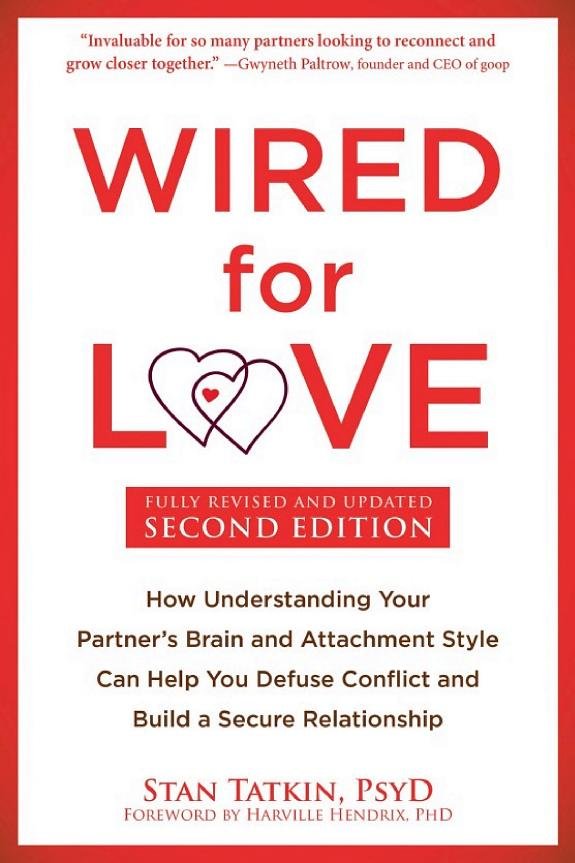
Wired for Love: How Understanding Your Partner’s Brain and Attachment Style Can Help You Defuse Conflict and Build a Secure Relationship
3. Wired for Love: How Understanding Your Partner’s Brain and Attachment Style Can Help You Defuse Conflict and Build a Secure Relationship by Stan Tatkin
Stan Tatkin is a couples therapist who blends attachment theory with neuroscience, and his voice in this book is warm, direct, and occasionally a little bossy in the best possible way. He is clearly someone who has sat with a lot of couples in a lot of difficult moments and has developed strong opinions about what actually helps. The central metaphor of the book, that partners function like ambassadors to each other’s nervous systems, is one that tends to stick with readers long after they have put it down.
Tatkin categorizes partners into anchors, islands, and waves, his own accessible shorthand for secure, avoidant, and anxious attachment styles respectively. The “island” description of avoidant attachment is particularly well done. He explains how island partners often genuinely believe they are low-maintenance and easy to be with, while their partners experience them as emotionally absent. That gap in perception is something couples can spend years fighting about without ever naming correctly.
The book is oriented toward couples who are already in relationships rather than individuals trying to understand themselves in isolation. If you are single and exploring your patterns, it is still useful, but some of the exercises and frameworks are designed for two people to work through together. Tatkin is also refreshingly honest that some relationship configurations are harder to sustain than others, without being fatalistic about it.
Partners who understand how each other’s nervous systems work are better equipped to be a source of calm rather than a source of threat, even in the middle of a disagreement.
This is perfect for couples who want a neuroscience-informed framework for understanding their dynamic, though solo readers or those who find brain-based metaphors a bit clinical may connect more naturally with other books on this list.
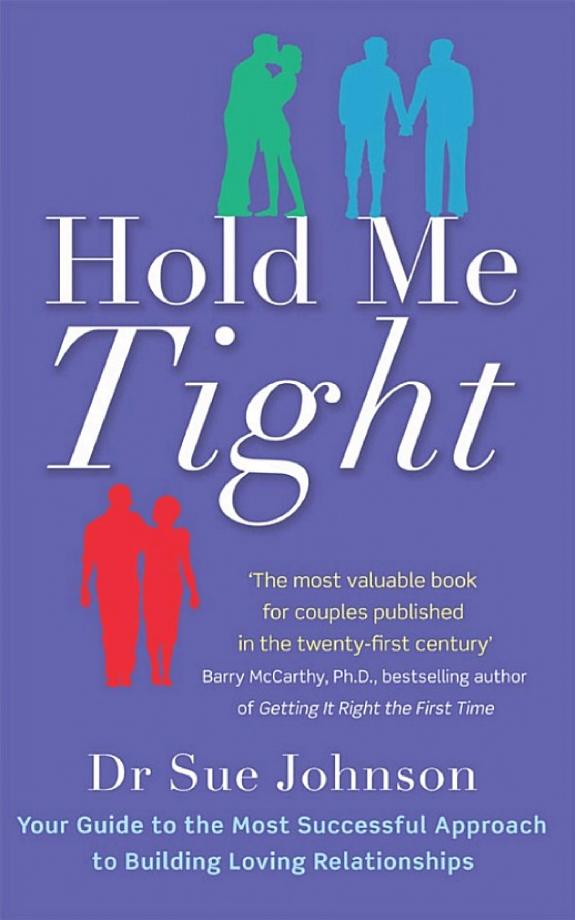
Hold Me Tight: Seven Conversations for a Lifetime of Love
4. Hold Me Tight: Seven Conversations for a Lifetime of Love by Sue Johnson
Sue Johnson is the creator of Emotionally Focused Therapy, one of the most well-researched couples therapy approaches in existence, and this book is essentially her attempt to bring that work to a general audience. It is structured around seven specific conversations that couples can have to move from disconnection toward what Johnson calls “secure bonding.” The writing is accessible and frequently moving, drawing on real case examples from her clinical practice.
What makes this book particularly relevant to avoidant attachment is Johnson’s focus on what she calls “demon dialogues,” the recurring negative cycles that couples get stuck in. The pursue-withdraw cycle, where one partner chases connection and the other retreats, is one of the most common, and it maps almost perfectly onto anxious-avoidant pairings. Johnson’s explanation of why the withdrawing partner pulls away, not because they do not care but because they are overwhelmed and trying to manage that overwhelm, is one of the more compassionate and accurate descriptions you will find anywhere.
The book is not a quick read in the sense that it rewards slow engagement. The conversations it proposes require real vulnerability, and Johnson does not pretend otherwise. If you are someone who finds emotional directness uncomfortable, this book will push you a little. That is kind of the point.
The withdrawing partner is not indifferent. They are often just as distressed as the pursuing partner, simply expressing it in the opposite direction.
This is perfect for couples who are motivated to do real emotional work together, as well as individuals in therapy who want a framework that complements their sessions, though readers looking for a lighter, more explanatory read may find the depth here a bit demanding.
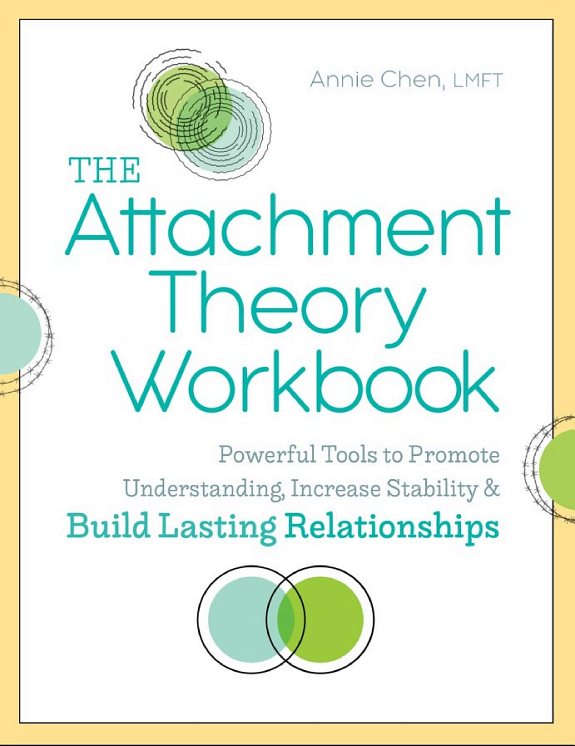
The Attachment Theory Workbook: Powerful Tools to Promote Understanding, Increase Stability, and Build Lasting Relationships
5. The Attachment Theory Workbook: Practical Tools to Promote Understanding, Increase Stability, and Build Lasting Relationships by Annie Chen
Annie Chen’s workbook takes a more hands-on approach than the other titles here, which is exactly what some people need. Reading about attachment patterns is one thing. Actually sitting with a prompt that asks you to map your earliest memories of seeking comfort from a caregiver is another experience entirely. Chen structures the workbook to move through self-awareness, identifying your style and its origins, toward practical skill-building for more secure relating.
The exercises for avoidant attachment are thoughtful and specific. Chen does not just ask you to “open up more,” which is the kind of advice that is technically correct and practically useless. Instead, she offers graduated exercises that help avoidant readers practice tolerating closeness in small, manageable increments. There is also a useful section on recognizing when avoidant tendencies are being triggered in real time, which is a skill that takes practice but makes a significant difference.
The workbook format does mean this is not the kind of book you read on a commute. It asks for dedicated time and a certain willingness to be honest with yourself on paper. Some people find that format deeply helpful. Others buy workbooks with great intentions and then feel vaguely guilty about the blank pages six months later. You know which one you are.
Insight without practice tends to stay theoretical. The work of changing attachment patterns happens in the small, repeated moments of choosing differently, not in a single realization.
This is perfect for self-directed learners who want structured exercises to work through at their own pace, though readers who prefer narrative-driven books or who are in active crisis may find the workbook format less suited to where they are right now.
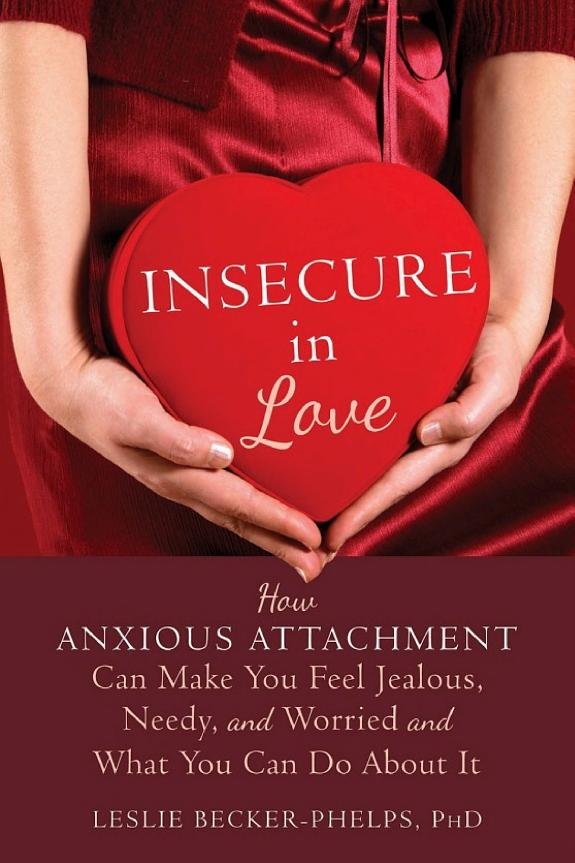
Insecure in Love: How Anxious Attachment Can Make You Feel Jealous, Needy, and Worried and What You Can Do About It
6. Insecure in Love: How Anxious Attachment Can Make You Feel Jealous, Needy, and Worried and What You Can Do About It by Leslie Becker-Phelps
The title of this book is focused on anxious attachment, so you might wonder what it is doing on a list about avoidant attachment. The answer is that anxious and avoidant attachment are almost never experienced in isolation. They tend to find each other. If you have avoidant tendencies, there is a reasonable chance you have spent significant time in a relationship with someone who has anxious tendencies, or vice versa, and understanding both sides of that dynamic is genuinely clarifying.
Leslie Becker-Phelps is a psychologist who writes with a lot of warmth and clinical grounding. Her approach is rooted in compassionate self-awareness, a framework she uses throughout the book to help anxiously attached readers develop a kinder, more observant relationship with their own emotional responses. For avoidant readers, the value is in understanding what their withdrawal does to an anxiously attached partner, not as a guilt trip, but as useful information for building more honest communication.
The book is also simply well-written in a way that makes difficult psychological concepts feel approachable. Becker-Phelps has a gift for explaining internal emotional processes without making them sound either clinical or melodramatic. If you have ever been in an anxious-avoidant relationship and wanted to understand the whole picture rather than just your half of it, this book fills in a lot of the gaps.
Anxious and avoidant partners often trigger each other’s deepest fears in a loop that neither person fully understands from the inside. Seeing the whole cycle is the first step to interrupting it.
This is perfect for avoidant individuals who want to understand the anxious attachment experience from the inside, as well as for anxiously attached readers who want compassionate, practical tools, though people seeking a book focused primarily on avoidant patterns may want to start elsewhere on this list.
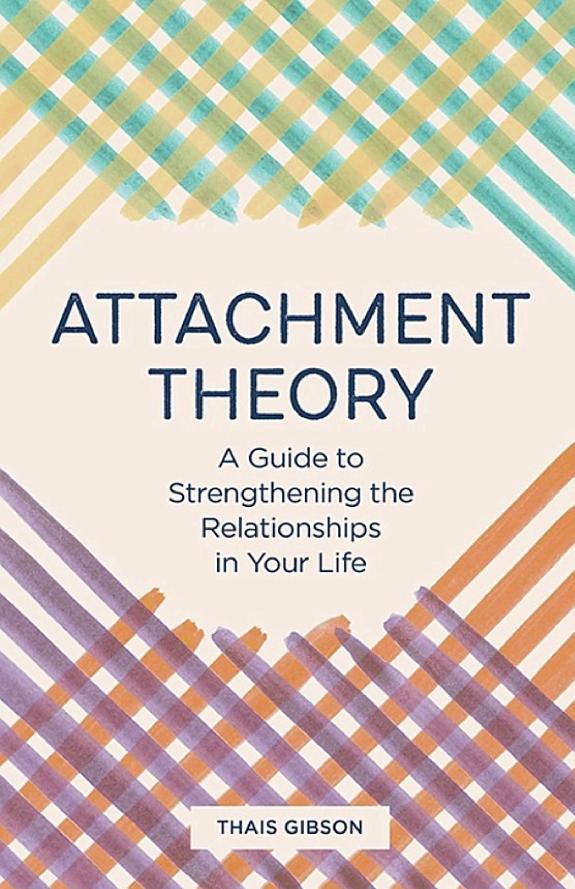
Attachment Theory: A Guide to Strengthening the Relationships in Your Life
7. Attachment Theory: A Guide to Strengthening the Relationships in Your Life by Thais Gibson
Thais Gibson is probably best known for her popular online presence around attachment theory, and this book brings that accessible, direct energy into a more structured format. Gibson has a background in multiple therapeutic modalities, including cognitive behavioral therapy and neuro-linguistic programming, and she weaves those influences throughout the book in ways that feel practical rather than eclectic. The tone is confident and clear, which some readers find refreshing and others find a touch assertive.
The sections on avoidant attachment are among the most detailed you will find in a general-audience book. Gibson breaks down the specific core wounds that tend to underlie avoidant patterns, things like a deep belief that dependence is dangerous or that emotional needs are fundamentally burdensome to others. She then connects those wounds to specific behavioral patterns in adult relationships, which makes the theory feel grounded in real behavior rather than abstract categories.
One of the book’s strengths is its attention to how avoidant individuals can work toward earned security, not by becoming a different person, but by gradually updating the internal beliefs that drive distancing behavior. Gibson is optimistic about change without being unrealistic, which is a balance that is harder to strike than it sounds. This is a solid closing entry for a reading journey through attachment theory because it synthesizes a lot of what the other books cover and adds Gibson’s own clinical perspective on the path forward.
Avoidant attachment is not a wall someone built to keep you out. It is a wall they built to keep themselves safe, often long before they ever met you.
This is perfect for readers who want a comprehensive, practically oriented guide to attachment theory that covers all styles with particular depth on avoidant patterns, though those who prefer a more academic or research-heavy presentation may find Gibson’s style a bit too conversational.
Reading about attachment is a little strange in the best way. You pick up a book expecting to learn something intellectual and end up recognizing yourself in ways you did not entirely anticipate. That is not a bad thing. It is actually the whole point. The books on this list approach avoidant attachment from different angles, some through neuroscience, some through clinical frameworks, some through exercises you do with a pen in hand, and there is value in more than one of them depending on where you are in the process.
If you are just starting out, Levine and Heller’s Attached is probably the clearest entry point. If you are in a relationship and want to do the work together, Sue Johnson’s Hold Me Tight is worth the effort it asks of you. And if you are someone who learns by doing rather than just reading, Annie Chen’s workbook will serve you better than any amount of passive consumption. The goal across all of them is the same: not perfection, but a little more understanding, and maybe a little more grace toward yourself and the people you love.