

8 Books That Improve Communication in Relationships
Most relationship problems are not really about the dishes in the sink or who forgot to call the plumber. They are about the conversation underneath that one, the one where someone feels unheard or unseen and does not quite know how to say so. Communication is the invisible architecture of every relationship, and when it starts to crack, everything else feels shakier too.
The good news is that communication is a skill, not a personality trait you either have or you do not. These eight books approach that skill from different angles, whether you are trying to stop a fight before it goes sideways, understand why you and your partner keep misreading each other, or simply find the words for something that has been sitting unspoken for months. Some are rooted in decades of clinical research. Others read almost like a long, honest conversation with a very wise friend. All of them have something genuinely useful to offer.
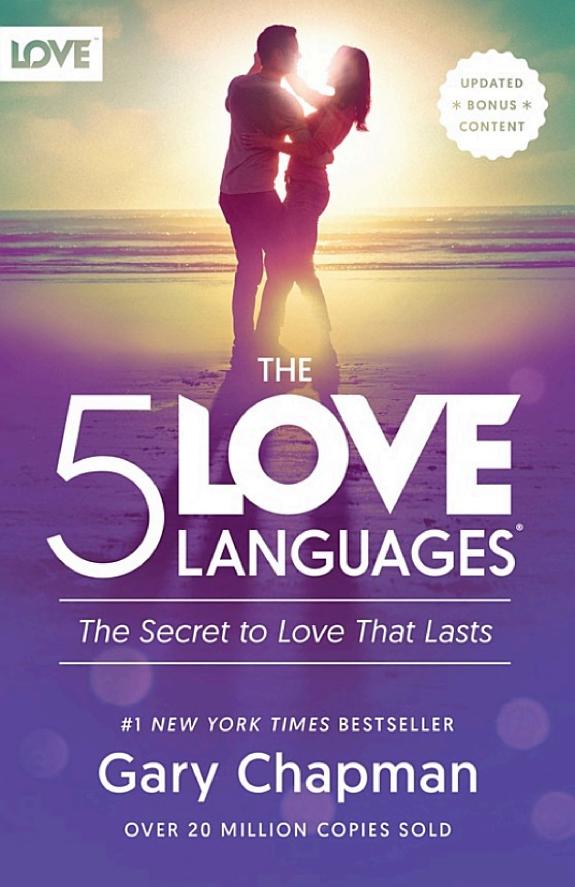
The 5 Love Languages: The Secret to Love that Lasts
1. The 5 Love Languages: The Secret to Love that Lasts by Gary Chapman
Gary Chapman spent years as a marriage counselor before he noticed a pattern he could not ignore. People in relationships were trying to love each other, genuinely trying, and still ending up feeling unloved. His theory, now famous enough to show up in wedding toasts and therapy offices alike, is that people give and receive love in five distinct ways: words of affirmation, acts of service, receiving gifts, quality time, and physical touch. The problem is not a lack of effort. It is that most of us are speaking our own language and expecting our partner to understand it fluently.
Chapman writes in a warm, pastoral style that is easy to read and immediately applicable. He draws on real couples he has counseled, which gives the book a grounded, human texture rather than the sterile feel of a self-help manual. The core idea is almost disarmingly simple, but the implications are surprisingly deep. Understanding that your partner feels loved through acts of service while you are pouring energy into verbal affirmations can reframe years of frustration in a single afternoon.
The book does lean on a Christian worldview at points, which some readers will find comforting and others will want to mentally edit around. It also works best when both partners engage with it together, since the insight only goes so far if you are the only one doing the translating. And if you are someone who resists pop psychology frameworks, the tidy categorization of all human love into five buckets may feel a bit too neat.
Knowing your partner’s love language does not solve everything, but it does give you a much better map of where you have been getting lost.
This is perfect for couples who feel like they keep putting in effort without it landing, or for anyone who wants a simple, shared vocabulary for talking about emotional needs.
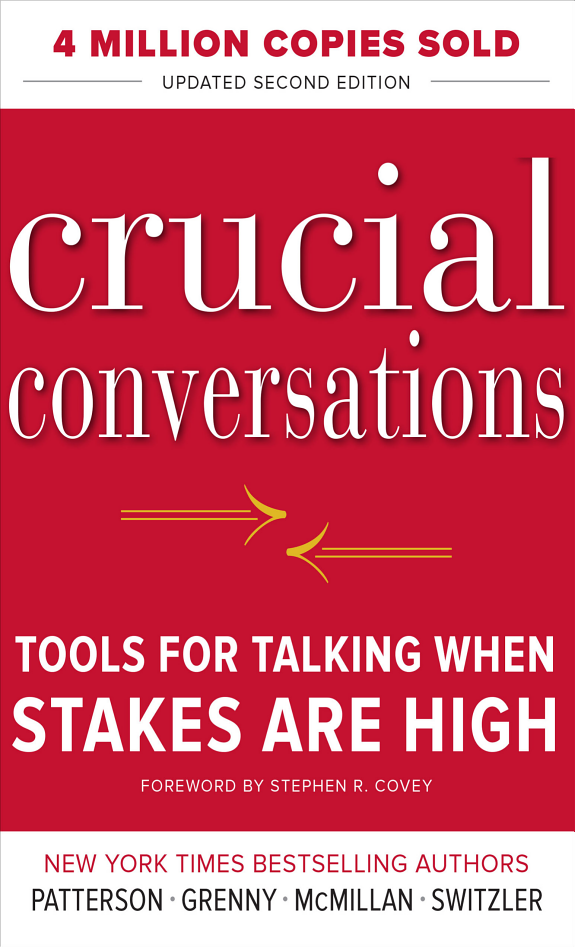
Crucial Conversations: Tools for Talking When Stakes Are High
2. Crucial Conversations: Tools for Talking When Stakes Are High by Kerry Patterson, Joseph Grenny, Ron McMillan, Al Switzler
Not every important conversation happens between romantic partners. Some happen with a parent, a colleague, a friend who said something that has been sitting badly for weeks. Crucial Conversations was written with all of those situations in mind, and it has sold millions of copies largely because the authors understand something most of us quietly dread: the higher the stakes of a conversation, the worse we tend to handle it. We either go silent or we go loud, and neither works.
Patterson and his co-authors break down why this happens with real clarity. When we feel threatened, our brains shift into a kind of fight-or-flight mode that is spectacularly bad at nuanced dialogue. The book offers a set of practical tools for noticing when a conversation is going off the rails and steering it back, including how to create psychological safety, how to separate facts from stories we tell ourselves about those facts, and how to stay curious when every instinct is telling you to defend yourself.
The writing is brisk and business-oriented, which is both a strength and a limitation. The examples often come from workplace settings, so readers looking for advice tailored specifically to romantic relationships may find themselves doing a bit of translation. The tone is also fairly clinical at times, so if you want warmth and emotional resonance, this is not quite that book. What it is, though, is one of the most practically useful guides to high-stakes communication you will find anywhere.
The insight that we fill in missing information with our own worst fears, and then react to those fears as if they were facts, is worth the price of the book on its own.
This is perfect for people who tend to either shut down or escalate during difficult conversations, and for anyone who wants a concrete, repeatable process for navigating conflict.
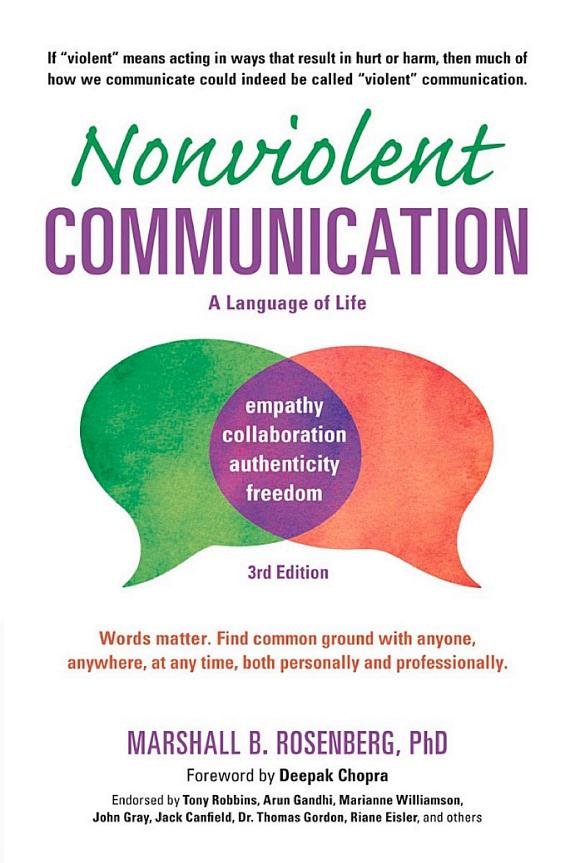
Nonviolent Communication: A Language of Life
3. Nonviolent Communication: A Language of Life by Marshall B. Rosenberg
Marshall Rosenberg believed that most human conflict, from arguments between partners to disputes between nations, comes from a failure to connect needs with honest expression. Nonviolent Communication, often called NVC, is his framework for doing that differently. The process sounds simple on paper: observe without evaluating, identify your feelings, connect those feelings to underlying needs, and make a clear request. In practice, it is one of the more demanding communication disciplines you will encounter, because it asks you to take genuine responsibility for your emotional experience rather than outsourcing it to the other person’s behavior.
Rosenberg’s writing carries a kind of earnest idealism that some readers find inspiring and others find slightly grating, especially in passages where he applies the NVC framework to extreme scenarios. But the core methodology is genuinely thoughtful and, when practiced consistently, does change the texture of difficult conversations. The distinction he draws between needs and strategies, the idea that we often fight over strategies when we actually share the same underlying needs, is one of the more useful reframes in the whole genre.
This is not a quick read in the sense of something you absorb and immediately apply. NVC takes practice, and the language it asks you to use can feel stilted at first, almost comically formal. People who prefer intuitive, conversational approaches to conflict may find the structured format frustrating. It rewards patience, though, and pairs well with therapy or couples work where you have a space to practice the skills out loud.
Rosenberg’s argument that judgments of others are really just expressions of unmet needs in disguise is uncomfortable to sit with, which is probably a sign it is worth sitting with.
This is perfect for people who want to go deep on the emotional mechanics of communication and are willing to put in the work of unlearning some habitual ways of speaking.
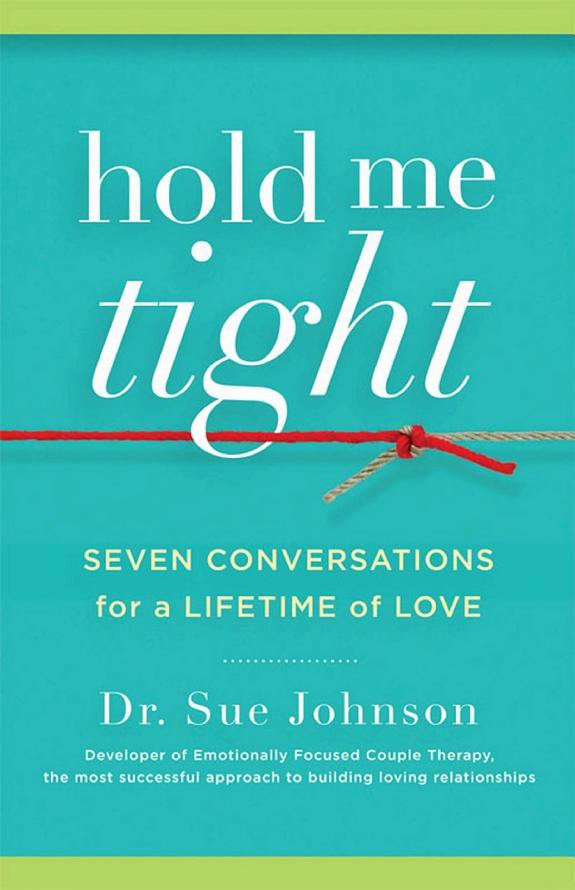
Hold Me Tight: Seven Conversations for a Lifetime of Love
4. Hold Me Tight: Seven Conversations for a Lifetime of Love by Dr. Sue Johnson
Sue Johnson is the developer of Emotionally Focused Therapy, one of the most well-researched approaches to couples counseling in existence, and Hold Me Tight is her attempt to bring that work to a general audience. The book is built around a central insight from attachment theory: that adults, just like children, need to feel securely attached to the people they love, and that most relationship conflict is really a protest against disconnection. We fight because we are scared of losing the bond, even when the fight itself is what threatens it.
Johnson writes with genuine warmth and clinical authority, which is a combination that is harder to pull off than it sounds. The seven conversations she outlines are not scripts so much as frameworks for the kinds of emotional honesty that most couples find genuinely difficult. She is particularly good at helping readers recognize the negative cycles they get stuck in, the pursuer-withdrawer dynamic, the mutual shutdown, the argument that is always about the same thing even when the surface topic changes.
Readers who are skeptical of attachment theory as a framework, or who feel that their relationship problems are more practical than emotional, may find the book’s emphasis on vulnerability and emotional accessibility a bit much. It also works best when both partners read it, since the exercises are designed for two. Solo readers can still get a great deal from it, but some of the depth requires a willing partner on the other side of the conversation.
Johnson’s framing of conflict as a cry for connection rather than a battle for control reorients the whole conversation about why couples fight.
This is perfect for couples who feel emotionally distant or stuck in repetitive arguments, and for anyone who wants to understand the attachment science behind why relationships feel the way they do.
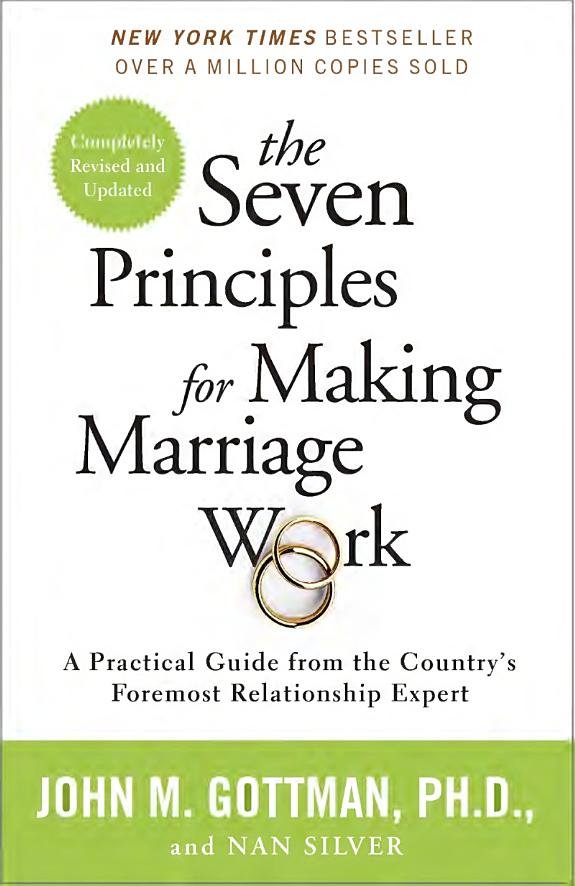
The Seven Principles for Making Marriage Work: A Practical Guide from the Country’s Foremost Relationship Expert
5. The Seven Principles for Making Marriage Work by John M. Gottman and Nan Silver
John Gottman has spent decades studying couples in his research lab, watching them talk, argue, laugh, and ignore each other, and then following up years later to see which relationships survived and which did not. The result is a body of work that is unusually grounded in observable behavior rather than theory alone. The Seven Principles is the most accessible entry point into that research, and it remains one of the most credible books about marriage you can read, precisely because Gottman is not just telling you what sounds good but what the data actually shows.
The seven principles themselves cover a range of territory, from deepening your knowledge of your partner’s inner world to managing conflict in ways that do not leave lasting damage. Gottman’s concept of the Four Horsemen, the communication patterns most predictive of relationship breakdown, criticism, contempt, defensiveness, and stonewalling, has become genuinely influential in the therapy world. Reading about them here, with clear examples and antidotes for each, is both illuminating and occasionally a little uncomfortable if you recognize yourself in the descriptions.
The book is peppered with quizzes and exercises, which some readers love and others find interruptive. The tone is also fairly measured and research-forward, so if you are looking for something with more emotional heat or narrative pull, it can feel a bit like a well-written textbook at points. That is not really a criticism, it is a description. If you want rigorous and practical, this delivers both.
The finding that contempt, not conflict, is the single greatest predictor of relationship failure is one of those pieces of research that genuinely changes how you think about what matters in a partnership.
This is perfect for couples who want evidence-based guidance and are willing to work through exercises together, and for anyone who finds comfort in knowing that the advice they are following has been tested against real outcomes.
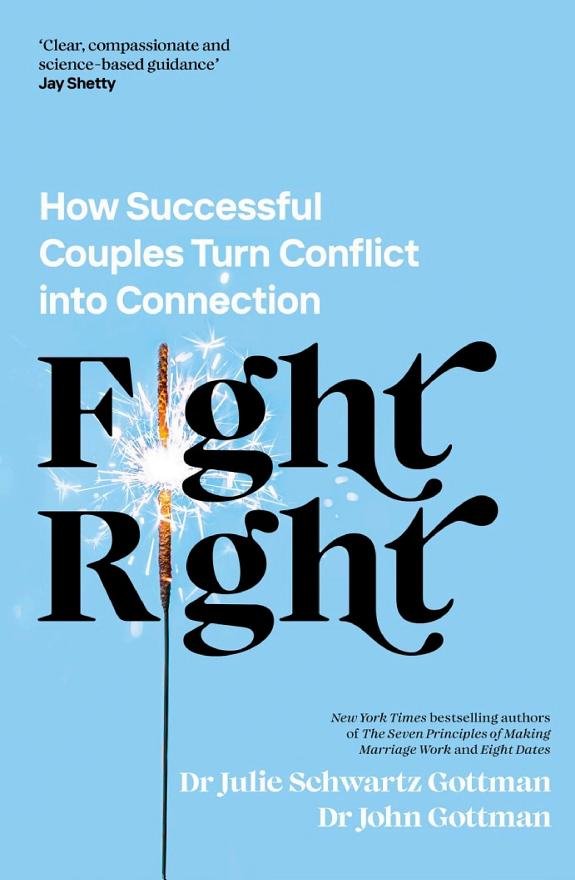
Fight Right: How Successful Couples Turn Conflict Into Connection
6. Fight Right: How Successful Couples Turn Conflict Into Connection by Julie Schwartz Gottman and John Gottman
If The Seven Principles is the comprehensive overview of the Gottman approach, Fight Right is a focused deep-dive into the specific territory of conflict. Julie and John Gottman wrote this one together, and the collaboration gives it a slightly different energy, a bit more conversational and immediate than some of their earlier work. The premise is that conflict itself is not the enemy of a good relationship. How you fight is. Most couples are not fighting about the wrong things so much as fighting in ways that create damage rather than resolution.
The book does an excellent job of distinguishing between solvable problems and what the Gottmans call perpetual problems, the ongoing differences rooted in personality or values that will never fully go away. Learning to manage those perpetual problems rather than expecting to resolve them permanently is one of the more realistic and genuinely helpful reframes in the book. They also spend considerable time on flooding, the physiological state of overwhelm that makes productive conversation nearly impossible, and how to recognize and interrupt it before a fight goes somewhere neither person wanted to go.
Some readers may find that the material overlaps significantly with The Seven Principles, and if you have already read that book, parts of this will feel familiar. It is also, like most Gottman work, oriented primarily toward heterosexual couples in the examples, though the underlying principles apply more broadly. Readers looking for something entirely new from the Gottman canon may want to know that going in.
The idea that a fight can be an opportunity to understand your partner more deeply rather than a problem to be won is simple to say and genuinely hard to internalize, but this book makes a serious attempt to show you how.
This is perfect for couples who fight frequently and want to understand what is actually happening in those moments, and for anyone who wants to stop dreading conflict and start using it more constructively.
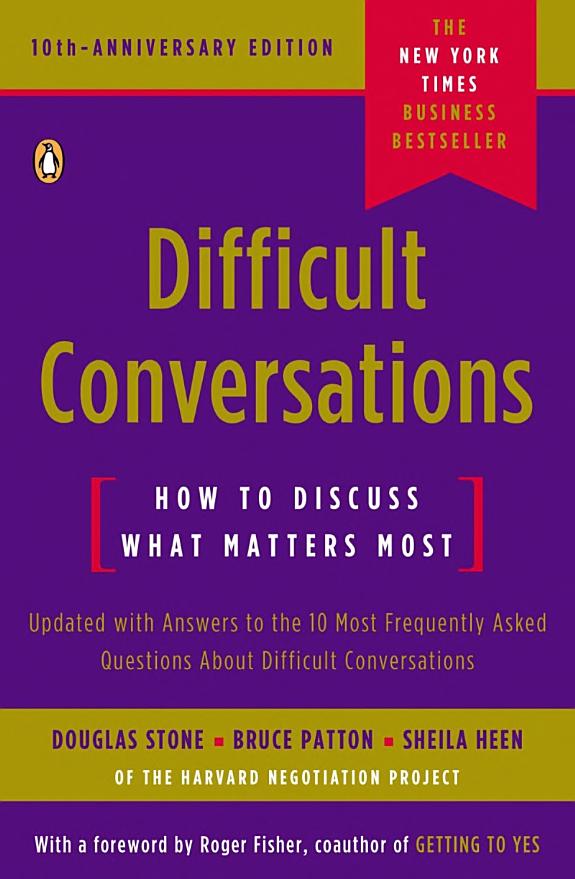
Difficult Conversations: How to Discuss What Matters Most
7. Difficult Conversations: How to Discuss What Matters Most by Douglas Stone, Bruce Patton, and Sheila Heen
This book came out of the Harvard Negotiation Project, which sounds like it might produce something dry and corporate, but Difficult Conversations is anything but. Stone, Patton, and Heen have written one of the most psychologically astute guides to hard conversations available, and it holds up remarkably well across personal and professional contexts. The central insight is that every difficult conversation is actually three conversations happening at once: a conversation about what happened, a conversation about feelings, and a conversation about identity, about what this situation means for how we see ourselves.
The identity conversation is where the book really distinguishes itself. Most communication guides focus on what to say and how to say it. This one goes deeper into why certain conversations feel so threatening at a fundamental level, why feedback can feel like an attack on who you are rather than just information about what you did. Understanding that dynamic does not make hard conversations easy, but it does make them more navigable, because you can start to separate what is actually being said from what your nervous system is interpreting it as.
The book is not specifically about romantic relationships, which means some of the examples feel more suited to a workplace or family-of-origin context. Readers looking for something aimed squarely at couples may find themselves adapting the material more than they expected. That said, the frameworks here are among the most transferable in this entire list, and the writing is clear, intelligent, and free of the motivational-poster quality that plagues a lot of the genre.
The observation that we tend to argue about who is right when we should be trying to understand how two people can have such different experiences of the same event is one of the more quietly radical ideas in the book.
This is perfect for thoughtful readers who want to understand the deeper structure of difficult conversations, and for anyone who finds themselves getting defensive or derailed in high-stakes discussions regardless of the setting.
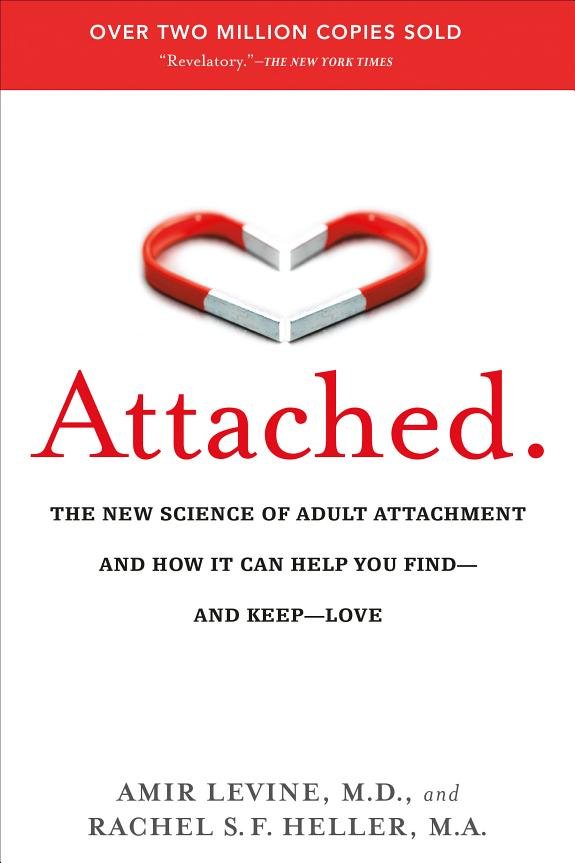
Attached: The New Science of Adult Attachment and How It Can Help You Find—and Keep—Love
8. Attached: The New Science of Adult Attachment and How It Can Help You Find and Keep Love by Amir Levine and Rachel Heller
Amir Levine is a psychiatrist and neuroscientist, and Attached reads like someone who actually understands the biology of bonding decided to write a book for people who are confused about why their relationships keep going the same way. The book introduces readers to the three main adult attachment styles, secure, anxious, and avoidant, and explains how those styles shape the way people communicate, fight, seek closeness, and pull away. If you have ever been in a relationship where one person always seemed to need more reassurance and the other always seemed to need more space, this book will feel like someone finally named the thing.
Levine and Heller write accessibly without dumbing things down, which is a real skill. The science is present but not overwhelming, and the case studies are specific enough to feel real rather than illustrative. The section on how anxious and avoidant types tend to find each other, and why that pairing so often produces exactly the dynamic both people find most painful, is particularly well done. It is the kind of thing that is uncomfortable to read and hard to stop reading at the same time.
The book does tend to frame secure attachment as a clear goal and avoidant attachment as a kind of problem to be solved, which can feel reductive if you identify as avoidant and feel like you are being pathologized. The advice for avoidant readers is somewhat thinner than for anxious ones. And while the attachment framework is genuinely useful, it is worth remembering that people are more complicated than any three-category system can fully capture. Read it as a lens, not a verdict.
The idea that your attachment style is not a personality flaw but an adaptation that made sense in its original context, and that it can shift with the right relationship and the right awareness, is one of the more genuinely hopeful things this book has to offer.
This is perfect for anyone who recognizes a repeating pattern in their relationships and wants to understand where it comes from, and for couples who want a shared framework for talking about how they each approach closeness and distance.
None of these books will do the work for you, and it would be a little suspicious if any of them claimed to. Real communication in relationships is messy and ongoing and sometimes frustrating even when you have read all the right things. But knowledge does matter. Understanding why you go quiet when you feel criticized, or why your partner shuts down right when you most need them to stay in the conversation, changes the texture of those moments even when it does not immediately change the behavior.
Pick the book that speaks to where you actually are right now. If you are in the middle of a recurring fight that never seems to resolve, start with the Gottmans. If you feel like you and your partner are speaking different emotional languages, start with Chapman. If you want to understand the deeper wiring underneath all of it, Levine and Heller or Sue Johnson will take you there. The goal is not to become a perfect communicator. It is to become a slightly more honest, slightly more curious one. That turns out to be enough to change quite a lot.