

5 Books for Career Growth and Success
Most career advice sounds like it was written by someone who has never actually had a bad day at work. You know the type: relentless optimism, vague platitudes about “leaning into your potential,” and a suspiciously convenient story about going from broke to brilliant in eighteen months. Real career growth is messier than that. It involves wrong turns, slow progress, and the occasional afternoon where you wonder if you should have studied something more practical, like underwater welding.
The books on this list are different. They are grounded in research, written by people who have thought seriously about work and what makes it meaningful, and they hold up under scrutiny. Whether you are just starting out, climbing toward something bigger, or stepping into a new role that scares you a little, there is something here worth your time. These are not quick fixes. They are the kind of books you return to.
Deep Work
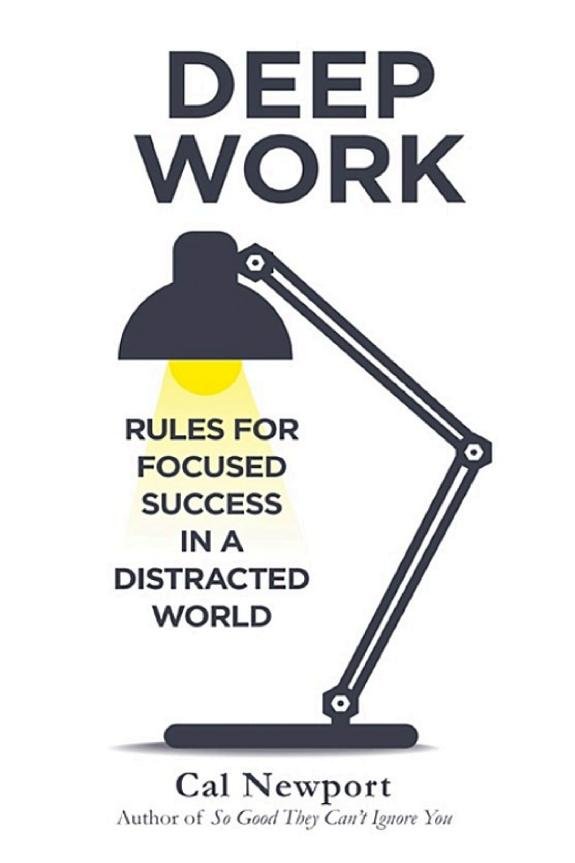
1. Deep Work by Cal Newport
Cal Newport is a computer science professor who does not have social media accounts and is not particularly apologetic about it. His argument in Deep Work is straightforward: the ability to focus without distraction on cognitively demanding tasks is becoming increasingly rare and increasingly valuable. If you can cultivate that ability, you have a serious edge. Newport calls this kind of focused, uninterrupted effort “deep work,” and he contrasts it with the shallow, fragmented busyness that fills most of our days.
The book is split into two parts. The first builds the case for why deep work matters, drawing on examples from Carl Jung to Bill Gates. The second offers practical strategies for actually doing it, from scheduling blocks of distraction-free time to rethinking your relationship with email. Newport’s writing is clear and a little austere, which suits the subject well. He is not trying to entertain you. He is trying to convince you, and mostly he succeeds.
Where the book earns its keep is in the specificity of its advice. Newport does not just tell you to focus more. He gives you frameworks for restructuring your workday around the kind of work that actually moves your career forward. Some of his suggestions are ambitious, and a few feel better suited to academics than to people in open-plan offices with back-to-back meetings. Still, even a partial application of his ideas tends to produce noticeable results.
The most valuable professionals of the coming decades will not be the ones who are always available. They will be the ones who can disappear for a few hours and come back with something worth reading.
This is perfect for knowledge workers, writers, programmers, and anyone who suspects they are capable of better work than their current environment allows. It is probably not the right fit for people in highly collaborative or client-facing roles where constant availability is genuinely part of the job.
Drive
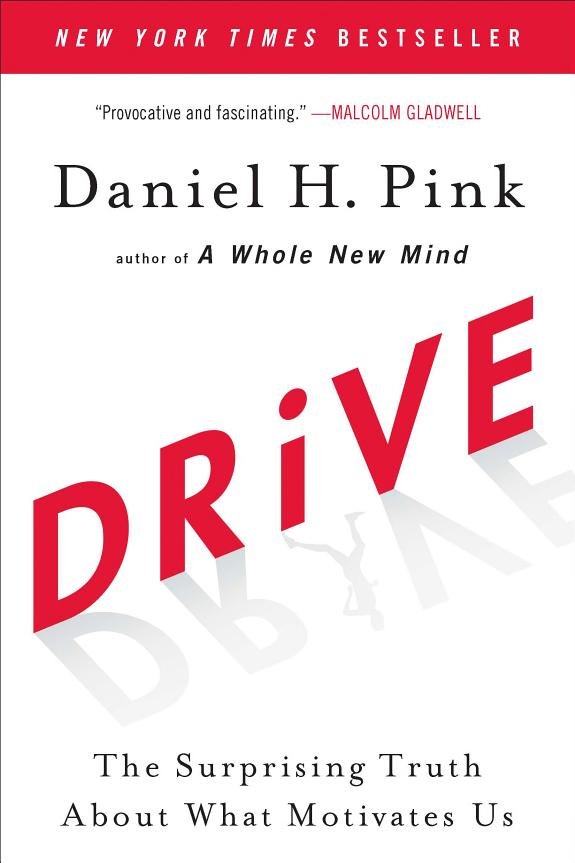
2. Drive by Daniel H. Pink
Daniel Pink spent time as a speechwriter for Al Gore, which means he knows how to make a point land. In Drive, he takes on one of the more persistent myths in management: that people are primarily motivated by carrots and sticks. His argument, backed by decades of behavioral science research, is that for any work requiring creativity or complex thinking, external rewards often undermine performance rather than enhance it. What actually drives us, Pink contends, is autonomy, mastery, and purpose.
Pink is a skilled synthesizer. He draws on the work of psychologists like Edward Deci and Richard Ryan and makes it accessible without dumbing it down. The three pillars of his motivation framework are intuitive once you encounter them, and that is part of the book’s appeal. It articulates something many people have felt but struggled to name: the reason a pay raise did not make you love your job, or why a side project consumed you in a way your day job never could.
The practical sections at the end of each chapter are hit or miss. Some suggestions feel genuinely useful; others read like workshop exercises that would work better in a corporate retreat than in real life. And if you have already read widely in behavioral economics or organizational psychology, parts of Drive will feel familiar. But as an introduction to intrinsic motivation and its implications for how you build a career, it is hard to beat.
Understanding what actually motivates you is not a luxury. It is the foundation for making any career decision that sticks.
This is perfect for managers trying to build better teams, individuals trying to understand why certain work energizes them and other work drains them, and anyone considering a career change they cannot quite justify on paper. Those already deep in organizational psychology literature may find it covers familiar ground.

Grit
3. Grit by Angela Duckworth
Angela Duckworth is a psychologist at the University of Pennsylvania who left a demanding consulting career to become a teacher, then went back to school to study why some people succeed and others do not. Her answer, developed over years of research, is grit: the combination of passion and perseverance for long-term goals. Talent, she argues, is overrated. What predicts achievement more reliably is the willingness to keep going when things get hard.
Duckworth writes with warmth and intellectual honesty. She is upfront about the limitations of her research and does not oversell her conclusions. The stories she tells, from West Point cadets to National Spelling Bee finalists to championship swimmers, are genuinely engaging. She also spends meaningful time on how grit develops, which is more useful than simply being told that persistence matters. The sections on deliberate practice, borrowed from Anders Ericsson’s work, are particularly worth your attention.
The book’s main vulnerability is that it can slide toward circular reasoning. Gritty people succeed, and we know they are gritty because they succeeded. Duckworth is aware of this and addresses it, but not everyone will find the answer fully satisfying. There is also a question the book does not quite resolve: when is perseverance wisdom, and when is it stubbornness in a direction that no longer serves you? That is a real tension, and it deserves more than a few pages.
Effort counts twice in Duckworth’s framework, and that reframe alone is worth sitting with for a while.
This is perfect for people early in their careers who are trying to understand why some paths feel harder than others, coaches and educators, and anyone who has wondered whether they have what it takes for a long-term goal. It is less useful for people looking for strategic career advice or those already fluent in the psychology of motivation.
Lean In
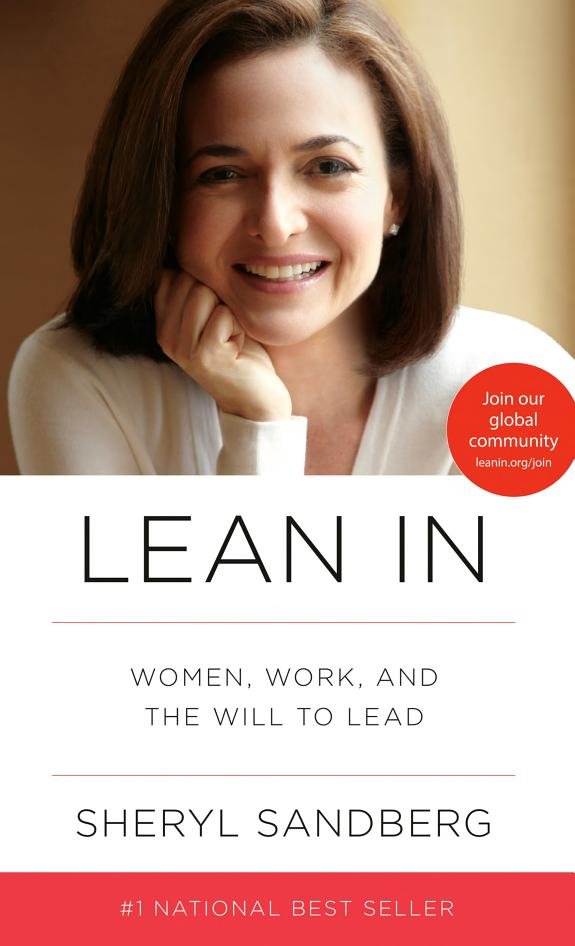
4. Lean In by Sheryl Sandberg
Sheryl Sandberg was the Chief Operating Officer of Facebook when she wrote Lean In, and the book carries both the advantages and the limitations of that vantage point. She writes from a position of extraordinary privilege, and she is candid enough to acknowledge it, at least partially. Her central argument is that women hold themselves back in ways that compound the structural barriers they already face, and that leaning into ambition rather than away from it is both personally and collectively important. It is a thesis that generated enormous conversation when the book appeared in 2013, and it still does.
The chapters on negotiation, mentorship, and navigating the intersection of career and family are the strongest. Sandberg is specific here in ways that feel genuinely helpful rather than generic. Her discussion of the “likability penalty” that women face when they advocate for themselves is backed by real research and described with clarity. The storytelling is polished, occasionally a little too polished, but the underlying observations are sharp.
The book has drawn fair criticism for centering the experiences of women who already have significant resources and support, and for placing too much responsibility on individuals to navigate systems that need structural change. Those critiques have merit. Lean In works best when read as one perspective among many, not as a complete theory of gender and work. It is also worth noting that some of its advice applies broadly to anyone navigating ambition in a workplace that does not always reward it straightforwardly.
The internal obstacles Sandberg describes are real, even when the external ones are larger and harder to move.
This is perfect for women in the early to middle stages of their careers, managers thinking about how to support the women on their teams, and anyone interested in the intersection of gender and professional ambition. Readers looking for a structural or policy-focused analysis of workplace inequality will want to supplement it with other voices.
The First 90 Days
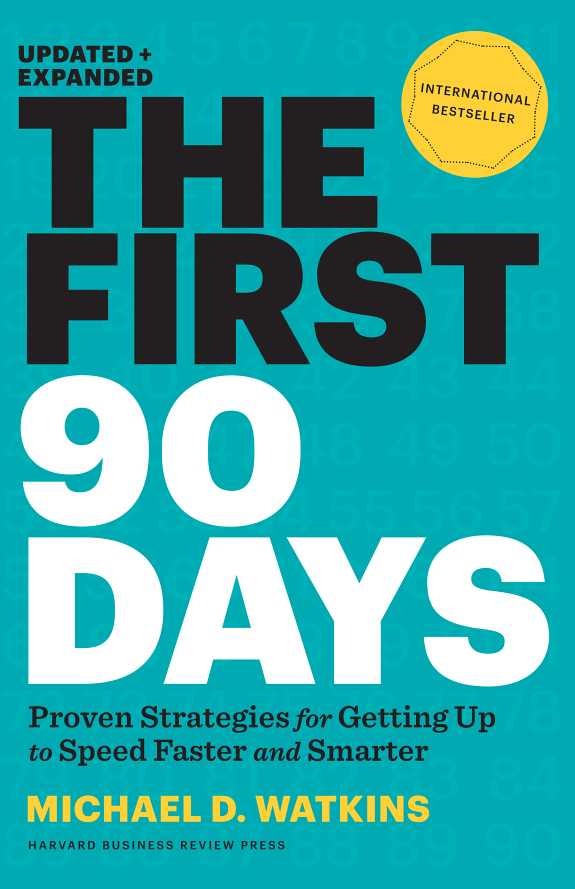
5. The First 90 Days by Michael D. Watkins
Michael Watkins wrote The First 90 Days for people stepping into new roles, whether that means a first management position, a lateral move, or a leap to a senior leadership job. The premise is simple and well-supported: the first three months in a new position are disproportionately important. How you use that time shapes your credibility, your relationships, and your ability to get anything done for months or years afterward. Watkins offers a framework for navigating that period without either moving too slowly or burning goodwill by moving too fast.
The book is more structured than most in this genre, which is either a feature or a bug depending on how your mind works. Watkins introduces concepts like STARS, a model for diagnosing the type of situation you are entering, and distinguishes between learning, alliance-building, and early wins in a way that is genuinely useful. He is writing primarily for managers and executives, but a lot of the advice translates to anyone starting something new in a professional context.
It can read as dense in places, and Watkins occasionally favors the framework over the human complexity underneath it. Real organizations are messier than any model, and the book sometimes underestimates how much informal dynamics shape what is actually possible. Still, as a practical guide to avoiding the most common and costly mistakes people make when they change roles, it is one of the more reliable things you can read. It is the kind of book you wish someone had handed you before the last time you started a new job, not after.
Most people treat the first 90 days as a time to prove themselves. Watkins argues it is actually a time to listen, which is a harder and more valuable thing to do.
This is perfect for anyone stepping into a new role, especially a management or leadership position, and for people who have made a job transition that did not go as well as hoped and want to understand why. It is less relevant for people in stable, long-term roles with no immediate change on the horizon.
None of these books will hand you a career. That is not how any of this works. But each one offers something genuinely useful: a clearer picture of what focused work actually looks like, a more honest account of what motivates people, a framework for navigating a new role without stepping on every landmine. Taken together, they form a reasonable library for thinking seriously about professional life.
Read the ones that meet you where you are. If you are just starting out, Grit and Drive might resonate most. If you are stepping into something new, The First 90 Days is worth your full attention. If you have been coasting on busyness and wondering why it does not feel like progress, start with Deep Work. The right book at the right moment has a way of clarifying things that were already true but not yet visible. That is reason enough to keep reading.