
5 Books That Help You Stop Procrastinating
Most of us have a complicated relationship with procrastination. We know what we should be doing. We even want to do it, sort of. And yet somehow the afternoon disappears and we have watched three documentary episodes about competitive cheese rolling and reorganized a drawer that was already fine. Sound familiar?
The good news is that procrastination is not a character flaw. It is a habit, a psychological pattern, and in many cases a perfectly understandable response to fear or discomfort. The even better news is that some genuinely smart people have written books about it, and not the shallow “just wake up earlier” variety. The five books below dig into why we stall, what keeps us stuck, and how to actually move forward. They come from different angles, which is part of what makes reading them together so useful.
Solving the Procrastination Puzzle
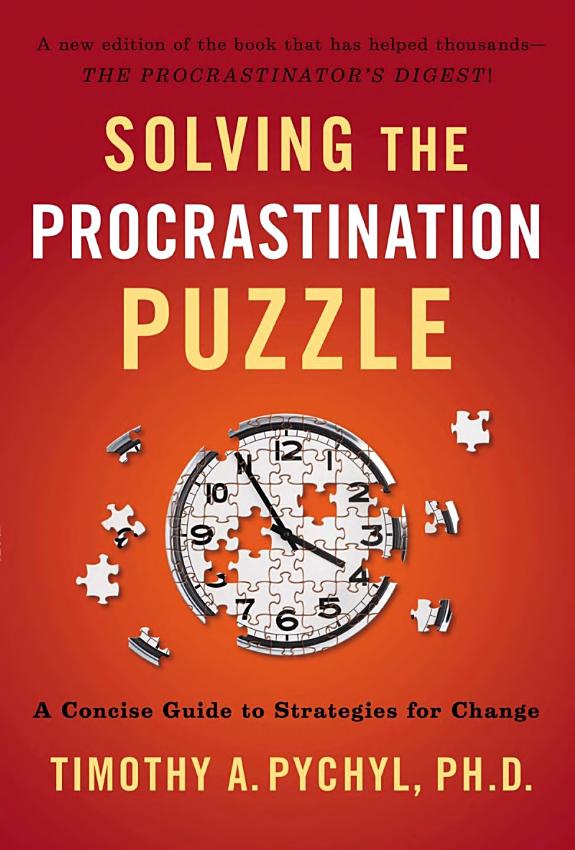
1. Solving the Procrastination Puzzle by Timothy A. Pychyl
Timothy Pychyl is a psychology professor who has spent decades researching procrastination, and this short, readable book is the distillation of that work. He is not here to motivate you with slogans. He is here to explain what is actually happening in your brain when you avoid a task, and the explanation is more interesting than you might expect. At the core of his argument is the idea that procrastination is an emotion regulation problem, not a time management problem. We avoid tasks because they make us feel bad, and avoidance provides temporary relief. That relief is the trap.
Pychyl writes with the calm clarity of someone who has explained this material to hundreds of students. The book is compact, maybe two hours of reading, and it does not waste your time. He walks through the research on implementation intentions, the importance of just getting started, and why waiting until you “feel like it” is one of the most reliable ways to never do anything at all. His tone is warm but honest, and he resists the urge to make things sound easier than they are.
What makes this book stand out is its foundation in actual science rather than productivity folklore. Pychyl cites studies, explains mechanisms, and then connects those mechanisms to practical strategies. It is the kind of book where you finish a chapter and immediately think of three things you have been putting off for months. Whether that thought produces action is, of course, still up to you.
“Procrastination is not a time management problem. It is an emotion management problem. Until you understand that, no planner in the world will save you.”
This is perfect for readers who want a research-grounded explanation of why they procrastinate before jumping into solutions, especially those who have tried productivity systems before and found them hollow.
The War of Art
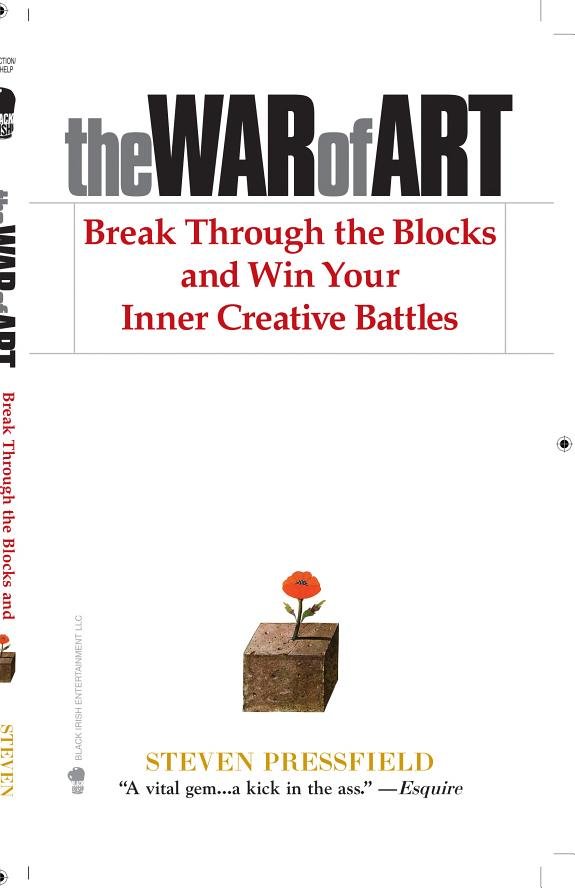
2. The War of Art by Steven Pressfield
Steven Pressfield does not call it procrastination. He calls it Resistance, and he writes about it like it is a living enemy. That might sound dramatic, but the framing works. Pressfield is a novelist who spent years failing to write before finally breaking through, and this book is his account of what stood between him and the work. The War of Art is part memoir, part manifesto, and entirely unlike any other book on this list. It is short, punchy, and reads almost like a series of dispatches from someone who has been in a long and difficult battle.
His central idea is that Resistance is universal, it shows up for every creative person, and it is strongest precisely when the work matters most. The more important a project is to you, the harder Resistance will fight to keep you from it. This reframe is genuinely useful. Instead of wondering why you are avoiding something you care about, you start to see the avoidance itself as evidence that the thing matters. That shift in perspective does not eliminate the problem, but it changes how you relate to it.
This book is not for everyone, and Pressfield would probably be fine with that. The later sections veer into spiritual territory, invoking muses and higher callings in ways that some readers will find inspiring and others will find baffling. If you are deeply skeptical of that kind of language, the final third might lose you. But the first two thirds, on Resistance and on what it means to be a professional, are worth the price of the book on their own.
“Resistance is not a peripheral opponent. It is the main event. And the artist who does not understand this will spend a lifetime wondering why the work never gets done.”
This is perfect for writers, artists, and creative professionals who feel blocked and want a fiery, unconventional perspective on why creative avoidance happens and how to push through it.
Finish
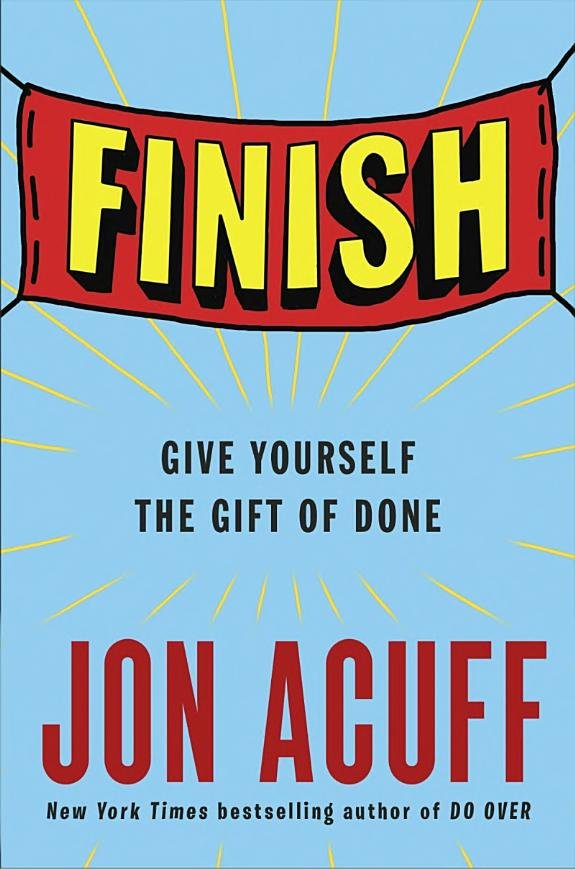
3. Finish by Jon Acuff
Jon Acuff has a gift for saying uncomfortable things in a way that makes you laugh rather than wince. Finish is ostensibly a book about completing your goals, but it is really a book about perfectionism, which Acuff argues is the primary reason most goals die quietly in a drawer somewhere. His research, conducted with a data scientist using a group of thousands of participants, found that people who gave themselves permission to be imperfect were significantly more likely to finish their projects than those who held themselves to impossible standards. Perfectionism is not the engine of achievement. It is the handbrake.
The book is funny, genuinely funny, in the way that only comes from a writer who has lived through the material. Acuff is not above mocking his own patterns, and that self-deprecation makes the advice land without feeling preachy. He covers topics like the “day after” problem, which is what happens when you break a streak and then abandon the whole project, and the way we secretly sabotage ourselves by making goals far too ambitious at the start. His suggestion to deliberately cut your goal in half partway through is one of those ideas that sounds wrong until it works.
If you are looking for dense psychological theory, this is not your book. Acuff writes for a general audience and keeps things accessible, sometimes at the cost of depth. But that is also part of its charm. It is a book you can read over a weekend and then actually use on Monday. Not every book about procrastination needs to be a graduate seminar.
“Perfectionism does not want you to finish. It wants you to quit. Every unrealistic standard it sets is just another door it hopes you will not walk through.”
This is perfect for goal-setters who repeatedly start strong and then abandon their projects, particularly those who suspect perfectionism is the culprit but have never had it explained quite so clearly.
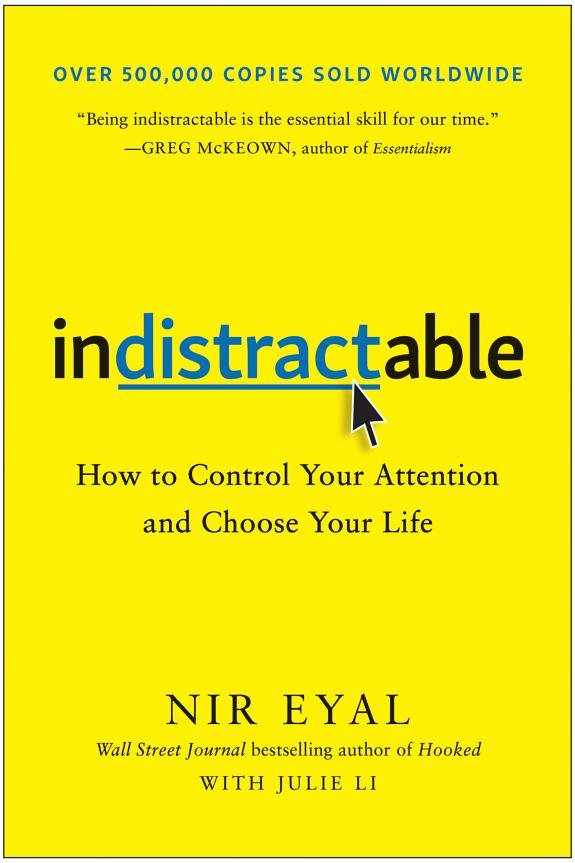
Indistractable
4. Indistractable by Nir Eyal
Nir Eyal is in an interesting position as the author of this book. He previously wrote Hooked, a guide to building habit-forming products, which essentially taught tech companies how to make apps more addictive. Indistractable is, in some ways, the antidote to his own earlier work. He is upfront about this, which takes a certain amount of nerve, and the self-awareness actually adds credibility rather than undermining it. He knows how distraction is engineered because he helped engineer it.
The core argument here is similar to Pychyl’s in some ways: distraction is not primarily caused by external temptations but by internal discomfort. We reach for our phones not because the phone is irresistible but because we are trying to escape something, boredom, anxiety, a task that feels too hard. Eyal introduces the concept of traction versus distraction, where traction is any action that moves you toward your goals and distraction is anything that moves you away, regardless of whether it feels productive. That reframe is quietly useful, because it means that obsessively reorganizing your task list can be just as distracting as scrolling social media.
Eyal is a practical writer, and the book is full of specific techniques, from scheduling your time in values-aligned blocks to having honest conversations with the people in your life about focus and interruption. Some readers will find the sheer number of tactics a little overwhelming, and a few of the workplace and relationship sections feel like they belong in a different book. But the foundational ideas are solid, and the writing is clear and unpretentious.
“Every distraction starts from within. Fix the internal trigger and the external temptation loses most of its power.”
This is perfect for people who feel constantly pulled away from their work by technology and interruptions, especially those who want both a psychological explanation and a concrete toolkit for reclaiming their attention.
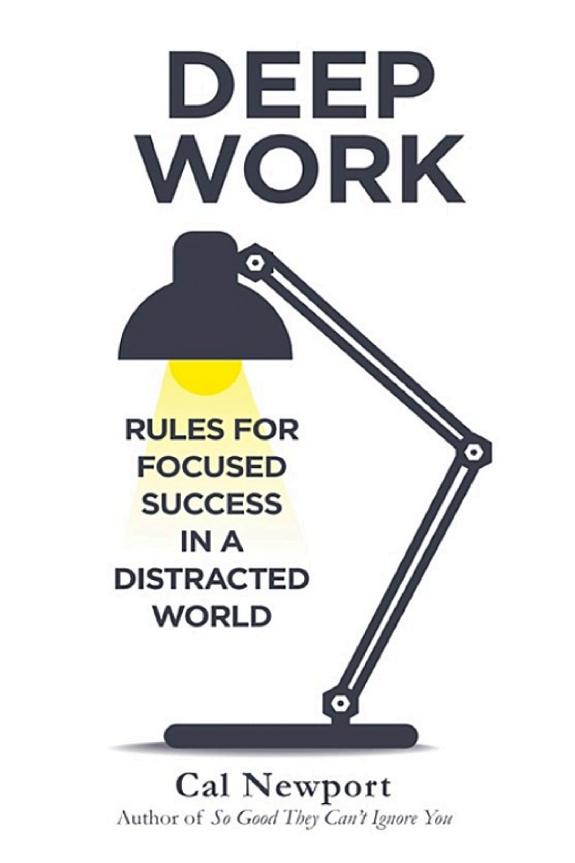
Deep Work
5. Deep Work by Cal Newport
Cal Newport does not procrastinate, or at least that is the impression you get from reading his books. He is rigorous, systematic, and slightly intense in a way that is either inspiring or exhausting depending on your mood. Deep Work is built around a simple but important claim: the ability to focus without distraction on cognitively demanding tasks is becoming increasingly rare and increasingly valuable at the same time. Most of us are getting worse at it. The people who get better at it will have a significant advantage. Newport is not smug about this, but he is direct.
The book is split into two parts. The first makes the case for deep work, drawing on examples from Carl Jung to Bill Gates to explain why extended, distraction-free concentration produces results that shallow, fragmented work simply cannot. The second part offers practical strategies for building a deep work practice, including different scheduling philosophies, the importance of downtime, and how to quit social media without feeling like you are making a dramatic lifestyle statement. Newport himself does not have social media accounts, which he mentions calmly and without lecturing, which is somehow more persuasive than if he had made a big deal of it.
Where this book connects to procrastination is in its diagnosis of why so many knowledge workers feel busy but unproductive. Constant connectivity and the fragmentation of attention are not just distracting. They erode your capacity for the kind of focused effort that actually moves projects forward. If you have ever ended a full day of work feeling like you accomplished nothing, Newport has a fairly convincing explanation for why, and a structured path toward something better. It is not a quick fix, but then again, neither is the problem.
“Busyness and productivity are not the same thing. One fills your calendar. The other fills your life with work that matters.”
This is perfect for knowledge workers, academics, and writers who feel scattered and want a structured, research-informed approach to rebuilding their capacity for sustained, meaningful focus.
None of these books will fix procrastination for you. That would be a strange thing to promise, and anyone who does promise it is probably selling something you do not need. What these five books will do, if you read them honestly, is help you understand the specific shape of your own avoidance, whether it is emotional discomfort, perfectionism, distraction, fragmented attention, or some combination of all four. That understanding is not nothing. In fact, it is where most real change starts.
Pick the one that sounds most like your problem and start there. You can always read the others later. And yes, the irony of procrastinating on reading a book about procrastination is not lost on anyone here.