

7 Books for Recovering Perfectionists
There is a particular kind of exhaustion that comes from holding yourself to impossible standards. You finish a project and immediately spot what is wrong with it. You hesitate to start things because you are not sure you can do them perfectly. You say yes to everything, sleep too little, and still feel like you are somehow falling short. If any of that sounds familiar, welcome. You are in good company here.
Perfectionism is sneaky. It disguises itself as high standards or ambition or just caring a lot. But underneath those labels, it is usually fear. Fear of judgment, fear of failure, fear that if you let one thing slip, the whole carefully constructed version of yourself will come apart. The books on this list do not promise to fix you, which is honestly a relief, because the fixing mentality is part of the problem. What they offer instead is something quieter and more durable: perspective, compassion, and a few practical tools for loosening perfectionism’s grip. Some are research-driven, some are deeply personal, and at least one will make you feel like you are sitting across from a very wise friend who has been through it too.
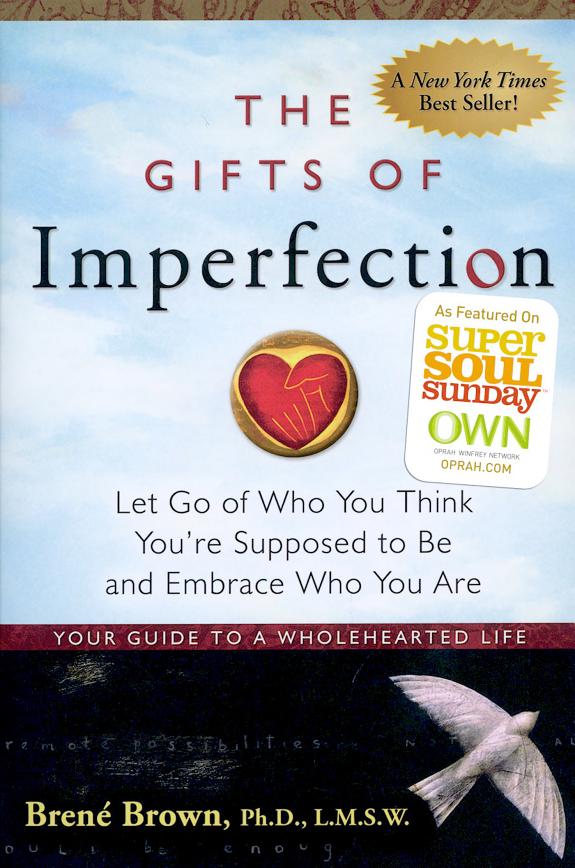
The Gifts of Imperfection
1. The Gifts of Imperfection by Brené Brown
Brené Brown spent years researching shame, vulnerability, and what she calls wholeheartedness, and this book is where that research becomes something you can actually use. The premise is simple but takes a while to really land: worthiness is not something you earn by achieving or perfecting or pleasing. It is something you claim. Brown lays out ten guideposts for living a more wholehearted life, and while that might sound a little self-help-adjacent, the writing is warm and grounded enough to keep it from feeling like a motivational poster.
Brown’s voice is one of the most distinctive things about this book. She is funny in a self-deprecating way, honest about her own struggles, and never preachy. She talks about her research but she also talks about her own family, her own bad days, and the moments when she herself forgot everything she had supposedly learned. That honesty makes the book feel credible rather than aspirational in the hollow sense.
The central ideas here circle around the difference between perfectionism and healthy striving. Brown argues that perfectionism is not about doing your best. It is about avoiding shame and judgment. That distinction, once you really sit with it, is genuinely clarifying. It helps you see where your drive to do well ends and where the fear begins.
If you are someone who prefers dense, clinical frameworks or quantitative data, this book might feel a little soft around the edges. Brown’s style is conversational and story-heavy, which some readers love and others find frustrating when they are looking for something more structured.
Perfectionism is not self-improvement. It is, at its core, about trying to earn approval and acceptance. That reframe alone is worth the read.
This is perfect for readers who are just beginning to question their perfectionism and want a compassionate, readable entry point that does not feel clinical or overwhelming.
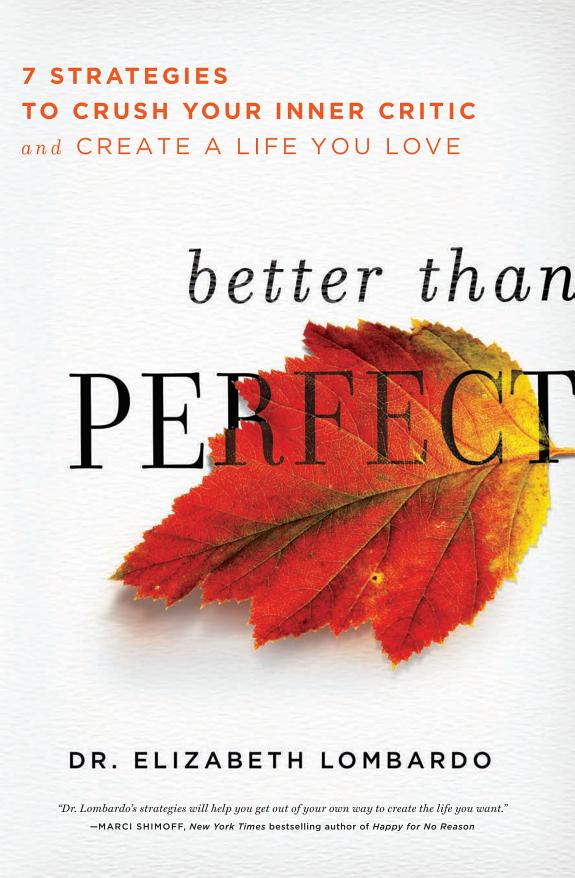
Better Than Perfect
2. Better Than Perfect by Elizabeth Lombardo
Elizabeth Lombardo is a psychologist and this book reads like one, in the best possible way. It is practical, structured, and genuinely useful for people who want more than reflection. Lombardo identifies seven core beliefs that drive perfectionism and then works through each one methodically, offering concrete strategies for shifting them. If you are the kind of person who reads self-help books and then immediately wants a worksheet to fill out, this one is for you.
What sets this book apart is its focus on what Lombardo calls the “better than perfect” mindset, which is not about lowering your standards but about redirecting your energy. She makes a useful distinction between excellence, which is healthy and motivating, and perfectionism, which is driven by fear and self-criticism. The goal is not to stop caring. It is to care in a way that actually serves you rather than depleting you.
Lombardo writes with a lot of warmth and includes plenty of real-world examples from her work with clients. The tone is encouraging without being saccharine. She takes perfectionism seriously as a psychological pattern rather than treating it as a quirky personality trait that just needs a little reframing.
Readers who are looking for something more philosophical or narrative-driven might find the structured format a bit rigid. This is a book that works best when you engage with it actively rather than reading it straight through on a lazy Sunday afternoon.
Lombardo’s core argument is that perfectionism is not a high standard. It is a defense mechanism. And defense mechanisms, by definition, keep you stuck.
This is perfect for action-oriented readers who want a structured, psychology-based approach to perfectionism with clear strategies they can start applying right away.
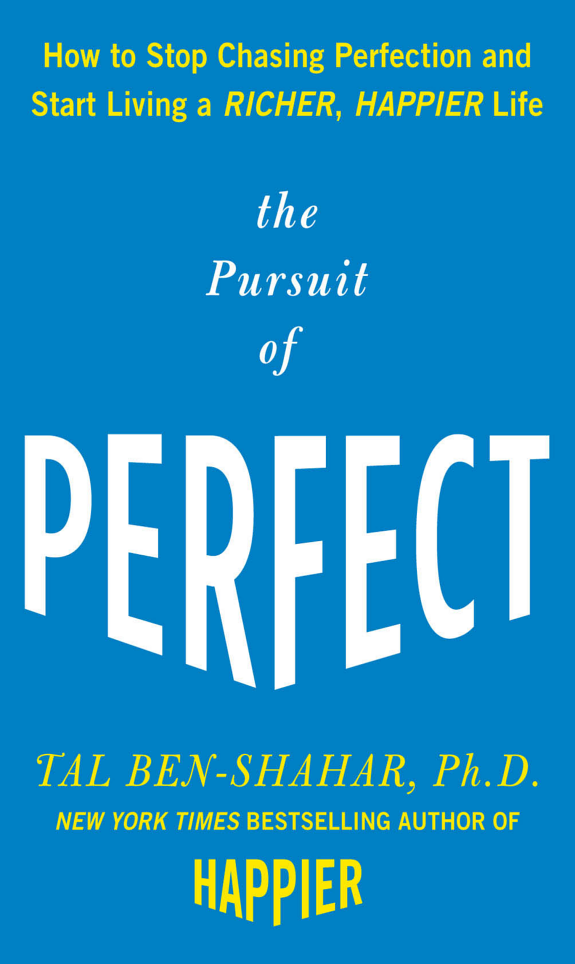
The Pursuit of Perfect
3. The Pursuit of Perfect by Tal Ben-Shahar
Tal Ben-Shahar is a Harvard lecturer best known for teaching one of the most popular courses in that university’s history, a course on positive psychology and happiness. This book grows out of that work and brings a genuinely interesting academic perspective to the question of why perfectionism makes us miserable. Ben-Shahar draws on psychology research, philosophy, and a fair amount of his own personal experience to make the case that the pursuit of a perfect life is not just futile but actively harmful.
The central distinction Ben-Shahar draws is between perfectionists and what he calls optimalists. Perfectionists reject failure and treat anything less than perfect as unacceptable. Optimalists accept failure as an inevitable part of the process and use it as information rather than evidence of their inadequacy. It is a useful framework, and Ben-Shahar does a good job of showing how it plays out in relationships, work, and the way we talk to ourselves.
The writing is clear and intelligent without being dry. Ben-Shahar is a good teacher and it shows. He explains psychological concepts in ways that are accessible without oversimplifying them, and he connects theory to practice in ways that feel genuine rather than tacked on. There are exercises at the end of each chapter for readers who want to engage more actively.
If you are looking for something deeply personal or emotionally resonant, this book might feel a little more cerebral than you want. It is more professor than confessor, which is a feature for some readers and a limitation for others.
The optimalist does not settle for less. She sets high goals and works hard to achieve them. The difference is that she accepts, rather than rejects, the reality of the journey.
This is perfect for intellectually curious readers who want a research-informed perspective on perfectionism and appreciate a more academic, structured approach to personal growth.
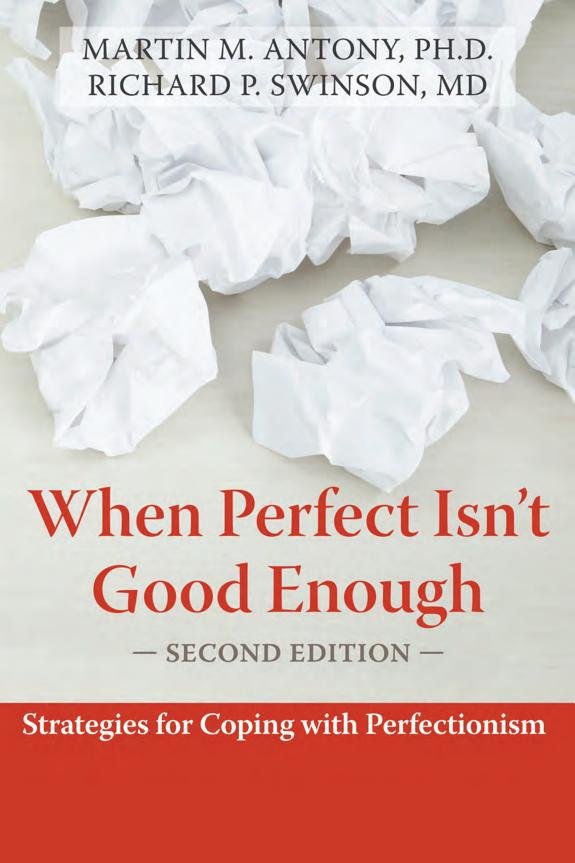
When Perfect Isn’t Good Enough
4. When Perfect Isn’t Good Enough by Martin M. Antony
Martin Antony is a clinical psychologist and one of the leading researchers on perfectionism, anxiety, and cognitive behavioral therapy. This book is the most clinical on this list, and that is precisely its strength. If you have ever suspected that your perfectionism is more than just a personality quirk, that it is interfering with your work, your relationships, or your ability to enjoy anything, this book takes that seriously and gives you real tools for addressing it.
The approach here is rooted in CBT, which means the book is full of exercises, thought records, and behavioral experiments. Antony walks you through how to identify perfectionist thinking patterns, how to challenge them, and how to gradually expose yourself to the discomfort of doing things imperfectly. It sounds simple in theory. In practice, it is genuinely hard work, and Antony does not pretend otherwise.
What is particularly valuable here is the specificity. Antony does not just talk about perfectionism in general terms. He addresses how it shows up in different contexts, including work, relationships, appearance, and health, and tailors his strategies accordingly. That level of detail makes the book feel less like a broad self-help read and more like a targeted intervention.
This is not a book for casual reading. The tone is measured and clinical, and the exercises require real effort and honesty. Readers who are looking for something warm and narrative-driven will probably find it dry. But for people who are genuinely struggling and want something substantive, it is one of the most useful books on this list.
Perfectionism is not about caring more than other people. It is about fearing the consequences of imperfection more than other people. That distinction changes everything about how you approach change.
This is perfect for readers who recognize that their perfectionism is significantly affecting their daily life and want a rigorous, evidence-based workbook to help them address it systematically.
Present Over Perfect
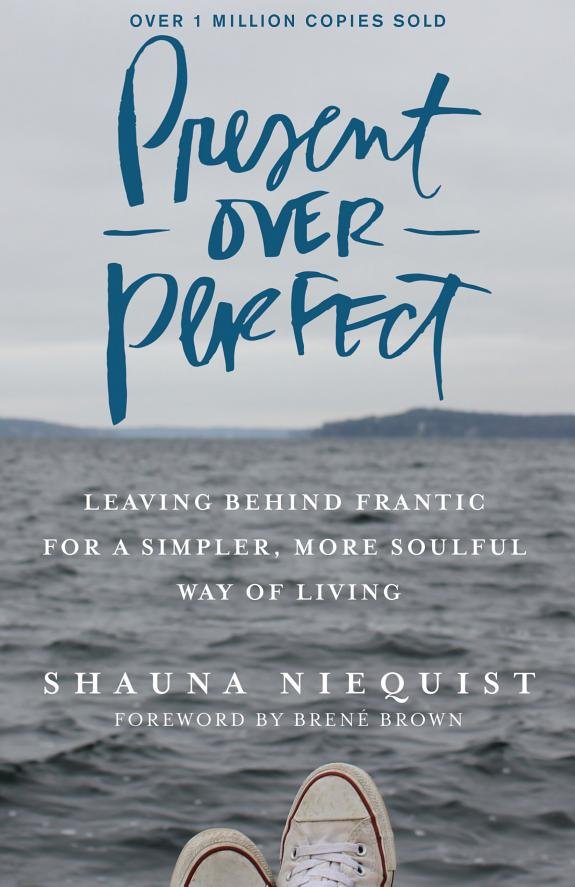
5. Present Over Perfect by Shauna Niequist
Shauna Niequist writes the way some people talk when they are being completely honest with you, which is to say, she is a little raw, occasionally funny, and entirely without pretense. This book is a memoir-style collection of essays about her own journey away from a life of relentless busyness, people-pleasing, and performance. It is the most personal book on this list and also the most quietly radical in its conclusions.
Niequist is a Christian writer and her faith is woven throughout the book, which is worth knowing upfront. She does not preach, but she does write from a specific spiritual framework, and readers who are not religious may find some sections less relevant to their own experience. That said, the core of what she is saying, that a life spent performing and achieving and impressing is not actually a life you are present for, transcends any particular tradition.
The writing is beautiful in places. Niequist has a gift for capturing the specific texture of a feeling, the particular exhaustion of always being “on,” the strange grief of realizing you have been absent from your own life. The book does not offer a program or a set of steps. It offers something more like permission: permission to slow down, to say no, to let some things be less than perfect because the alternative is missing everything that actually matters.
If you are looking for data, research, or structured strategies, this is not that book. It is more of a long, honest conversation than a manual. Readers who prefer concrete frameworks will probably want to pair it with something more clinical.
You can do less and be more present for what you do. That is not a compromise. For many perfectionists, it is the hardest thing they will ever try.
This is perfect for readers who are burned out and overextended and want something warm, reflective, and honest about the cost of a life lived in constant performance mode.
The Confidence Gap
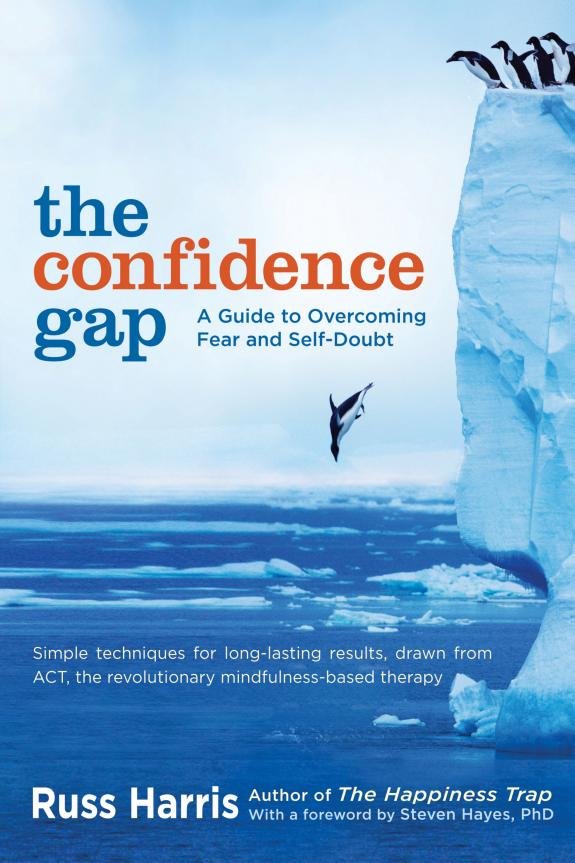
6. The Confidence Gap by Russ Harris
Russ Harris is an ACT therapist, which stands for Acceptance and Commitment Therapy, and this book applies that framework to the specific problem of confidence and the way perfectionism undermines it. The core insight is deceptively simple: waiting until you feel confident before you act is a trap. Confidence comes from doing things, not from thinking your way into a state of readiness that never quite arrives. Perfectionists, who often wait until conditions are exactly right before attempting anything, will find this uncomfortably familiar.
Harris writes with a directness that is refreshing. He does not waste time on flattery or extended metaphors. He gets to the point quickly and then gives you something to do with it. The ACT approach involves learning to notice your thoughts without being controlled by them, which sounds abstract until Harris explains it in concrete, practical terms. The idea is not to silence your inner critic but to stop treating everything it says as the truth.
There is a lot of overlap between perfectionism and confidence issues, and Harris addresses that overlap honestly. He talks about how the pursuit of the perfect performance, the one that will finally silence all doubt, is itself the thing keeping people from developing real competence and real confidence. It is a useful reframe for anyone who has ever delayed starting something because they were not sure they could do it well enough.
This book is less emotionally warm than some others on this list. Harris is practical and a little brisk, which works well if that is what you need and may feel slightly cold if you are looking for something more nurturing. Also, if you are already familiar with ACT, some of the material will feel repetitive.
The confidence gap is the space between where you are and where you think you need to be before you can act. ACT’s argument is that the gap is not a problem to solve. It is a condition to accept.
This is perfect for perfectionists who find themselves paralyzed by self-doubt and want a practical, no-nonsense approach rooted in acceptance and commitment therapy.
Radical Acceptance
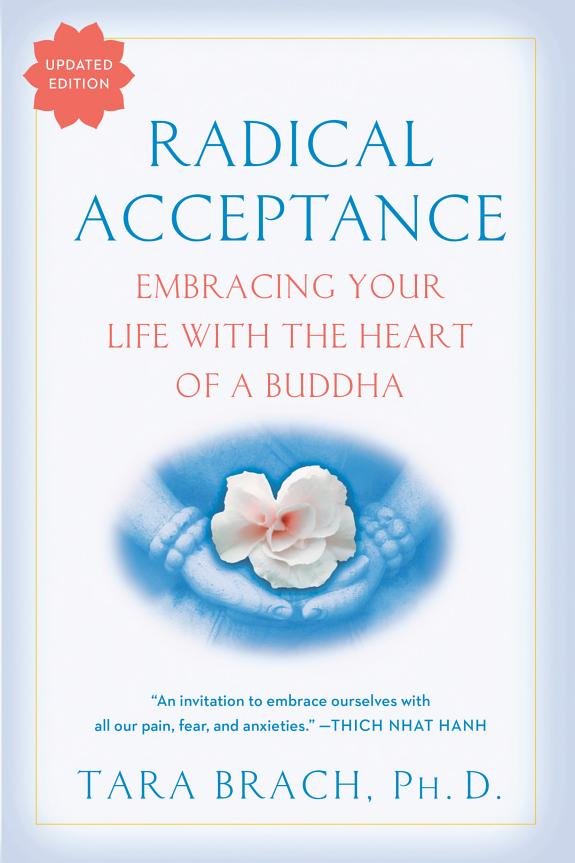
7. Radical Acceptance by Tara Brach
Tara Brach is a psychologist and Buddhist meditation teacher, and this book is the most philosophically deep on this list. It is about what Brach calls the “trance of unworthiness,” which is the pervasive, often unconscious belief that something is fundamentally wrong with us. That belief, she argues, is at the root of perfectionism, anxiety, and a great deal of unnecessary suffering. The antidote she offers is radical acceptance, which is not resignation or passivity but a full, clear-eyed acknowledgment of what is actually happening in the present moment.
The writing is gentle and precise. Brach draws on Buddhist teachings and psychological research in roughly equal measure, and she weaves in stories from her own practice and from her work with students and clients. Some of those stories are genuinely moving. She has a talent for finding the universal in the particular, for telling one person’s story in a way that makes you feel like she is talking about you.
The meditation practices she offers are not decorative. They are central to the book’s argument. Brach believes, and makes a compelling case, that we cannot think our way out of the trance of unworthiness. We have to feel our way out, and meditation is the primary tool for doing that. Readers who are skeptical of mindfulness practices may find this frustrating, but those who are open to it will find the guidance genuinely useful.
This is not a quick read and it is not a light one. It asks you to sit with some uncomfortable things about yourself and your relationship with your own experience. If you are in a season of life where you need practical, actionable strategies above all else, you might want to start elsewhere on this list. But if you are ready to go a little deeper, this book is one of the most worthwhile on the subject.
The trance of unworthiness keeps us striving and performing and proving. Radical acceptance is the recognition that we were never actually broken in the first place.
This is perfect for readers who want to explore the deeper roots of their perfectionism through a blend of Buddhist philosophy, psychology, and mindfulness practice.
Perfectionism does not disappear after reading a book. If it did, the self-help section would be considerably smaller. What books can do is shift something in the way you see yourself, give you language for what you have been experiencing, and remind you that you are not uniquely flawed for struggling with this. A lot of people are quietly exhausted by their own standards, and a lot of people have found their way to something gentler.
The seven books here come at the problem from different angles. Some are clinical and structured. Some are personal and reflective. Some are rooted in therapy, some in philosophy, some in lived experience. That variety is intentional, because perfectionism is not one-size-fits-all and neither is recovery from it. Start with the one that feels most relevant to where you are right now. There is no wrong entry point, which is, fittingly, kind of the whole point.