
8 Books for Healing Childhood Trauma
Some books find you at exactly the right moment. Others sit on your shelf for years before you are ready to open them. Books about childhood trauma tend to fall into the second category. There is nothing wrong with that. Picking up a book that asks you to look honestly at your earliest years takes a particular kind of courage, and that courage tends to arrive on its own schedule.
The eight books gathered here come from different angles. Some are rooted in neuroscience, some in psychology, some in the kind of plain, direct writing that feels like a conversation with someone who actually gets it. They do not all agree with each other on every point, which is probably a good thing. Healing is not a single road, and no one book holds every answer. What each of these does offer is a serious, compassionate attempt to help readers understand where they came from and how that past continues to shape the present. That is a worthwhile place to start.
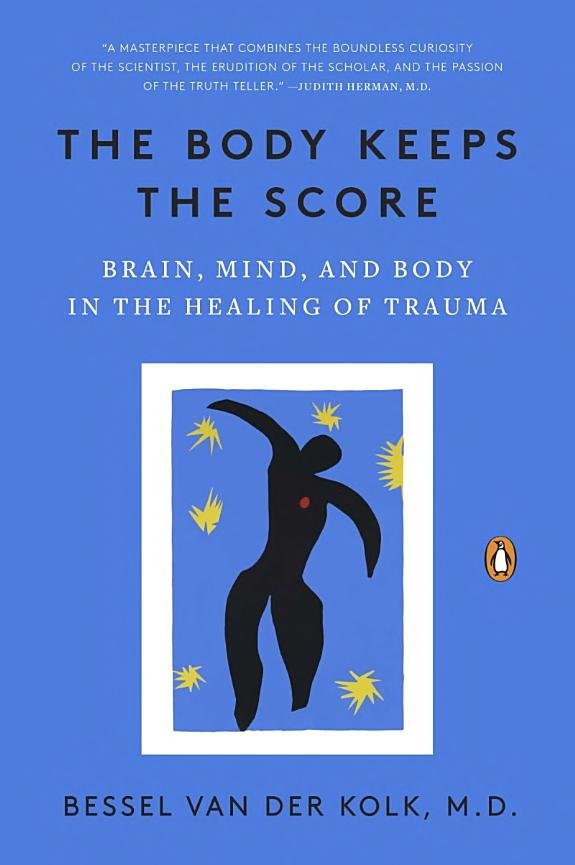
The Body Keeps the Score
1. The Body Keeps the Score by Bessel van der Kolk
Bessel van der Kolk spent decades working with trauma survivors, and this book is the distillation of that work. His central argument is both simple and quietly unsettling: trauma does not live only in memory. It lives in the body, in the nervous system, in the way a person flinches at a particular tone of voice or goes numb in moments that should feel ordinary. He draws on neuroscience, attachment theory, and clinical case studies to build that case, and he builds it carefully.
Van der Kolk’s writing is dense in places. This is not a light weekend read. He covers a wide range of therapeutic approaches, from EMDR to yoga to theater, and some sections read more like a survey of treatment modalities than a cohesive narrative. Readers who are not particularly interested in the clinical mechanics of trauma research may find certain chapters slow going. That said, the core ideas are genuinely illuminating, and the patient, methodical way he explains why talk therapy alone often falls short of helping trauma survivors has resonated with an enormous number of readers for good reason.
What sets this book apart is its insistence that healing has to involve the body. That idea has become more widely accepted in therapeutic circles since this book was published, but van der Kolk was among the first to bring it to a mainstream audience in such a thorough way. He treats his patients with obvious respect, and that comes through in how he writes about them.
“Trauma is not just an event that took place sometime in the past; it is also the imprint left by that experience on mind, brain, and body.” This framing quietly reorients how you think about your own reactions and responses.
This is perfect for readers who want a thorough, research-backed foundation for understanding how early trauma shapes the nervous system, and who are comfortable spending time with clinical language alongside the human stories.
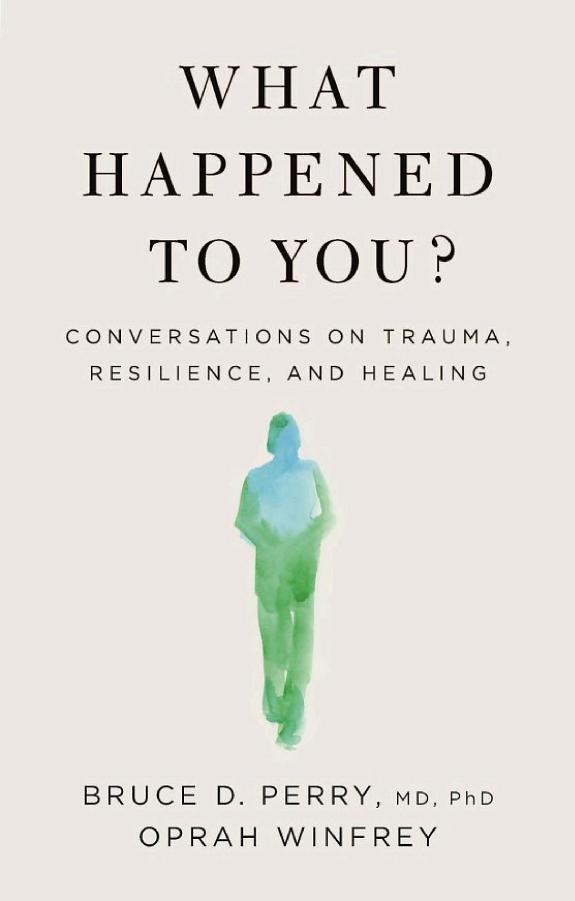
What Happened to You?
2. What Happened to You? by Bruce D. Perry and Oprah Winfrey
The title alone is worth sitting with for a moment. So much of how we talk about struggling people, including ourselves, starts with “what is wrong with you?” Bruce Perry and Oprah Winfrey propose a different question entirely. That shift, from judgment to curiosity, from blame to context, is the animating idea behind this whole book. Perry is a neuroscientist and psychiatrist who has spent his career studying how childhood adversity affects brain development. Winfrey brings her own history of trauma and her decades of conversations with survivors. The combination works better than you might expect.
The book is structured as a dialogue between the two of them, which gives it an accessible, conversational quality that van der Kolk’s book, for all its strengths, does not always have. Perry explains the science in plain language, and Winfrey asks the questions a thoughtful non-specialist would ask. Her willingness to share her own experiences grounds the theoretical material in something real. Some readers find the back-and-forth format a little uneven, and there are moments where the book feels like it is trying to serve too many audiences at once. But as an entry point into trauma-informed thinking, it is genuinely warm and readable.
Perry’s framework around how early experiences shape the developing brain is explained here with clarity and patience. He is particularly good on the concept of “neurosequential” development, the idea that the brain builds from the bottom up, and that addressing trauma requires meeting people where their nervous system actually is, not where we think it should be.
Asking “what happened to you” instead of “what is wrong with you” is not just a kinder question. It is a more accurate one, and this book makes a compelling case for why that distinction matters in every relationship, including the one you have with yourself.
This is perfect for people who want an accessible, science-informed introduction to childhood trauma without wading through dense academic prose, especially those who appreciate learning through personal story alongside research.
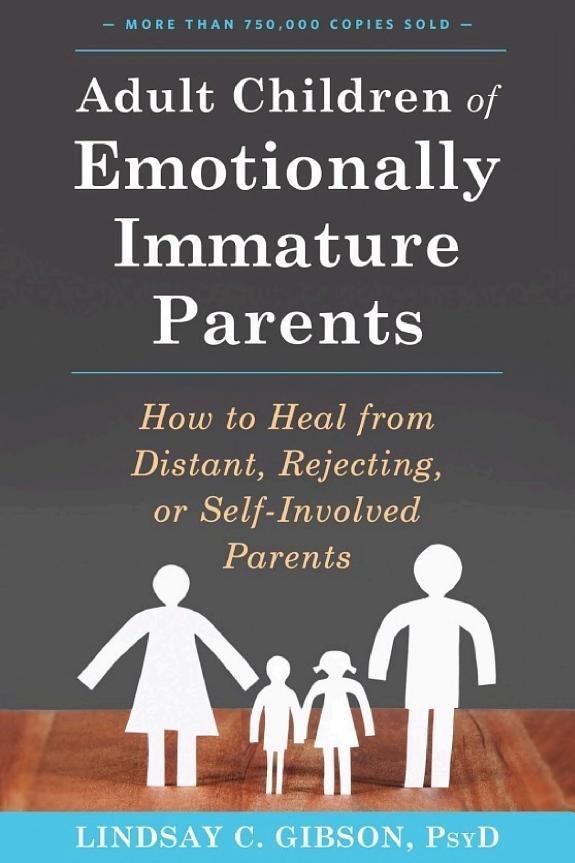
Adult Children of Emotionally Immature Parents
3. Adult Children of Emotionally Immature Parents by Lindsay C. Gibson
Lindsay Gibson is a clinical psychologist, and this book reads like the work of someone who has sat across from a lot of adults who love their parents but cannot quite figure out why those relationships have always felt so exhausting. Her subject is a specific kind of difficult parent: not necessarily abusive in any dramatic or obvious way, but emotionally unavailable, self-centered, or inconsistent in ways that left their children feeling fundamentally unseen. Gibson calls these parents emotionally immature, and she describes the type with a precision that many readers find startling in its accuracy.
The book is organized around recognizing the patterns, understanding how they affected you, and then figuring out how to relate to these parents, and to yourself, differently. Gibson’s writing is clear and practical without being glib. She does not pretend that insight alone fixes anything, but she does believe that understanding the dynamic is a necessary first step. There is a chapter on the four types of emotionally immature parents that has become something of a touchstone in online conversations about family dysfunction, and it earns that reputation.
One honest caveat: if your parent was not simply emotionally immature but was genuinely abusive or neglectful in more serious ways, this book may feel a little mild in places. It is calibrated toward a particular kind of relational wound, and it serves that audience very well. For readers whose childhoods involved more severe harm, it may be a useful complement to other resources rather than a complete picture on its own.
Gibson’s concept of the “role-self,” the version of yourself you developed to manage an emotionally immature parent, is one of those ideas that quietly reorganizes how you understand your own behavior in relationships.
This is perfect for adults who grew up feeling emotionally lonely even in intact families, and who have spent years trying to articulate why their relationship with their parents has always felt subtly off.
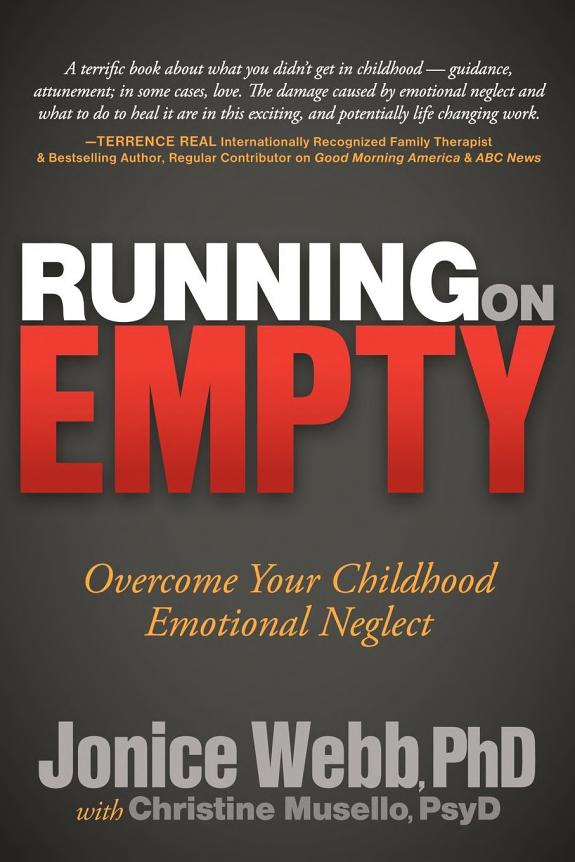
Running on Empty: Overcome Your Childhood Emotional Neglect
4. Running on Empty: Overcome Your Childhood Emotional Neglect by Jonice Webb
Jonice Webb’s book addresses something that is genuinely hard to talk about, and harder still to recognize: the damage done not by what happened to you, but by what did not. Childhood emotional neglect, as Webb defines it, is the failure of parents to respond adequately to a child’s emotional needs. It is not a dramatic event. It is an absence, and absences are notoriously difficult to point to. Many readers come to this book having spent years feeling vaguely empty or disconnected without being able to explain why, since nothing terrible happened to them, at least nothing they can name.
Webb is a psychologist, and she writes with a clinician’s precision and a therapist’s warmth. She is good at helping readers identify the subtle signs of emotional neglect in their own histories: the sense that emotions are somehow dangerous or embarrassing, difficulty knowing what you want, a persistent feeling of being different from other people in ways you cannot quite articulate. The self-assessment tools she offers throughout the book are genuinely useful, not in a pop-psychology quiz way, but as structured prompts for reflection.
The book is not without its limitations. Some readers find the later chapters on recovery a bit formulaic, and the writing occasionally tips toward the self-help genre’s tendency to make complex processes sound more straightforward than they are. But as a tool for naming something that has been nameless, it is hard to overstate how much this book has meant to people who finally found language for an experience they had carried silently for years.
The idea that you can be harmed by what your parents failed to give you, rather than by what they did, is one that many people need to hear before they can begin to take their own pain seriously.
This is perfect for people who feel something is missing but cannot point to any obvious trauma in their past, and who suspect their childhood was “fine” in ways that do not quite account for how they feel as adults.
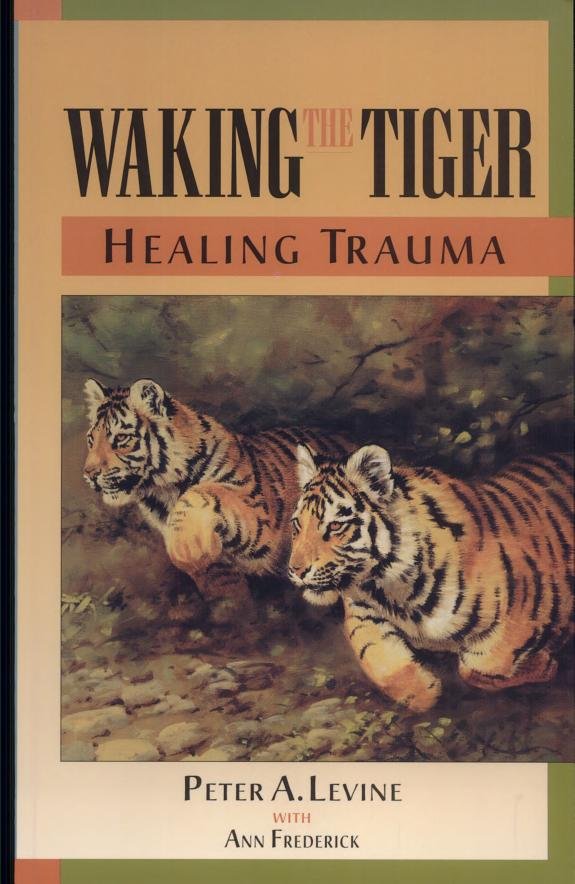
Waking the Tiger: Healing Trauma
5. Waking the Tiger: Healing Trauma by Peter A. Levine
Peter Levine spent years watching animals in nature and asking a question that turned out to be more profound than it first appears: why do prey animals not develop trauma after being chased and nearly killed, when humans so often do? His answer, developed over decades of clinical work and refined in this book, has to do with the body’s natural capacity to discharge the energy of a threatening experience. Animals shake, tremble, and complete the biological cycle. Humans, for various cultural and psychological reasons, tend to suppress those responses, and that suppression, Levine argues, is where trauma gets stuck.
This book introduced the world to Somatic Experiencing, Levine’s body-based approach to healing trauma, and it remains the most readable account of that framework. His writing is accessible and occasionally lyrical, and he uses animal behavior as a running metaphor in ways that are more illuminating than they might sound on paper. The case studies are vivid without being exploitative, and he is careful to explain the physiological underpinnings of his approach without drowning the reader in jargon.
That said, readers who are skeptical of somatic or body-oriented approaches to psychology may find some of the theoretical framework a stretch. Levine’s model is compelling, but it is not universally accepted in clinical circles, and the book does not spend much time engaging with that debate. It is also worth noting that reading about Somatic Experiencing is a different thing from actually working with a trained practitioner, and some of the exercises in the book are better attempted with professional support.
Levine’s observation that the body has its own wisdom about healing, and that much of what we call trauma is actually the body’s incomplete attempt to protect itself, reframes suffering as something other than a personal failure.
This is perfect for readers who feel that their trauma lives more in their body than in their thoughts, and who are curious about approaches to healing that go beyond talking and cognitive reframing.
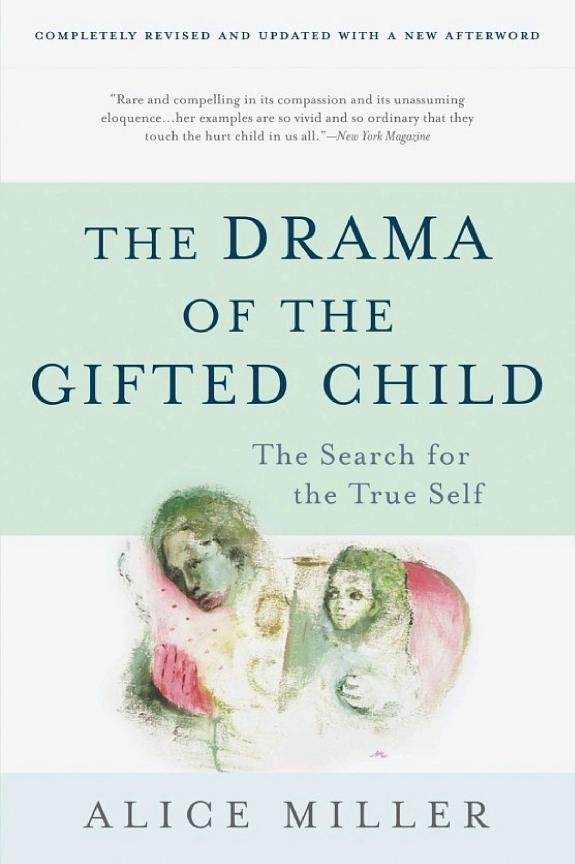
The Drama of the Gifted Child: The Search for the True Self
6. The Drama of the Gifted Child: The Search for the True Self by Alice Miller
Do not let the title mislead you. Alice Miller is not writing about academically gifted children. She is writing about children who were gifted at reading their parents’ emotional needs and adapting themselves accordingly. This slim, dense book, first published in German in 1979 and still in print, is one of the foundational texts in the literature on childhood psychological harm. Miller was a psychoanalyst, and her prose has the compressed intensity of someone who has spent a long time thinking very carefully about a very specific thing.
Her central argument is that many adults who present as high-functioning, even successful, are running on a false self constructed in childhood to secure parental approval. The true self, with its authentic feelings and needs, was suppressed because expressing it felt unsafe or unwelcome. Miller writes about depression, grandiosity, and the compulsive need to achieve as symptoms of this early suppression, and she does so with a directness that can feel uncomfortably accurate. More than a few readers have described finishing this book and needing to sit quietly for a while. That is not a warning, just a heads-up.
The book is short, and some readers find Miller’s psychoanalytic framework a little dated. She is working within a particular theoretical tradition that not everyone finds persuasive, and her later work became increasingly polemical in ways that this early book mostly avoids. Taken on its own terms, though, it remains one of the most incisive accounts of how childhood emotional dynamics shape adult psychology.
Miller’s insistence that children have a right to their own feelings, and that parents who deny that right cause real harm even with the best intentions, was quietly radical when she wrote it and remains worth sitting with today.
This is perfect for adults who grew up feeling responsible for their parents’ emotional states and who suspect they have spent most of their lives performing a version of themselves rather than actually being themselves.
Healing the Shame that Binds You
7. Healing the Shame that Binds You by John Bradshaw
John Bradshaw was a counselor, theologian, and public television personality, which is an unusual combination, and his writing reflects all of those influences. This book, first published in 1988, was among the first to bring the concept of toxic shame to a popular audience, and its influence on how people talk about family dysfunction and addiction is hard to overstate. Bradshaw distinguishes between healthy shame, the ordinary human sense of limitation and fallibility, and toxic shame, the deeply internalized belief that one is fundamentally defective as a person. It is the second kind that this book is about.
Bradshaw’s style is warmer and more evangelical than the other authors on this list, which will suit some readers and put others off. He draws on a wide range of sources, from family systems theory to twelve-step philosophy to transpersonal psychology, and the synthesis is sometimes a little uneven. Some of the experiential exercises he recommends are more suited to a workshop setting than to solitary reading, and a few of the theoretical frameworks he relies on have not aged especially well. If you are the kind of reader who wants everything tightly sourced and clinically grounded, this may not be your book.
That said, for readers who have spent years unable to name the particular quality of their inner critic, the one that does not just say “you did something wrong” but insists “you are wrong,” Bradshaw’s articulation of toxic shame can be genuinely clarifying. He writes about it with the authority of someone who has lived it, and that personal honesty gives the book a texture that purely academic treatments of the subject often lack.
The distinction between guilt, which says “I did something bad,” and shame, which says “I am bad,” sounds simple until you realize how much of your inner life has been organized around the second one.
This is perfect for readers who struggle with a persistent sense of being fundamentally flawed or unworthy, particularly those who grew up in families shaped by addiction, rigid religion, or chronic emotional criticism.
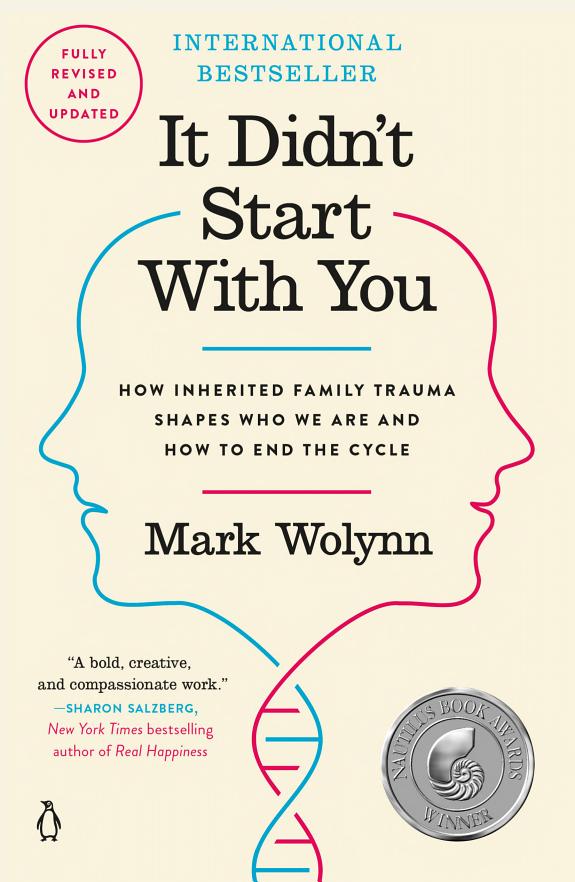
It Didn’t Start with You: How Inherited Family Trauma Shapes Who We Are and How to End the Cycle
8. It Didn’t Start with You by Mark Wolynn
Mark Wolynn’s book takes the conversation about childhood trauma in a direction that some readers find revelatory and others find a bit of a stretch: the idea that some of what we carry is not only our own history, but our family’s. Drawing on epigenetics, family systems therapy, and the work of therapists like Bert Hellinger and Franz Ruppert, Wolynn argues that trauma can be transmitted across generations, that fears, patterns, and emotional responses can be inherited in ways that go beyond what we consciously learned from watching our parents.
The epigenetic research Wolynn cites is real and genuinely interesting, though it is worth noting that the science of transgenerational trauma transmission is still developing, and some of the therapeutic frameworks he draws on are more contested than the book sometimes acknowledges. Readers with a strong scientific background may want to hold some of the more sweeping claims lightly. That said, the clinical tool Wolynn introduces, the Core Language Approach, which involves close attention to the specific words and images that recur in a person’s fears and symptoms, is practical and thought-provoking regardless of one’s views on the underlying theory.
What makes this book worth reading is the way it invites a kind of compassion toward yourself that is hard to arrive at when you are treating your struggles as purely personal failures. If some of what you are carrying belonged first to your grandmother, or your grandfather’s father, that does not excuse anything or explain everything, but it does change the texture of self-blame in a way that many readers find genuinely useful. It is also one of the more unusual books on this list, which, if you have already read several of the others, might be exactly what you need.
The possibility that some of our deepest fears and patterns are echoes of experiences we never had, but that our bodies somehow remember anyway, is strange and worth taking seriously, even if the full picture is still being worked out by researchers.
This is perfect for readers who have done significant personal work on their own history and still find certain patterns or fears that do not seem to connect to anything in their own life, and who are open to exploring the possibility that family history runs deeper than conscious memory.
These eight books will not all speak to you equally, and that is fine. Healing is not a checklist, and no single framework captures the whole of any person’s experience. Some of these authors disagree with each other in interesting ways, and sitting with those disagreements can be as useful as any one book’s conclusions. The point is not to find the correct theory of your childhood but to find language and perspective that help you understand yourself a little better than you did before.
If you are new to this territory, starting with van der Kolk or Perry and Winfrey will give you a solid foundation. If you already have some familiarity with trauma literature and are looking for something that pushes into less charted ground, Wolynn or Levine might be the more interesting choice. And if you have spent years knowing something is off but struggling to name it, Gibson or Webb might be the book you have been waiting for without knowing it.
Take your time. There is no rush. The books will be there when you are ready for them.