

5 Philosophy Books Everyone Should Read
Philosophy has a reputation problem. Mention it at a dinner party and someone will groan, someone will quote a bumper sticker, and someone else will bring up their one college course where they read Descartes and felt vaguely cheated. That reputation is not entirely fair. The best philosophy books are not puzzles designed to confuse you. They are attempts, sometimes brilliant and sometimes maddening, to figure out how human beings ought to live and what the world actually is.
The five books gathered here span centuries and cover wildly different temperaments. Aristotle is methodical. Nietzsche is theatrical. Russell is patient and clear. Plato is sneaky in the best possible way. None of them agree with each other, which is rather the point. Reading them together is less like taking a course and more like sitting in a room where very smart people refuse to stop arguing. If that sounds appealing, read on.
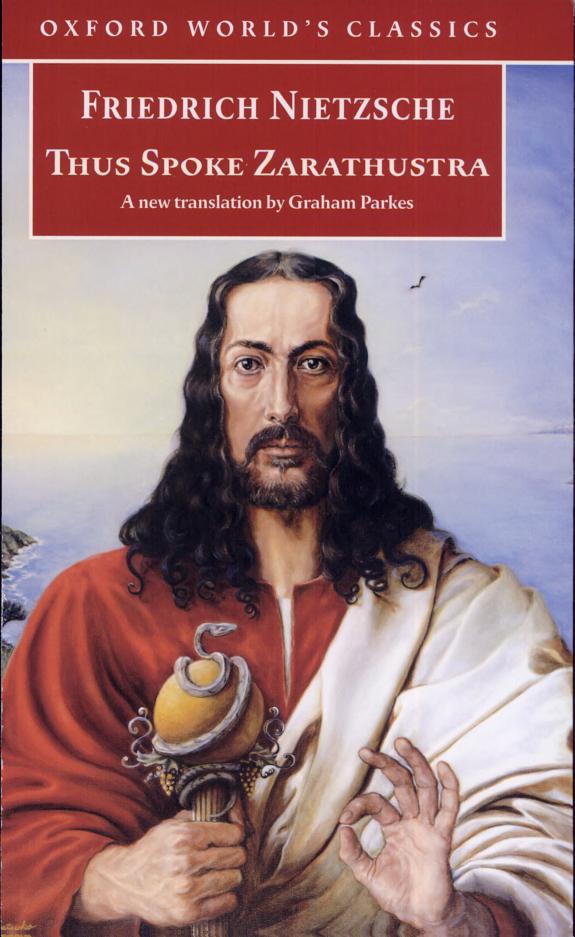
Thus Spoke Zarathustra
1. Thus Spoke Zarathustra by Friedrich Nietzsche
Nietzsche wrote this book in a kind of fever, and you can feel it on every page. Thus Spoke Zarathustra is not a conventional philosophical text. It reads more like a prose poem or a strange gospel, following a prophet named Zarathustra as he descends from his mountain to share ideas that most people are not ready to hear. The famous concept of the Ubermensch, the overman, lives here, along with the eternal recurrence and a sustained, furious argument against living a small, comfortable, unexamined life.
Nietzsche’s voice is unlike anyone else in the philosophical canon. He writes with a kind of ecstatic intensity that can feel overwhelming and occasionally exhausting. He is not building an argument step by step. He is hammering at you with images and declarations. That is either thrilling or deeply irritating depending on your temperament, and there is no shame in landing on either side. The book rewards patience and rereading, and it tends to mean something different to you at thirty than it did at nineteen.
The central ideas here, that values must be created rather than inherited, that suffering can be affirmed rather than avoided, that human greatness requires honest self-examination, are genuinely interesting and worth wrestling with even if you ultimately reject them. Nietzsche is often misread as nihilistic, but the book is actually a strange kind of optimism. A demanding, unsparing optimism, but optimism nonetheless.
“Thus Spoke Zarathustra” is not a book that explains philosophy. It is a book that performs it, asking you to become someone capable of thinking differently rather than simply absorbing new information.
This is perfect for readers who are comfortable with ambiguity, enjoy literary writing alongside philosophical ideas, and want a book that unsettles more than it reassures. It is not for readers who want clear arguments and tidy conclusions.
The Problems of Philosophy
2. The Problems of Philosophy by Bertrand Russell
If Nietzsche is the philosopher who arrives at the party wearing a cape, Bertrand Russell is the one who shows up early, makes sure everyone has a drink, and then quietly explains why nothing we think we know is quite as certain as we assumed. The Problems of Philosophy, published in 1912, is a short, lucid, and genuinely accessible introduction to some of the oldest and most persistent questions in Western philosophy. What can we actually know? What is the nature of matter? How do our minds relate to the world outside them?
Russell’s great gift is clarity. He does not condescend, but he also does not show off. He writes as though he genuinely wants you to follow his reasoning, and he takes the time to build each idea carefully before moving to the next. For anyone who has picked up a philosophy book and felt immediately lost, this is the antidote. It is also short enough to finish in a weekend, which in the world of philosophy is practically a miracle.
The book is not without its limitations. It was written over a century ago and reflects certain assumptions of its era. Russell is also primarily concerned with epistemology and metaphysics, so readers hoping for ethics or political philosophy will need to look elsewhere. But as an entry point into what philosophy actually does and why it matters, this book is almost without equal. It asks good questions, takes them seriously, and models what careful thinking looks like without being tedious about it.
Russell demonstrates that philosophy is not about having answers. It is about learning to hold difficult questions with precision and intellectual honesty, which turns out to be its own reward.
This is perfect for complete newcomers to philosophy who want a trustworthy guide, and for anyone who finds most philosophy books impenetrable. It is not for readers already well-versed in epistemology, who may find it too introductory.
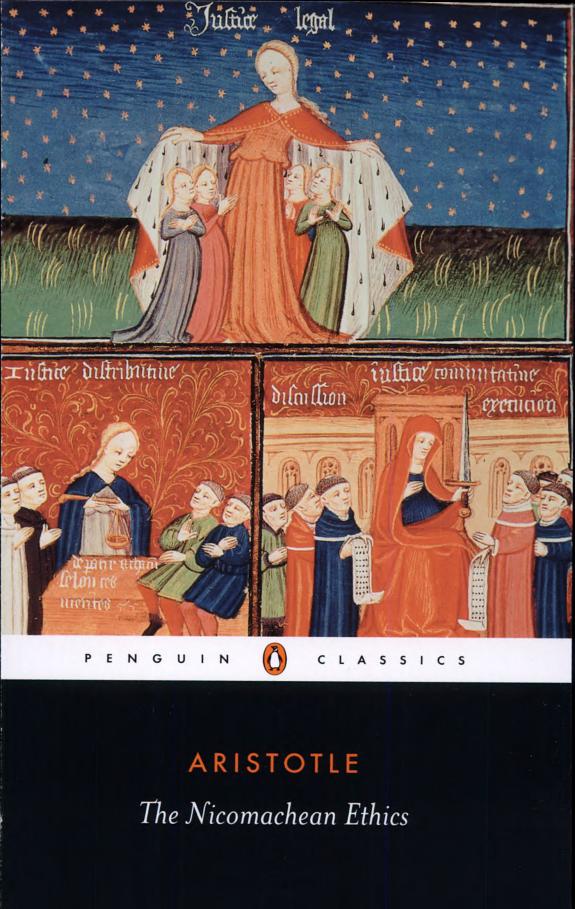
The Nicomachean Ethics
3. The Nicomachean Ethics by Aristotle
Aristotle wrote the Nicomachean Ethics as a serious attempt to answer a question that sounds simple until you try to answer it: what does it mean to live well? Not happily in the shallow sense, not successfully in the material sense, but genuinely, fully well. His answer involves the concept of eudaimonia, often translated as happiness or flourishing, and the argument he builds around it is careful, practical, and surprisingly modern in its concerns. He is interested in virtue, friendship, pleasure, and the good life in a way that feels less like ancient history and more like a very thoughtful conversation.
The Nicomachean Ethics is not an easy read. Aristotle’s prose, even in a good translation, is dense and sometimes repetitive. He is working through ideas systematically, and he does not always bother to make it entertaining. But the reward for sticking with it is substantial. His treatment of virtue as a habit rather than an innate quality, his insistence that character is built through action rather than intention, and his nuanced account of friendship as one of the central goods of human life are all ideas that hold up remarkably well.
What makes Aristotle particularly useful is that he is interested in practical wisdom, the ability to know what to do in specific situations rather than just to recite abstract principles. That focus on the particular, on what it actually looks like to be courageous or generous or just in real circumstances, gives the book a grounded quality that a lot of ethical philosophy lacks. He is not building a system you apply from outside. He is describing how good people actually think.
Aristotle’s ethics are not a rulebook. They are a description of what a well-developed human character looks like in practice, which is both more demanding and more useful than a list of commandments.
This is perfect for readers interested in ethics, character, and the philosophy of how to live, particularly those willing to work through dense material for substantive payoff. It is not for readers looking for quick, actionable advice or a breezy read.
Beyond Good and Evil
4. Beyond Good and Evil by Friedrich Nietzsche
If Thus Spoke Zarathustra is Nietzsche in full theatrical mode, Beyond Good and Evil is Nietzsche with his sleeves rolled up. Published in 1886, it is a more direct and argumentative book, a sustained critique of the philosophical tradition and the moral assumptions that Nietzsche believed were quietly suffocating European culture. He takes aim at Kant, at utilitarianism, at democracy, at Christianity, and at what he calls the herd mentality, the tendency to flatten individual excellence in the name of collective comfort.
The book is structured as a series of aphorisms and longer sections, and it moves quickly. Nietzsche is brilliant at the compressed observation, the single sentence that reframes something you thought you understood. He is also, it must be said, frequently infuriating. Some of his pronouncements are genuinely insightful. Others are provocative in a way that reads as more performance than argument. The reader has to do a fair amount of work to separate the two, and that work is actually part of what makes the book valuable.
Beyond Good and Evil is particularly interesting read alongside the Nicomachean Ethics, because Nietzsche and Aristotle share a concern with excellence and the cultivation of character, but arrive at very different conclusions about what that cultivation requires and who it is available to. Nietzsche’s aristocratic streak is real and worth examining critically. But his challenge to inherited moral frameworks, his insistence that we examine where our values come from and whether they actually serve life, remains a genuinely useful provocation.
Beyond Good and Evil asks you to question not just what you believe but why you believe it, and whether those reasons are actually your own or simply ones you absorbed without noticing.
This is perfect for readers who have some philosophical background and want to engage with Nietzsche’s ideas more directly than Zarathustra allows. It is not for readers who find provocative, aphoristic writing frustrating or who want a systematic argument.
The Republic
5. The Republic by Plato
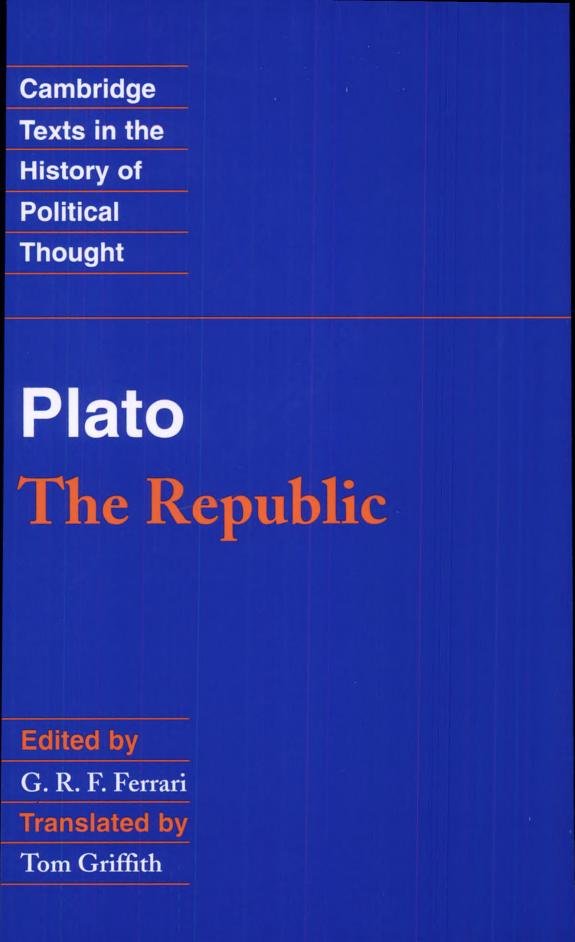
Plato’s Republic is one of those books that shows up on every great books list, which can make it feel more like an obligation than an invitation. Set that feeling aside if you can, because The Republic is genuinely fascinating and, in places, genuinely strange. Written as a dialogue featuring Socrates and various interlocutors, it begins as a conversation about justice and expands into an account of the ideal city, the nature of the soul, the theory of Forms, the allegory of the cave, and a fairly unsettling argument for philosopher-kings. It covers a lot of ground.
What makes The Republic worth reading is not just the ideas themselves but the method. Plato uses dialogue to show philosophy in action, with Socrates testing arguments, exposing contradictions, and following ideas wherever they lead even when the destination is uncomfortable. The allegory of the cave, in which prisoners mistake shadows for reality and struggle to accept the light when it is offered, remains one of the most evocative images in all of philosophy. It is the kind of thing that lodges in your mind and keeps surfacing at unexpected moments.
It is also worth being honest about the book’s difficulties. Plato’s ideal city is authoritarian in ways that should make any modern reader uneasy. His treatment of art, democracy, and the role of women is complicated and sometimes contradictory. Reading The Republic well means engaging with these tensions rather than explaining them away, and it means being willing to hold the genuinely good ideas alongside the ones that have aged poorly. That combination of admiration and critical distance is, arguably, exactly what philosophy is for.
The Republic is not a blueprint. It is a thought experiment conducted with extraordinary ambition, asking what justice might look like if we were willing to follow the argument wherever it led, regardless of how uncomfortable the destination.
This is perfect for readers interested in political philosophy, ethics, and the foundations of Western thought, and for anyone who wants to understand what Plato actually argued rather than what they have heard about him. It is not for readers who want a quick or comfortable read.
These five books do not agree with each other, and that is exactly why reading them together is worthwhile. Plato wants philosopher-kings. Aristotle wants virtuous citizens. Nietzsche wants to overturn the whole framework. Russell wants to make sure we understand what we are even arguing about before we start. The disagreements between them are not a flaw in the reading list. They are the point.
Philosophy is not a subject where you arrive at the right answers and stop reading. It is a practice of thinking carefully about things that matter, and these books are some of the best invitations to that practice that exist. Start with whichever one sounds most interesting to you. The others will still be there, and they will mean more once you have spent some time with the first.