

5 Best Books for Leadership Skills Worth Reading
Leadership books have a reputation. A lot of them promise to turn you into a visionary CEO by chapter three, only to spend the remaining two hundred pages restating the same idea in slightly different fonts. The good ones, though, do something rarer. They make you stop and think about how you actually show up for the people around you.
The five books here earn their place on a shelf. They come from different angles, some rooted in biology and organizational behavior, others in psychology or business research, but they share a common thread: they take the work of leading people seriously. Whether you manage a team of two or two thousand, or whether you simply want to understand what separates good leadership from the hollow kind, there is something here worth your time.
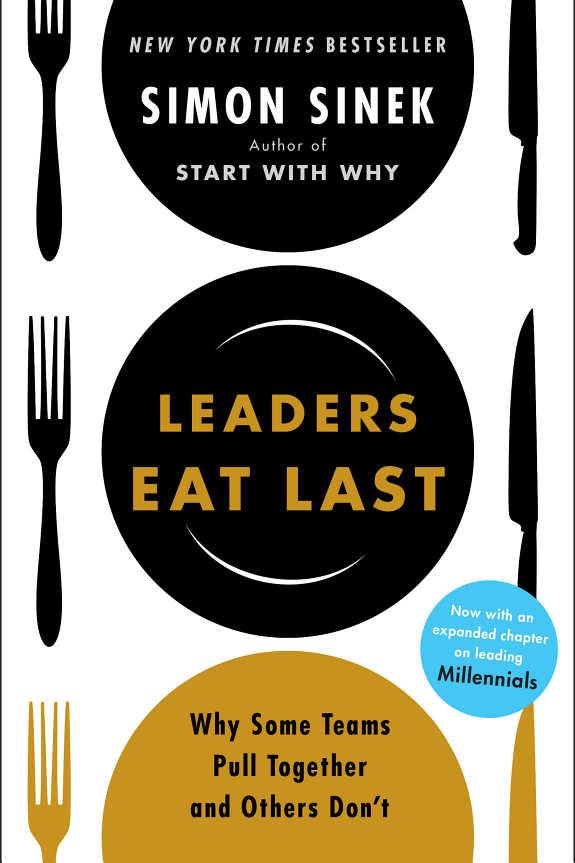
Leaders Eat Last
1. Leaders Eat Last by Simon Sinek
Simon Sinek opens this book with a story about a Marine general who explains that officers eat after the enlisted. That single image carries the entire argument forward. Sinek’s central claim is that great leaders create environments where people feel safe, and that this safety, far from being soft or sentimental, is the biological and organizational foundation of high performance. He draws on anthropology, neuroscience, and real-world case studies to build his case, and he builds it well.
The writing is clear and conversational, the kind of prose that moves quickly without feeling thin. Sinek has a gift for taking abstract ideas, like the role of cortisol and oxytocin in workplace culture, and grounding them in stories that make the concepts stick. The book does repeat itself in places, and readers who have already absorbed his TED talks may find some sections familiar. But the core argument deserves the space he gives it.
Where the book earns real credit is in its treatment of what Sinek calls the Circle of Safety. The idea that leaders are responsible for protecting their people from internal politics, fear, and uncertainty before expecting those people to perform is not a radical one, but Sinek articulates it with enough specificity and warmth that it lands differently than a management textbook would. It feels like a genuine conviction rather than a framework.
“The true price of leadership is the willingness to place the needs of others above your own. Great leaders truly care about those they are privileged to lead.”
This is perfect for managers who sense something is off in their team culture but cannot quite name it, and for anyone who wants a readable, research-informed case for why empathy is not a weakness in leadership.
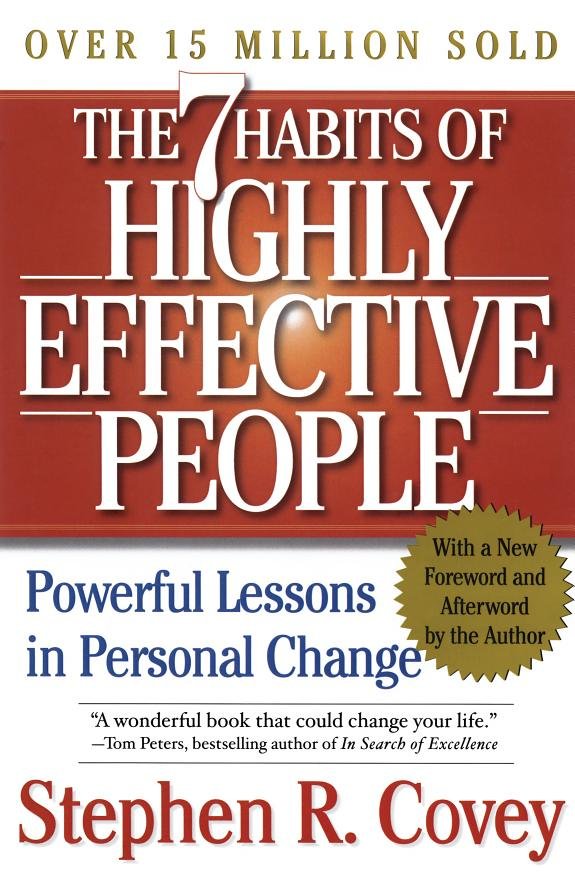
The 7 Habits of Highly Effective People
2. The 7 Habits of Highly Effective People by Stephen R. Covey
Few books have aged as publicly as this one. Published in 1989, it has sold over forty million copies and been cited so often that it risks becoming wallpaper. But strip away the cultural familiarity and what remains is a genuinely rigorous framework for how to live and lead with intention. Covey was not writing a leadership manual in the narrow sense. He was writing about character, and that broader ambition is what gives the book its staying power.
Covey’s voice is earnest and measured. He is not trying to be clever. Each habit is explained with patience, illustrated with examples, and connected to a principle-centered philosophy that runs through the whole book. The habits themselves, from being proactive to seeking first to understand, are not novel ideas in isolation. What Covey does is sequence them in a way that feels coherent and cumulative, moving from personal effectiveness to interpersonal effectiveness to interdependence.
The book is not for everyone. Readers who find self-help frameworks overly schematic will likely find the numbered habits and quadrant diagrams more irritating than useful. And some of the examples feel dated. But if you can engage with the underlying ideas on their own terms, the framework holds. The habit of beginning with the end in mind alone is worth the read, particularly for anyone who has spent time being busy without being purposeful, which, honestly, is most of us at some point.
“Most people do not listen with the intent to understand; they listen with the intent to reply.”
This is perfect for people early in their careers who want a structured foundation for personal and professional growth, and for experienced leaders who are willing to revisit first principles without rolling their eyes at the format.
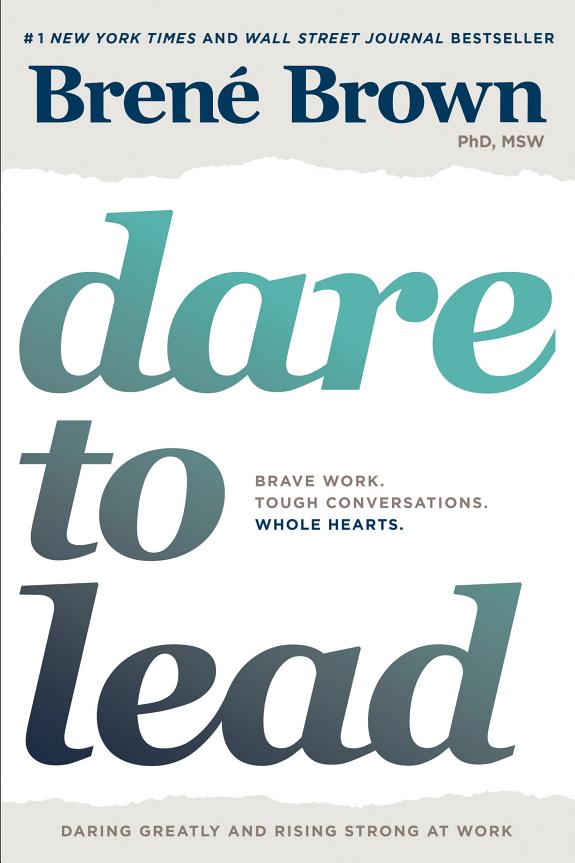
Dare to Lead
3. Dare to Lead by Brené Brown
Brené Brown spent years studying shame and vulnerability before turning her attention explicitly to leadership, and that research background shows throughout this book. Dare to Lead argues that courage, not confidence or authority, is the defining quality of great leadership, and that courage requires a willingness to be vulnerable. This is not a comfortable argument for everyone, and Brown knows it. She addresses the skepticism directly and with good humor.
Her writing style is warm and direct. She uses her own experiences generously, which makes the book feel honest rather than prescriptive. Brown is not telling you how leaders ought to behave from a theoretical height. She is sharing what she has observed in organizations and what she has had to practice herself. The book covers a lot of ground, from rumbling with hard conversations to understanding values and trust, and it does so without becoming a checklist. Each concept is explored with enough depth to feel useful.
Where some readers will push back is on the emotional register. Brown is unabashedly feelings-forward, and if you are the kind of reader who finds that kind of language uncomfortable in a professional context, this book will test your patience. That discomfort, Brown would argue, is exactly the point. But it is worth naming. The book is also quite long, and some chapters could be tighter. Still, the core ideas about armored versus daring leadership are among the more honest things written about how people actually behave under pressure.
“Vulnerability is not winning or losing; it’s having the courage to show up and be seen when we have no control over the outcome.”
This is perfect for leaders who want to build genuinely trusting teams, and for anyone who suspects that their own defensiveness or need for control is getting in the way of doing their best work with other people.
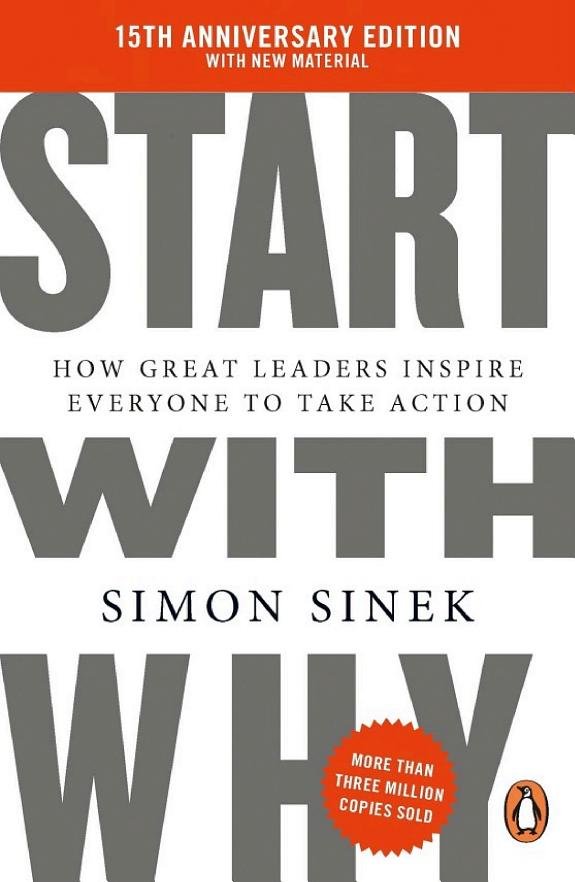
Start with Why
4. Start with Why by Simon Sinek
Before Leaders Eat Last, Sinek wrote this book, which grew out of his widely watched TED talk and introduced the concept of the Golden Circle. The central idea is straightforward: most organizations communicate from the outside in, starting with what they do, then how they do it, and rarely getting to why. Sinek argues that inspiring leaders and organizations do the opposite. They start with purpose and work outward from there. Apple, Martin Luther King Jr., and the Wright brothers all make appearances as examples.
The book is at its best in its first half, where Sinek lays out the framework with clarity and builds a compelling case for why purpose-driven leadership creates loyalty that transactions cannot. He is a skilled storyteller, and the examples are well chosen. The writing is accessible without being shallow, which is harder to pull off than it looks in this genre.
The second half is weaker. Sinek stretches the Golden Circle concept across more and more examples, and the argument begins to feel circular in places. There is also a tendency to treat the framework as universal when it may apply more naturally to certain kinds of organizations than others. A startup with a clear mission is a different context than a large public institution navigating competing stakeholder demands. The book does not always acknowledge that complexity. Still, for anyone who leads or communicates, the core question, why does this organization exist beyond making money, is one worth sitting with seriously.
“People don’t buy what you do; they buy why you do it.”
This is perfect for founders, team leads, and communicators who want to understand how to articulate purpose in a way that actually resonates, and for anyone who has ever sat through a brand strategy meeting wondering why nothing felt real.
Good to Great
5. Good to Great by Jim Collins
Jim Collins and his research team spent five years studying companies that made a sustained leap from good performance to great performance, and then tried to figure out why. The result is one of the most rigorously constructed business books of the past few decades. Good to Great is not a motivational read. It is a research report written with enough narrative skill to be genuinely engaging, and that combination is rarer than it should be.
The concepts Collins introduces, Level 5 Leadership, the Hedgehog Concept, the Flywheel, have entered the vocabulary of business and leadership education for good reason. They are precise, well-supported, and practically useful. Level 5 Leadership in particular is a striking idea: the leaders who drove the greatest sustained results were not the charismatic visionaries the business press tends to celebrate. They were humble, fiercely determined, and focused on the institution rather than their own legacy. That finding cuts against a lot of conventional leadership mythology, and Collins presents it with enough evidence to be convincing.
The book is not without its critics. Some of the companies Collins held up as examples of greatness later stumbled, which raises questions about the durability of the findings. Collins addressed some of this in later work, but it is worth keeping in mind when reading. The book also focuses almost entirely on large publicly traded American companies, which limits how directly the lessons transfer to smaller organizations, nonprofits, or non-Western business contexts. If you can hold those limitations alongside the research, though, there is a great deal here that is worth thinking about carefully.
“Good is the enemy of great. And that is one of the key reasons why we have so little that actually becomes great.”
This is perfect for leaders and managers who want their thinking grounded in data rather than anecdote, and for anyone who is skeptical of leadership books but willing to give one serious, research-driven entry a fair chance.
None of these books will hand you a leadership identity. That is not how any of this works. But each one offers something specific and honest: a framework for thinking about safety and culture, a structure for personal effectiveness, a case for vulnerability, a question about purpose, a body of research on what actually drives sustained excellence. Read one and sit with it. Argue with it if you need to. The best leadership reading tends to be the kind that unsettles you a little rather than simply confirming what you already believe.
If you are not sure where to start, begin with whichever question feels most pressing right now. Struggling to articulate why your work matters? Start with Sinek. Sensing that your team does not quite trust you? Brown or Sinek’s Leaders Eat Last might be the more useful entry point. Wanting to build better personal habits before leading others? Covey has held up for a reason. The shelf is here whenever you are ready.